
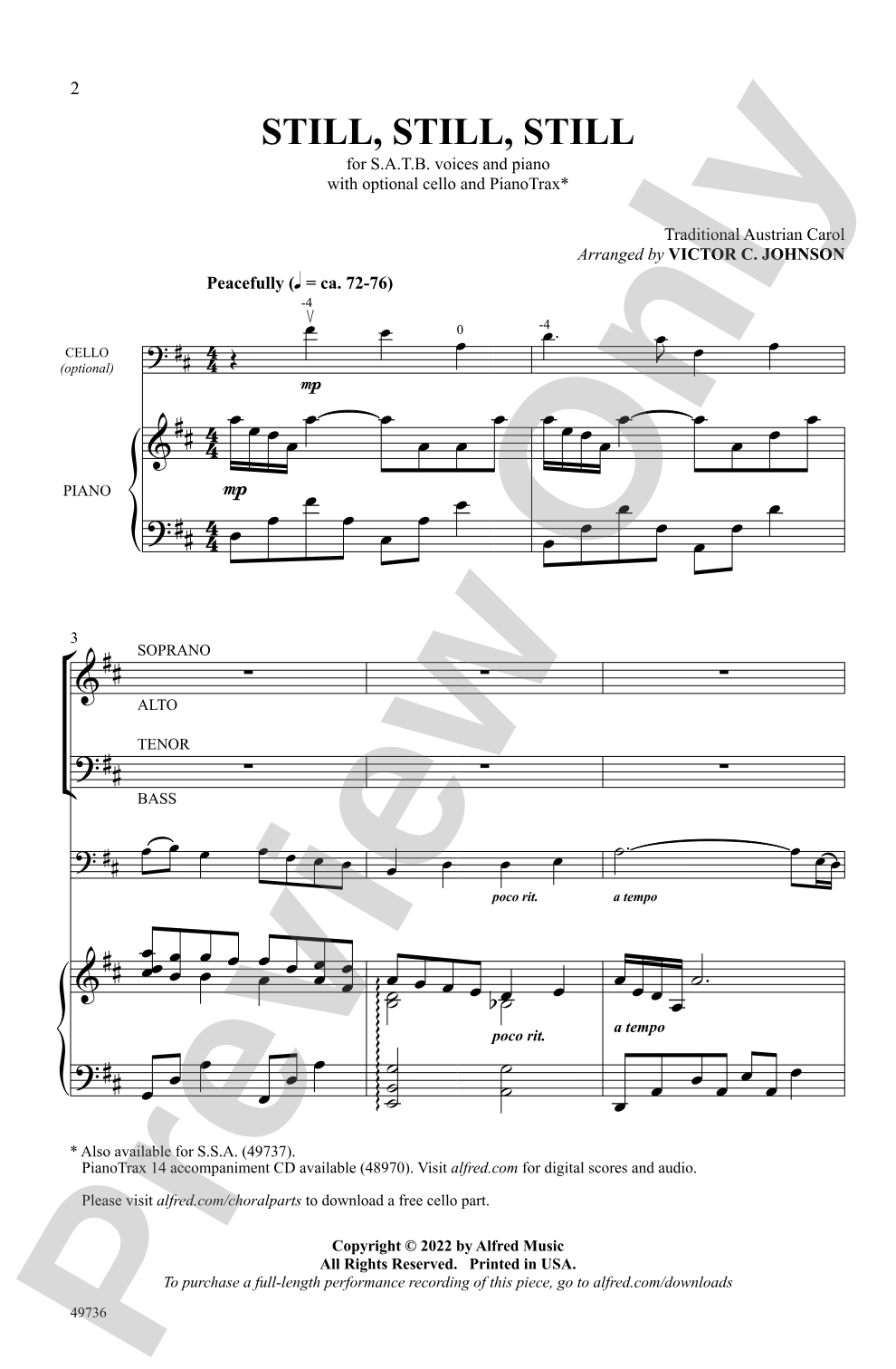
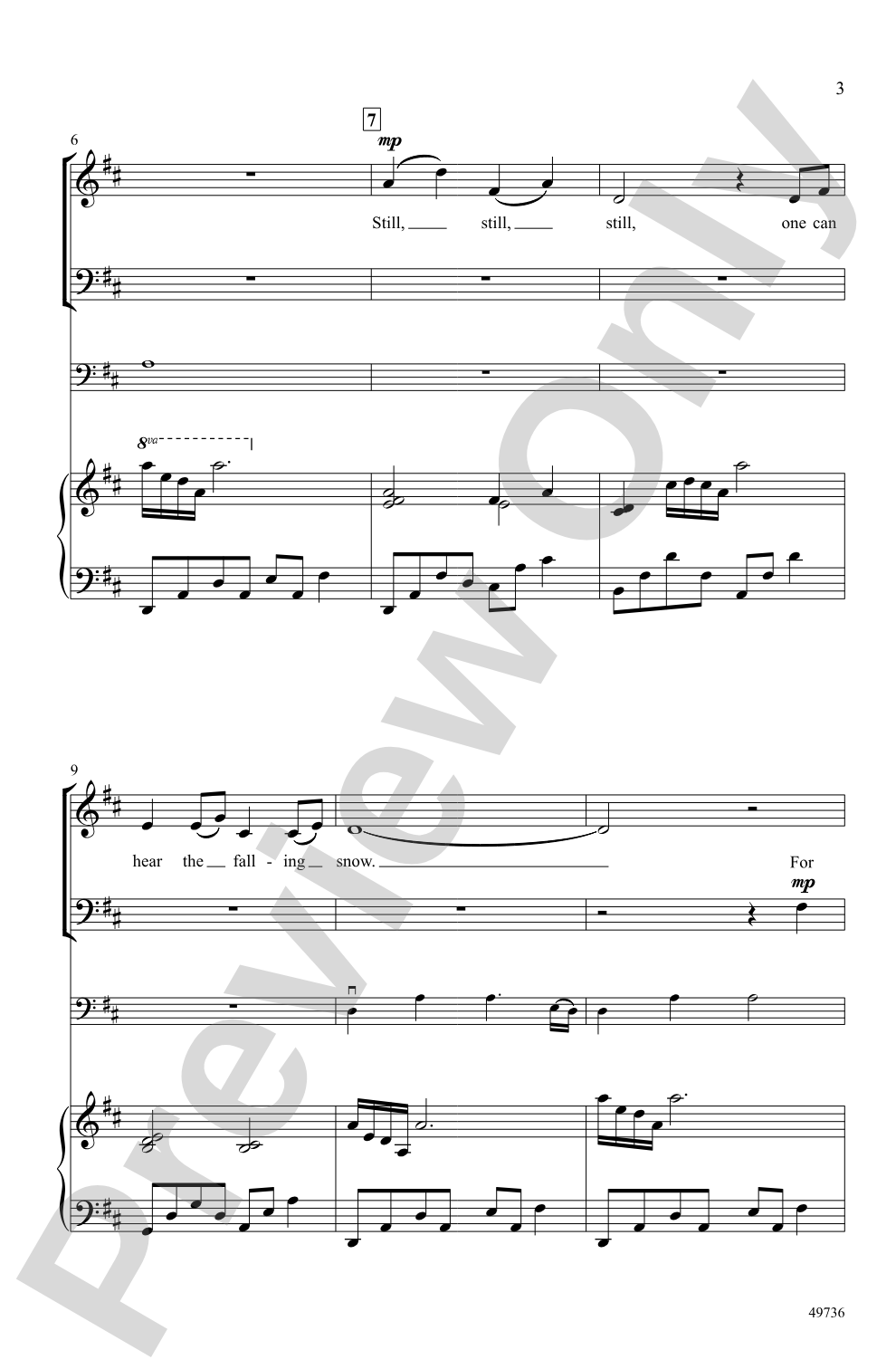
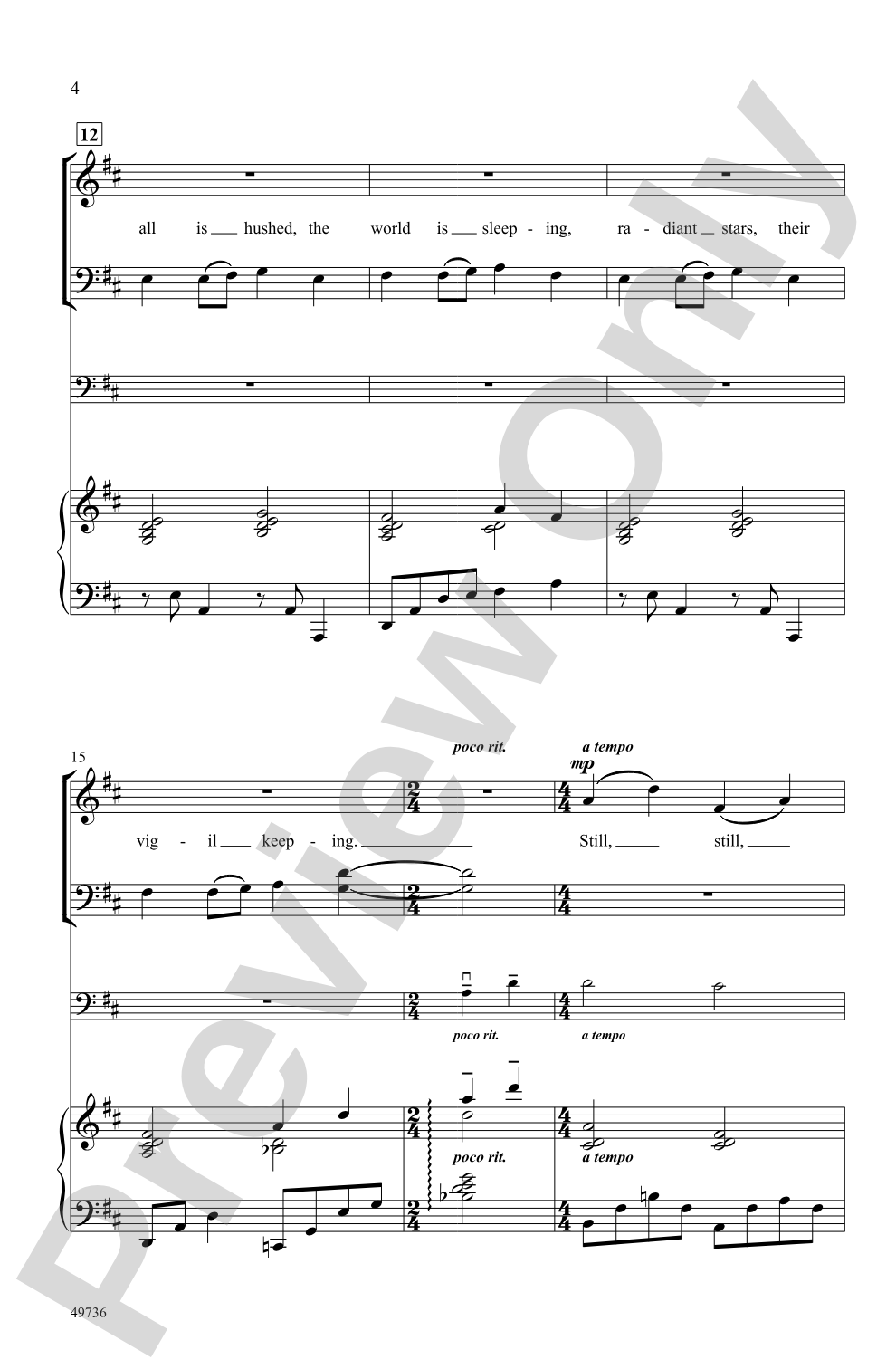

Still, Still, Still: SATB Choral Octavo
Traditional Austrian Carol / arr. Victor C. Johnson
Item: 00-PO-0006935
$2.05
Minimum order quantity: 20 copies
Pickup currently not available
Description
Victor Johnson lends his artful pen to the beloved Austrian carol, which proves a fitting vehicle for his sensitive signature style. Long melodic lines, generous harmonic suspensions, an intricate piano accompaniment, and a luminous cello obbligato combine to make a special moment for holiday programs. SSA and SATB singers will sound their best on this terrific treatment that is a joy to sing and a pleasure to hear.


Still, Still, Still: SATB Choral Octavo isn't in MakeMusic Cloud just yet...but it could be. Let us know you'd like to see it, and you'll help shape what comes next. In the meantime, start a free trial and dive into thousands of interactive titles your students can play along with today.
Request This Title
Tell us you want it.
Start Your Free Trial
Explore everything that's ready to play right now.
Sample Audio
1
Audio File
--:--
0:00
0:00
Sample Video
Additional Details
Series:
Alfred Choral Designs
Publisher:
Alfred Music
Page Count:
12
SKU:
00-PO-0006935
More about this title
About the Arranger: Victor C. Johnson

Victor C. Johnson brings decades of choral leadership to his work as composer and arranger. A Dallas native, he has served as conductor of the Dallas Symphony Children's Chorus Mixed Ensemble since 2022 and previously directed choral programs at Ft. Worth Academy of Fine Arts for 18 years, where he shaped the Academy Singers, Academy Men's Choir, and the Singing Girls of Texas. His catalog includes over 500 published works across choral music, vocal solos, and keyboard collections.
Johnson holds membership in the American Choral Directors Association, American Guild of Organists, and other professional organizations including ASCAP and Phi Mu Alpha Sinfonia. His work as School Choral Editor for Sing! at Choristers Guild reflects his commitment to creating accessible, meaningful choral literature for singers at all levels.
Why we love this
Johnson's arrangement preserves the carol's essential warmth while deepening it through sophisticated harmonic language and orchestral texture. The addition of a cello obbligato and carefully crafted piano accompaniment lifts what could be a simple carol into genuine concert repertoire, giving singers the satisfaction of tackling material that feels both familiar and artistically substantial. Directors seeking a holiday piece that showcases musicianship rather than gimmick will find this one earns its place on a program.
What to expect
Tender and introspective, this arrangement moves with deliberate grace rather than brightness. The generous harmonic suspensions and luminous cello line create an almost orchestral intimacy, inviting the listener into a quiet moment of reflection. It feels less like a carol to be jolly about and more like one to be moved by.
Who it's for
SATB choirs with solid blend and intonation seeking sophisticated holiday repertoire that goes beyond predictable arrangements. This octavo suits holiday programs from high school through adult community choirs, and works particularly well for ensembles comfortable with seven-to-eight-part textures created through divisi writing.
How to get the most out of it
- Shape the long melodic lines with unhurried breath support; these flowing phrases reward legato singing and will sound hollow if rushed through.
- Balance the SATB voicing so the harmonic suspensions resonate without one part overwhelming the others; pull back slightly on soprano sustained notes to let inner voices shine.
- Coordinate with your cellist early in rehearsals so the obbligato becomes a true conversation with the choir rather than an afterthought; mark exact cutoffs and entries together.
- Use the recorded accompaniment during rehearsals to lock tempos and phrasing, especially in passages where the piano's independent rhythmic figures might otherwise splinter the ensemble's unity.
How to use it
Pair this with either a brighter carol earlier in the holiday set or a spiritual following it to create dynamic contrast. Its concert-hall sensibility makes it ideal for a formal winter celebration or the reflective segment of a multi-movement holiday program, and the available instrumental parts allow you to expand the accompaniment if your venue and forces permit.
Skills your students will build
- Sustaining long melodic phrases with proper breath management and line continuity
- Hearing and blending four-part harmonic suspensions and non-chord tones
- Coordinating with instrumental obbligati (cello) while maintaining ensemble cohesion
- Reading and singing SATB divisi passages with confidence
- Responding to subtle dynamic and tempo nuance from the piano accompaniment