

Still a Bach Christmas: SATB Choral Octavo
Music by Johann Sebastian Bach / arr. Jay Althouse
Item: 00-PO-0003879
$2.25
Minimum order quantity: 20 copies
Pickup currently not available
Description
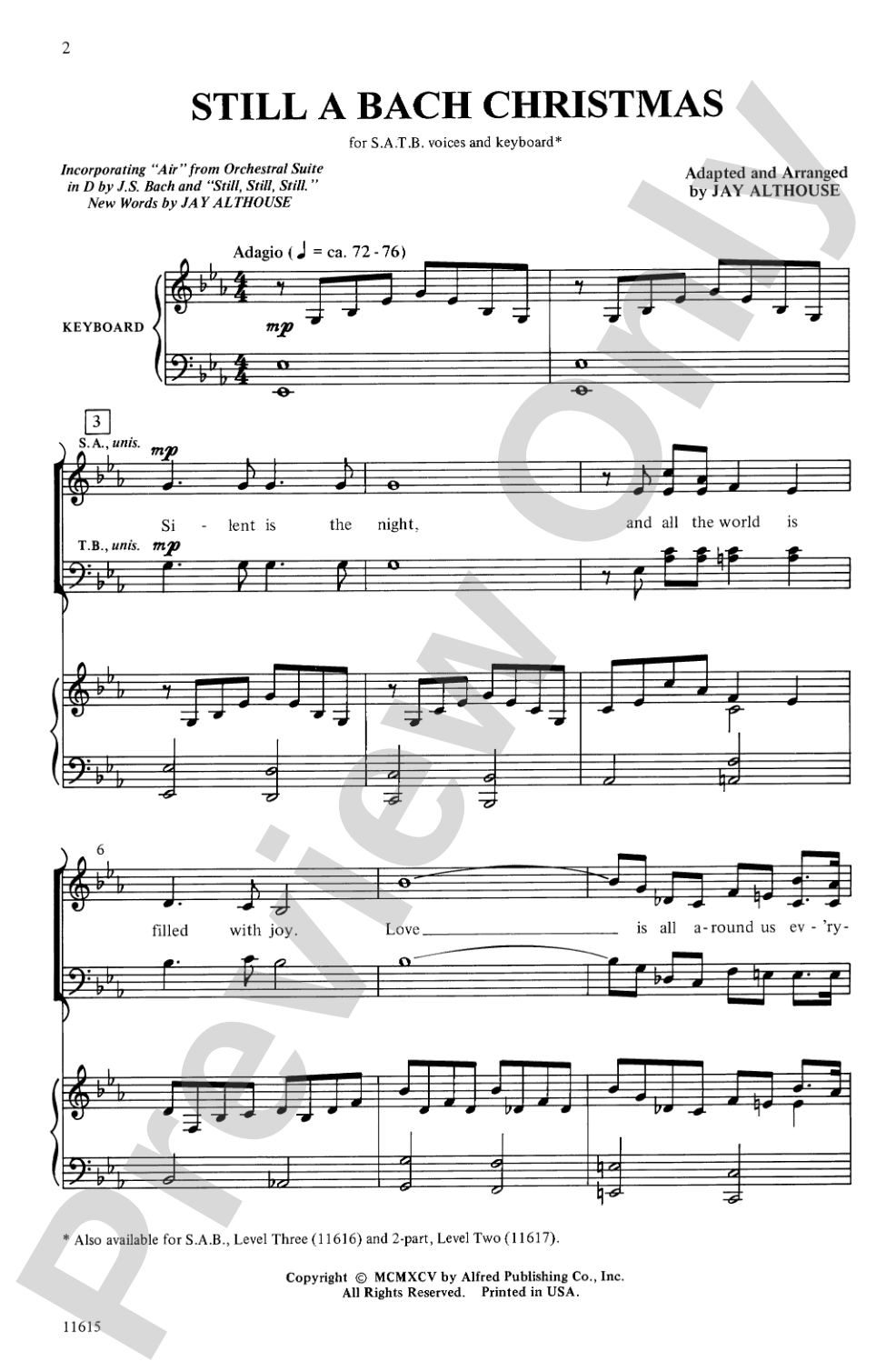
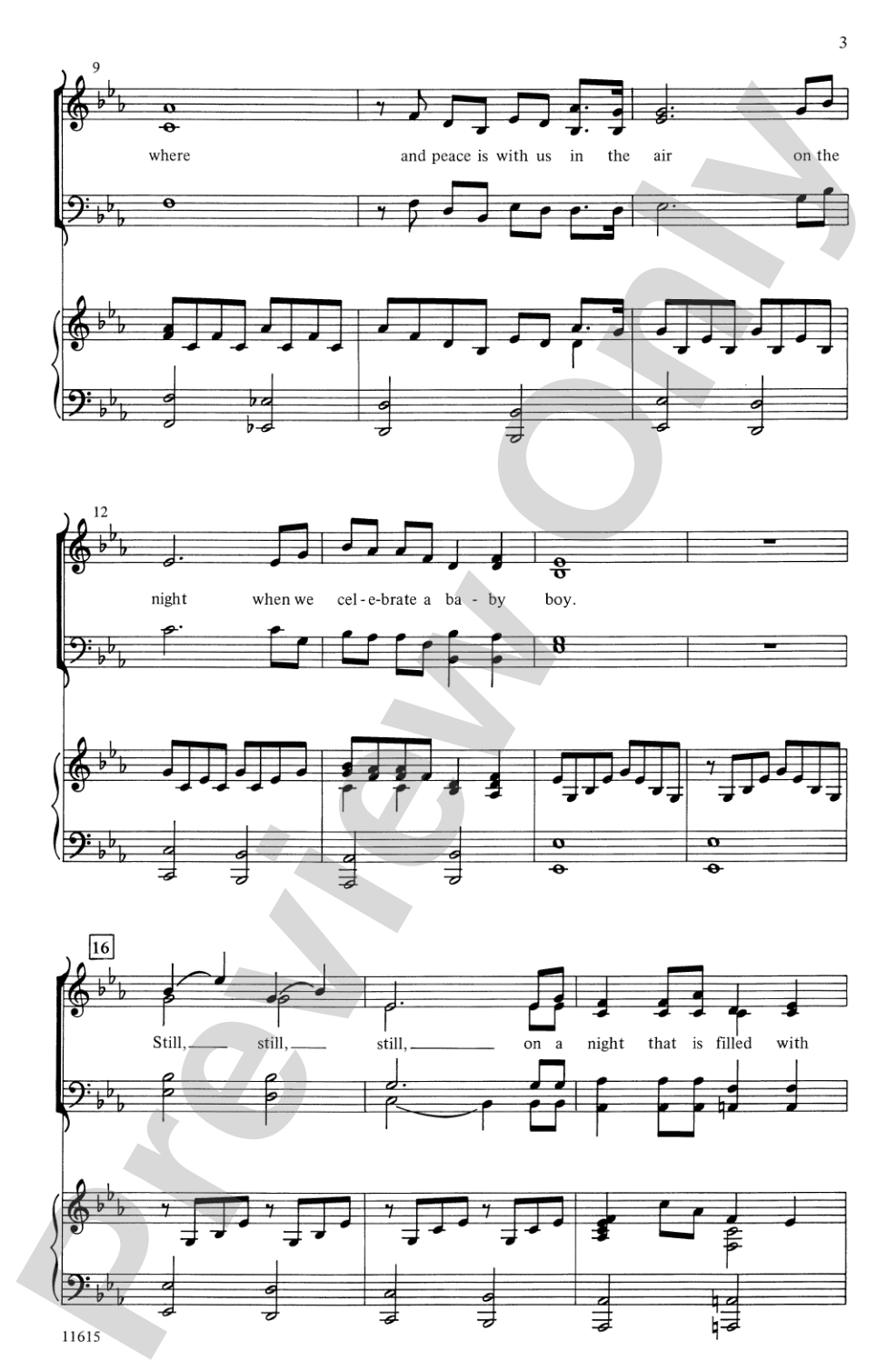
A well-crafted choral work incorporating Bach's famous "Air" from orchestral Suite in D, the best loved carol, "Still, Still, Still," and just a touch of "O Holy Night." A simple adaptation of Bach's keyboard harmonies is used throughout as the piano accompaniment. Sensitive and enchating. New text by the arranger. Could become a holiday classic!


Still a Bach Christmas: SATB Choral Octavo isn't in MakeMusic Cloud just yet...but it could be. Let us know you'd like to see it, and you'll help shape what comes next. In the meantime, start a free trial and dive into thousands of interactive titles your students can play along with today.
Request This Title
Tell us you want it.
Start Your Free Trial
Explore everything that's ready to play right now.
Sample Audio
No sample audio found.
Sample Video
No sample videos found.
Additional Details
Series:
Alfred Archive Edition: Alfred Choral Designs
Publisher:
Alfred Music
Page Count:
8
SKU:
00-PO-0003879
More about this title
About the Composer: Johann Sebastian Bach
Johann Sebastian Bach (1685-1750) stands as one of history's most prolific and structurally inventive composers. His mastery of counterpoint, harmonic language, and orchestral color shaped the foundation of Western classical music. Bach composed across every genre available in his era except opera, leaving behind nearly 1,100 works that continue to define how we understand musical architecture and expression.
For choral musicians and educators, Bach's legacy lives in his ability to write singable lines that never sacrifice sophistication. His dance suites, keyboard works, and sacred music remain endlessly adaptable because the harmonic and melodic ideas are so strong they transcend their original instrumentation. This octavo proves that truth: Bach's "Air" and keyboard harmonies translate seamlessly into a modern choral context.
Why we love this
Jay Althouse has found an elegant way to weave three distinct musical ideas into a single coherent piece without forcing any of them. The contrast between Bach's "Air," the familiar carol, and a touch of Massenet's "O Holy Night" creates genuine sophistication, yet the piece remains accessible for choirs at this level. The new text connects these melodies in a way that feels inevitable rather than stitched together.
What to expect
There's a hushed, reverent quality throughout, as if three different moments of quiet reflection have been placed together in a sacred space. The piece moves between the formal elegance of the baroque, the tender simplicity of a beloved carol, and a surge of romantic warmth, all without ever raising its voice.
Who it's for
This octavo works for intermediate to advanced high school choirs, college choirs, and community choruses looking for a Christmas piece that respects their singers' musicality. Directors who want to program something Bach-rooted but avoid the weight of a full motet will find this arrangement perfectly calibrated.
How to get the most out of it
- Balance the "Air" section carefully; the alto and bass lines carry important harmonic movement that shouldn't disappear under the melody. Mark these voices lightly in rehearsal so singers understand their role in the overall sound.
- The transition between the Bach material and "Still, Still, Still" benefits from a slight ritardando to give singers time to shift their interpretation from the more formal baroque character to the carol's intimacy.
- Shape each phrase with legato phrasing in mind; the piano harmonies suggest gentle motion rather than rigid block chords, and your voices should breathe with that same fluidity.
- The soprano line in the "O Holy Night" section sits higher than the rest of the piece. Rehearse this passage separately with sopranos to ensure they have the stamina and confidence for the fuller sound required here.
How to use it
Program this as the centerpiece of a Christmas concert's quieter section, perhaps following a more energetic festive piece. It pairs beautifully with purely instrumental works and creates a natural moment for the audience to settle into deeper listening. The eight-page length makes it substantial enough to anchor a program segment without overwhelming a shorter concert set.
Skills your students will build
- Singing Bach-style counterpoint with independent voice lines
- Sustaining legato phrasing across longer phrases
- Balancing harmonic voices so inner lines remain audible
- Making smooth interpretive shifts between baroque, carol, and romantic idioms