

Step by Step 2B: An Introduction to Successful Practice for Violin: Violin
Arr. Kerstin Wartberg
Item: 00-PB-0001801
$14.99
Pickup currently not available
Description
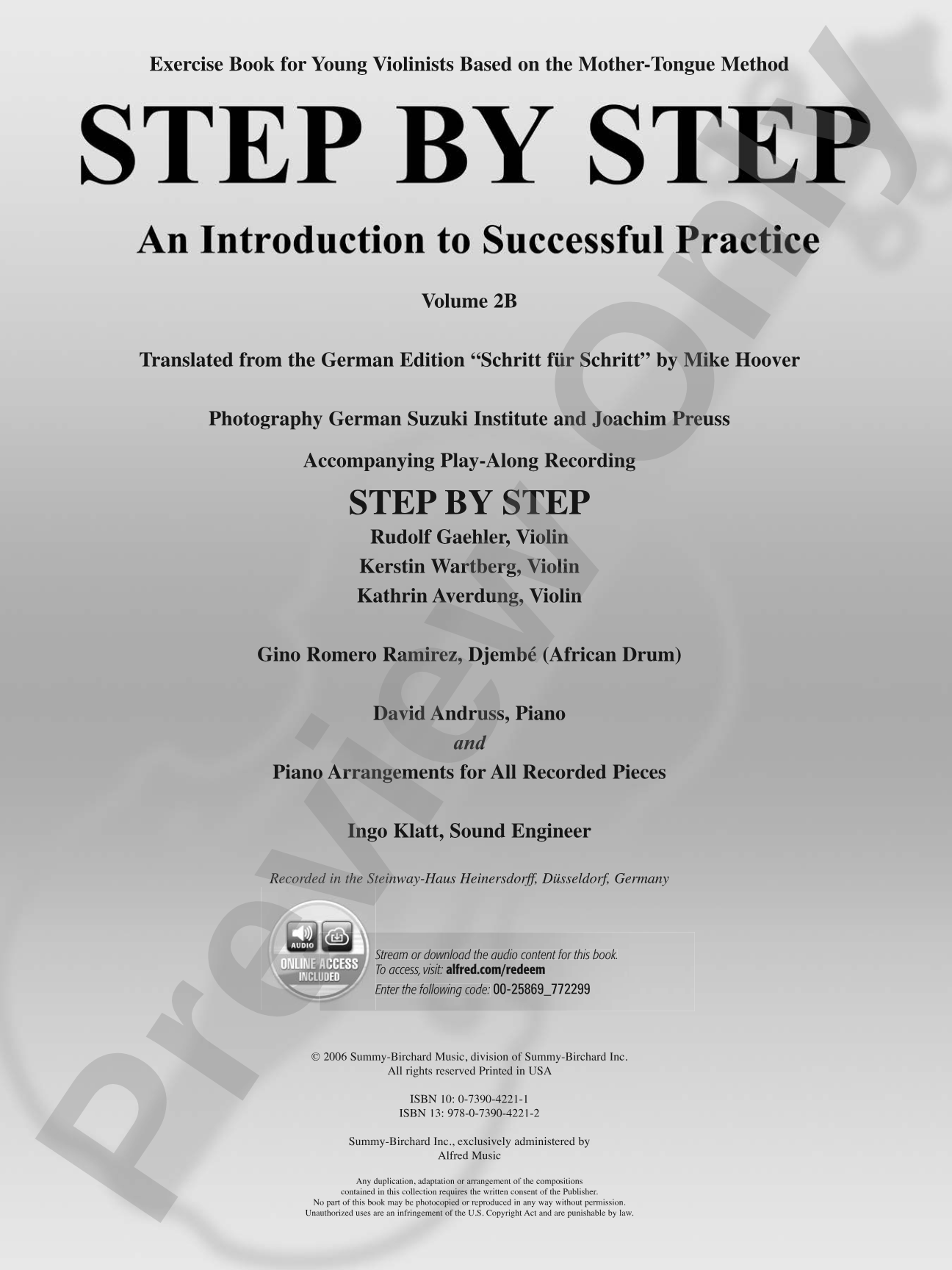
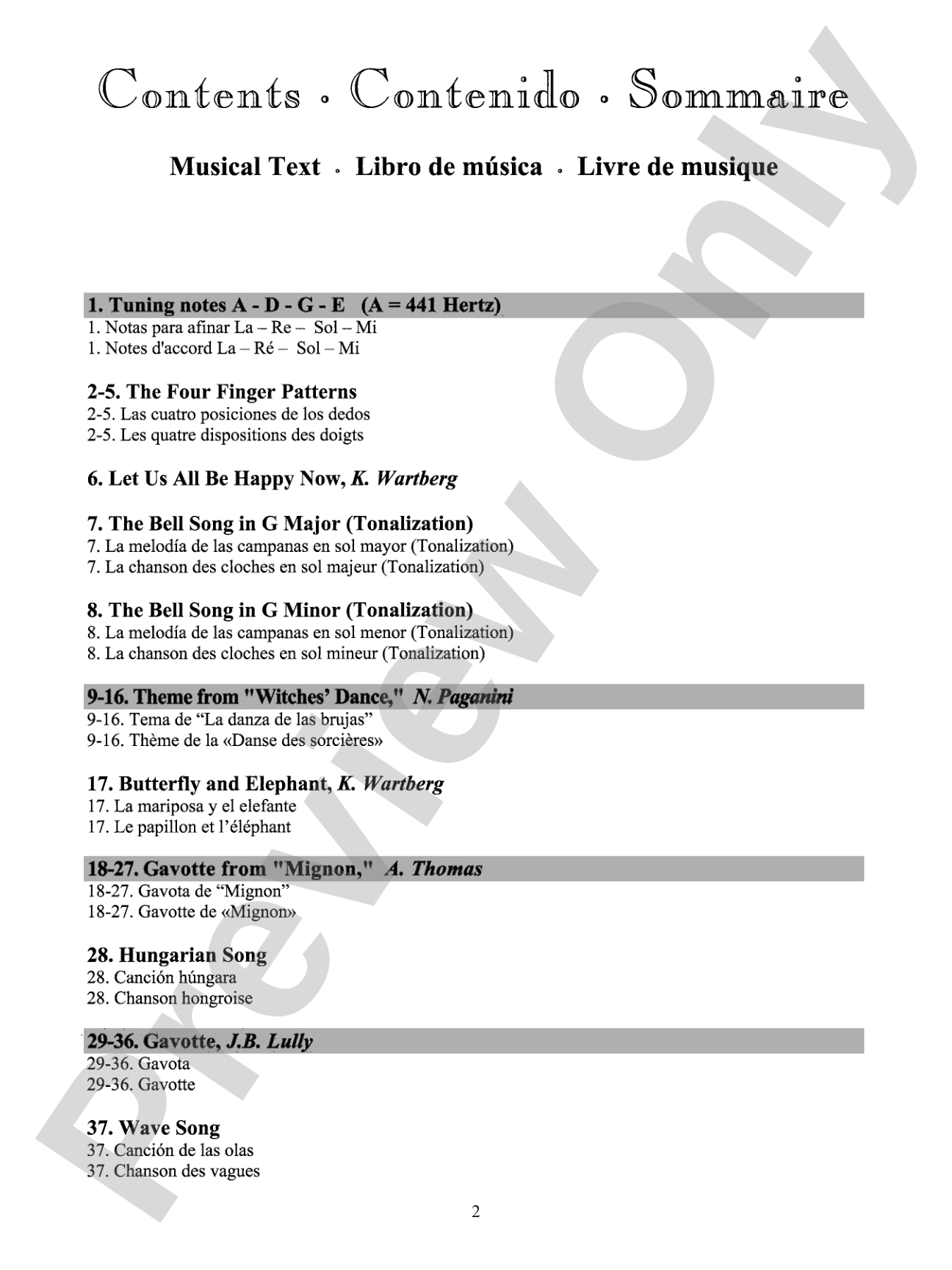
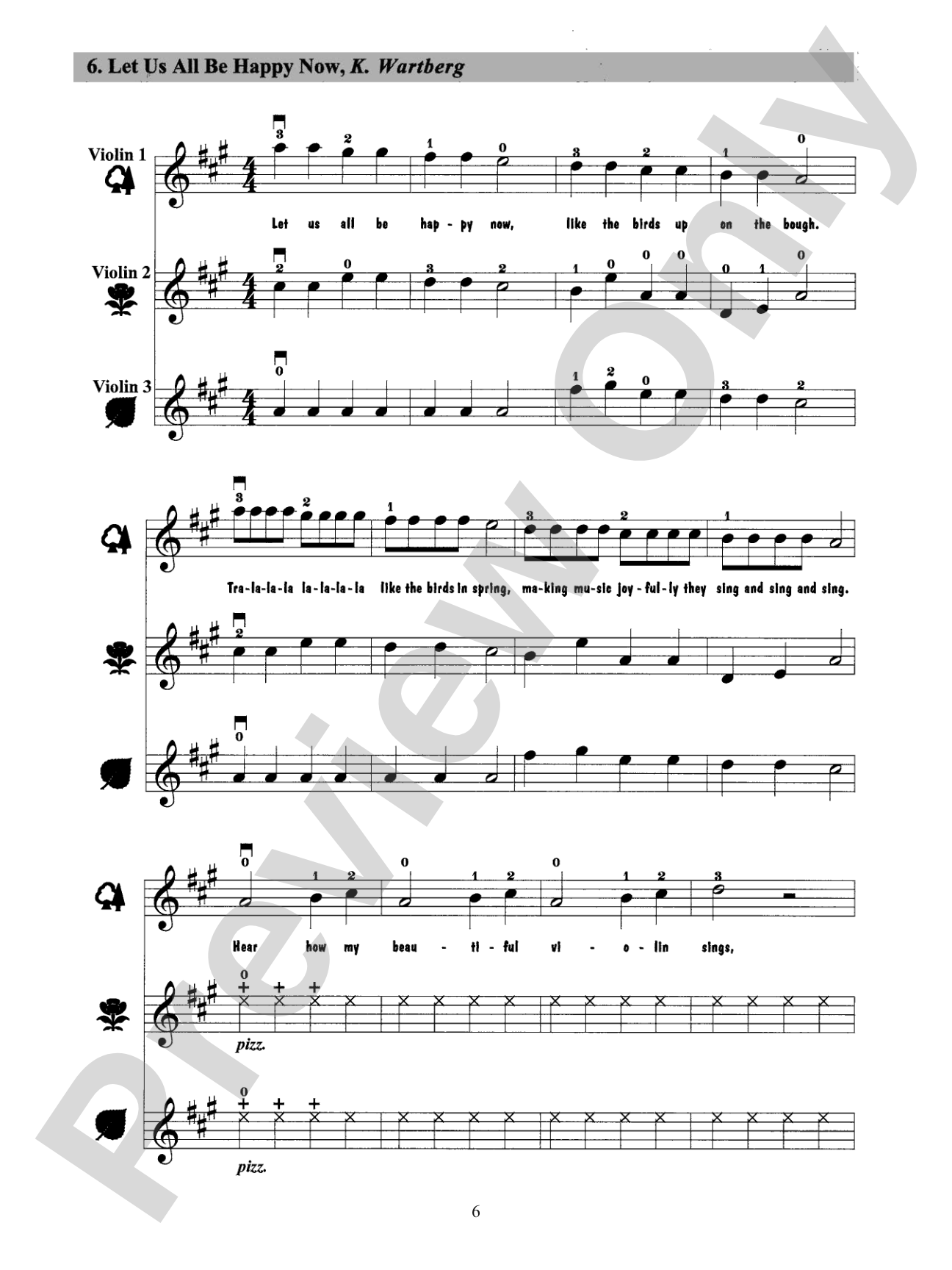
The Step by Step series is a collection of exercise books/audio for violin based on the Mother-Tongue approach. From the very beginning, it will provide a solid foundation in instrumental technique for Suzuki and traditional approaches in private lessons or group settings. The focus is on teaching correct, child-appropriate practice habits that range from listening, singing, and dancing to playing music. The ideas presented, including information for parent and practice tips should stimulate daily practice and also make it more effective. Includes new piano arrangements by David Andruss. This volume is the Condensed Version based on Suzuki Violin School, Volume 2, and includes the Violin Exercise Book with online audio. The book contains the same tunes as the exercise book but without extensive teaching suggestions. The recording is the same as that in the Complete Version. Languages: English / Spanish / French Pages: 29


Step by Step 2B: An Introduction to Successful Practice for Violin: Violin isn't in MakeMusic Cloud just yet...but it could be. Let us know you'd like to see it, and you'll help shape what comes next. In the meantime, start a free trial and dive into thousands of interactive titles your students can play along with today.
Request This Title
Tell us you want it.
Start Your Free Trial
Explore everything that's ready to play right now.
Sample Audio
No sample audio found.
Sample Video
No sample videos found.
Additional Details
Publisher:
Alfred Music
Page Count:
28
SKU:
00-PB-0001801
More about this title
Why we love this
The condensed format cuts through the noise while preserving what matters: solid technique building matched to repertoire students actually want to play. Wartberg's new piano arrangements give these foundational pieces fresh accompaniment that keeps young violinists engaged rather than bored by repetition. The trilingual support (English, Spanish, French) opens this resource to studios and schools serving diverse families.
What to expect
Familiar melodies with new orchestral color. These are the tunes young violinists know from Volume 2 of the Suzuki repertoire, now paired with David Andruss's piano accompaniments that add warmth and harmonic interest. The experience shifts from solitary drill to collaborative music making.
Who it's for
Young violinists in their first or second year of study, whether following Suzuki methodology or a traditional approach. This condensed version serves private lesson teachers and group instructors who want focused material without extensive pedagogical commentary, plus families learning in multiple languages.
How to get the most out of it
- Establish a consistent practice space where the student can return daily. Familiar surroundings reduce friction and build routine faster than shuffling between locations.
- Sing through each exercise before playing it. This embeds the melodic shape and intonation target in the ear, making the violin work an extension of something the student already controls.
- Use the online audio to demonstrate proper tempo and tone quality, then have the student play along with the recording. This teaches listening skills while providing harmonic context.
- Check posture and bow hold before each practice session. Small corrections now prevent the tension patterns that cause problems later.
How to use it
Integrate this into your weekly lesson cycle as the core technical and repertoire work for beginners advancing through their first year. The online audio makes it suitable for students working between lessons, and the condensed format keeps focus sharp during lesson time. The trilingual materials work well in community school settings or summer programs with mixed language families.
Skills your students will build
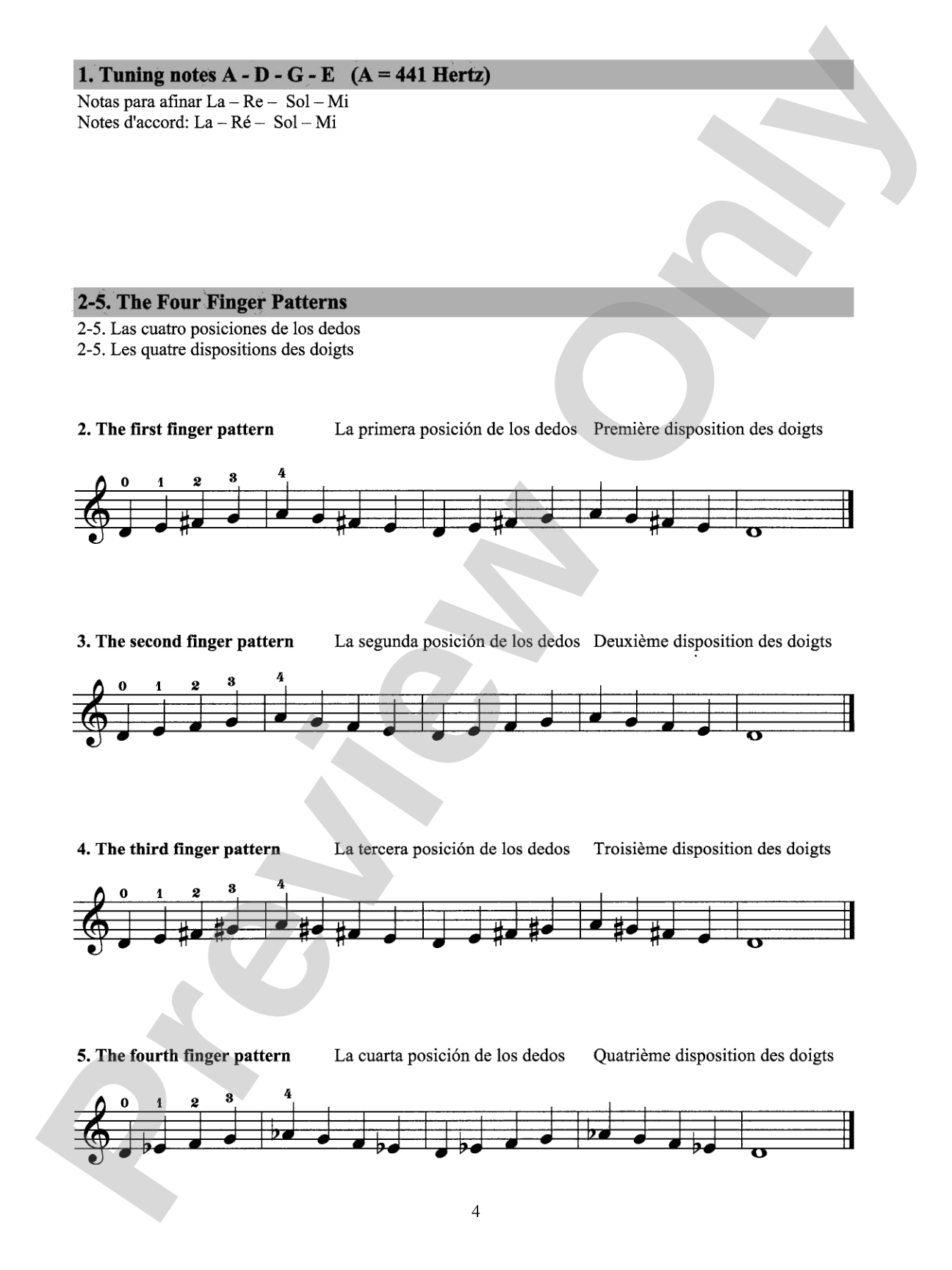
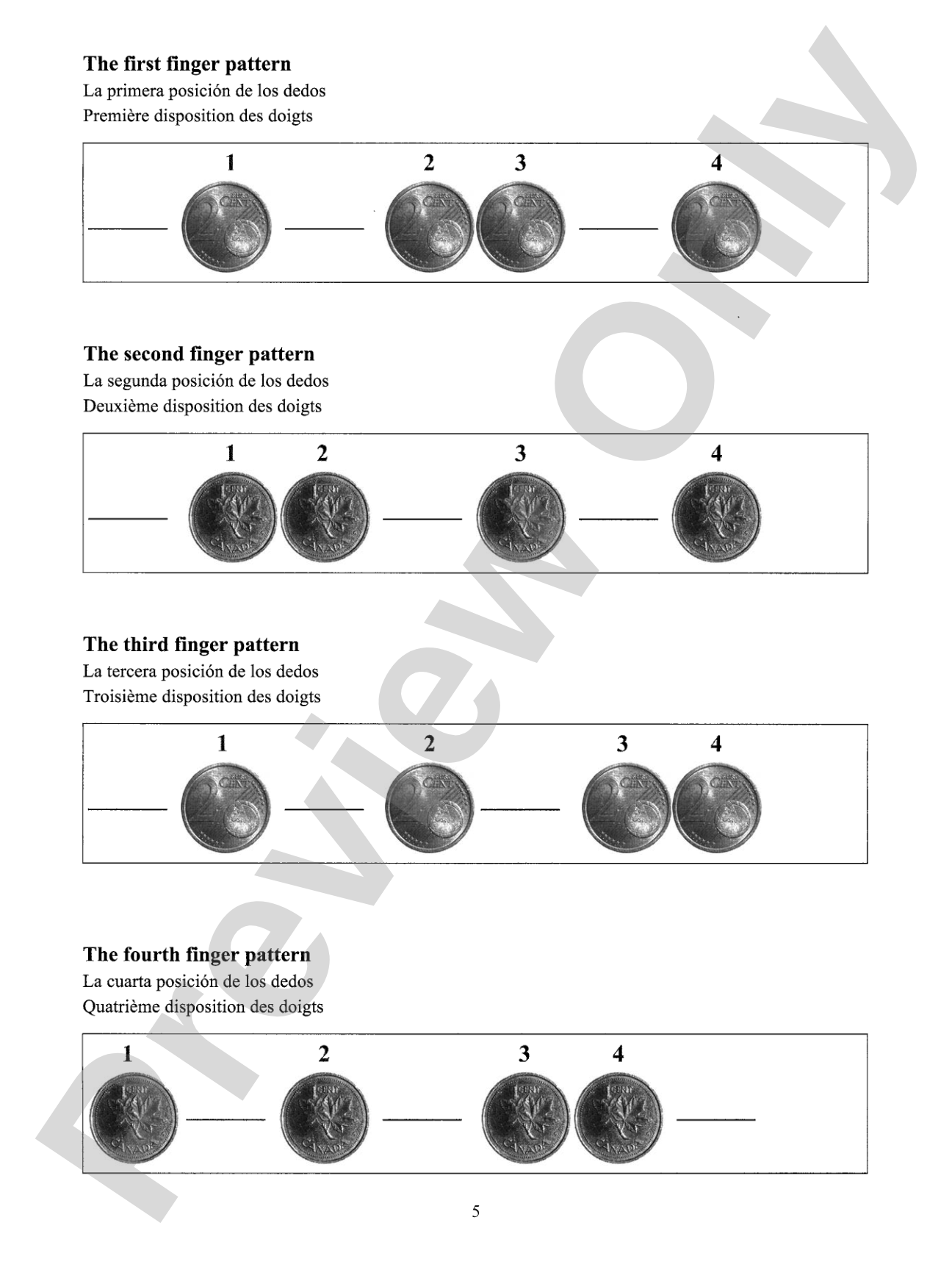
- Building foundational left hand position and intonation across first and second positions
- Bow control through basic strokes (down bow, up bow, détaché)
- Developing consistent vibrato readiness through listening and singing
- Reading simple quarter note, eighth note, and half note rhythms in treble clef
- Creating sustainable daily practice habits through structured, manageable exercises
- Listening and ensemble awareness when playing with piano accompaniment