
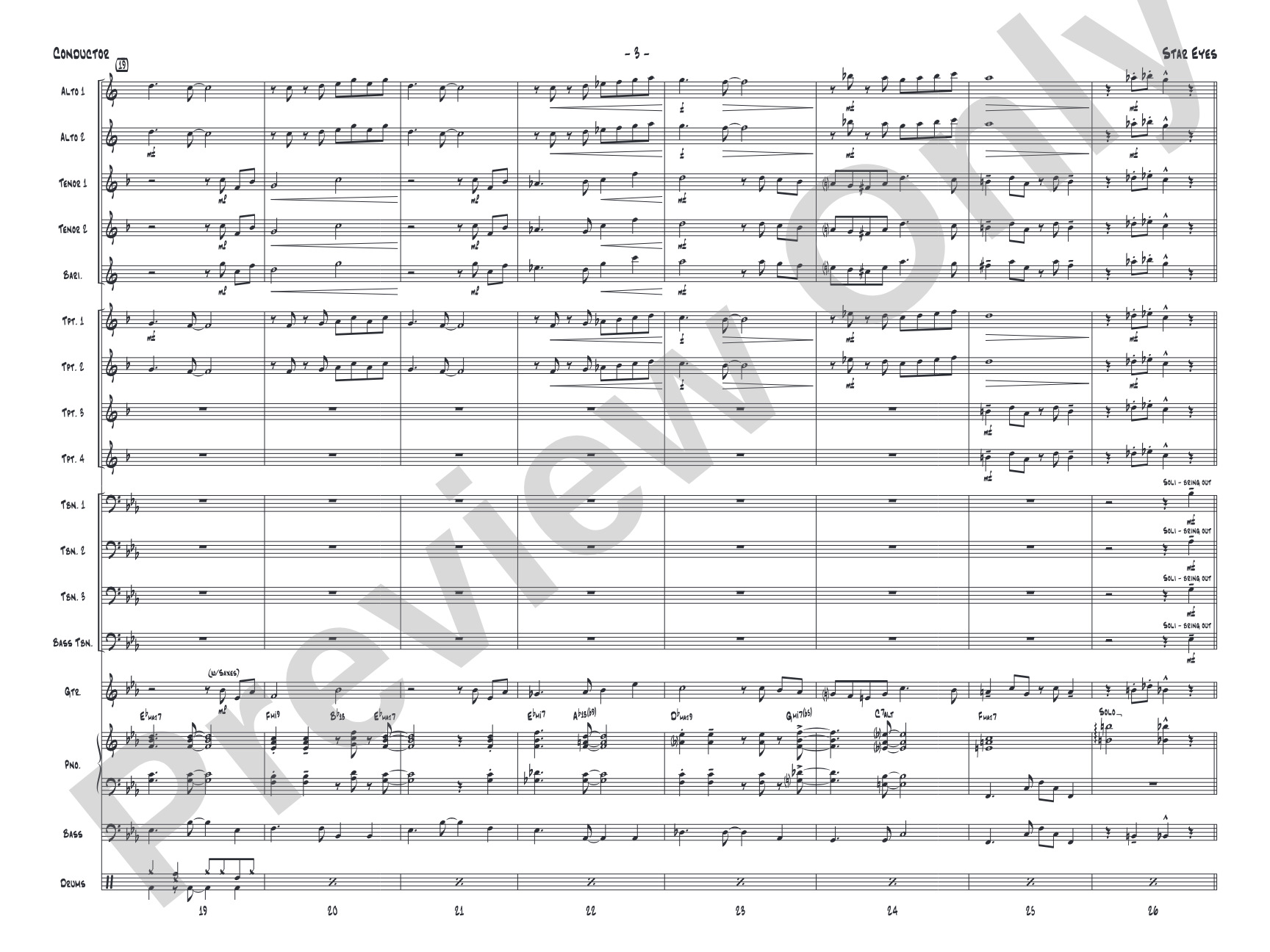
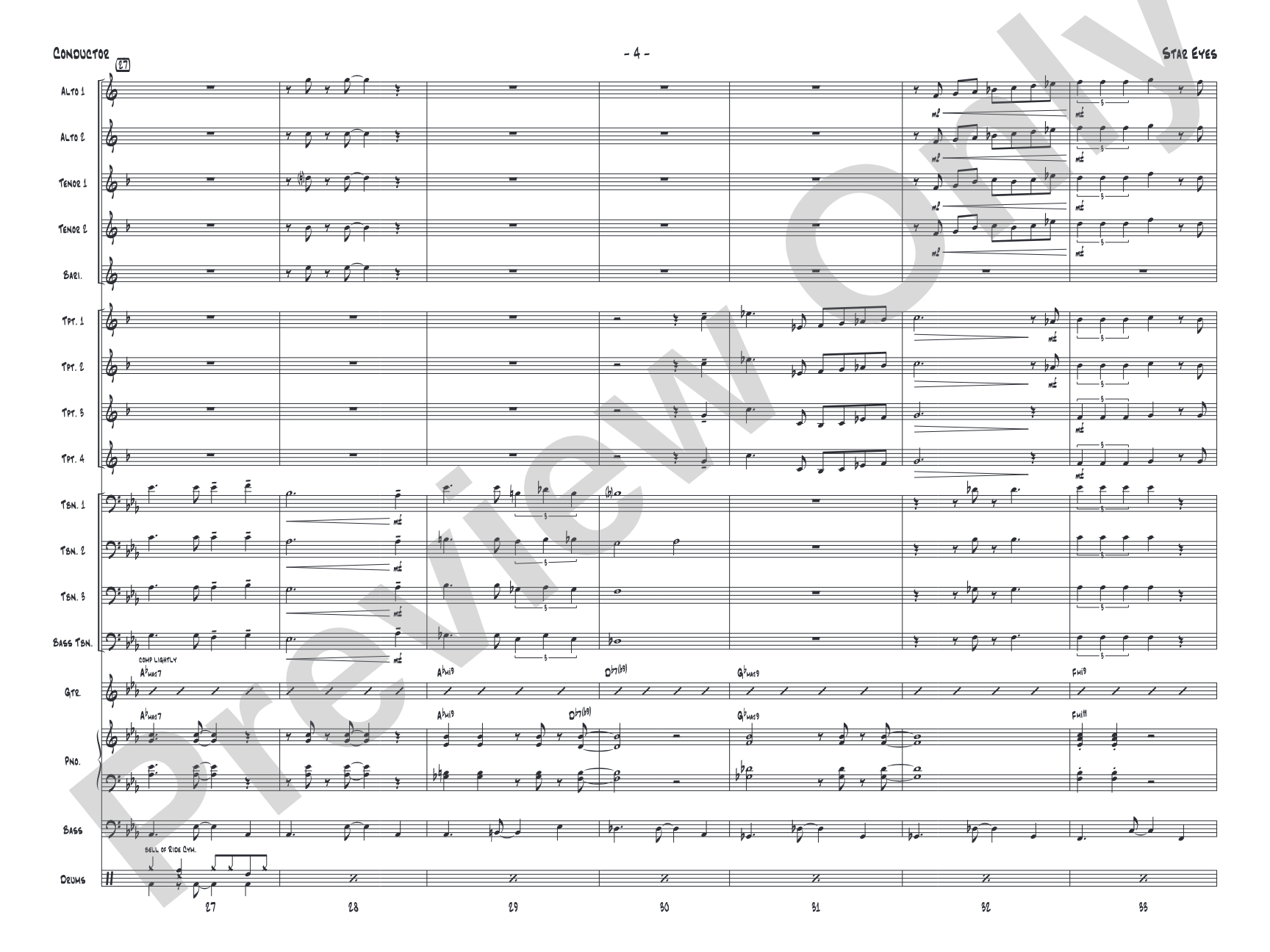
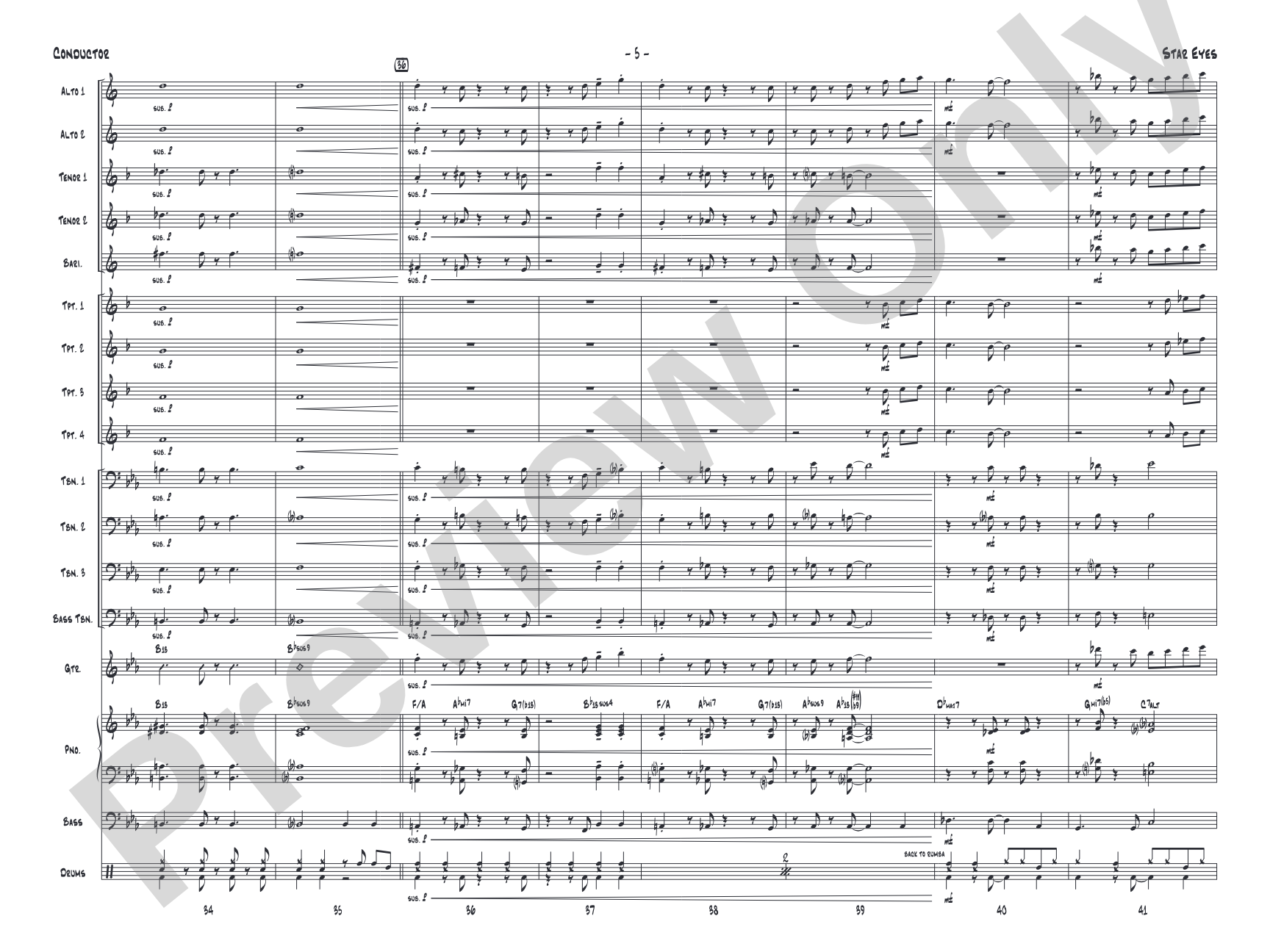
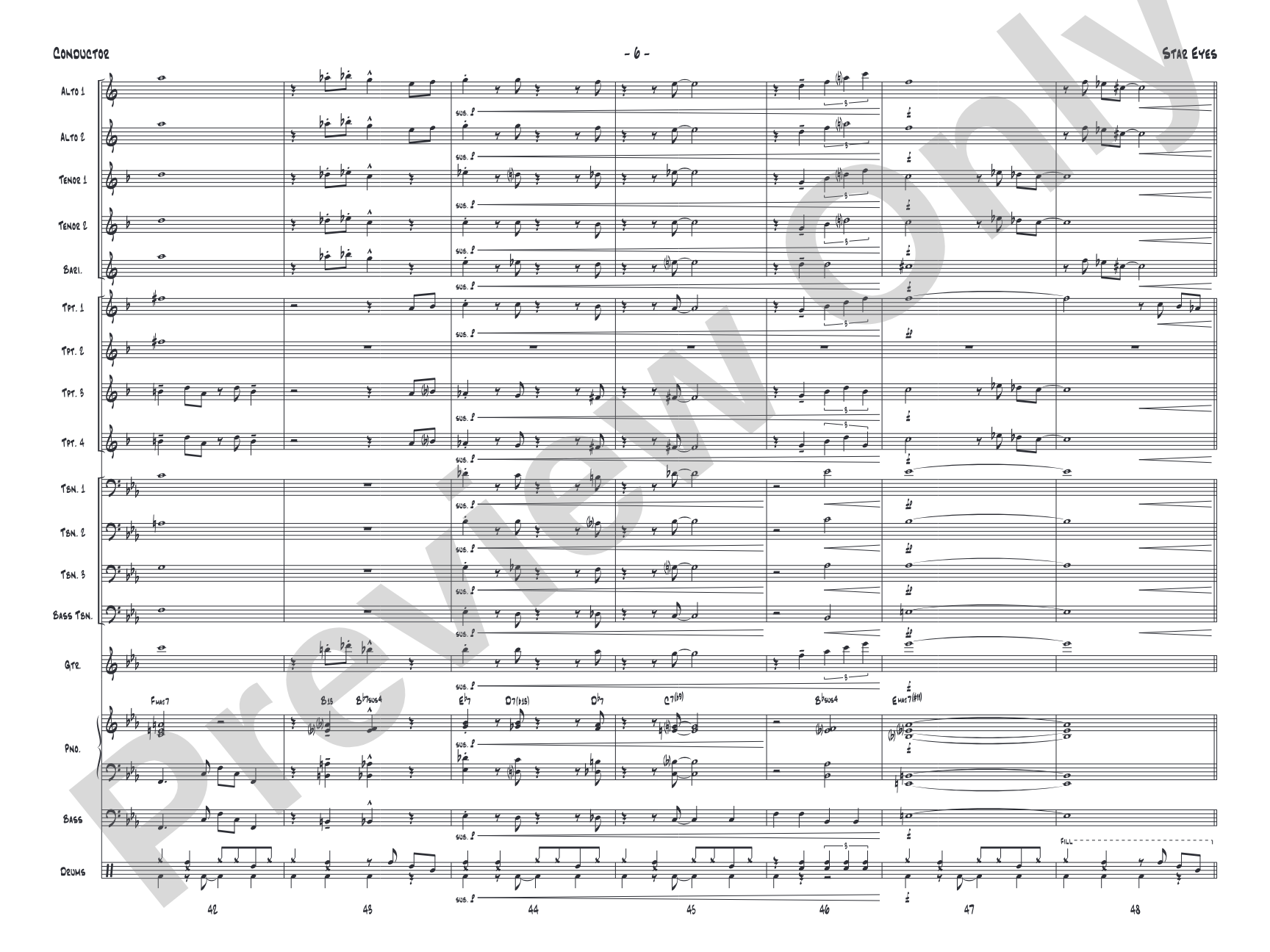
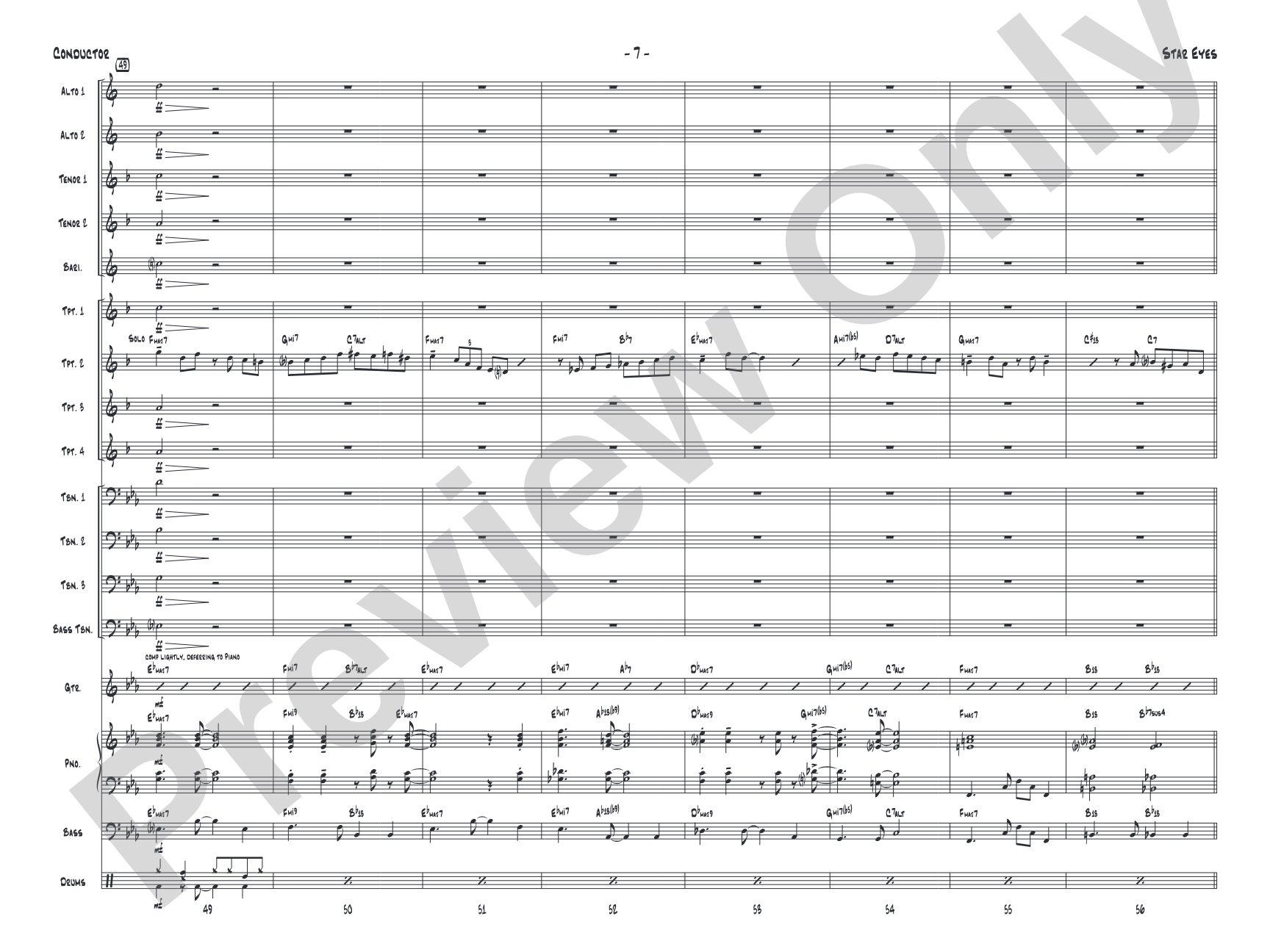
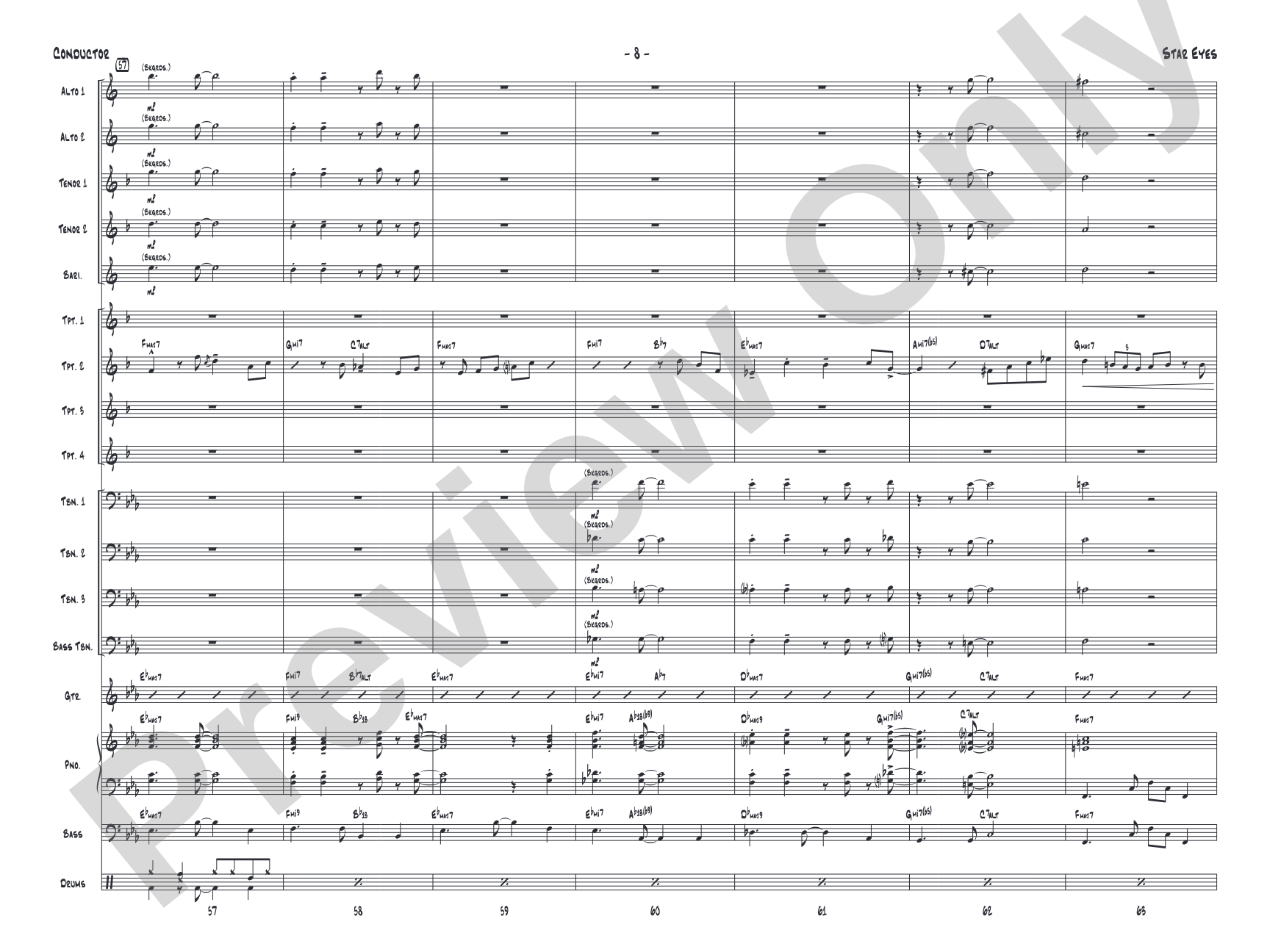
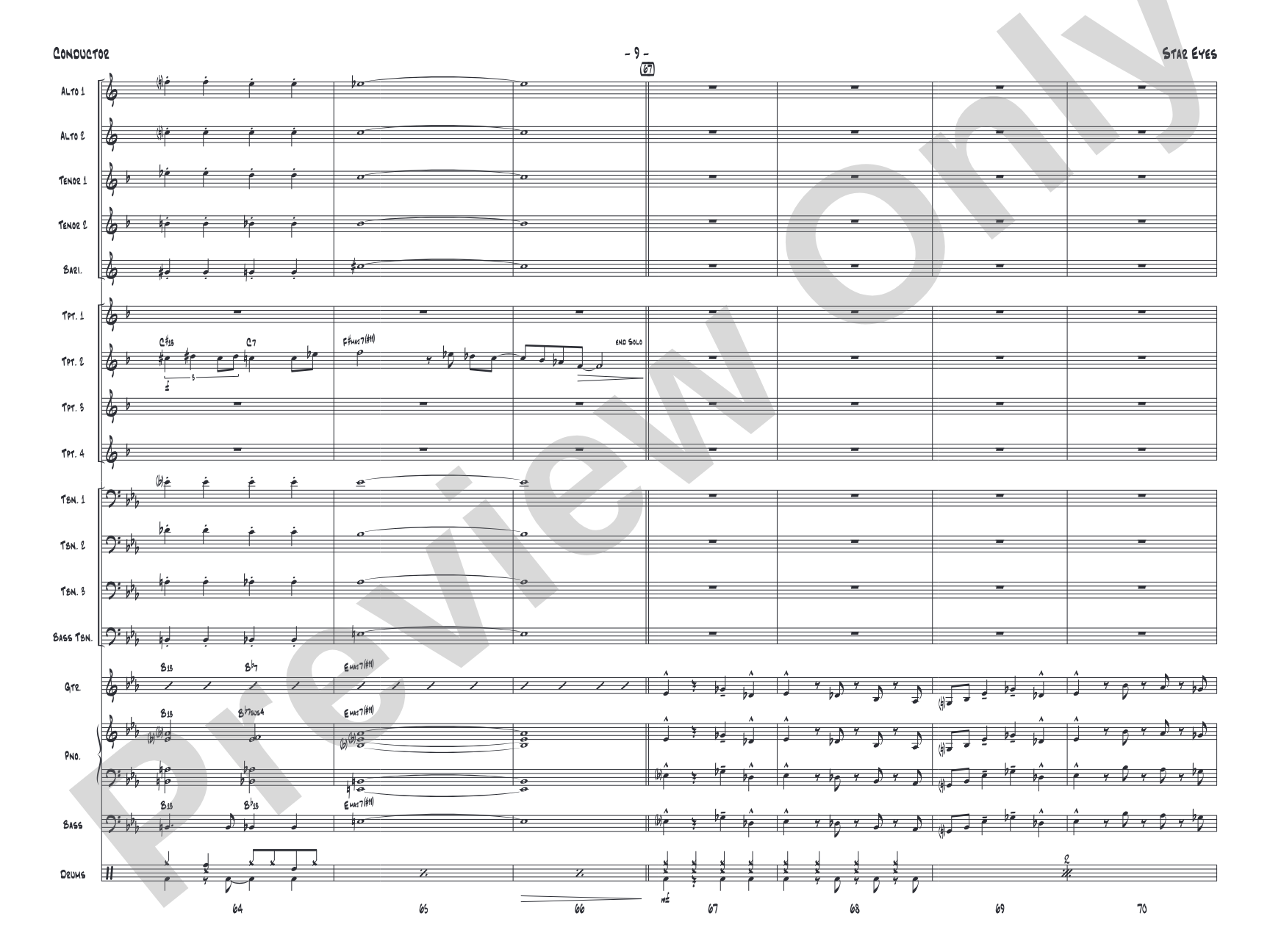
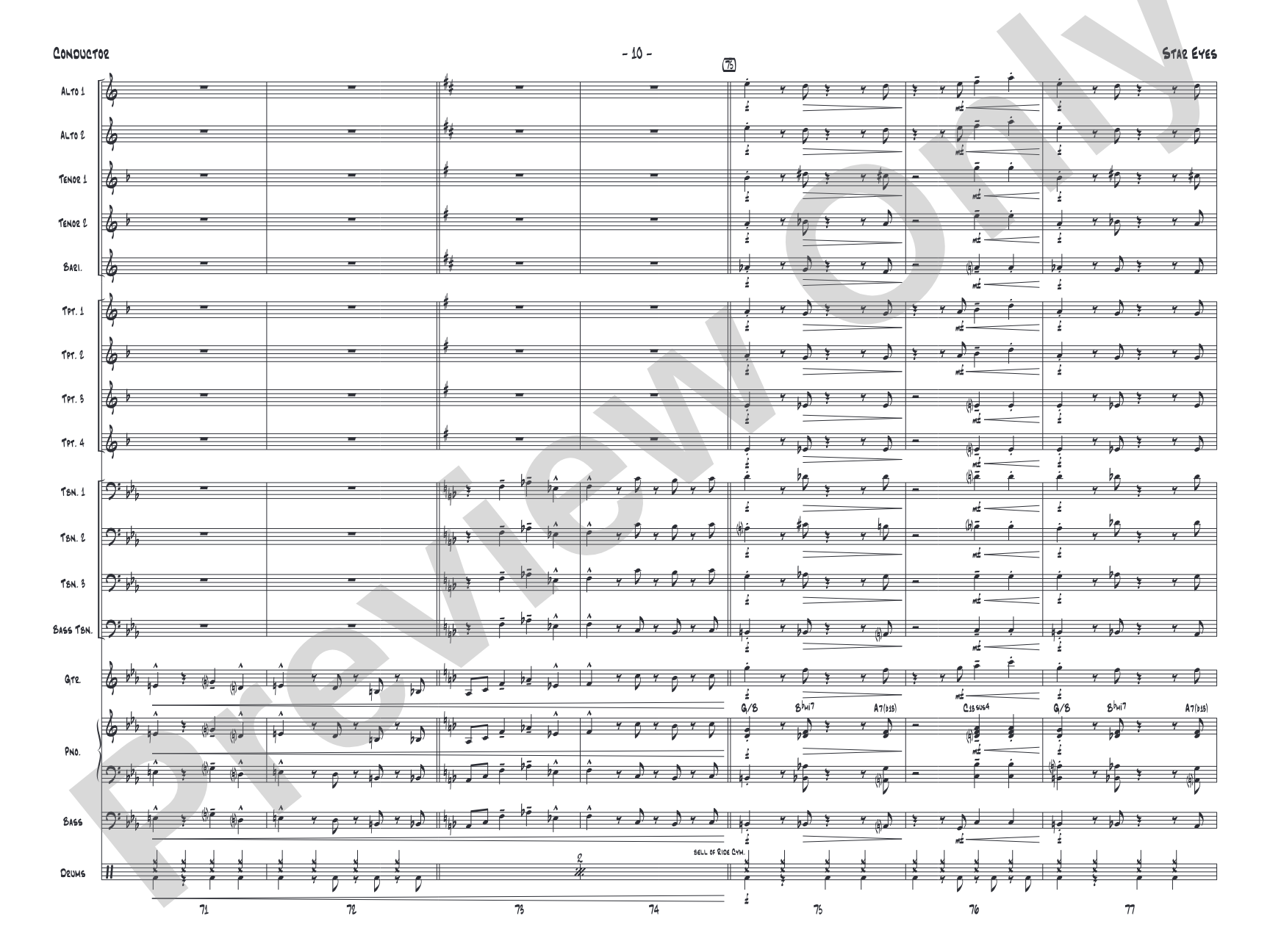
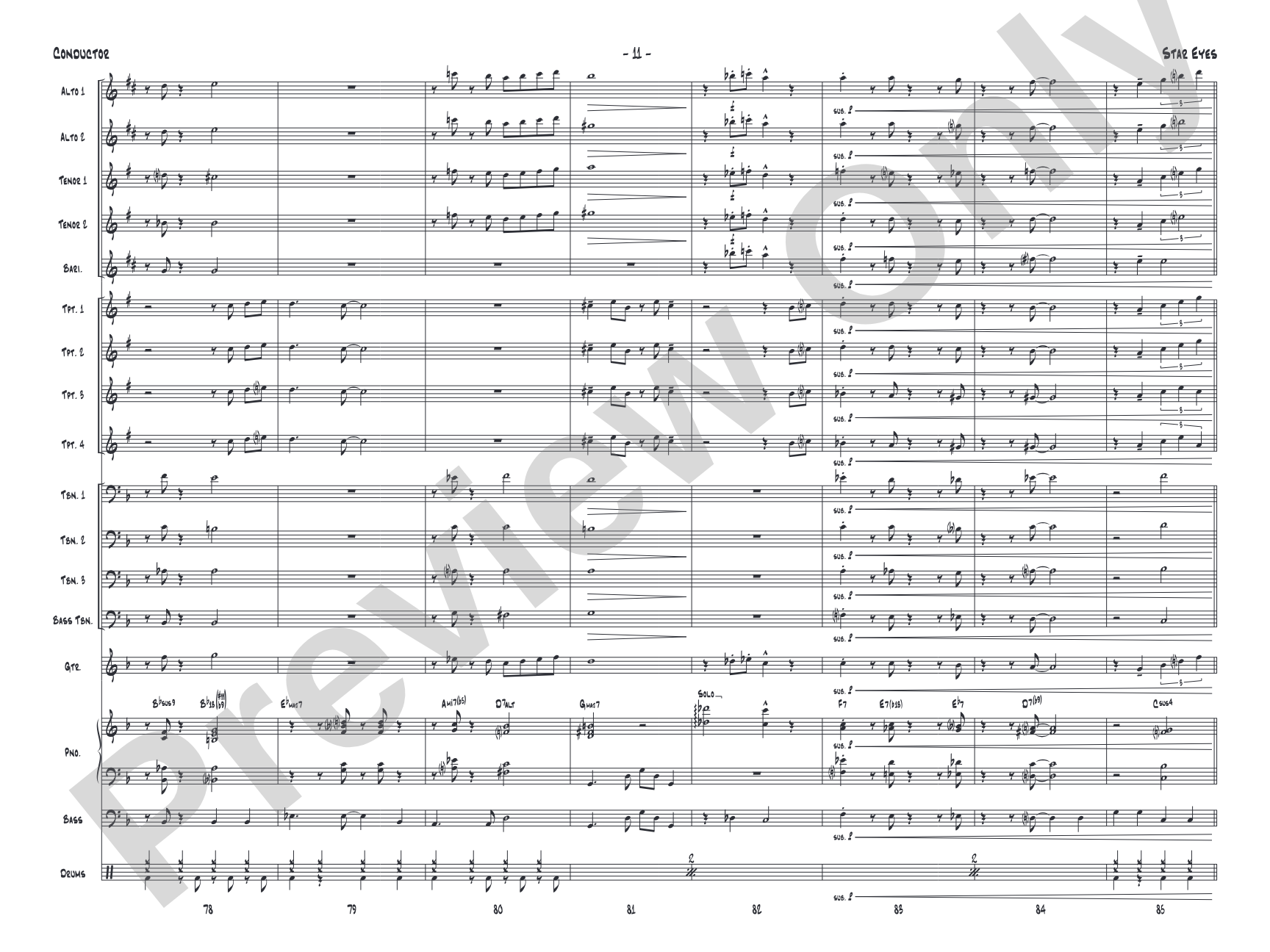
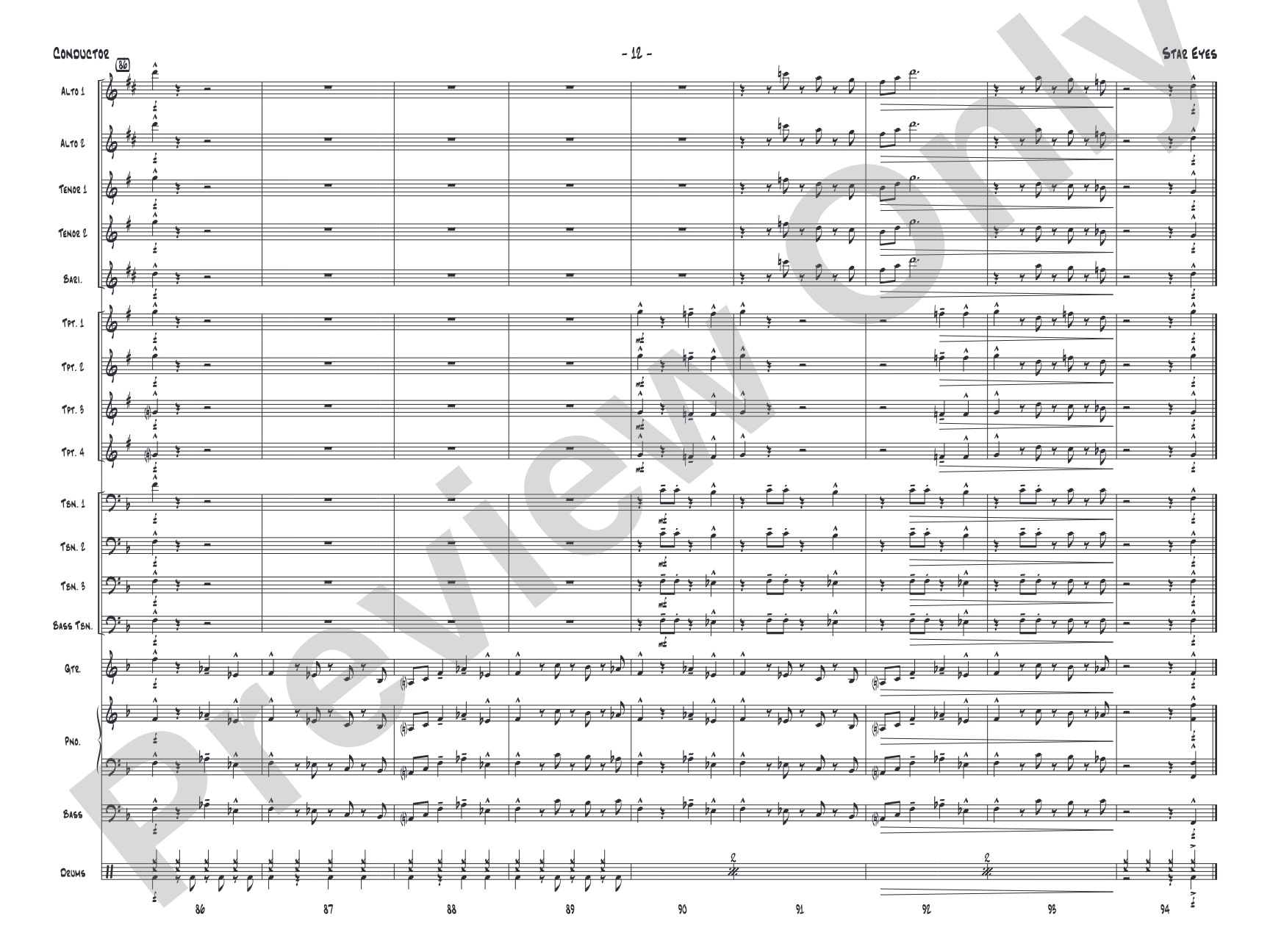


Star Eyes: Jazz Ensemble Conductor Score & Parts
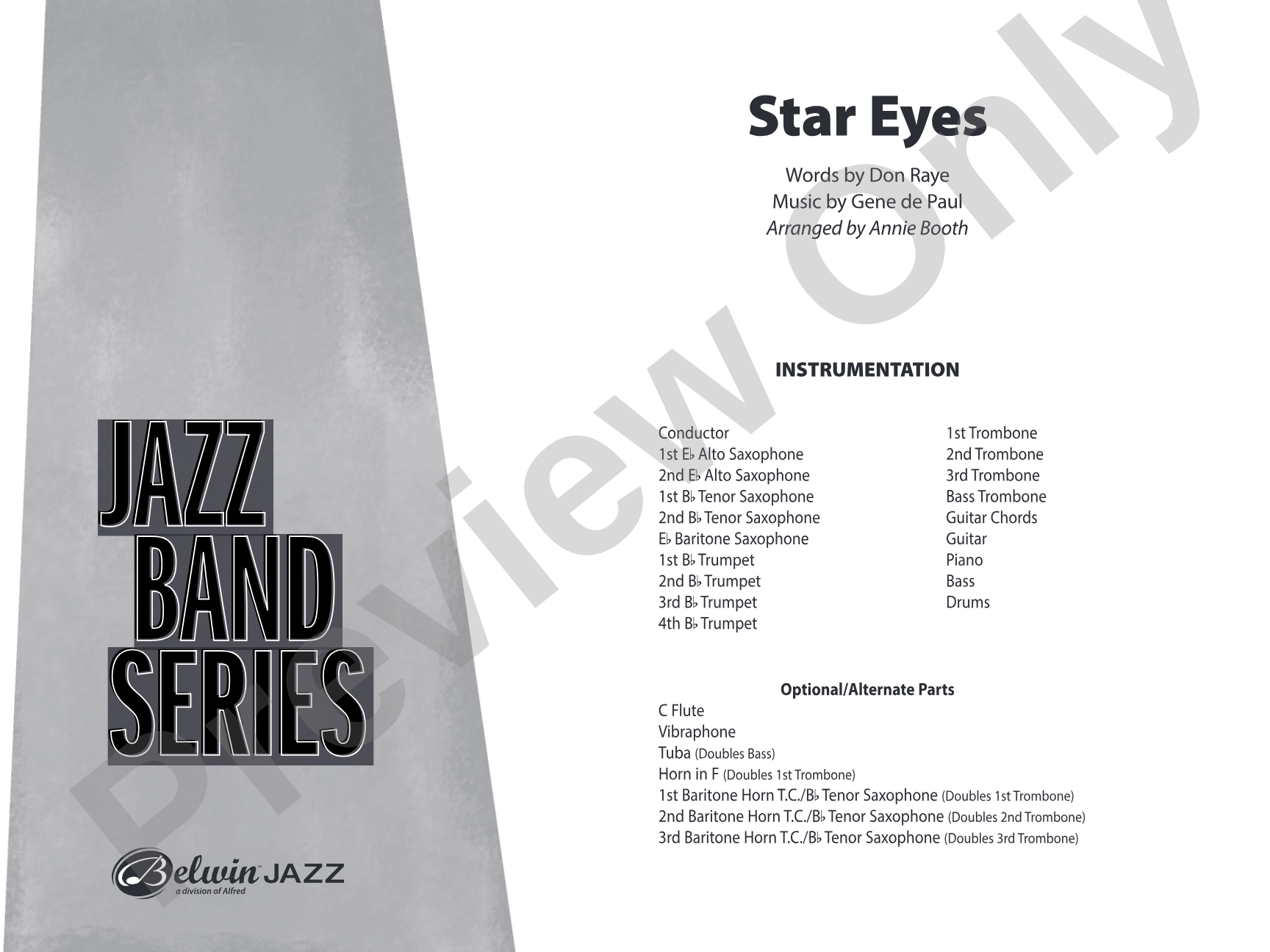
By Gene de Paul / Words by Don Raye / arr. Annie Booth
Grade: 3
Item: 00-PK-0009578
$55.00
One moment…
Description
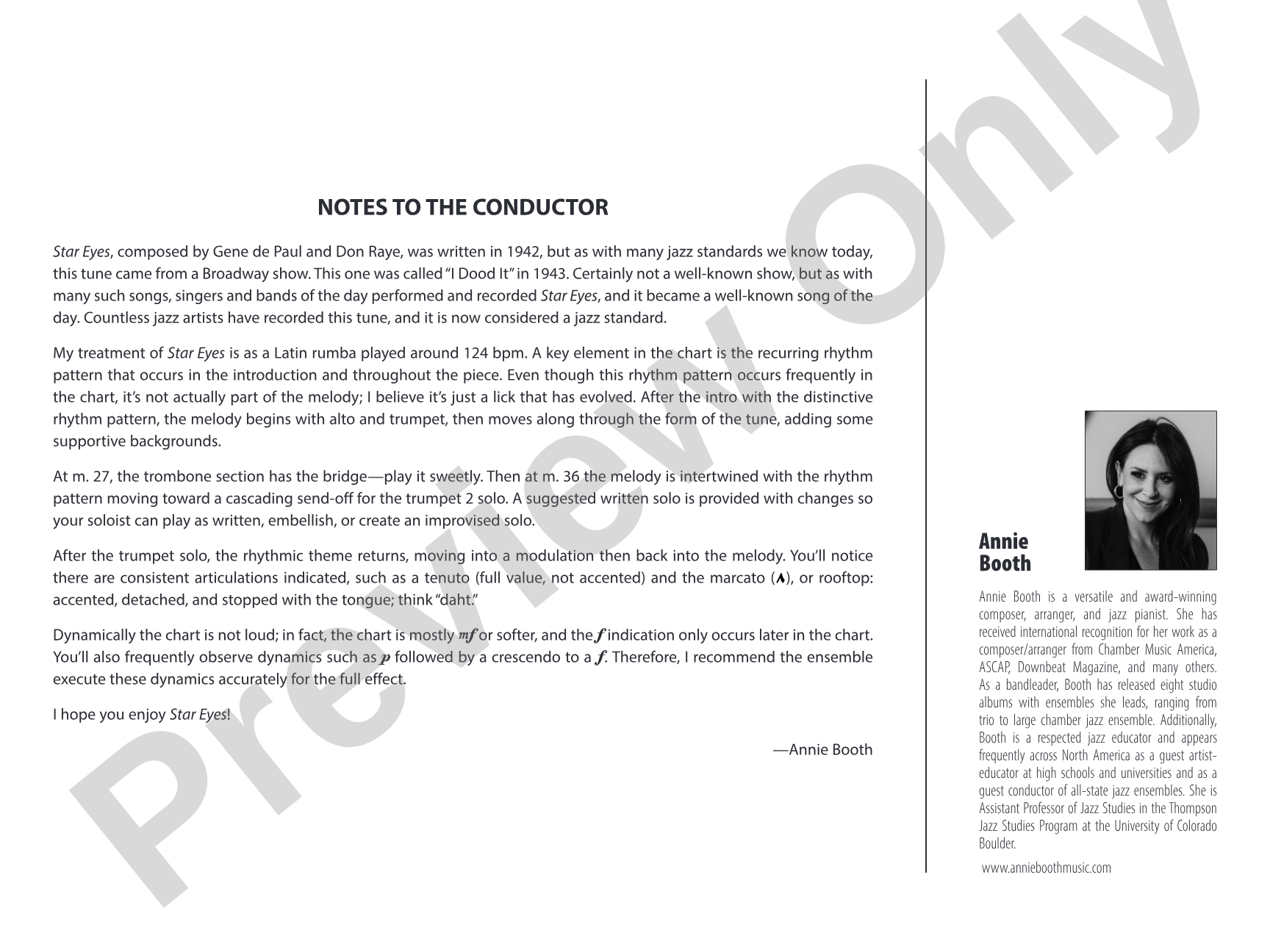
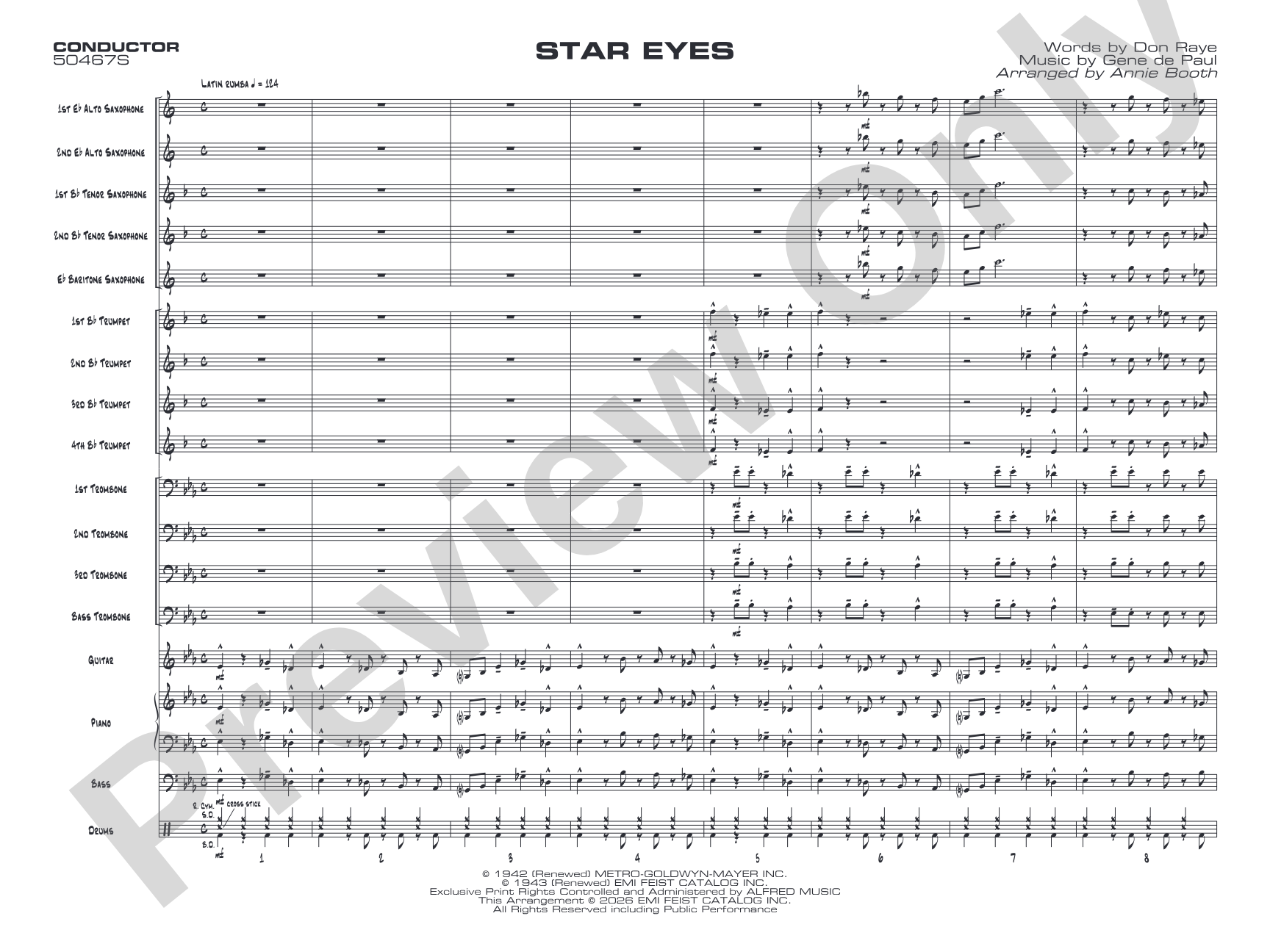
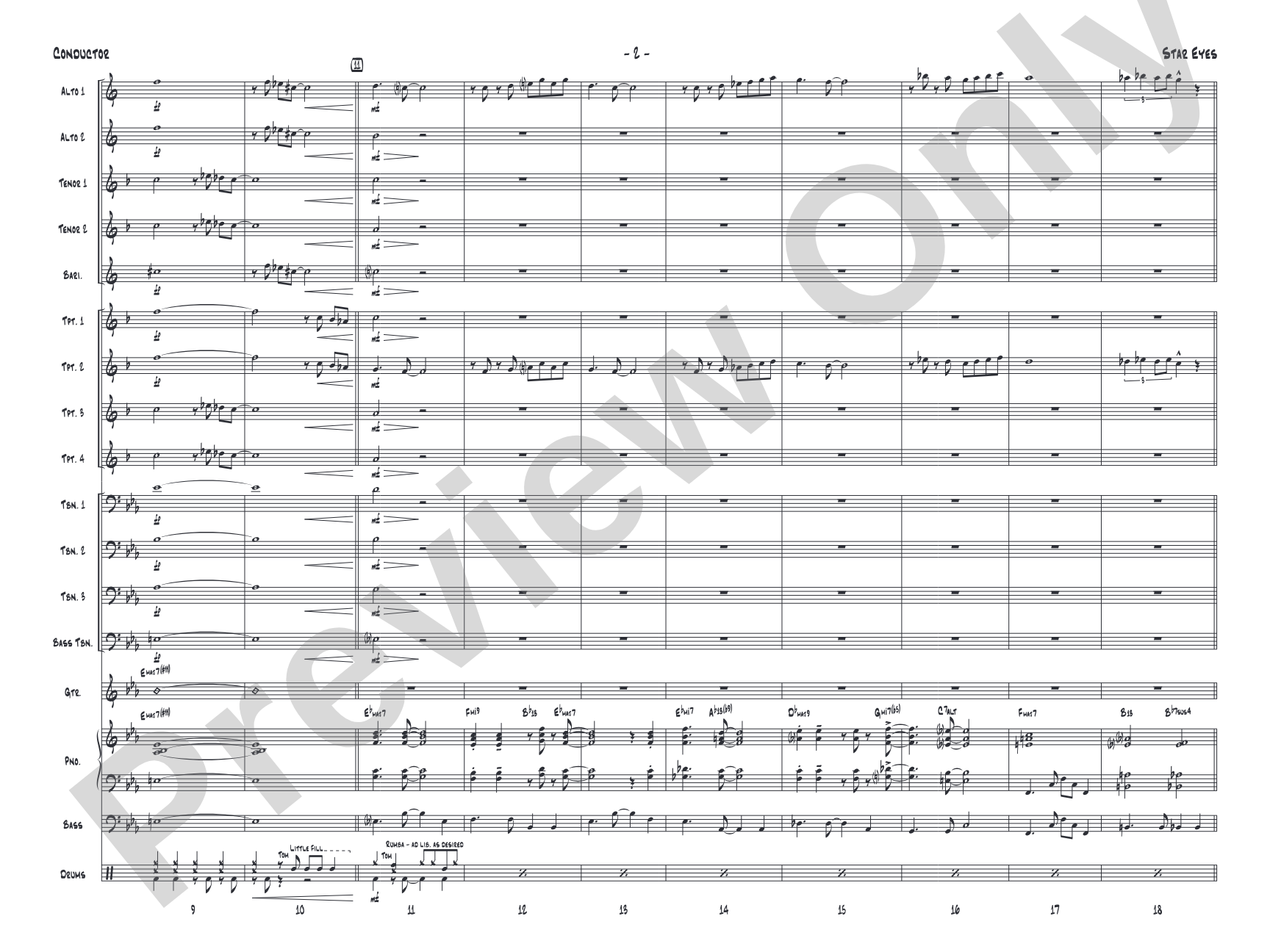
This jazz standard treated as a Latin rumba groove performed around 124 BPM. A well-crafted chart with a clever rhythmic treatment, a trumpet 2 solo and the lead trumpet range is to written G on top of the staff. Optional parts include flute and vibes. Superb.


Star Eyes: Jazz Ensemble Conductor Score & Parts isn't in MakeMusic Cloud just yet...but it could be. Let us know you'd like to see it, and you'll help shape what comes next. In the meantime, start a free trial and dive into thousands of interactive titles your students can play along with today.
Request This Title
Tell us you want it.
Start Your Free Trial
Explore everything that's ready to play right now.
Sample Audio
1
Audio File
--:--
0:00
0:00
Sample Video
Additional Details
Series:
Belwin Jazz Band Series
Publisher:
Alfred Music
SKU:
00-PK-0009578
More about this title
About the Composer: Gene de Paul
Gene de Paul (1919-1988) was a prolific composer and lyricist whose work spanned film, Broadway, and popular song. He wrote the scores for major Hollywood productions including Seven Brides for Seven Brothers and Athena, earning Academy Award nominations for his film work. "Star Eyes" stands among his most enduring compositions, recorded countless times across jazz, pop, and vocal traditions.
Why we love this
Annie Booth's arrangement transforms a classic standard into a contemporary Latin groove without losing the melodic elegance that made the tune famous. The rhythmic sophistication and optional instrumentation (flute and vibes) give you flexibility to match your ensemble's instrumentation while maintaining cohesion, and the trumpet ranges are thoughtfully voiced to keep parts accessible at Grade 3.
What to expect
Sophisticated and warm. The rumba groove creates forward momentum while the melody floats above with classic jazz elegance. There's a sense of seasoned professionalism here; even though the arrangement sits at Grade 3, it never sounds simplistic or thin.
Who it's for
Jazz ensemble directors working at the Grade 3 level who want to introduce Latin feels and standard repertoire in a single, well-constructed chart. This works equally well for high school jazz bands seeking accessible material and middle school programs ready to move beyond swing into genre variety.
How to get the most out of it
- Lock in the Latin rumba pulse at 124 BPM during sectional rehearsals; have the rhythm section establish the groove together before adding horns.
- Balance the trumpet 2 solo so it sits clearly above the ensemble without overwhelming the Latin feel; this soloist should anchor the swing against the rumba backdrop.
- If including the optional flute and vibes parts, rehearse them separately with the rhythm section first to confirm they're doubling the intended lines cleanly.
- Pay attention to the lead trumpet's written G on top of the staff; confirm all first trumpet players can execute that range consistently before performance.
How to use it
Place this on a jazz concert that pairs it with other standards or contemporary jazz charts to show your ensemble's range across styles. It also serves as an excellent fall or winter concert opener, as the upbeat Latin energy engages the audience immediately and the moderate difficulty allows rehearsal focus on musicality rather than note-learning.
Skills your students will build
- Reading and executing Latin rumba rhythms in a jazz context
- Balancing melody and rhythm section in ensemble texture
- Comping and trading in a non-swing feel
- Managing lead trumpet range above the staff
- Listening skills for optional instrumentation blend