
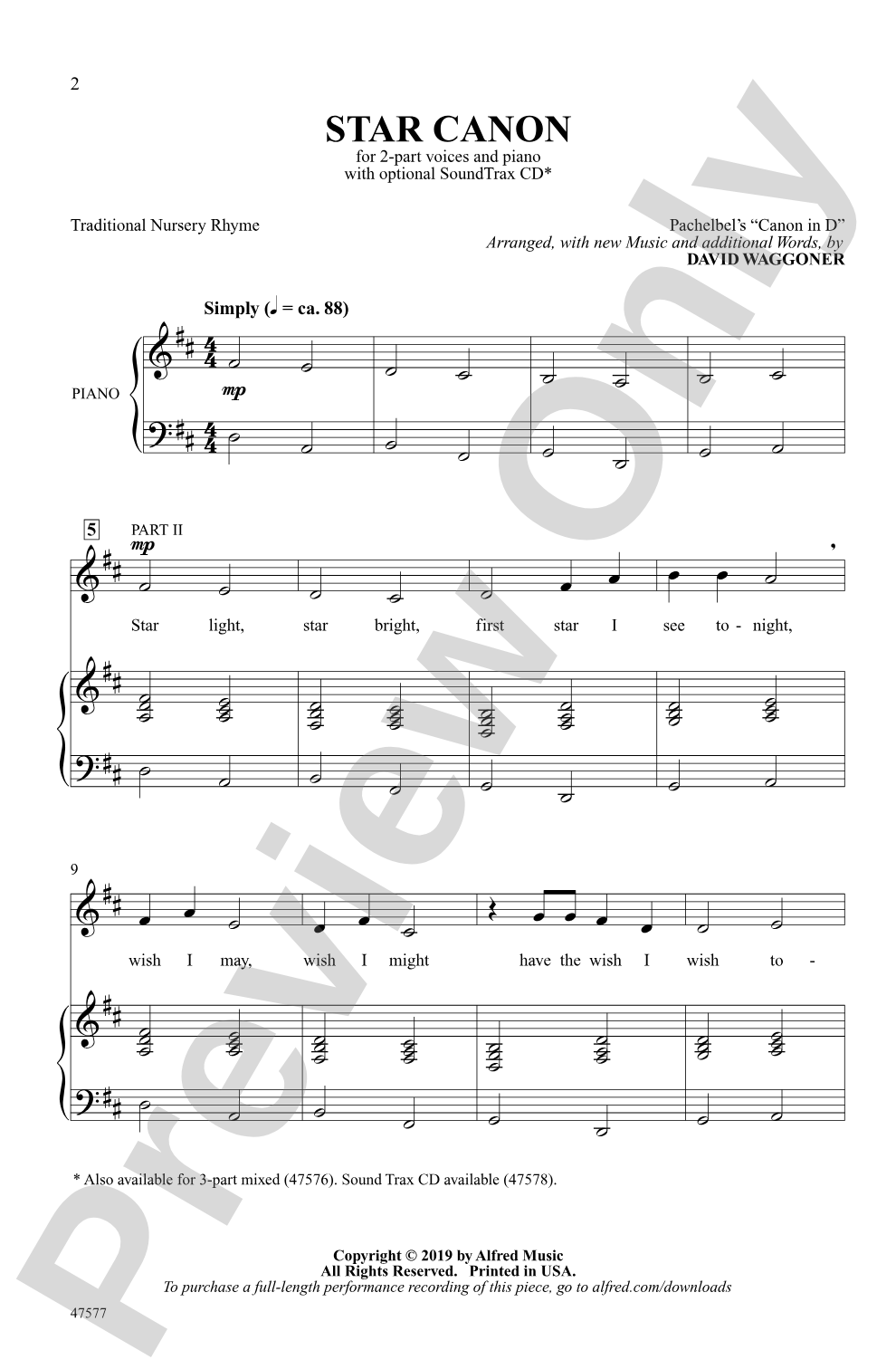

Star Canon: 2-Part Choral Octavo
Pachelbel's "Canon in D"
Words from a Traditional Nursery Rhyme / arr., with new music and additional words, by David Waggoner
Item: 00-PO-0006032
$2.05
Minimum order quantity: 20 copies
Pickup currently not available
Description
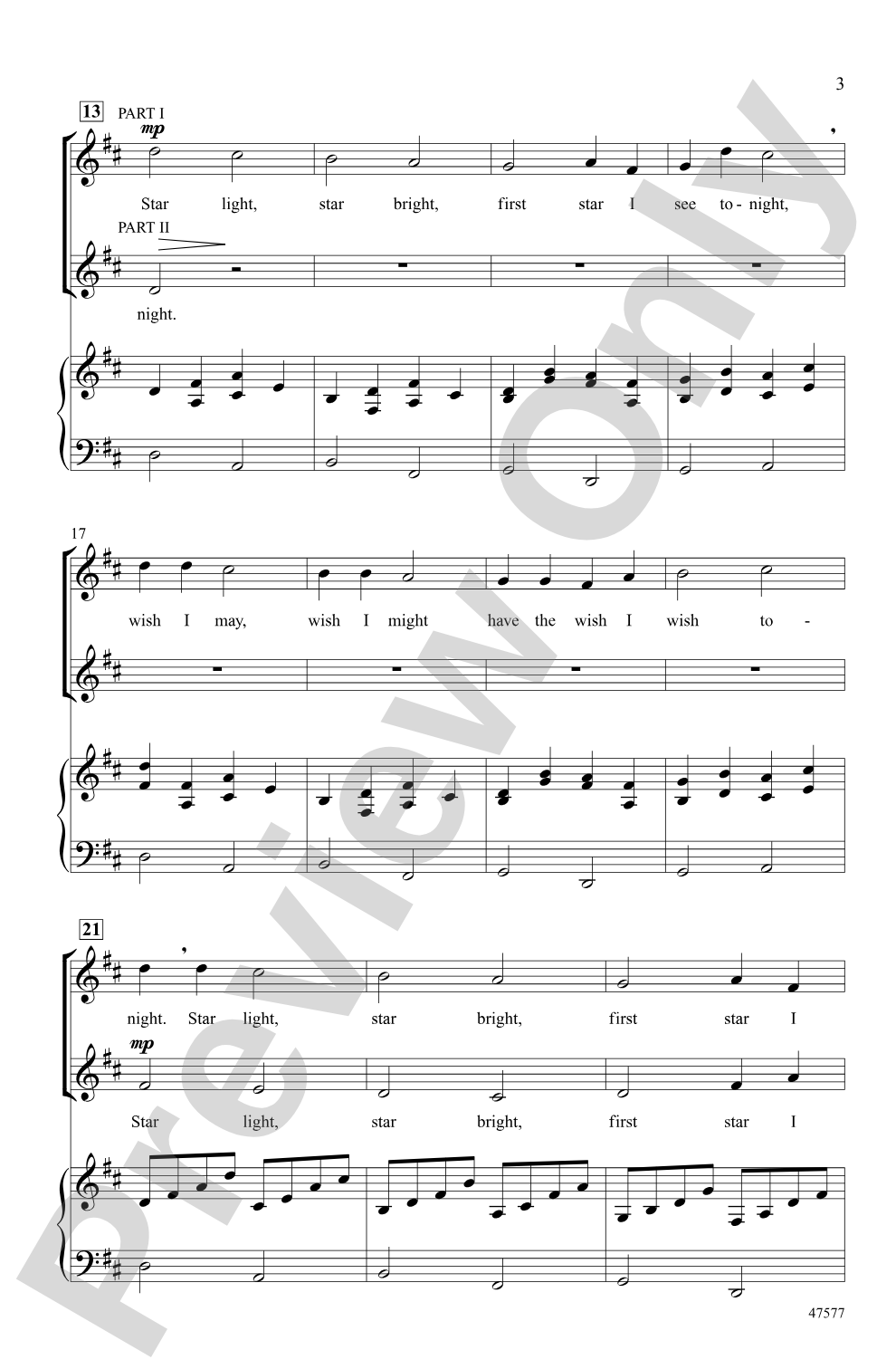
A simple yet elegant adaptation of Pachelbel's "Canon in D," this arrangement introduces a new melody that beautifully complements the beloved original. Incorporates twinkling text from the nursery rhyme "Star light, star bright" as well as some new words about making wishes. A delicate balance of unison- and partner-singing makes this an ideal selection for younger groups.


Star Canon: 2-Part Choral Octavo isn't in MakeMusic Cloud just yet...but it could be. Let us know you'd like to see it, and you'll help shape what comes next. In the meantime, start a free trial and dive into thousands of interactive titles your students can play along with today.
Request This Title
Tell us you want it.
Start Your Free Trial
Explore everything that's ready to play right now.
Sample Audio
1
Audio File
--:--
0:00
0:00
Sample Video
Additional Details
Series:
Alfred Choral Designs
Publisher:
Alfred Music
Page Count:
8
SKU:
00-PO-0006032
More about this title
About the Arranger: David Waggoner

David Waggoner holds degrees from the University of Michigan School of Music and a master's degree in music from Eastern Michigan University. His work spans choirs, handbells, and instrumental ensembles, reflecting a deep commitment to accessible music education across multiple genres and skill levels.
Waggoner serves as Director of Music at the First United Methodist Church in Wyandotte, MI, while teaching elementary music in Woodhaven, MI. He brings classroom experience directly into his compositional and arranging work, understanding the needs of young singers and the teachers who guide them.
Why we love this
Waggoner has done something genuinely difficult here: he's taken one of the most recognizable melodies in Western music and made it feel fresh without overwhelming young singers. The weaving of "Star Light, Star Bright" text into a two-part texture keeps both parts engaged and singable, avoiding the trap of making one line subordinate. Most arrangements at this level either oversimplify or overcompose; this one knows exactly when to step back.
What to expect
There's an unhurried elegance here that mirrors a quiet moment before sleep, which makes sense given the nursery rhyme foundation. The two-part weaving creates a sense of gentle conversation rather than conflict, with moments of unison that feel earned rather than lazy. The whole piece breathes.
Who it's for
Elementary and middle school choirs benefit most from this octavo, particularly groups with singers in grades 2-5 or mixed-age ensembles where some singers are still developing independent part-singing skills. It works equally well for church choir programs serving younger children and for general music classes exploring partner songs and arrangements of familiar melodies.
How to get the most out of it
- Balance the parts by having singers listen for the interplay between the two melodic lines rather than treating one as accompaniment. Young singers often lock into unison unconsciously, so deliberate ear training on the independence of each part pays off quickly.
- Use the recorded accompaniment to anchor the harmonic progression, especially if your singers are unfamiliar with the Pachelbel progression. Let them hear how their parts fit into the larger harmonic picture.
- Keep the tempo steady and unhurried. The beauty of this piece lives in clarity and space; rushing obscures the elegant simplicity Waggoner has built in.
- Emphasize the text painting in the wishes section. Young singers respond to the narrative arc from the familiar nursery rhyme into original poetry, so highlight how the music supports the emotional shift.
How to use it
This arrangement shines in spring or end-of-year concerts where you're showcasing growth in part-singing without asking for technical difficulty. It also works beautifully in services of worship or school holiday programs where you need something that feels sophisticated but remains accessible to an audience of mixed musical experience. Consider pairing it with a unison folk song from earlier in the year to demonstrate progress.
Skills your students will build
- independent part-singing in two voices
- listening to a partner part while singing a separate melody
- recognition of familiar harmonic progressions
- breath support for longer phrases without melodic anchor
- text expression and storytelling within a musical setting