
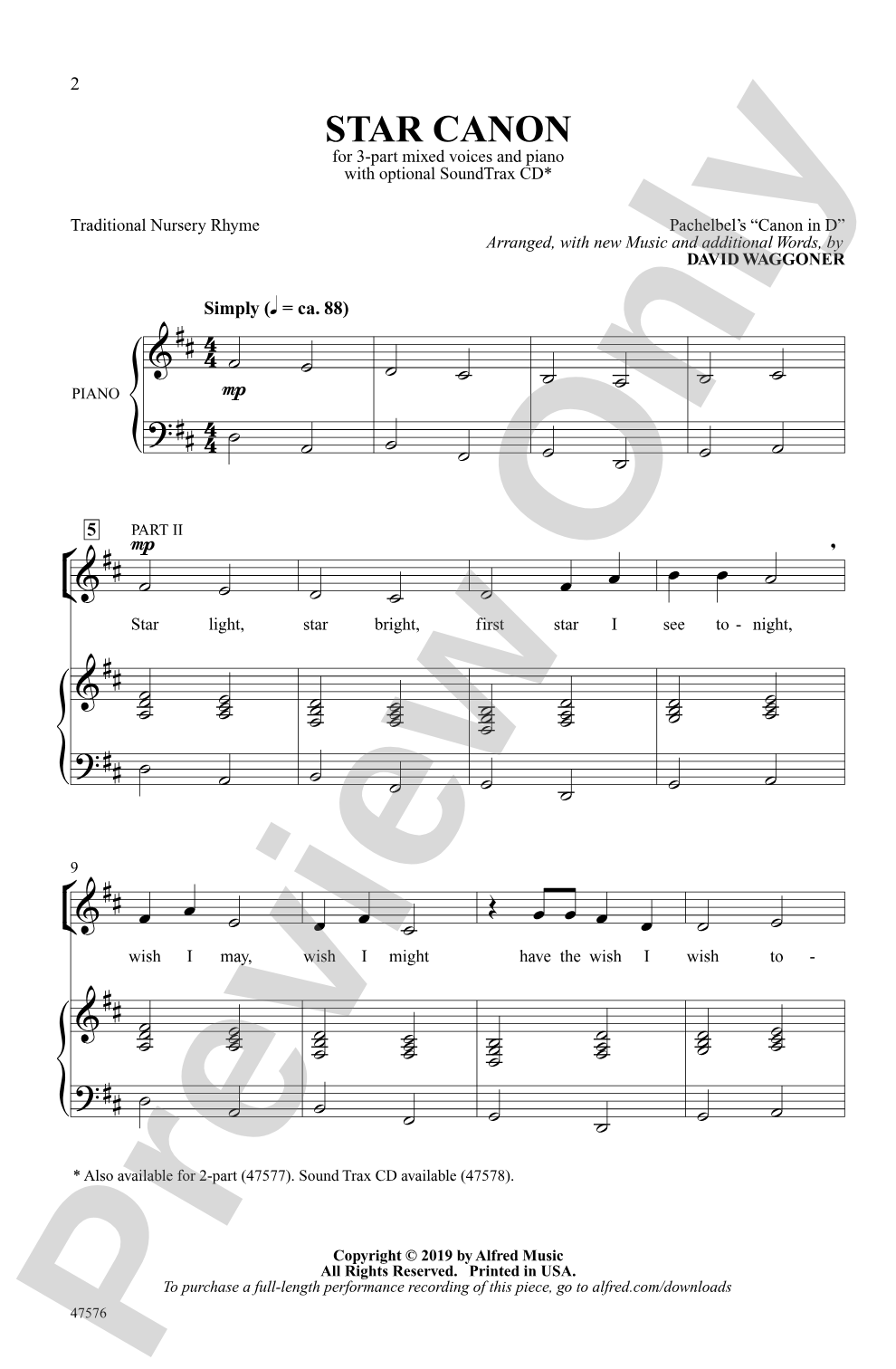

Star Canon: 3-Part Choral Octavo
Pachelbel's "Canon in D"
Words from a Traditional Nursery Rhyme / arr., with new music and additional words, by David Waggoner
Item: 00-PO-0006030
$2.05
Minimum order quantity: 20 copies
Pickup currently not available
Description
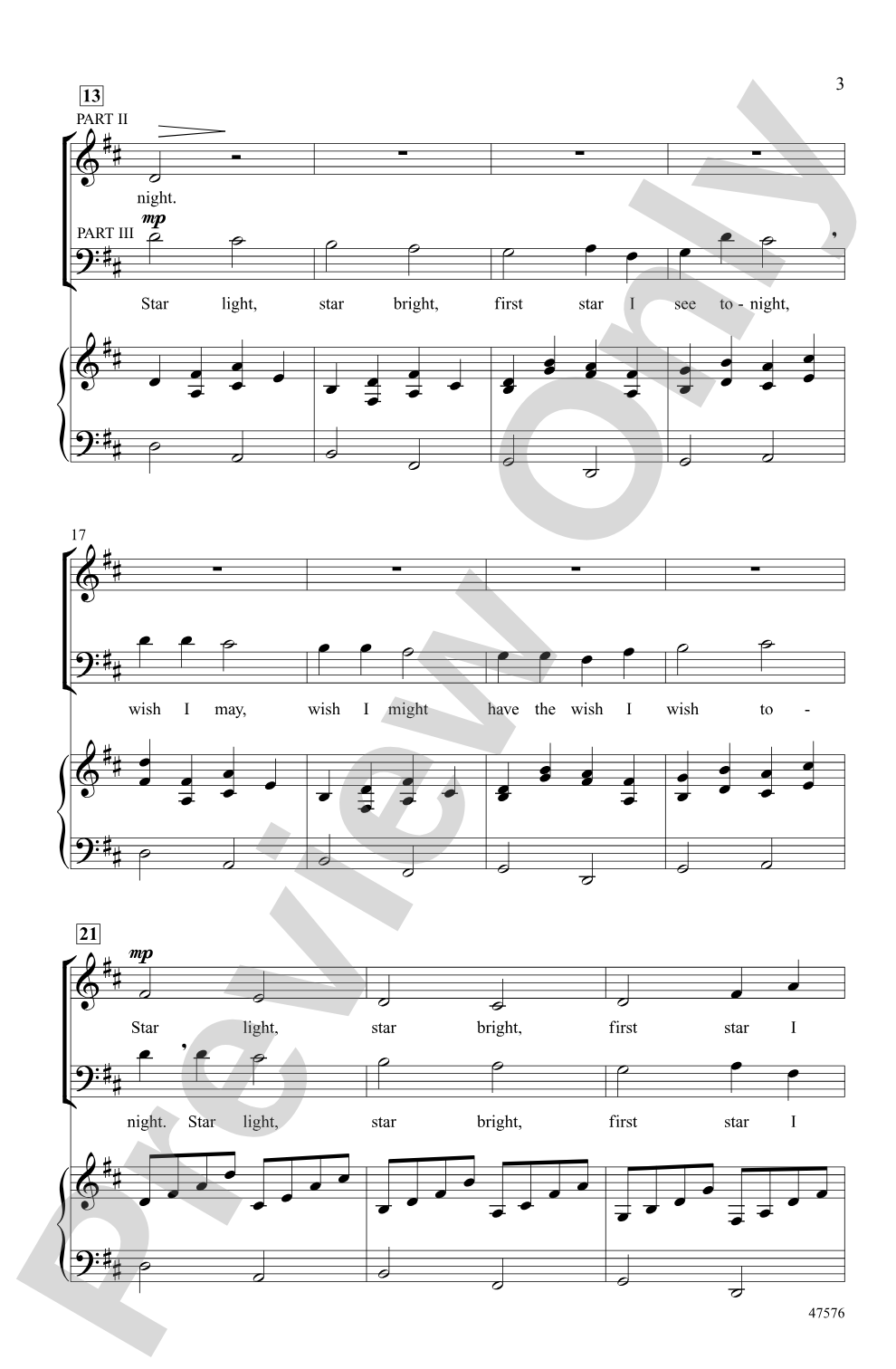
A simple yet elegant adaptation of Pachelbel's "Canon in D," this arrangement introduces a new melody that beautifully complements the beloved original. Incorporates twinkling text from the nursery rhyme "Star light, star bright" as well as some new words about making wishes. A delicate balance of unison- and partner-singing makes this an ideal selection for younger groups.


Star Canon: 3-Part Choral Octavo isn't in MakeMusic Cloud just yet...but it could be. Let us know you'd like to see it, and you'll help shape what comes next. In the meantime, start a free trial and dive into thousands of interactive titles your students can play along with today.
Request This Title
Tell us you want it.
Start Your Free Trial
Explore everything that's ready to play right now.
Sample Audio
1
Audio File
--:--
0:00
0:00
Sample Video
Additional Details
Series:
Alfred Choral Designs
Publisher:
Alfred Music
Page Count:
8
SKU:
00-PO-0006030
More about this title
About the Arranger: David Waggoner

David Waggoner brings practical classroom experience to his arranging work, having spent years teaching elementary music in Michigan. He holds degrees from the University of Michigan School of Music and Eastern Michigan University, grounding his compositions in solid musical training.
Beyond the classroom, Waggoner serves as Director of Music at First United Methodist Church in Wyandotte, Michigan, where he continues to compose for choirs, handbells, and other ensembles. His work reflects both his commitment to music education and his deep involvement in church music.
Why we love this
Waggoner respects the integrity of Pachelbel's harmonic foundation while making room for something new—a fresh melody and text that younger singers can own. The clever interweaving of "Star Light, Star Bright" with original verses about wishes gives elementary choirs a piece that feels sophisticated without overwhelming them, and the partner-singing structure means every voice stays engaged.
What to expect
There's a timeless quality here—the familiar progression of Canon in D carries weight and tradition, while the addition of nursery rhyme text and melody brings lightness and wonder. The piece shimmers with possibility, as if the old and new are making wishes together.
Who it's for
This arrangement is built for younger choirs (grades 3-6 typically thrive with this material) who are ready to tackle something with real harmonic sophistication but need anchoring in melody and text they recognize. Directors of mixed-age choirs will find it accessible enough for newer singers while musically substantive enough to hold the attention of more experienced ones.
How to get the most out of it
- Bring out the original Pachelbel melody when it appears in any voice part; let younger singers hear how the new melody sits alongside it, creating a dialogue rather than a blend.
- Use the recorded accompaniment to lock in the harmonic progression; it's easy for young singers to drift when the bass line carries such unfamiliar weight.
- Shape the unison sections with gentle dynamic contour so they don't feel like breaks in the texture; treat them as moments of unity that frame the partner-singing passages.
- Work the text separately from the notes, especially the transition between "Star Light, Star Bright" and the wish-making verses, so singers understand the emotional arc.
How to use it
This works beautifully as a seasonal closer (especially around winter concerts) or as a standalone concert opener that sets a magical tone. It can also function as a teaching tool in a concert program, showing younger students how arrangers build on classical music while making it their own.
Skills your students will build
- Part independence in a 3-part texture with unison and partner-singing sections
- Recognition of a Baroque harmonic progression and how melody can be layered over it
- Text underlay accuracy across multiple voice parts
- Sustaining focus through a piece built on repetitive harmonic changes