
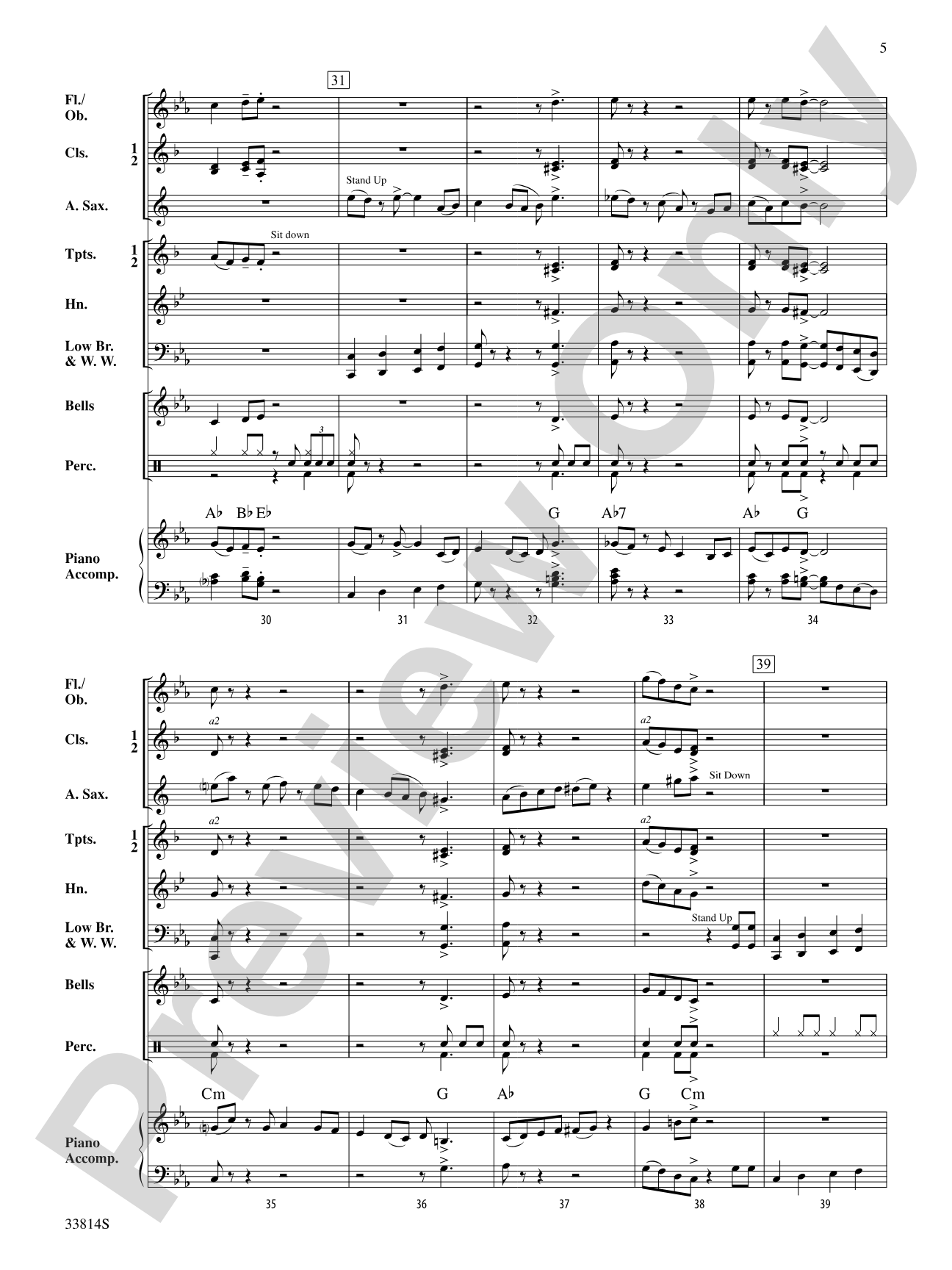
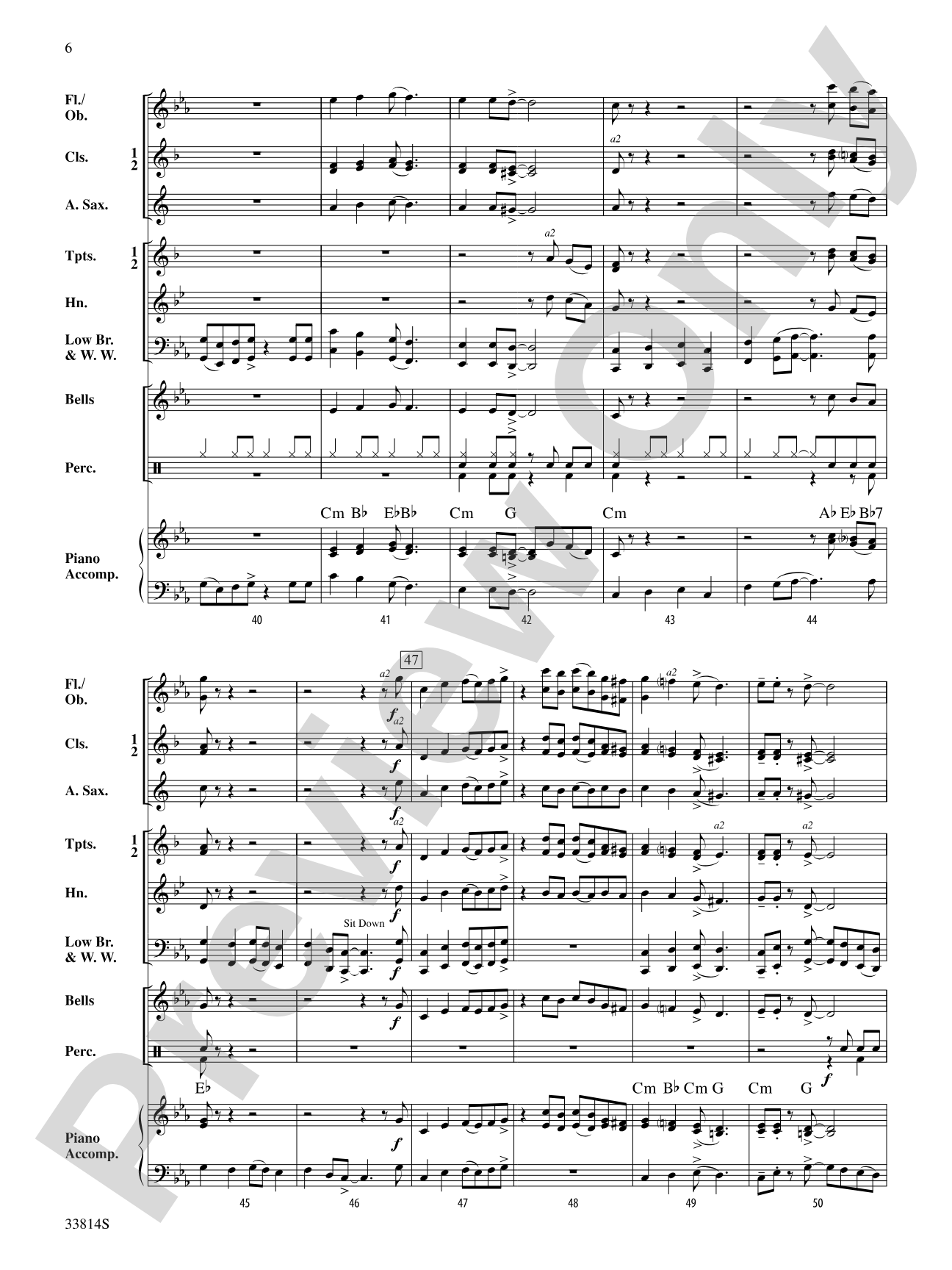
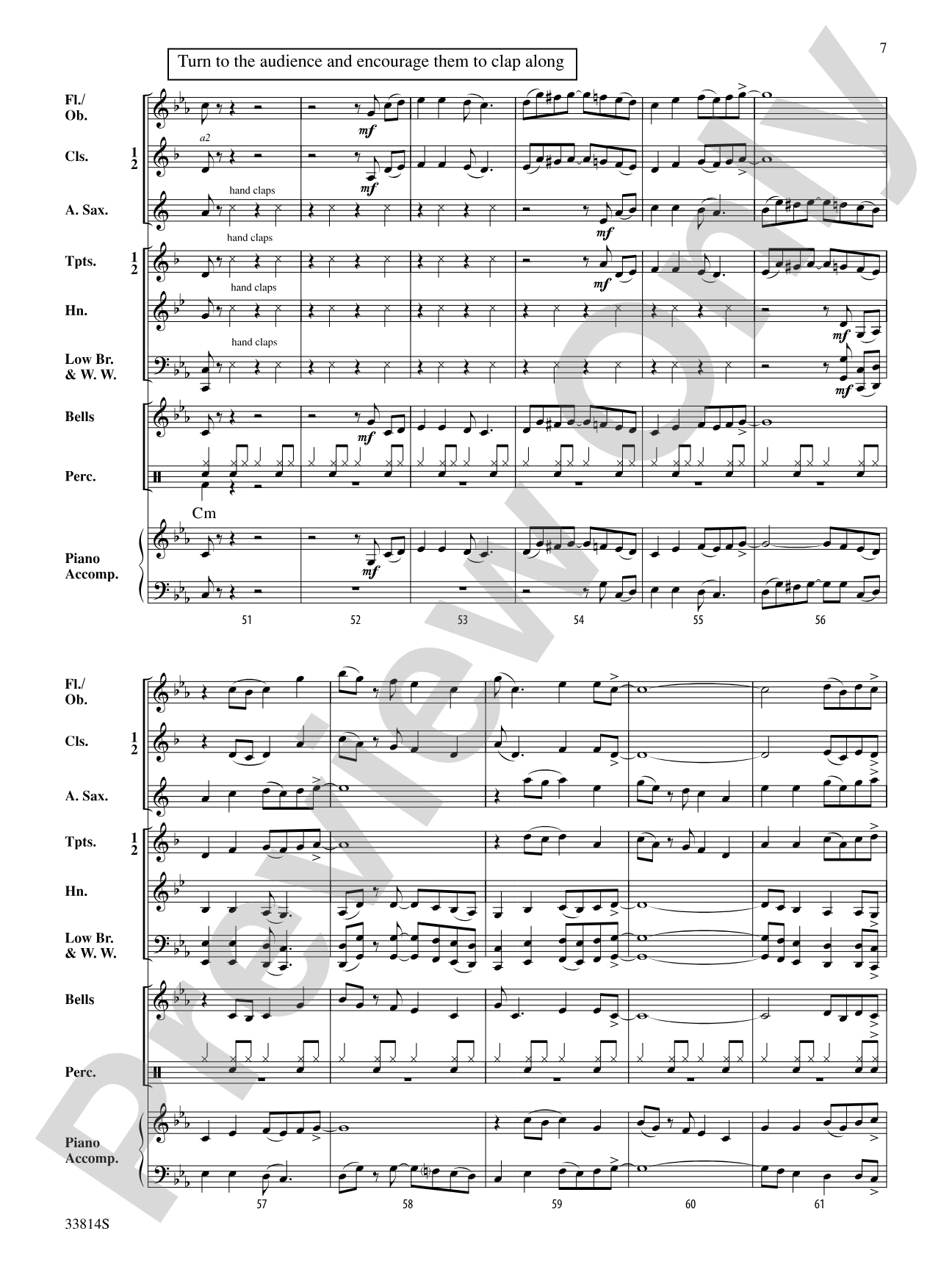
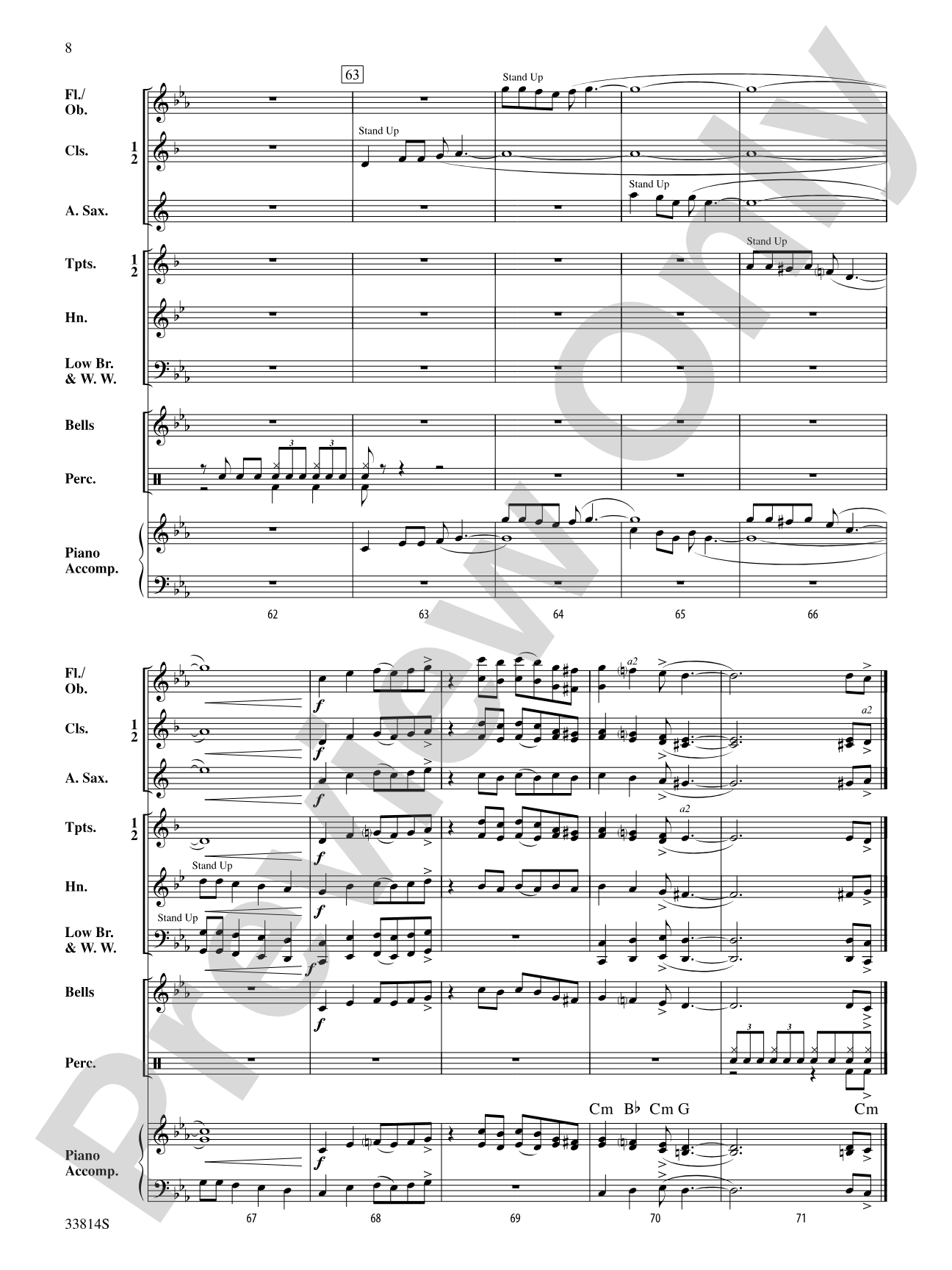

Stand Up and Swing: Concert Band Conductor Score & Parts
By John O'Reilly
Grade: 1.5 (Easy)
Item: 00-PK-0004250

$48.00
Pickup currently not available
Buy Extra Parts (Digital PDF Download)
Parts Added to Cart!
Description
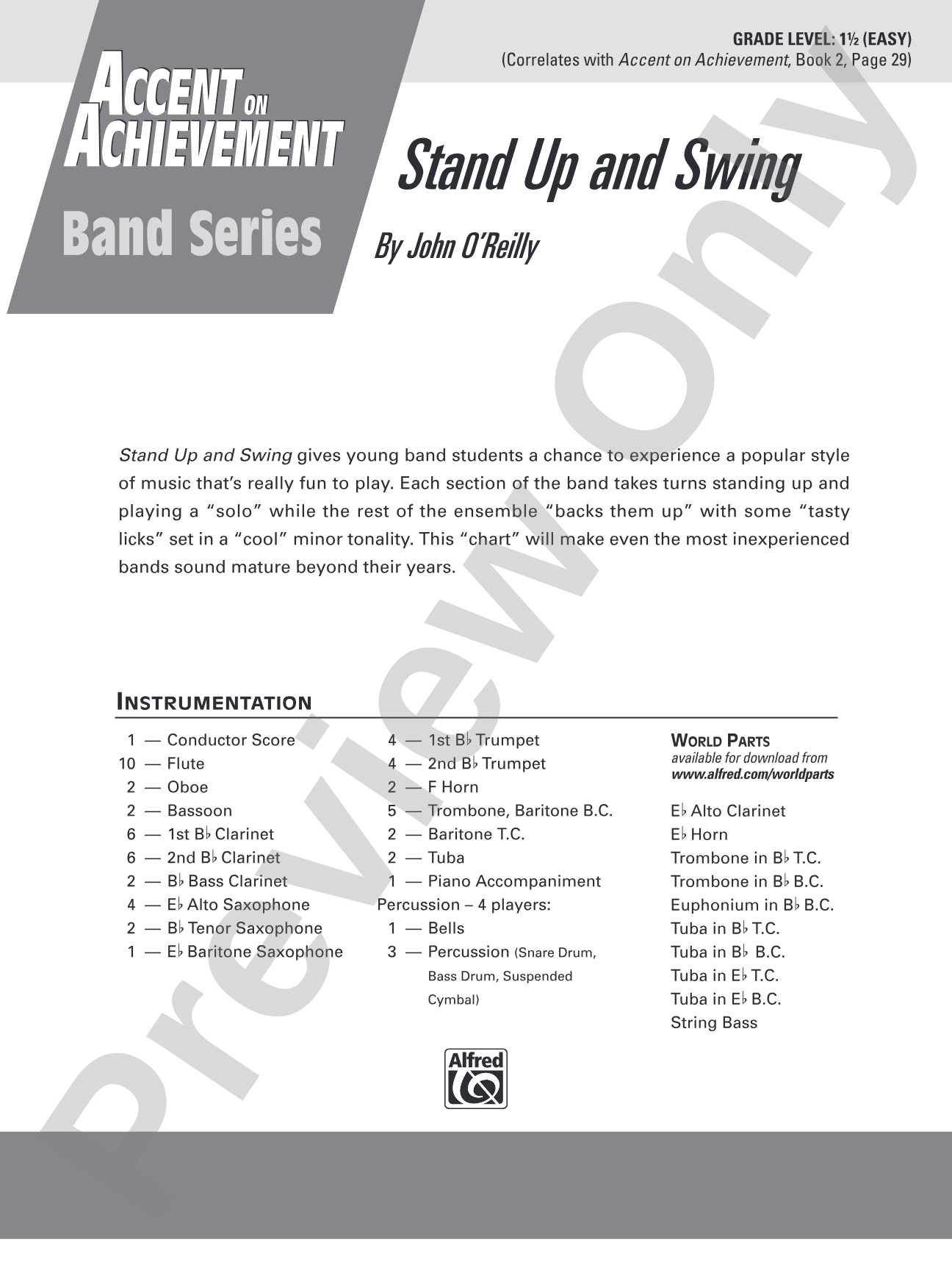
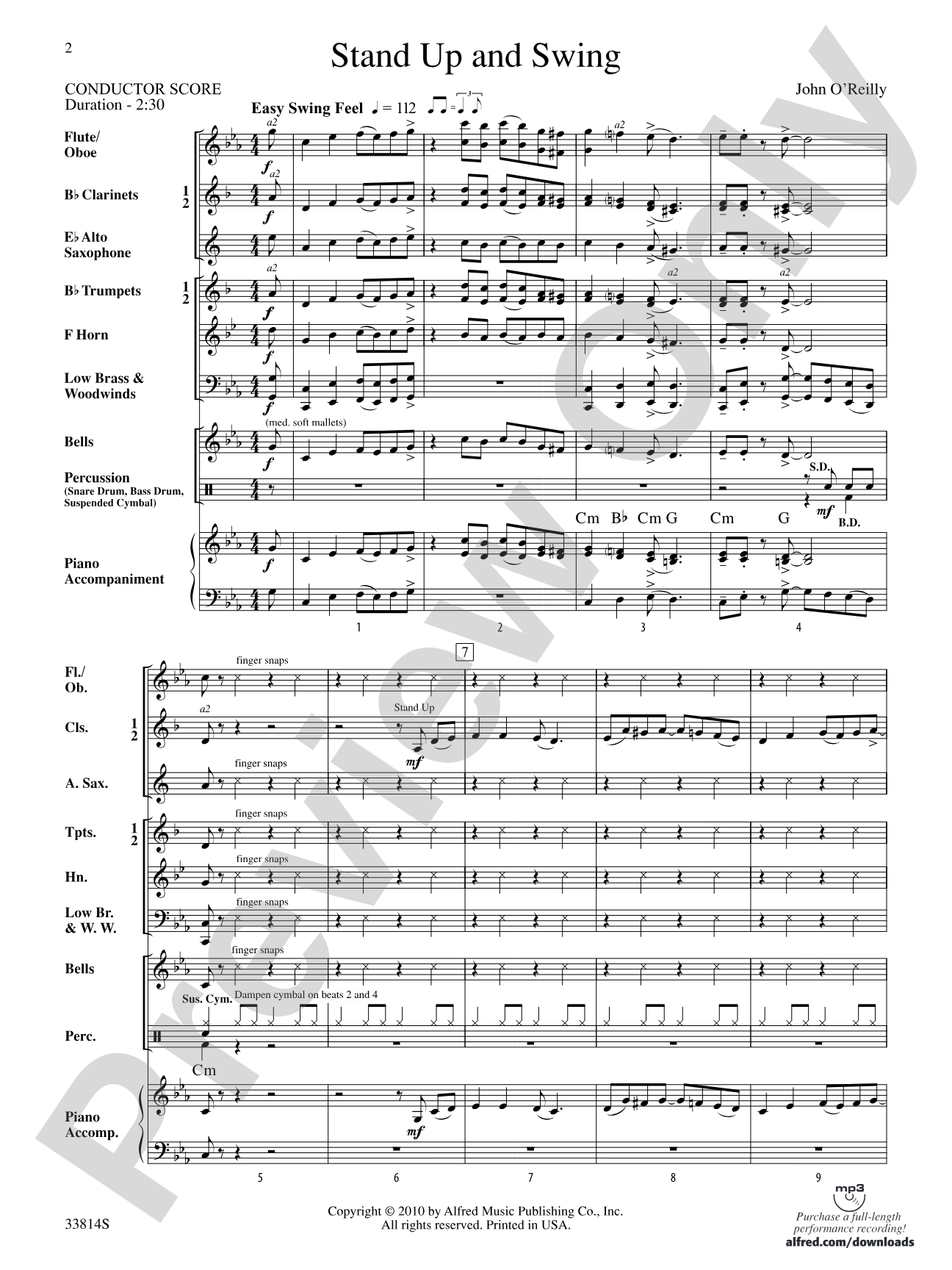
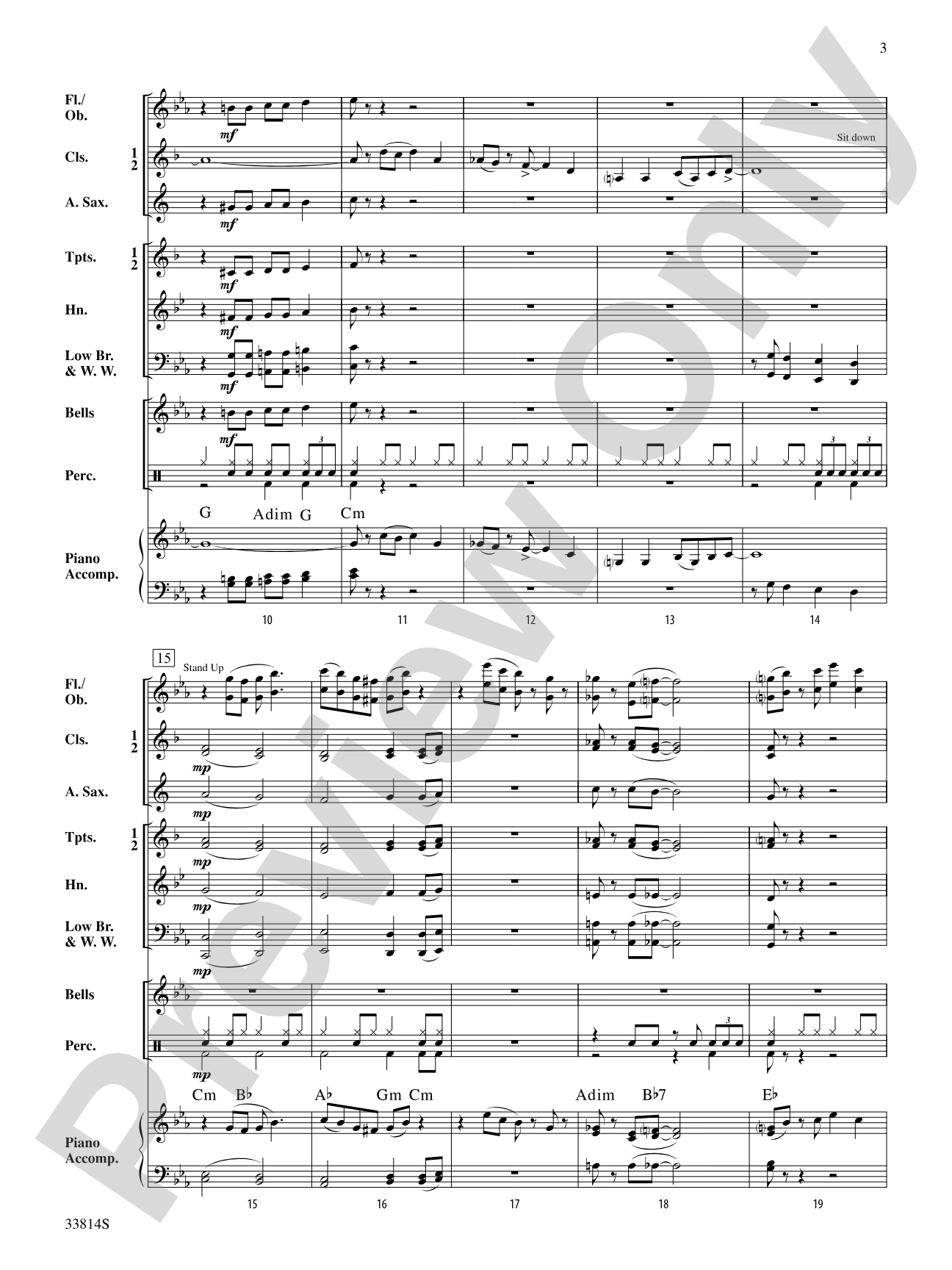
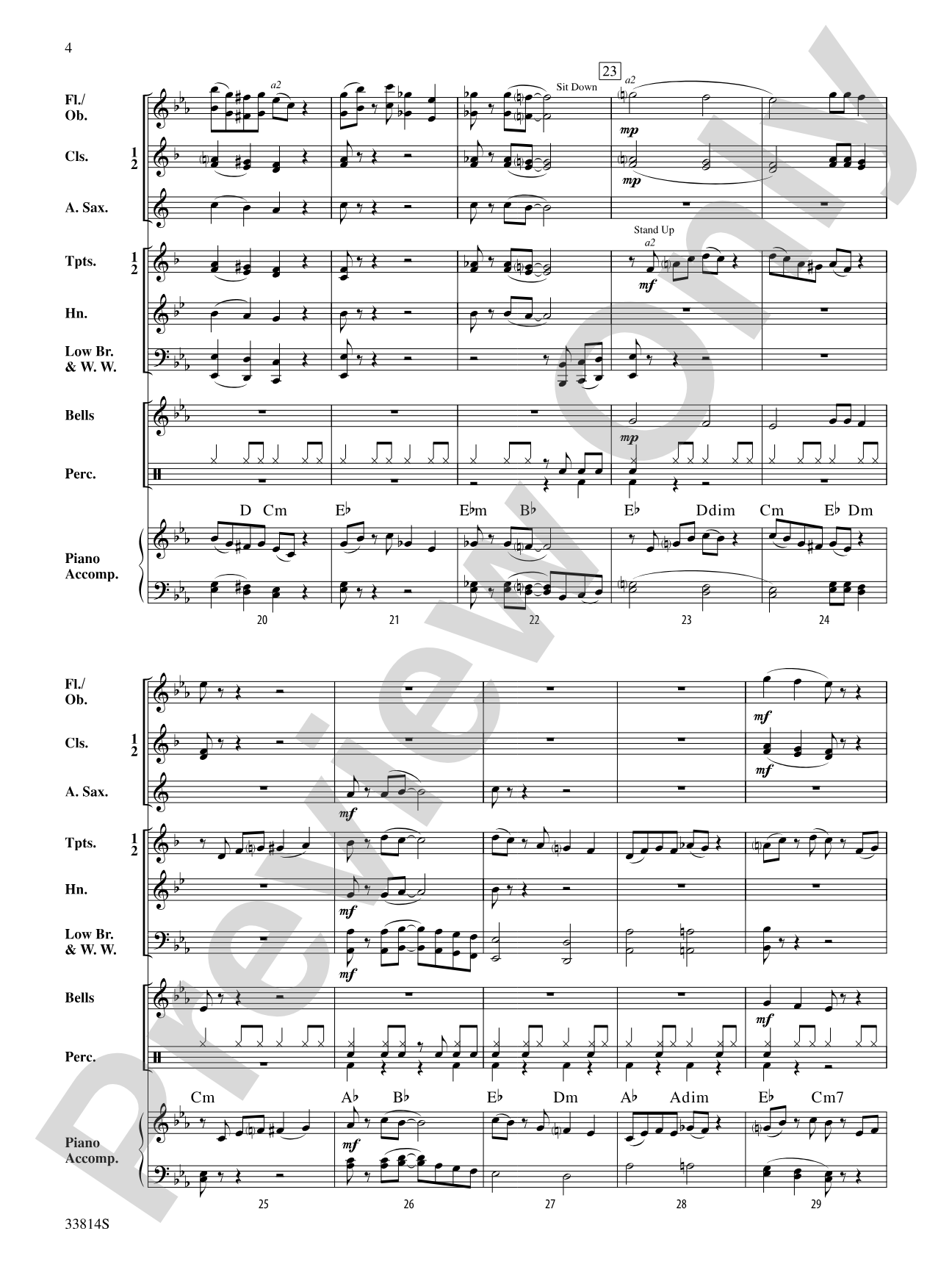
Stand up and Swing gives young band students a chance to experience a popular style of music that's really fun to play. Each section of the band takes turns standing up and playing a "solo" while the rest of the ensemble "backs them up" with some "tasty licks" set in a "cool" minor tonality. This "chart" will make even the most inexperienced bands sound mature beyond their years. (Correlates to Accent on Achievement, Book 2, Page 29)


Don't just read it, hear it, play along with it, and watch your students grow with it. In MakeMusic Cloud, Stand Up and Swing: Concert Band Conductor Score & Parts comes alive with professional accompaniment, adjustable tempo, and built-in practice tools that turn solo practice into real progress.
Open in the Player
Jump straight in and assign it today.
Start Your Free Trial
Open this title and explore the full library in minutes.
Sample Audio
1
Audio File
--:--
0:00
0:00
Sample Video
No sample videos found.
Additional Details
Series:
Accent on Achievement
Publisher:
Alfred Music
Page Count:
120
SKU:
00-PK-0004250
More about this title
About the Composer: John O'Reilly
John O'Reilly is a composer and educator whose work has shaped instrumental music instruction for generations. His compositions for young ensembles balance accessibility with musical substance, creating pieces that challenge students while remaining approachable for developing bands.
Why we love this
This arrangement proves that Grade 1.5 repertoire doesn't have to sound elementary. The sectional solo structure keeps every player engaged, and the swing idiom gives your band an immediate identity on stage. Young musicians consistently rise to the occasion when given material this musically honest.
What to expect
Stand Up and Swing has a relaxed but energetic character. The minor tonality creates sophistication, while the sectional spotlight approach keeps the energy moving forward. Your band will feel the difference between backing and leading, learning ensemble dynamics through the interplay itself.
Who it's for
This score and parts are for young concert bands at the Grade 1 to 2 level who want to play something contemporary and stylistically engaging. It works especially well for programs using the Accent on Achievement method, where it aligns directly with curriculum progression.
How to get the most out of it
- Balance the "backing up" section parts so featured soloists remain audible; the tasty licks should complement, not overpower, the stand-up section.
- Work through the minor tonality as an ensemble first. Have students locate the tonal center and understand the harmonic movement before sectional rehearsals.
- Let each section take ownership of their moment. Encourage the standing section to commit fully to the style and phrasing, not just the notes.
- Establish a clear swing feel early in rehearsals. Use recordings of professional swing bands to establish the rhythmic pocket your ensemble will inhabit.
How to use it
Program this as a second-set opener or closing number on a concert where you want to show your band's stylistic range and maturity. It pairs well alongside traditional concert repertoire and gives audiences a memorable moment of accessible, swinging musicianship.
Skills your students will build
- Playing within a swing style and feel
- Understanding harmonic movement in minor tonality
- Dynamic contrast between section and ensemble roles
- Sustaining ensemble balance while maintaining individual part independence
- Responding to sectional leadership within a fixed ensemble structure