

Sound Innovations for String Orchestra: Creative Warm-Ups: Teacher's Score
$34.99 USD
Sale price
$34.99 USD
Regular price
Skip to product information



Sound Innovations for String Orchestra: Creative Warm-Ups: Teacher's Score
Exercises for Intonation, Rhythm, Bowing, and Creativity for Intermediate String Orchestra
By Bob Phillips, Kirk Moss, Matt Turner, and Stephen Benham
Level: Intermediate
Item: 00-44213
$34.99
One moment…
Description
Sound Innovations: Creative Warm-ups emphasizes four aspects of string performance essential to the refinement of musicianship and skill at the intermediate level. Consistent with the Sound Innovations structure, students explore, develop, and refine (1) Sound Intonation; (2) Sound Rhythms; (3) Sound Bowing Fluency and Choreography; and (4) Sound Creativity. The levels can be used in the order that is best for your students' development, whether that means as individual warm-ups or as structured units. This material complements the content of Sound Innovations: Sound Development for Intermediate String Orchestra.
Students will develop high-level listening skills through practicing intervals, chord tones and balance, major/minor/diminished/augmented chord qualities, drones, and extended hand patterns---including cello extension pedagogy. Students will also learn to analyze, audiate, and perform rhythms that create rhythmic independence and develop large group rhythmic ensemble playing. Bowing fluency exercises will lead students to play in all parts of the bow, start in different points of the bow, use expressive bow strokes, and execute fluid string crossings. A groundbreaking sequence of exercises and repertoire helps students develop a toolbox of material to use while improvising in distinct styles: classical, jazz, Latin, rock, and over a drone accompaniment. Video demonstrations of key skills and audio tracks of key exercises are referenced in the book and can be accessed online at www.alfred.com/SoundDevelopmentWarmUps.
This title is available in MakeMusic Cloud.


Students will develop high-level listening skills through practicing intervals, chord tones and balance, major/minor/diminished/augmented chord qualities, drones, and extended hand patterns---including cello extension pedagogy. Students will also learn to analyze, audiate, and perform rhythms that create rhythmic independence and develop large group rhythmic ensemble playing. Bowing fluency exercises will lead students to play in all parts of the bow, start in different points of the bow, use expressive bow strokes, and execute fluid string crossings. A groundbreaking sequence of exercises and repertoire helps students develop a toolbox of material to use while improvising in distinct styles: classical, jazz, Latin, rock, and over a drone accompaniment. Video demonstrations of key skills and audio tracks of key exercises are referenced in the book and can be accessed online at www.alfred.com/SoundDevelopmentWarmUps.
This title is available in MakeMusic Cloud.
Don't just read it, hear it, play along with it, and watch your students grow with it. In MakeMusic Cloud, Sound Innovations for String Orchestra: Creative Warm-Ups: Teacher's Score comes alive with professional accompaniment, adjustable tempo, and built-in practice tools that turn solo practice into real progress.
Open in the Player
Jump straight in and assign it today.
Start Your Free Trial
Open this title and explore the full library in minutes.
Sample Audio
No sample audio found.
Sample Video
Additional Details
More about this title
About the Authors
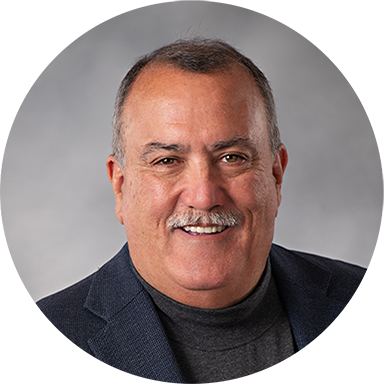
Bob Phillips, born in 1953, stands out as a composer, author, conductor, and educator who has fundamentally shaped string education. His innovative approach to large group pedagogy and development of eclectic musical styles for strings has made him one of today's most influential educational voices in the field.
Phillips has authored more than 25 book series for classroom instruction, including the complete Sound Innovations series across all six levels and groundbreaking eclectic publications such as Fiddlers Philharmonic, Jazz Philharmonic, Rock Philharmonic, Mariachi Philharmonic, Latin Philharmonic, and Fiddle and Song. He has published over 200 works for orchestras and bands, earning recognition as an award-winning ASCAP composer whose works appear regularly at the Midwest Clinic. His instructional DVDs, String Clinics to Go, have become valuable teaching resources for thousands of educators nationwide.
Throughout his career, Phillips has demonstrated his commitment to string music through both performance and instruction. He spent 27 years developing a nationally recognized string program in Saline, Michigan that grew to over 700 students and excelled in classical and eclectic repertoire. His folk-fiddling ensemble, the Saline Fiddlers Philharmonic, achieved international prominence under his direction, performing more than 80 shows annually and appearing at the White House and the Midwest Clinic. Phillips has conducted numerous youth orchestras and all-state ensembles across the country, served as resident conductor and arranger for Seattle's Wintergrass Festival for 12 years, and worked as assistant music director and arranger for the professional string ensemble Barrage 8.
Phillips has authored more than 25 book series for classroom instruction, including the complete Sound Innovations series across all six levels and groundbreaking eclectic publications such as Fiddlers Philharmonic, Jazz Philharmonic, Rock Philharmonic, Mariachi Philharmonic, Latin Philharmonic, and Fiddle and Song. He has published over 200 works for orchestras and bands, earning recognition as an award-winning ASCAP composer whose works appear regularly at the Midwest Clinic. His instructional DVDs, String Clinics to Go, have become valuable teaching resources for thousands of educators nationwide.
Throughout his career, Phillips has demonstrated his commitment to string music through both performance and instruction. He spent 27 years developing a nationally recognized string program in Saline, Michigan that grew to over 700 students and excelled in classical and eclectic repertoire. His folk-fiddling ensemble, the Saline Fiddlers Philharmonic, achieved international prominence under his direction, performing more than 80 shows annually and appearing at the White House and the Midwest Clinic. Phillips has conducted numerous youth orchestras and all-state ensembles across the country, served as resident conductor and arranger for Seattle's Wintergrass Festival for 12 years, and worked as assistant music director and arranger for the professional string ensemble Barrage 8.
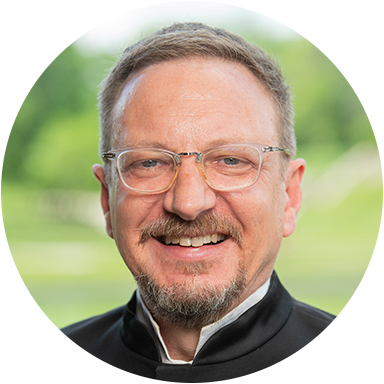
Kirk D. Moss holds the position of Vice Provost for Faculty and Academic Programs at University of Northwestern – St. Paul. He earned recognition there with the 2021 Faculty Award for Excellence in Scholarship. His academic credentials include a PhD in Music Education with conducting emphasis from University of Florida, a Master of Music degree from University of Cincinnati College-Conservatory of Music, and a Bachelor of Music degree with high distinction from University of Michigan.
Moss has made significant contributions to string music education and performance. He served as national president of the American String Teachers Association and chaired the ASTA National Orchestra Festival five times while holding positions on ASTA's Executive Board. His published works include the Sound Innovations series method books for Alfred Music and numerous string orchestra arrangements. He has earned six ASTA National Citation for Leadership and Merit awards and received an Alumni Outstanding Achievement Award from the University of Florida School of Music.
Throughout his twelve-year career teaching orchestras at the elementary, middle, and high school levels, Moss guided student groups to honors at state, national, and international competitions. He has worked as a guest conductor, clinician, and adjudicator across nearly forty states and Australia. One of his former high schools established a college string scholarship in his name. Moss is married to his wife, Deb, and together they have three children: Bethany, Luke, and Lydia.
Moss has made significant contributions to string music education and performance. He served as national president of the American String Teachers Association and chaired the ASTA National Orchestra Festival five times while holding positions on ASTA's Executive Board. His published works include the Sound Innovations series method books for Alfred Music and numerous string orchestra arrangements. He has earned six ASTA National Citation for Leadership and Merit awards and received an Alumni Outstanding Achievement Award from the University of Florida School of Music.
Throughout his twelve-year career teaching orchestras at the elementary, middle, and high school levels, Moss guided student groups to honors at state, national, and international competitions. He has worked as a guest conductor, clinician, and adjudicator across nearly forty states and Australia. One of his former high schools established a college string scholarship in his name. Moss is married to his wife, Deb, and together they have three children: Bethany, Luke, and Lydia.
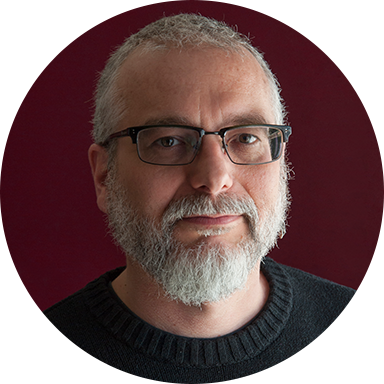
Matt Turner stands as one of the world's most accomplished improvising cellists. His versatility extends equally to piano, allowing him to navigate numerous musical genres and collaborate with artists spanning the globe. From fiddle icon Natalie MacMaster to avant-garde pioneers like Marilyn Crispell and Peter Kowald, jazz innovator Bobby McFerrin to country performer Wanda Vick, Turner's performance resume reflects remarkable breadth. His concert appearances have taken him across Canada, Europe, and Asia.
Turner's discography includes over 100 recordings released on major labels such as Harmonia Mundi, Cadence Jazz, Music and Arts, and Polyvinyl. His collaborators have ranged from jazz violinist Randy Sabien to alternative country ensemble Heller Mason. As a bandleader, his recordings appear on independent and international imprints including Illusions, Asian Improv, O.O. Discs, and Meniscus Records.
Formally trained at Lawrence University and the New England Conservatory of Music, where he earned his Master of Music in Third Stream Studies under mentors including Dave Holland and Geri Allen, Turner received a Distinction in Performance Award. He currently teaches improvisation at both Lawrence University and the Renaissance School for the Arts. A Yamaha Performing Artist, he performs and records with Bill Carrothers' Armistice 1918 ensemble and the Fantastic Merlins.
Turner's discography includes over 100 recordings released on major labels such as Harmonia Mundi, Cadence Jazz, Music and Arts, and Polyvinyl. His collaborators have ranged from jazz violinist Randy Sabien to alternative country ensemble Heller Mason. As a bandleader, his recordings appear on independent and international imprints including Illusions, Asian Improv, O.O. Discs, and Meniscus Records.
Formally trained at Lawrence University and the New England Conservatory of Music, where he earned his Master of Music in Third Stream Studies under mentors including Dave Holland and Geri Allen, Turner received a Distinction in Performance Award. He currently teaches improvisation at both Lawrence University and the Renaissance School for the Arts. A Yamaha Performing Artist, he performs and records with Bill Carrothers' Armistice 1918 ensemble and the Fantastic Merlins.
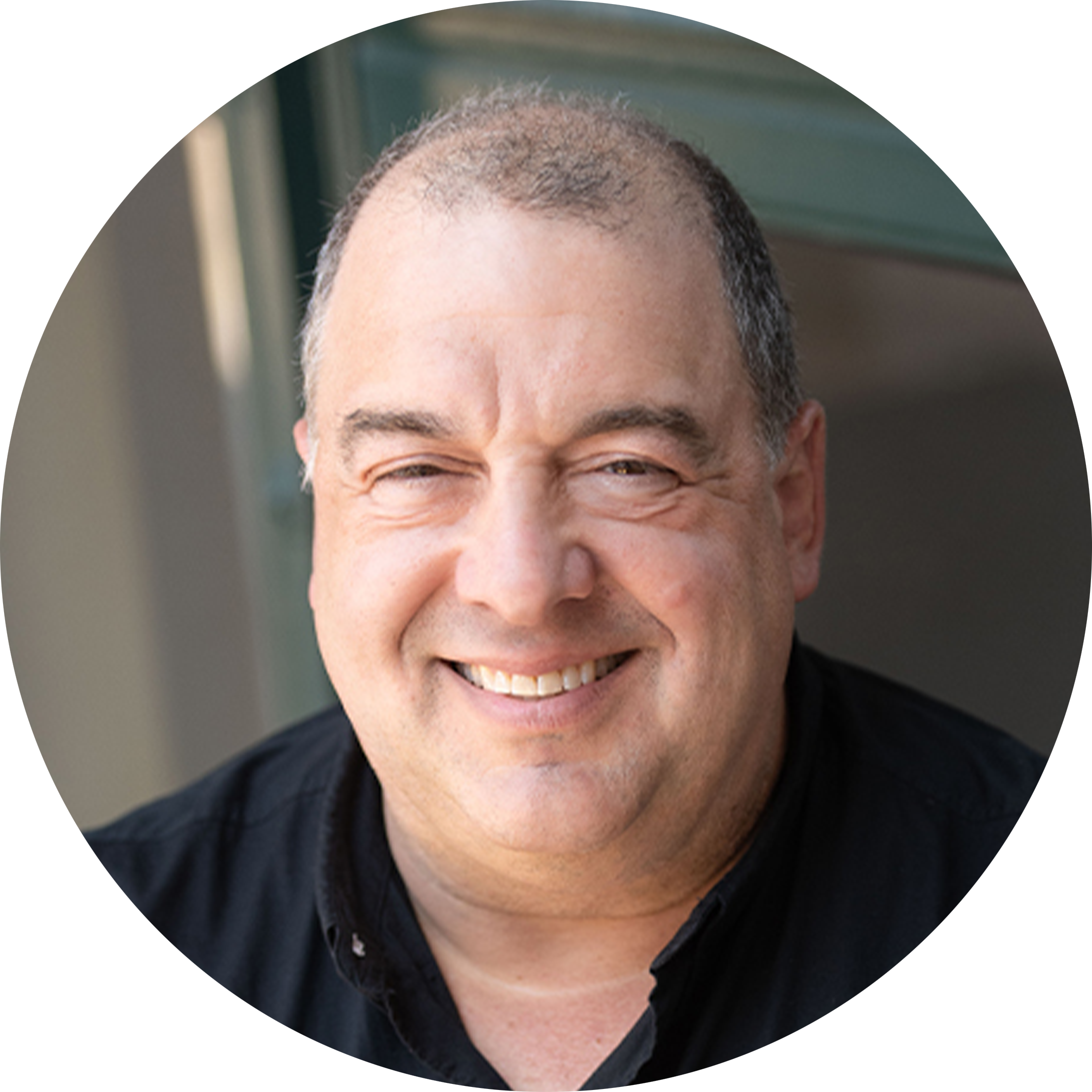
Dr. Stephen Benham serves as Professor of Music Education and Chair of Performance at Duquesne University's Mary Pappert School of Music in Pittsburgh. He holds degrees from the University of Minnesota, University of Michigan (M.M.), and the Eastman School of Music (Ph.D.). At Duquesne, he teaches both undergraduate and graduate courses in music education and string pedagogy. His teaching career also includes positions in public and private schools throughout Oregon, Michigan, and New York.
Benham has established himself as an active conductor, clinician, speaker, and adjudicator with engagements spanning 45 states and 40 countries across Europe, Africa, the Caribbean, and Asia. He has led numerous All-State orchestras, presented over 300 clinics and workshops, and completed extended residencies worldwide. His current schedule for 2024-2025 includes appearances in ten U.S. states and eight countries including Albania, Estonia, Kosovo, Pakistan, Ukraine, Kenya, Tanzania, and Zambia.
His scholarly work addresses leadership development, string pedagogy, culturally relevant instruction, and expanding music access to underserved populations. He authored the ASTA String Curriculum: Standards, Goals, Learning Sequences for Essential Skills and Knowledge in K-12 String Programs and co-authored Yes You Can! The Band and Choral Director's Guide to Teaching Strings. His publications appear in journals, handbooks, encyclopedias, and collections from Oxford University Press and Sage Publications. He also contributed to Alfred's Sound Innovations: Creative Warm-ups, Exercises for Intonation, Rhythm, Bowing, and Creativity for Intermediate Strings.
Benham has established himself as an active conductor, clinician, speaker, and adjudicator with engagements spanning 45 states and 40 countries across Europe, Africa, the Caribbean, and Asia. He has led numerous All-State orchestras, presented over 300 clinics and workshops, and completed extended residencies worldwide. His current schedule for 2024-2025 includes appearances in ten U.S. states and eight countries including Albania, Estonia, Kosovo, Pakistan, Ukraine, Kenya, Tanzania, and Zambia.
His scholarly work addresses leadership development, string pedagogy, culturally relevant instruction, and expanding music access to underserved populations. He authored the ASTA String Curriculum: Standards, Goals, Learning Sequences for Essential Skills and Knowledge in K-12 String Programs and co-authored Yes You Can! The Band and Choral Director's Guide to Teaching Strings. His publications appear in journals, handbooks, encyclopedias, and collections from Oxford University Press and Sage Publications. He also contributed to Alfred's Sound Innovations: Creative Warm-ups, Exercises for Intonation, Rhythm, Bowing, and Creativity for Intermediate Strings.