

Sound Differentiation for Beginning String Orchestra: Teacher's Score
$12.99 USD
Sale price
$12.99 USD
Regular price
Skip to product information


Sound Differentiation for Beginning String Orchestra: Teacher's Score
15 Arrangements of Traditional Tunes on the D & A Strings, Perfect for Differentiated Instruction
By Sarah Lenhart, Becky Bush, and Bob Phillips
Item: 00-48707
$12.99
One moment…
Description
Sound Differentiation is a motivational, time-saving supplemental resource that provides differentiated parts for 15 well-known tunes---perfect for a variety of teaching situations, including odd or incomplete instrumentation, or when working with a mix of ability levels. The arrangements in this collection are ready for use in an adaptable format with identical parts for all instruments. The featured parts are tune, bass line, harmony, and variation, and each one can be assigned to your choice of soloists, instrument sections, or difficulty-leveled groupings of students of both like-instrumentation or mixed-instrumentation. The difficulty of each piece progresses throughout the book.
Here are just some of the ways to differentiate with Sound Differentiation:
* Group students into 3 categories based on skill level and assign level-appropriate parts.
* Customize each arrangement by choosing the order in which students play each line of the song.
* Teachers may assign a new line order using the blank Teacher Order column.


Here are just some of the ways to differentiate with Sound Differentiation:
* Group students into 3 categories based on skill level and assign level-appropriate parts.
* Customize each arrangement by choosing the order in which students play each line of the song.
* Teachers may assign a new line order using the blank Teacher Order column.
Discover MakeMusic Cloud: thousands of interactive titles your students can play along with today.
Sample Audio
No sample audio found.
Sample Video
No sample videos found.
Additional Details
More about this title
About the Authors
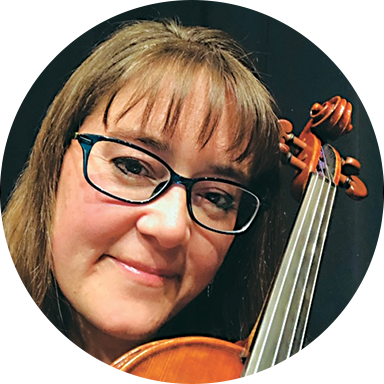
Sarah Lenhart serves as Middle School Orchestra Director at Hudsonville Public Schools in Michigan. She brings extensive experience from previous teaching positions in Connecticut, Illinois, Michigan, and New York, where she taught students across elementary through high school levels. Throughout her career, her ensembles have consistently achieved first division ratings, giving her valuable perspective on string pedagogy in diverse educational settings.
A graduate of the University of Michigan (Bachelor of Music Education) and Western Connecticut University (Masters of Education), Lenhart is an accomplished presenter and clinician. She has appeared multiple times at the National ASTA Conference and the Michigan Music Conference. She co-authored Sound Differentiation for Beginning String Orchestra, published by Alfred Music, and has served as conductor of the Ann Arbor School of the Performing Arts Youth Orchestra.
Lenhart remains active as a guest conductor throughout Michigan and has directed music at numerous alternative style camps, including the MASTA Strings Camp. Her work continues to shape string education across the region.
A graduate of the University of Michigan (Bachelor of Music Education) and Western Connecticut University (Masters of Education), Lenhart is an accomplished presenter and clinician. She has appeared multiple times at the National ASTA Conference and the Michigan Music Conference. She co-authored Sound Differentiation for Beginning String Orchestra, published by Alfred Music, and has served as conductor of the Ann Arbor School of the Performing Arts Youth Orchestra.
Lenhart remains active as a guest conductor throughout Michigan and has directed music at numerous alternative style camps, including the MASTA Strings Camp. Her work continues to shape string education across the region.
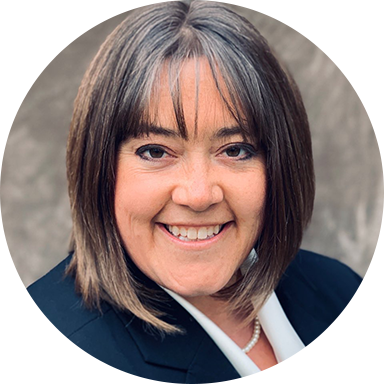
Becky Bush is an orchestra director who established the instrumental music program at Hudsonville Public Schools in Michigan. She has worked as both an Adjunct Professor of Music Education at Grand Valley State University and Calvin College, where she taught instrumental and string methods while mentoring student teachers. Her professional experience also includes positions at Alfred Music Publishing, where she served as String Acquisition Editor and Suzuki Strategist, and she previously directed orchestras at Jenison Public Schools, a GRAMMY Signature School recognized as one of NAMM's 100 Best Communities for Music Education.
Bush has authored and co-authored educational string music resources published by Alfred Music, including the instructional book Sound Differentiation for Beginning String Orchestra and the young orchestra composition Arctic Crossing. She holds a Bachelor's of Music Education from the University of Michigan and a Master's of Education from Grand Valley State University.
Beyond her teaching roles, Bush has directed youth ensembles at the St. Cecilia Music Center and served as music director at several summer camps, including Michigan ASTA String Camps, Blue Lake Fine Arts Camps, and Phillips Family Fiddle Camps. She is an active guest conductor throughout Michigan and has presented sessions at major music education conferences including The Midwest Clinic, the National ASTA Conference, and numerous state music educators' associations. She also performs with the Signature String Quartet.
Bush has authored and co-authored educational string music resources published by Alfred Music, including the instructional book Sound Differentiation for Beginning String Orchestra and the young orchestra composition Arctic Crossing. She holds a Bachelor's of Music Education from the University of Michigan and a Master's of Education from Grand Valley State University.
Beyond her teaching roles, Bush has directed youth ensembles at the St. Cecilia Music Center and served as music director at several summer camps, including Michigan ASTA String Camps, Blue Lake Fine Arts Camps, and Phillips Family Fiddle Camps. She is an active guest conductor throughout Michigan and has presented sessions at major music education conferences including The Midwest Clinic, the National ASTA Conference, and numerous state music educators' associations. She also performs with the Signature String Quartet.

Bob Phillips is a composer, author, and conductor born in 1953 who has fundamentally shaped string education through innovative pedagogy and diverse musical styles. Recognized as a leading educational composer, his instructional materials and compositions are used by thousands of string students annually across the United States and beyond.
Phillips has authored more than 25 book series for classroom instruction, including all six levels of Sound Innovations and six eclectic style publications: Fiddlers Philharmonic, Jazz Philharmonic, Rock Philharmonic, Mariachi Philharmonic, Latin Philharmonic, and Fiddle and Song. He has published over 200 works for orchestras and bands and is an award-winning ASCAP composer whose pieces are regularly performed at the Midwest Clinic. His instructional DVDs, String Clinics to Go, have reached thousands of teachers nationwide.
Over 27 years in Saline, Michigan, Phillips built a string program that enrolled over 700 students and became a national model of excellence in both classical and eclectic music. He founded and directed the Saline Fiddlers Philharmonic, an internationally recognized folk-fiddling ensemble that performed more than 80 shows annually and appeared multiple times at the White House and Midwest Clinic. Phillips has also conducted at numerous prestigious venues including All-State orchestras in eight states, Interlochen's All-State Orchestra, Blue Lake Fine Arts Camp, and various youth symphonies. He served 12 years as resident conductor and arranger for the Wintergrass Festival in Seattle and worked as an assistant music director and arranger for the professional string ensemble Barrage 8.
Phillips has authored more than 25 book series for classroom instruction, including all six levels of Sound Innovations and six eclectic style publications: Fiddlers Philharmonic, Jazz Philharmonic, Rock Philharmonic, Mariachi Philharmonic, Latin Philharmonic, and Fiddle and Song. He has published over 200 works for orchestras and bands and is an award-winning ASCAP composer whose pieces are regularly performed at the Midwest Clinic. His instructional DVDs, String Clinics to Go, have reached thousands of teachers nationwide.
Over 27 years in Saline, Michigan, Phillips built a string program that enrolled over 700 students and became a national model of excellence in both classical and eclectic music. He founded and directed the Saline Fiddlers Philharmonic, an internationally recognized folk-fiddling ensemble that performed more than 80 shows annually and appeared multiple times at the White House and Midwest Clinic. Phillips has also conducted at numerous prestigious venues including All-State orchestras in eight states, Interlochen's All-State Orchestra, Blue Lake Fine Arts Camp, and various youth symphonies. He served 12 years as resident conductor and arranger for the Wintergrass Festival in Seattle and worked as an assistant music director and arranger for the professional string ensemble Barrage 8.