
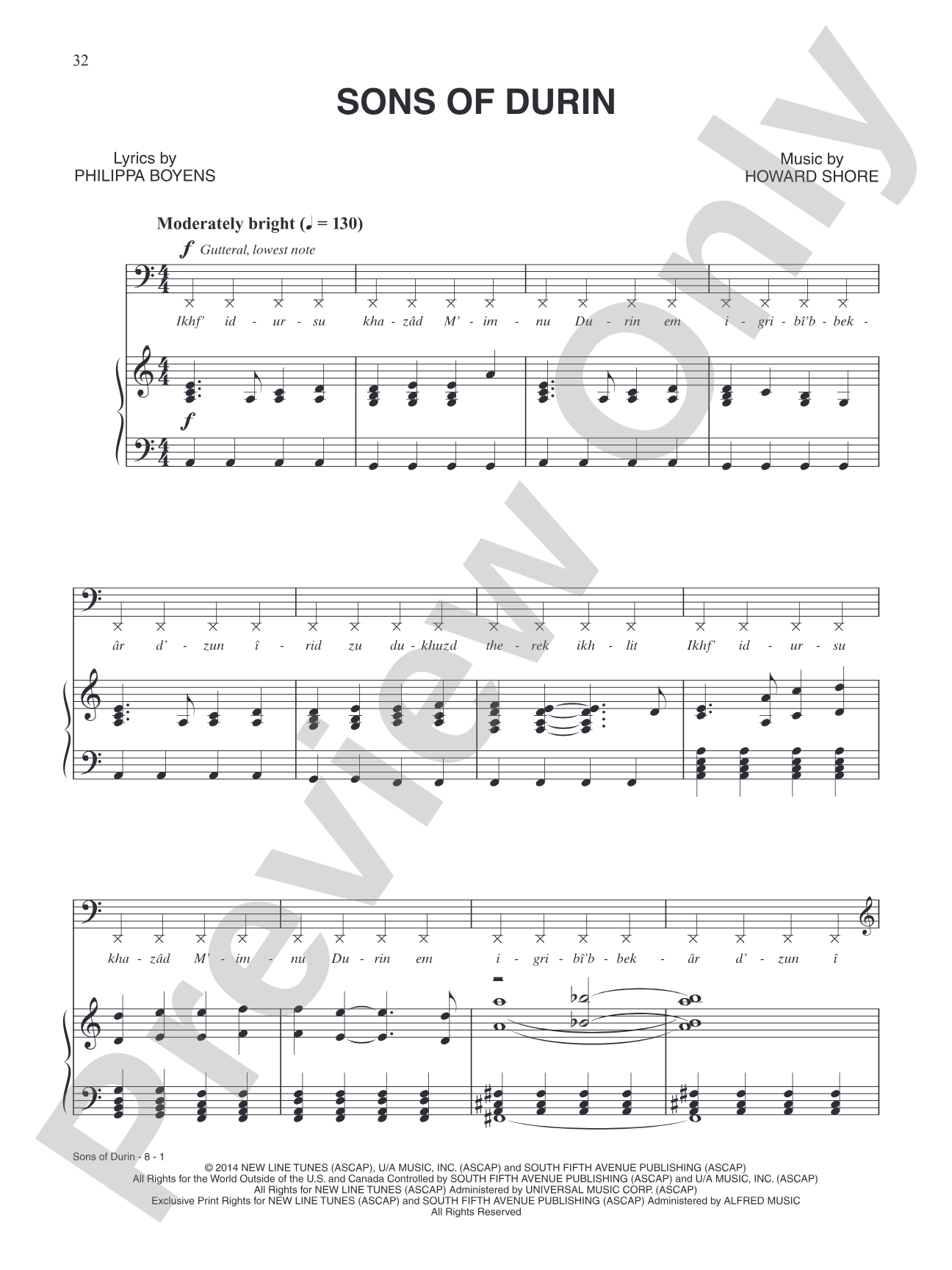
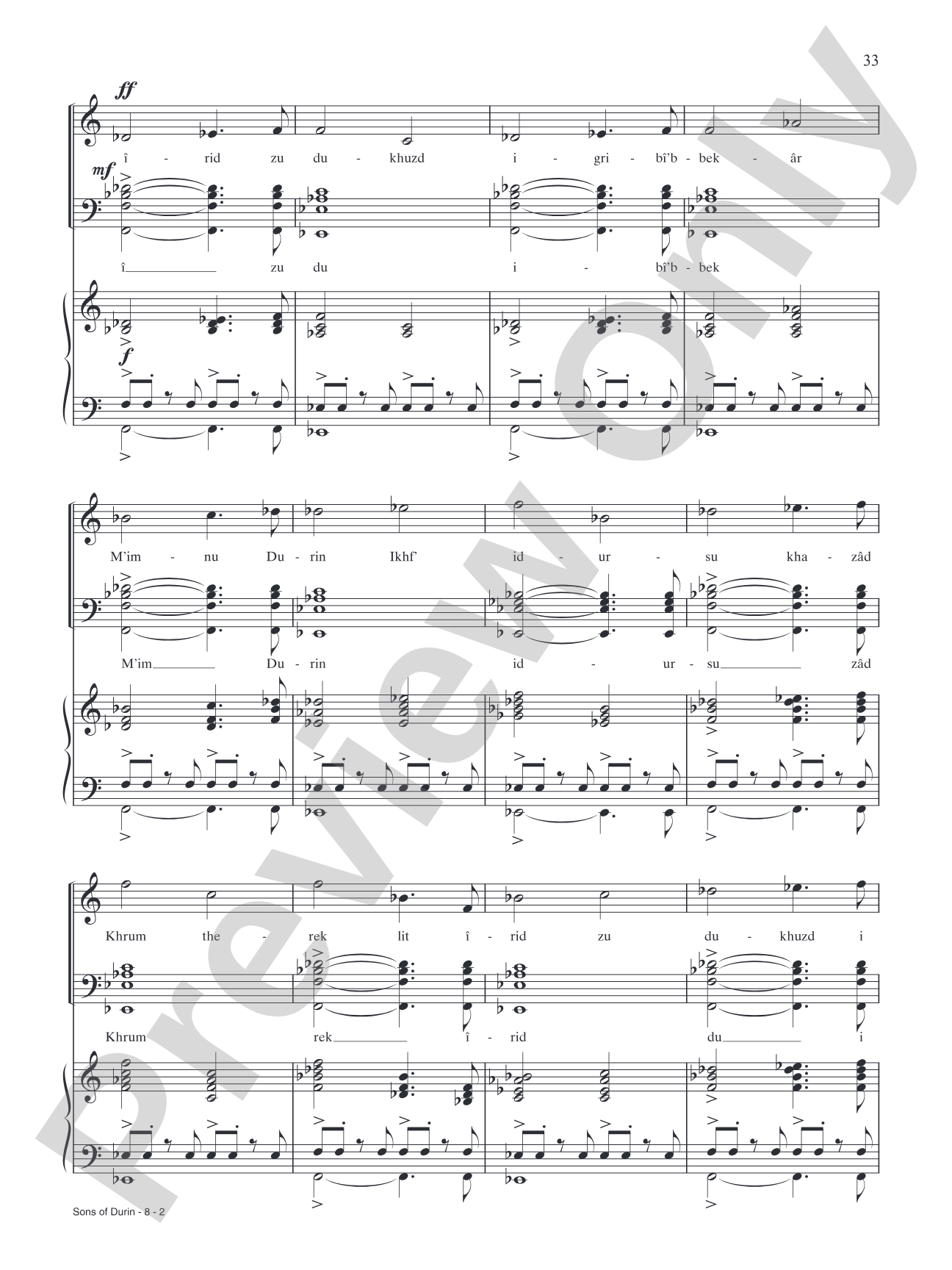

Sons of Durin (from The Hobbit: The Battle of Five Armies): Piano/Vocal
Sheet Music Selections from the Original Motion Picture Soundtrack
Music composed by Howard Shore
Item: 00-PS-0015973
$5.99
Pickup currently not available
Related Items
Shores of the Long Lake (from The Hobbit: The Battle of Five Armies): Piano/Vocal |
$4.99
|
View | |
Beyond Sorrow and Grief (from The Hobbit: The Battle of Five Armies): Piano/Vocal |
$4.99
|
View | |
The Gathering of the Clouds (from The Hobbit: The Battle of Five Armies): Piano |
$4.99
|
View | |
The Ruins of Dale (from The Hobbit: The Battle of Five Armies): Piano |
$4.99
|
View | |
Mithril (from The Hobbit: The Battle of Five Armies): Piano/Vocal |
$4.99
|
View | |
The Darkest Hour (from The Hobbit: The Battle of Five Armies): Piano/Vocal |
$4.99
|
View | |
The Fallen (from The Hobbit: The Battle of Five Armies): Piano/Vocal |
$5.99
|
View | |
To the Death (from The Hobbit: The Battle of Five Armies): Piano/Vocal |
$5.99
|
View | |
Courage and Wisdom (from The Hobbit: The Battle of Five Armies): Piano/Vocal |
$4.99
|
View | |
The Return Journey (from The Hobbit: The Battle of Five Armies): Piano |
$4.99
|
View | |
There and Back Again (from The Hobbit: The Battle of Five Armies): Piano |
$4.99
|
View | |
The Last Goodbye (from The Hobbit: The Battle of Five Armies): Piano/Vocal/Chords |
$4.99
|
View | |
Ironfoot (from The Hobbit: The Battle of Five Armies): Piano/Vocal |
$5.99
|
View | |
The Hobbit: The Battle of the Five Armies: Piano/Vocal Book |
$19.99
|
View |
Description
Fans, pianists, and composers will love this faithfully transcribed collection featuring awesome piano/vocal renditions of 14 selections from Howard Shore's brilliant score to The Hobbit: The Battle of the Five Armies. In addition to the piano arrangements, this beautifully produced souvenir folio features an array of colorful photos from the film. Titles: Shores of the Long Lake * Beyond Sorrow and Grief * The Gathering of the Clouds * The Ruins of Dale * Mithril * The Darkest Hour * Sons of Durin * The Fallen * To the Death * Courage and Wisdom * The Return Journey * There and Back Again * The Last Goodbye * Ironfoot.


Sons of Durin (from The Hobbit: The Battle of Five Armies): Piano/Vocal isn't in MakeMusic Cloud just yet...but it could be. Let us know you'd like to see it, and you'll help shape what comes next. In the meantime, start a free trial and dive into thousands of interactive titles your students can play along with today.
Request This Title
Tell us you want it.
Start Your Free Trial
Explore everything that's ready to play right now.
Sample Audio
No sample audio found.
Sample Video
No sample videos found.
Additional Details
Publisher:
Alfred Music
Page Count:
76
SKU:
00-PS-0015973
More about this title
About the Composer: Howard Shore
Howard Shore is a composer whose film scores have shaped the soundscape of contemporary cinema. His work on Peter Jackson's The Lord of the Rings and The Hobbit trilogies stands as a monumental achievement in orchestral film music, earning multiple Academy Awards and establishing him as one of the most celebrated composers in the medium.
Why we love this
Shore's melodies translate beautifully to the piano, and this collection captures the emotional depth of The Hobbit's score without requiring orchestral forces. Pianists at intermediate to advanced levels get access to genuinely singable vocal lines paired with rich harmonic accompaniment, making these arrangements ideal for recitals, auditions, or simply exploring how film music works on a smaller scale.
What to expect
These pieces unfold with the gravitas and emotional resonance of Shore's orchestral writing, now rendered in the intimate medium of voice and piano. Sweeping melodic lines blend with thoughtfully crafted accompaniment patterns that evoke the orchestral textures of the film without attempting literal transcription, creating an experience that feels both cinematic and deeply personal.
Who it's for
Pianists with intermediate to advanced technique who sing or collaborate with singers will find these arrangements exceptionally rewarding. Vocalists building recital programs, music theater students exploring film music idioms, and pianists seeking substantial solo arrangements with vocal options will all connect with this collection.
How to get the most out of it
- Honor the legato phrasing in the vocal line; Shore's melodies breathe like operatic writing, and rushing through sustained notes diminishes their impact.
- Balance the piano accompaniment so it supports rather than overwhelms the singer. These arrangements often feature detailed figuration that can easily overshadow the melody.
- Pay attention to key relationships between pieces; programming several selections in sequence creates a dramatic arc that mirrors the film's narrative.
- Explore the emotional character of each title before learning the notes. Shore's thematic writing is deeply connected to character and story, and understanding that context shapes interpretation.
How to use it
Weave individual selections into recital programs alongside standard vocal repertoire to introduce audiences to film music's compositional sophistication. The collection also works beautifully as a thematic program devoted entirely to Shore's work, allowing pianists and singers to explore character development and leitmotif across multiple pieces.
Skills your students will build
- Sustaining legato phrasing across longer phrases
- Balancing vocal melody against active piano accompaniment
- Interpreting thematic material that carries narrative weight
- Managing key signatures and harmonic progressions found in contemporary film music
- Collaborating between piano and voice with distinct but interdependent musical lines