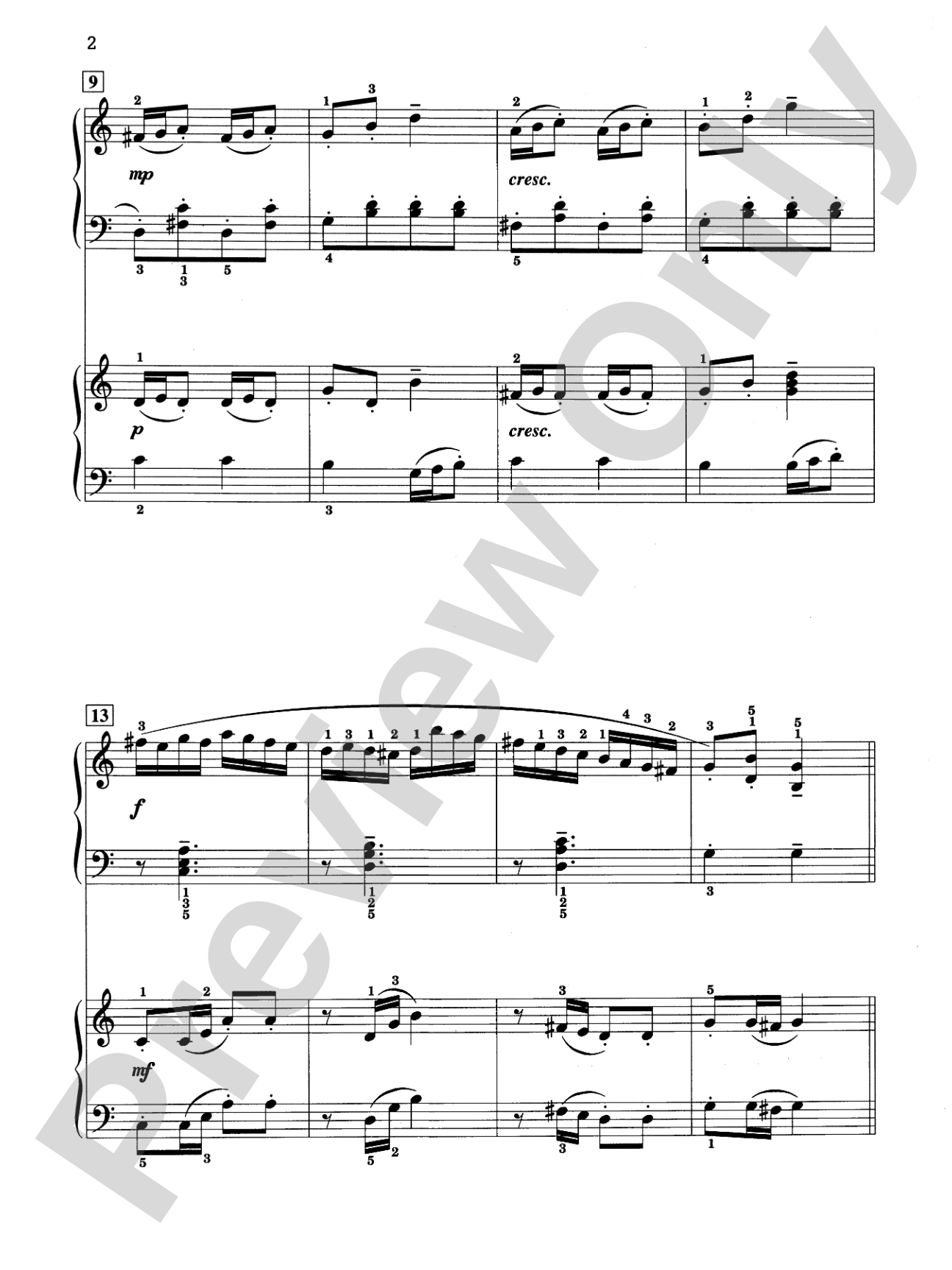
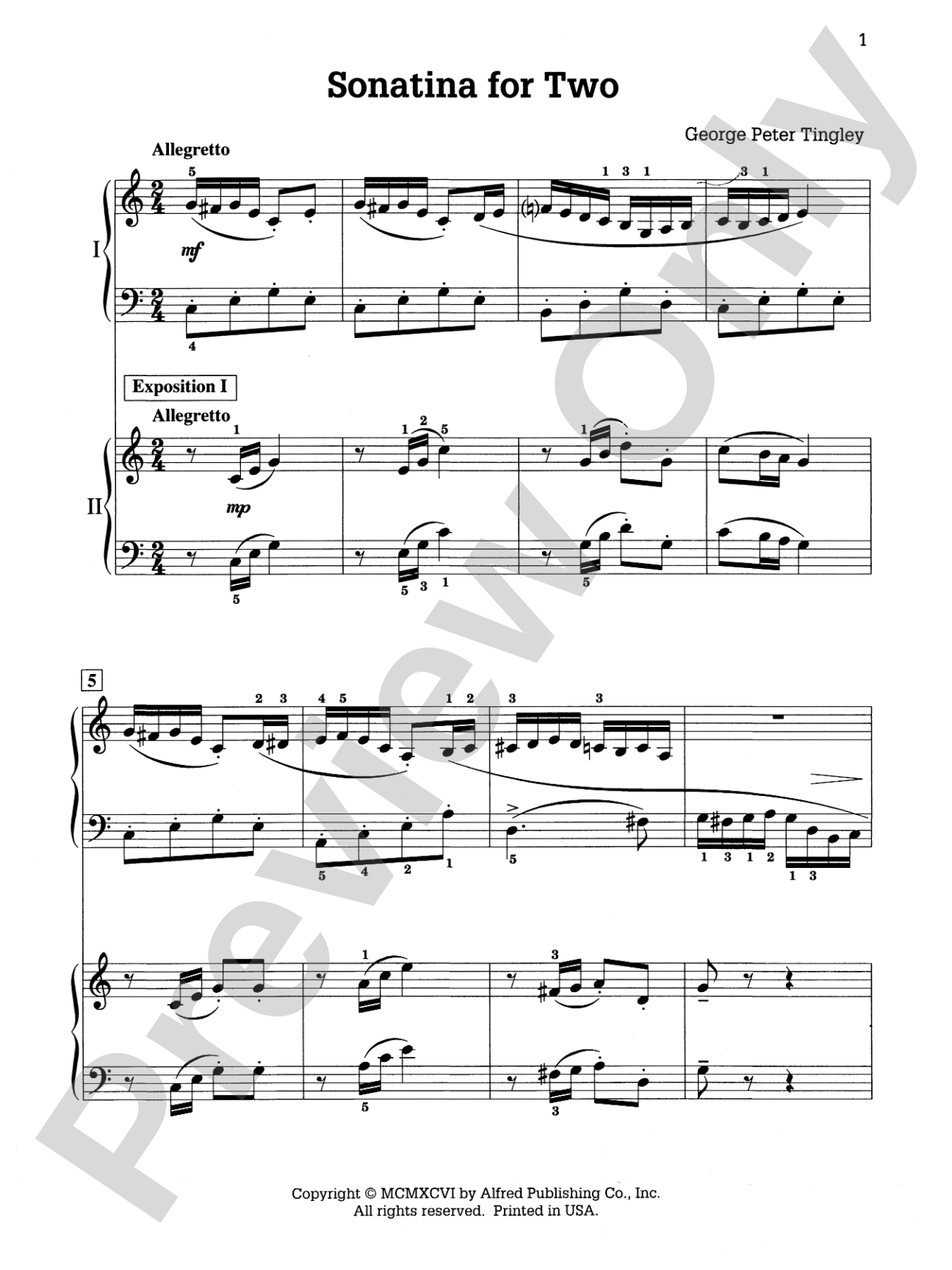
Sonatina for Two - Piano Duo (2 Pianos, 4 Hands) Sheet Music Preview

Sonatina for Two - Piano Duo (2 Pianos, 4 Hands): Piano Duets & Four Hands

By George Peter Tingley

Level: Intermediate

Item: 00-PB-0000840

Digital Download
$6.99
Description
This sonatina for intermediate piano ensemble---two pianos, four hands---remains true to the form, with two expositions, development and recapitulation clearly labeled for the performers. It is in the key of C major and 2/4 meter, with an allegretto tempo marking. Two copies are included. A Federation Festivals 2024-2028 selection.

Sonatina for Two - Piano Duo (2 Pianos, 4 Hands): Piano Duets & Four Hands isn't in MakeMusic Cloud just yet...but it could be. Let us know you'd like to see it, and you'll help shape what comes next. In the meantime, start a free trial and dive into thousands of interactive titles your students can play along with today.

Sample Audio
No sample audio found.
Sample Video
Additional Details
Publisher: Alfred Music
Page Count: 16
SKU: 00-PB-0000840

More about this title

About the Composer: George Peter Tingley

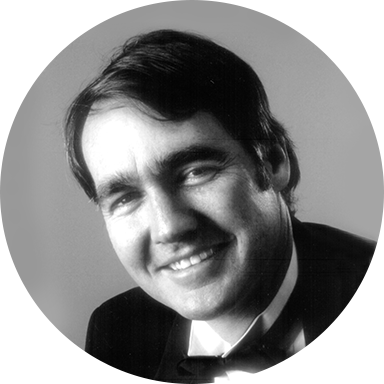
George Peter Tingley

George Peter Tingley is a composer, pianist, and educator based in Point Richmond, California. He earned degrees in Piano Performance from California State University, Hayward, and completed both Bachelor and Master of Music degrees in Music Theory at the University of Southern California. During the 1970s, he studied composition privately with Nadia Boulanger in Paris.

Tingley has been writing for music education since 1989 and has over 75 published piano works to his name. His compositions span solo repertoire, duet collections, and pieces for special occasions, including a work for Olympic figure skater Kristi Yamaguchi that was arranged for full orchestra and recorded with Tingley as piano soloist. His collection Fiddle and the Tuba, a teacher-student piano duet series, is recognized by the National Federation of Music Clubs.

Why we love this

This sonatina proves that intermediate ensemble writing doesn't require padding or compromise. Tingley respects the form completely: two clear expositions, a functioning development section, and a proper recapitulation, all spelled out so performers understand the architecture they're playing. The straightforward C major tonality and 2/4 meter make it accessible without being reductive, and its Federation Festivals selection confirms it earns its place in recital programming.

What to expect

Elegant and purposeful. The piece moves with classical clarity in C major, maintaining the bright directness of the key while the 2/4 meter gives it a lean, spirited quality. The formal architecture unfolds naturally, letting the musical ideas breathe without unnecessary complication.

Who it's for

Intermediate piano duets players preparing for recitals, festivals, or ensemble concerts. Two pianists at similar technical levels will find the part writing accessible and musically satisfying, whether they're high school students exploring duo literature or adults in community music programs.

How to get the most out of it

  • Balance the two pianos equally during the exposition so both themes register clearly; this isn't a primo-secondo hierarchy but a true dialogue between voices.
  • Use the labeled sections to shape longer phrases across the development; having the form clearly marked lets pianists plan their dynamic arc from the start.
  • Coordinate tempo carefully in passages where the two pianos interlock rhythmically; even small timing drift becomes audible at the allegretto pace.
  • Practice the recapitulation transition together multiple times; returning to the first theme with both pianos needs precision to feel purposeful rather than abrupt.

How to use it

Program this at a spring recital or festival where you want to showcase ensemble work that stands on its own merit rather than filling a time slot. It pairs well with solo repertoire from the same level, and the clean sonata form makes it an excellent teaching tool for pianists understanding how classical structure actually works in performance.

Skills your students will build

  • Balancing two independent piano lines in real time
  • Understanding sonata form through labeled structural sections
  • Coordinating tempo and ensemble integrity across two instruments
  • Sustaining musical ideas across longer phrases in a duo context

You May Also Like