
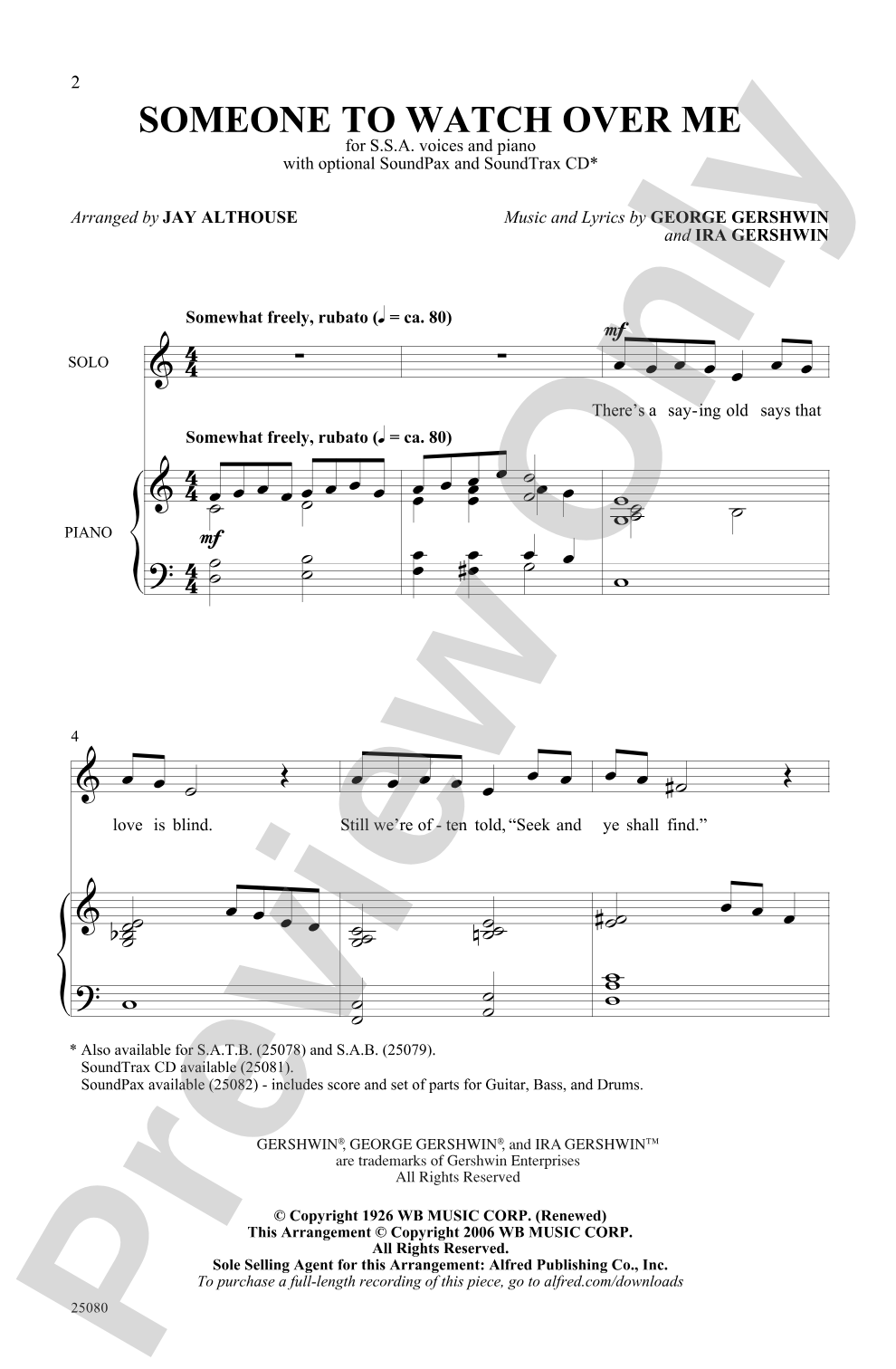

Someone to Watch Over Me: SSA Choral Octavo
By George Gershwin and Ira Gershwin / arr. Jay Althouse
Item: 00-PO-0002235
$2.10
Minimum order quantity: 20 copies
One moment…
Related Items
Someone to Watch Over Me: SoundTrax Digital Audio Download |
$27.99
|
View | |
Someone to Watch Over Me: SATB Choral Octavo |
$2.10
|
View | |
Someone to Watch Over Me: SAB Choral Octavo |
$2.10
|
View | |
Someone to Watch Over Me: Choral SoundPax |
$15.00
|
View | |
Someone to Watch Over Me: SAB Choral Octavo |
$2.10
|
View | |
Someone to Watch Over Me: SSA Choral Octavo |
$2.10
|
View | |
Someone to Watch Over Me: Choral Octavo SoundTrax CD |
$27.99
|
View | |
Someone to Watch Over Me: Choral SoundPax |
$15.00
|
View |
Description
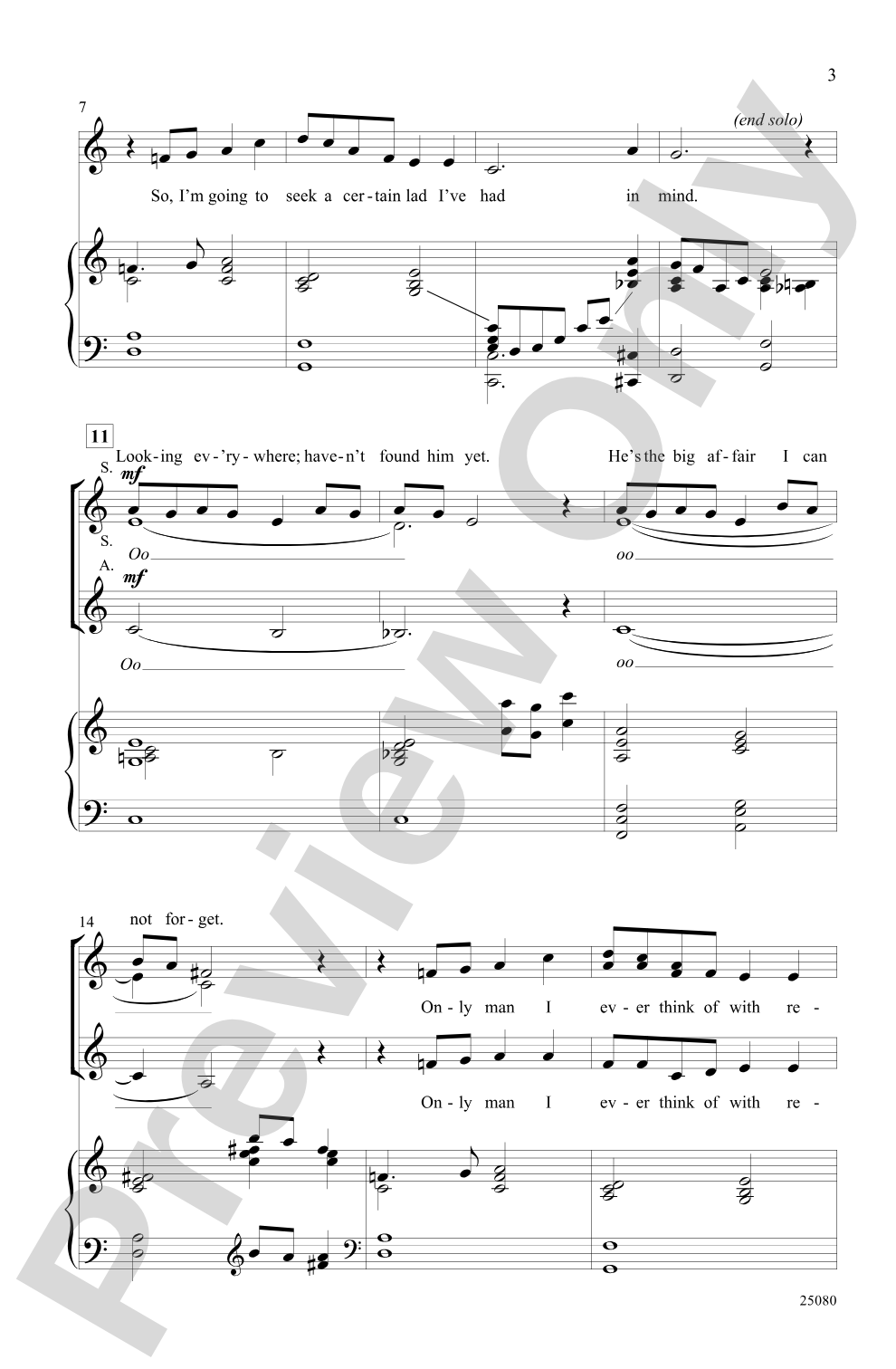
George Gershwin's classic song comes from the score of his Broadway musical Oh, Kay!, and has been recorded by everyone from Frank Sinatra to Willie Nelson. Jay's new arrangement takes a pure choral approach, and includes the poignant verse which introduces the song's beautifully melodic chorus. Choral writing at its best. This title is available in Music Prodigy.


Someone to Watch Over Me: SSA Choral Octavo isn't in MakeMusic Cloud just yet...but it could be. Let us know you'd like to see it, and you'll help shape what comes next. In the meantime, start a free trial and dive into thousands of interactive titles your students can play along with today.
Request This Title
Tell us you want it.
Start Your Free Trial
Explore everything that's ready to play right now.
Sample Audio
1
Audio File
--:--
0:00
0:00
Sample Video
No sample videos found.
Additional Details
Series:
Alfred Pop Choral Series
Publisher:
Alfred Music
Page Count:
8
SKU:
00-PO-0002235
More about this title
About the Composer: George Gershwin
George Gershwin (1898-1937) bridged concert music and popular song with an ease that few composers have matched. His ability to weave jazz idioms, blues tonality, and sophisticated harmony into melodies of immediate appeal made him one of the most influential American composers of the twentieth century. Works like Rhapsody in Blue and An American in Paris remain central to both the classical and jazz repertoires.
Gershwin's Broadway scores, written with his brother Ira as lyricist, defined an era of American musical theatre. His songs endure because they balance accessibility with genuine musical substance, a quality that makes them invaluable for choral musicians learning to honor both the integrity of a song and the voices that sing it.
Why we love this
Jay Althouse's arrangement preserves the song's intimate character while giving SSA choirs real musical substance to work with. The inclusion of the verse transforms this from a one-dimensional hit into a complete arc, moving from quiet introspection to the soaring warmth of the chorus. Gershwin's harmonic sophistication shines through without overwhelming singers at this level.
What to expect
Tender and protective. The verse unfolds like a quiet confession, with delicate harmonies supporting the vulnerability in the melody. When the chorus arrives, warmth blooms but never loses its gentleness, creating a piece that feels both timeless and intimate.
Who it's for
SSA choirs with solid intonation and the ability to blend three parts cleanly. This arrangement works for high school ensembles and community choirs alike, especially those looking to program sophisticated popular music that respects both singer and listener.
How to get the most out of it
- Shape the verse with understated dynamics and clear text projection; this section establishes the emotional foundation that makes the chorus land with full impact.
- Balance the three voice parts so no single line dominates; the beauty lies in how the voices weave together, not in featuring any one part.
- Allow rubato in the chorus, particularly on the phrase that gives the song its title. This is a moment to breathe and shape, not to lock into strict time.
- Let the recorded accompaniment guide your ensemble's sense of swing and jazz inflection; the rhythm section's feel matters as much as note accuracy here.
How to use it
This belongs on a concert alongside other Great American Songbook standards or as a bridge between classical and contemporary repertoire. Its modest length and emotional directness make it ideal for a program that needs a moment of pure lyricism, or as a contrast to more energetic choral fare. The verse-chorus structure also makes it useful when you want to demonstrate song form to your singers.
Skills your students will build
- Blending three voices with independence and balance
- Singing jazz-inflected harmonies with accurate intonation
- Interpreting rubato and phrasing in a song-based context
- Understanding verse-chorus form and how to differentiate character between sections
- Expressing vulnerability and lyricism through controlled dynamics