
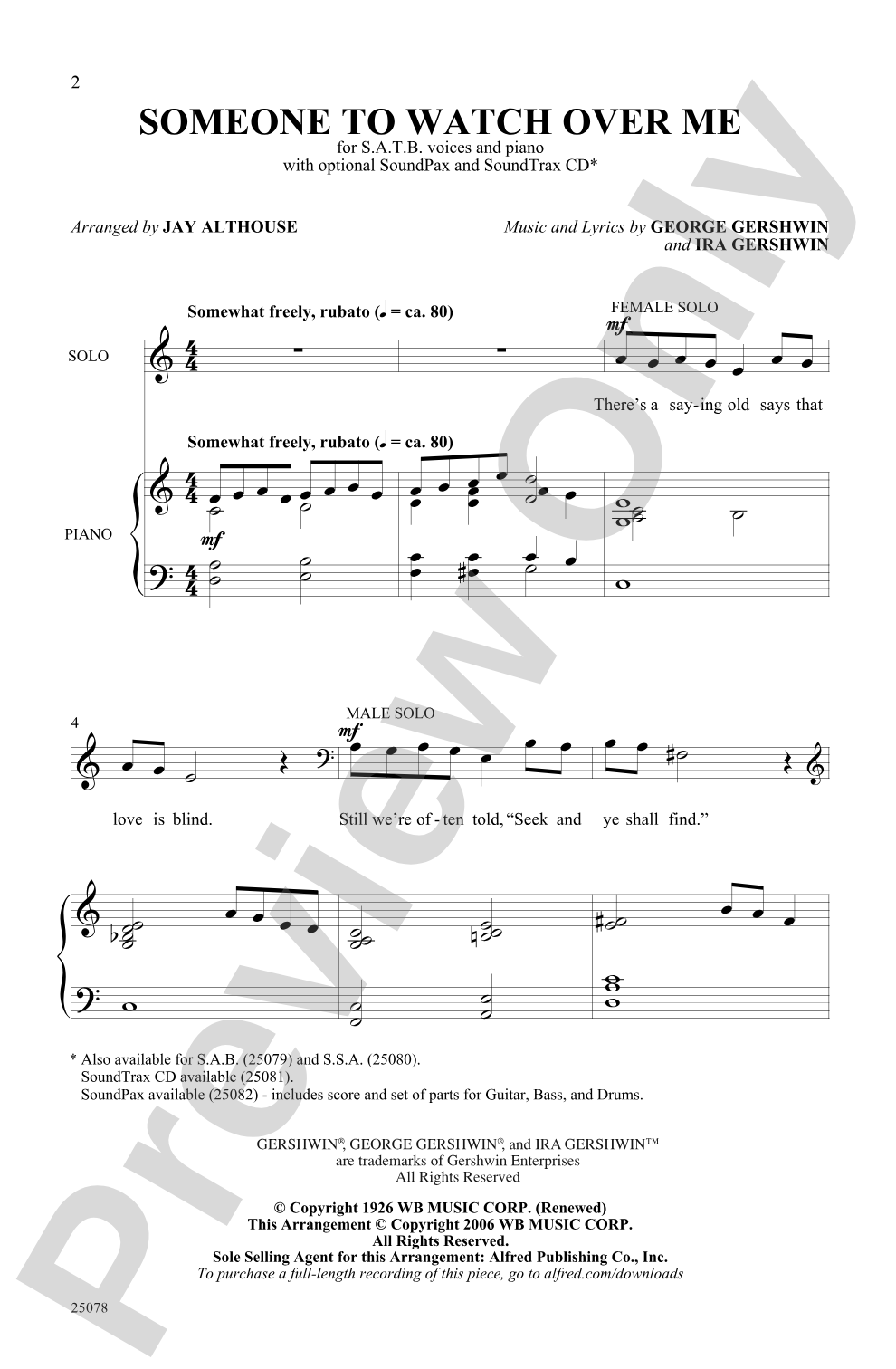

Someone to Watch Over Me: SATB Choral Octavo
By George Gershwin and Ira Gershwin / arr. Jay Althouse
Item: 00-PO-0002233
$2.10
Minimum order quantity: 20 copies
One moment…
Related Items
Someone to Watch Over Me: SoundTrax Digital Audio Download |
$27.99
|
View | |
Someone to Watch Over Me: SAB Choral Octavo |
$2.10
|
View | |
Someone to Watch Over Me: SSA Choral Octavo |
$2.10
|
View | |
Someone to Watch Over Me: Choral SoundPax |
$15.00
|
View | |
Someone to Watch Over Me: SAB Choral Octavo |
$2.10
|
View | |
Someone to Watch Over Me: SSA Choral Octavo |
$2.10
|
View | |
Someone to Watch Over Me: Choral Octavo SoundTrax CD |
$27.99
|
View | |
Someone to Watch Over Me: Choral SoundPax |
$15.00
|
View |
Description
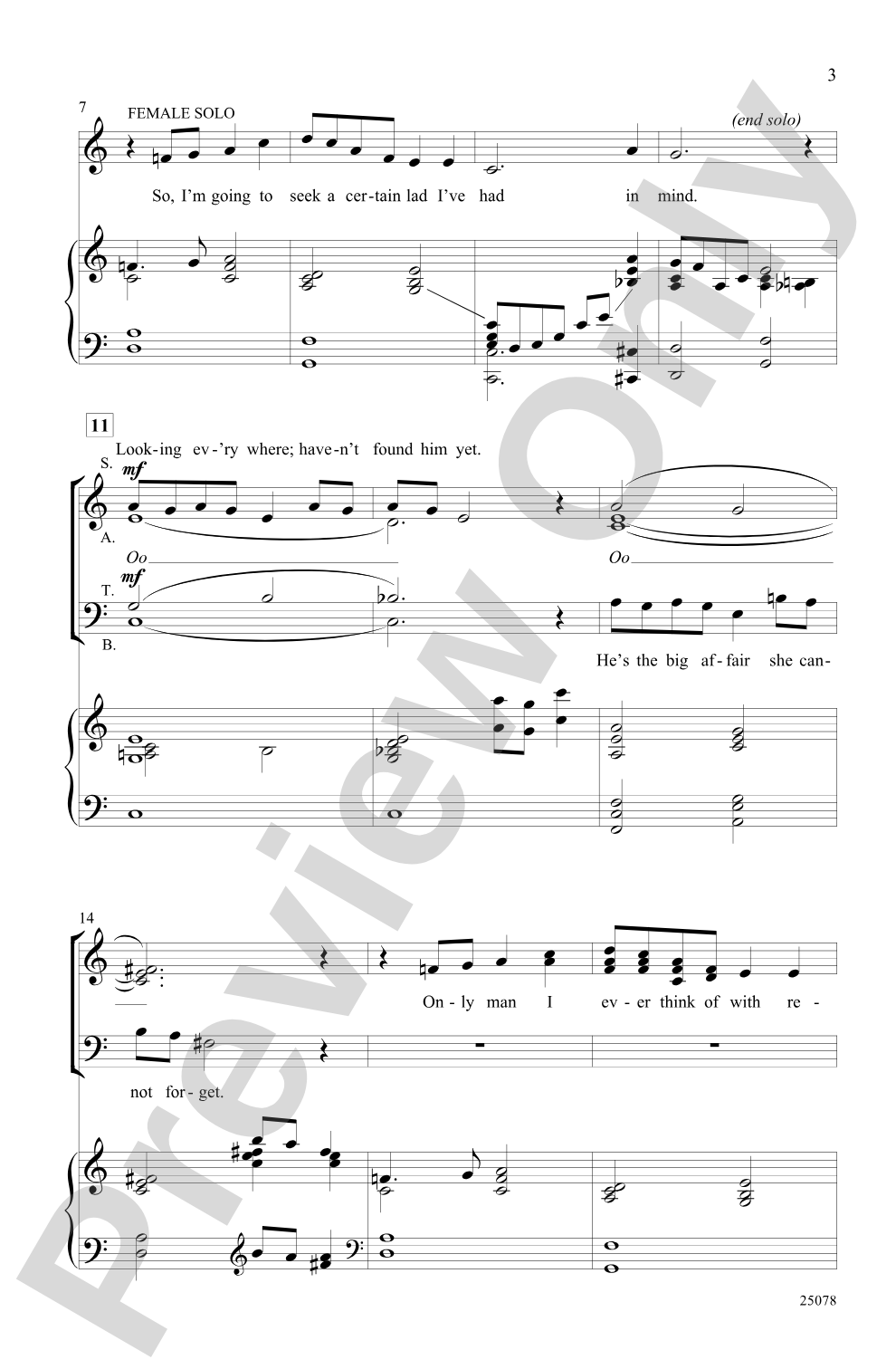
George Gershwin's classic song comes from the score of his Broadway musical Oh, Kay!, and has been recorded by everyone from Frank Sinatra to Willie Nelson. Jay's new arrangement takes a pure choral approach, and includes the poignant verse which introduces the song's beautifully melodic chorus. Choral writing at its best. This title is available in Music Prodigy.


Someone to Watch Over Me: SATB Choral Octavo isn't in MakeMusic Cloud just yet...but it could be. Let us know you'd like to see it, and you'll help shape what comes next. In the meantime, start a free trial and dive into thousands of interactive titles your students can play along with today.
Request This Title
Tell us you want it.
Start Your Free Trial
Explore everything that's ready to play right now.
Sample Audio
1
Audio File
--:--
0:00
0:00
Sample Video
No sample videos found.
Additional Details
Series:
Alfred Pop Choral Series
Publisher:
Alfred Music
Page Count:
8
SKU:
00-PO-0002233
More about this title
About the Composer: George Gershwin
George Gershwin (1898-1937) bridged classical composition and popular song in ways that few American composers have matched. His gift for melody and harmonic sophistication made him equally at home writing for Broadway, the concert hall, and the jazz ensemble. Gershwin's work remains central to music education because it demonstrates that serious artistry and accessibility are not opposing forces.
Beyond his concert works like Rhapsody in Blue, Gershwin's theatrical songs shaped American musical culture. Collaborating with his brother Ira as lyricist, he created standards that have outlasted their original contexts by decades. For choral directors, his melodies offer rich harmonic possibilities and genuine emotional depth, making his songs ideal for singers at any level seeking material with both substance and lasting appeal.
Why we love this
Jay Althouse's arrangement respects the song's golden-age charm while giving it room to breathe in choral voices. The inclusion of the verse alongside the famous chorus provides narrative arc and prevents the arrangement from feeling like a single melodic statement. This is the kind of accessible standard that singers actually enjoy performing, and audiences recognize immediately.
What to expect
Gentle and confiding, like someone sharing a quiet reassurance. The verse settles into introspection before the chorus opens into something more luminous. There's vintage warmth here, a sense of stepping into a timeless moment, without feeling dated.
Who it's for
Choirs with solid blend and pitch control looking for material that feels both familiar and musically rewarding. This arrangement works for high school through community levels, provided singers can track a jazz-inflected harmonic language and sustain long phrases.
How to get the most out of it
- Balance the verse carefully so it draws listeners in rather than overshadowing the chorus. The verse introduces the emotional context, so singers should approach it with warmth but without rushing the phrase.
- Lock the harmonic progressions in rehearsal by having each section sing their line against a sustained root from the piano. Gershwin's chords are colorful and worth hearing clearly.
- Shape the phrase endings with intention. This style rewards singers who listen to recorded versions from the Great American Songbook tradition and notice how vocalists linger slightly on cadential moments.
- Use the recorded accompaniment to establish the groove and style early in rehearsal. The arrangement assumes a light touch; resist heavy, overpowering dynamics even in the chorus.
How to use it
Program this alongside other American standards or jazz-adjacent repertoire for a concert that celebrates the Great American Songbook without leaning into novelty. It works equally well as a closing ballad for a pop or musical theatre concert, or as a bridge piece between classical and contemporary sets. The eight-page length makes it manageable for a varied program without consuming rehearsal time.
Skills your students will build
- Sustaining long vocal lines with consistent tone quality
- Singing jazz-influenced harmonic progressions and secondary dominants
- Tracking lyrical phrasing conventions from the American songbook tradition
- Balancing independence in four-part harmony while maintaining ensemble blend
- Interpreting a song's dramatic arc across verse and chorus