
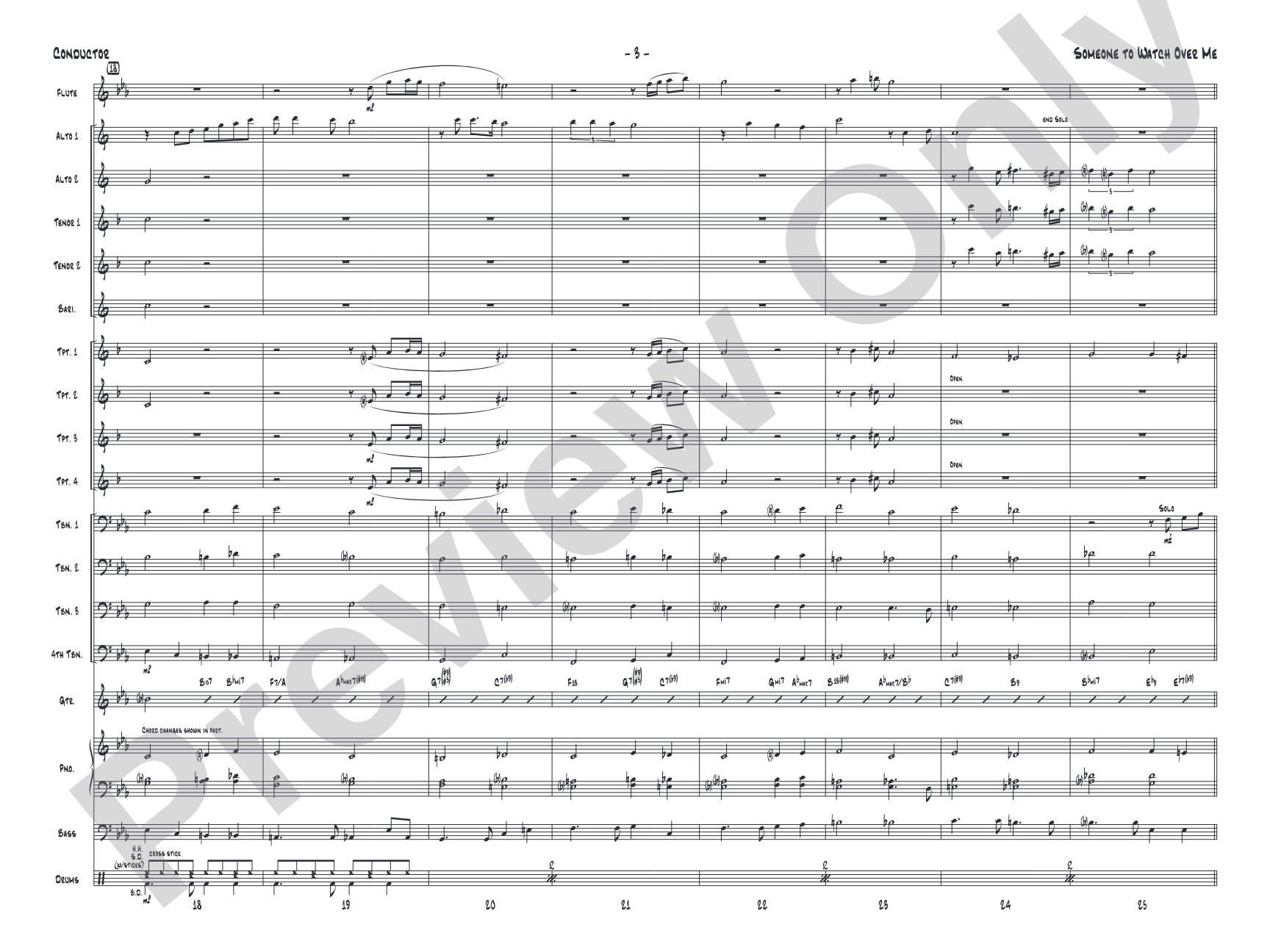
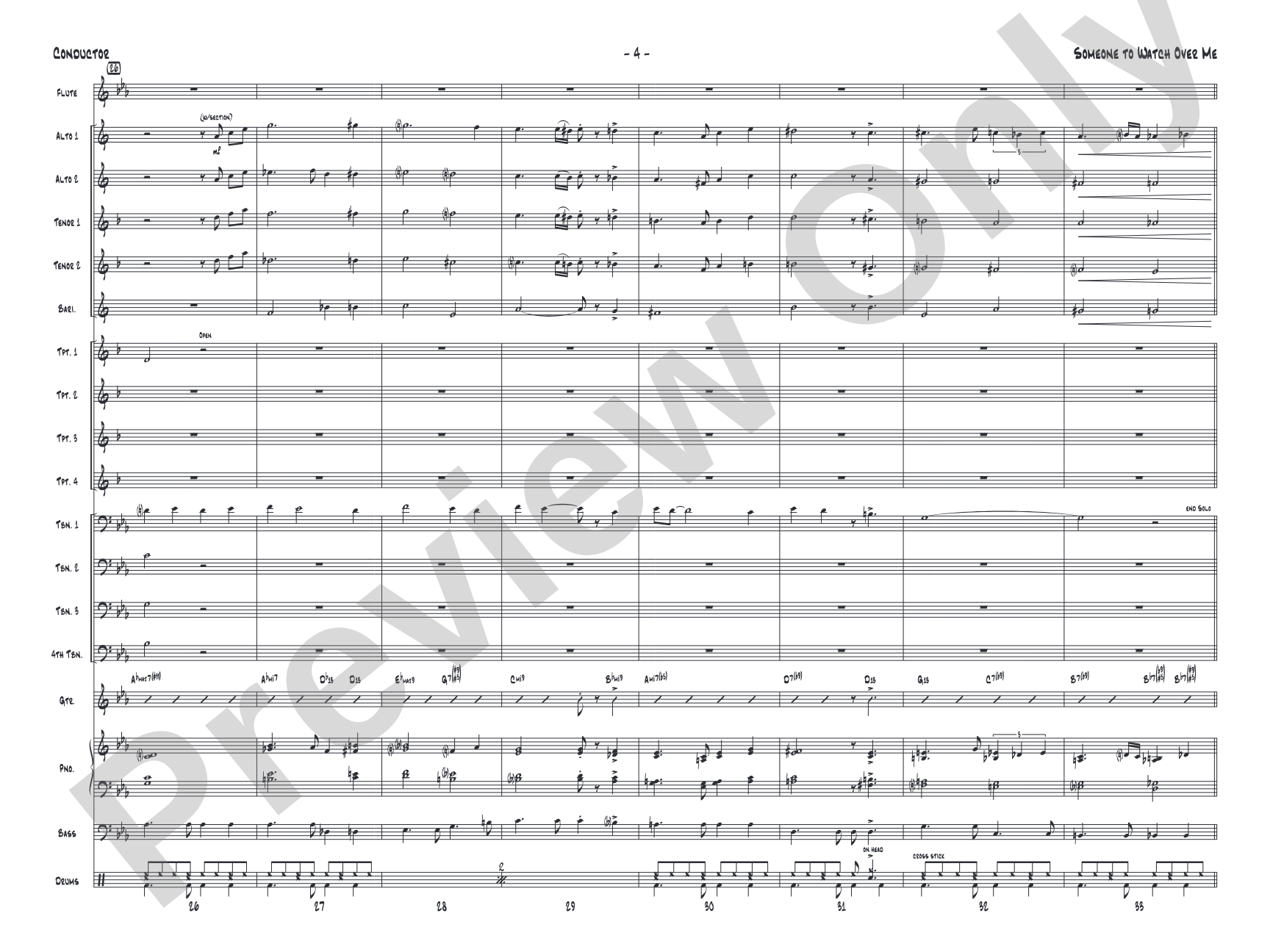
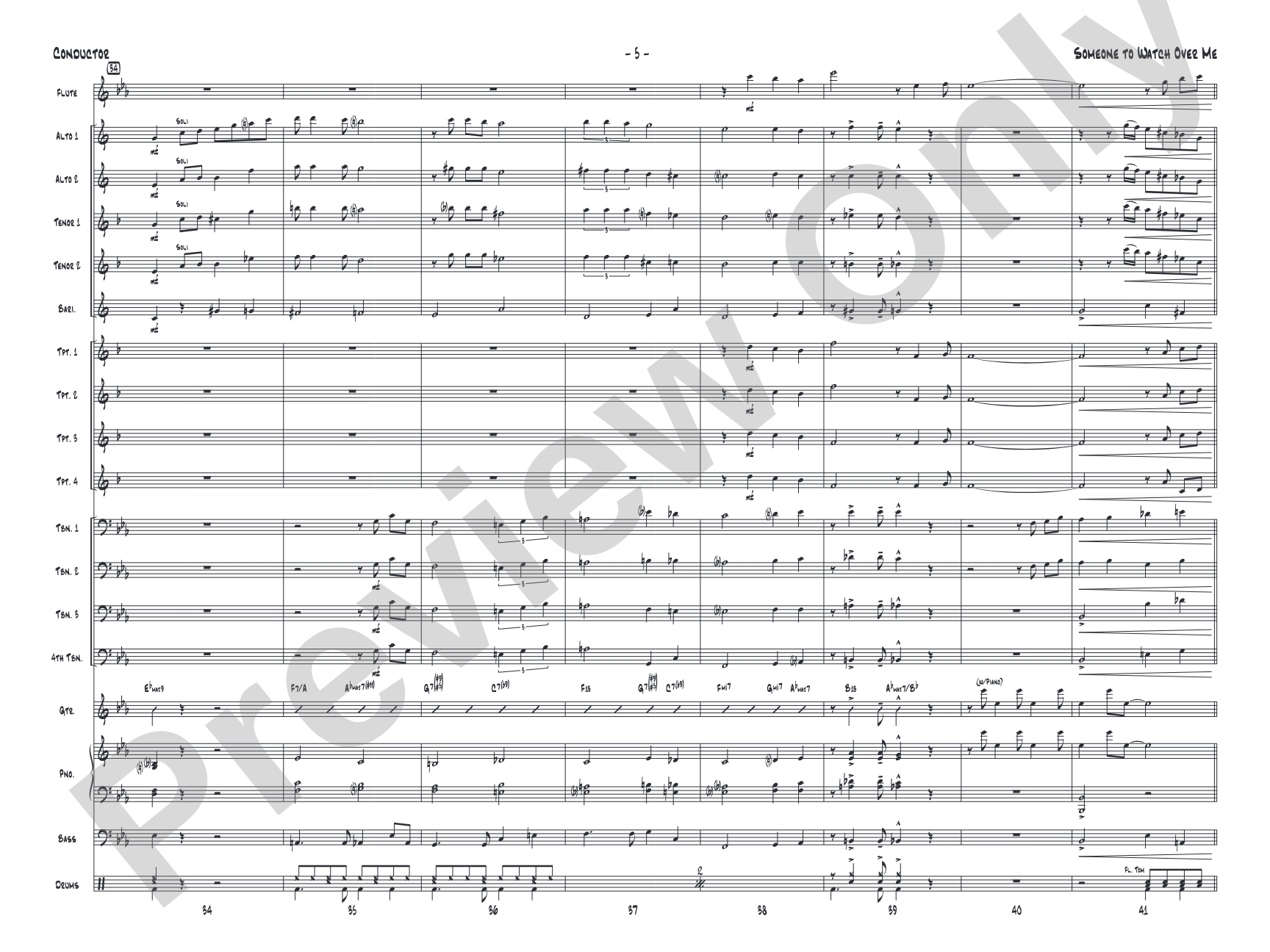
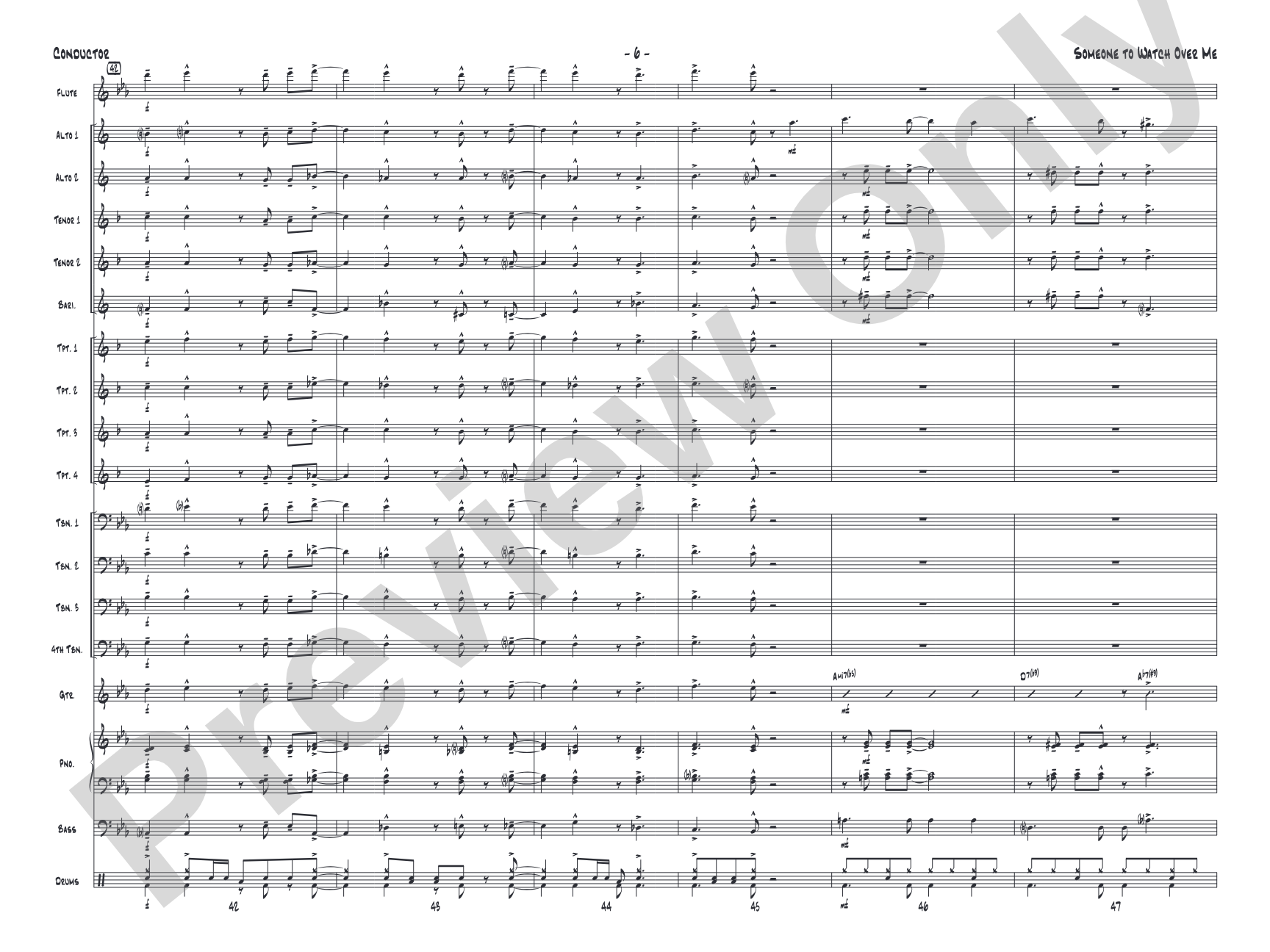


Someone to Watch Over Me: Jazz Ensemble Conductor Score & Parts
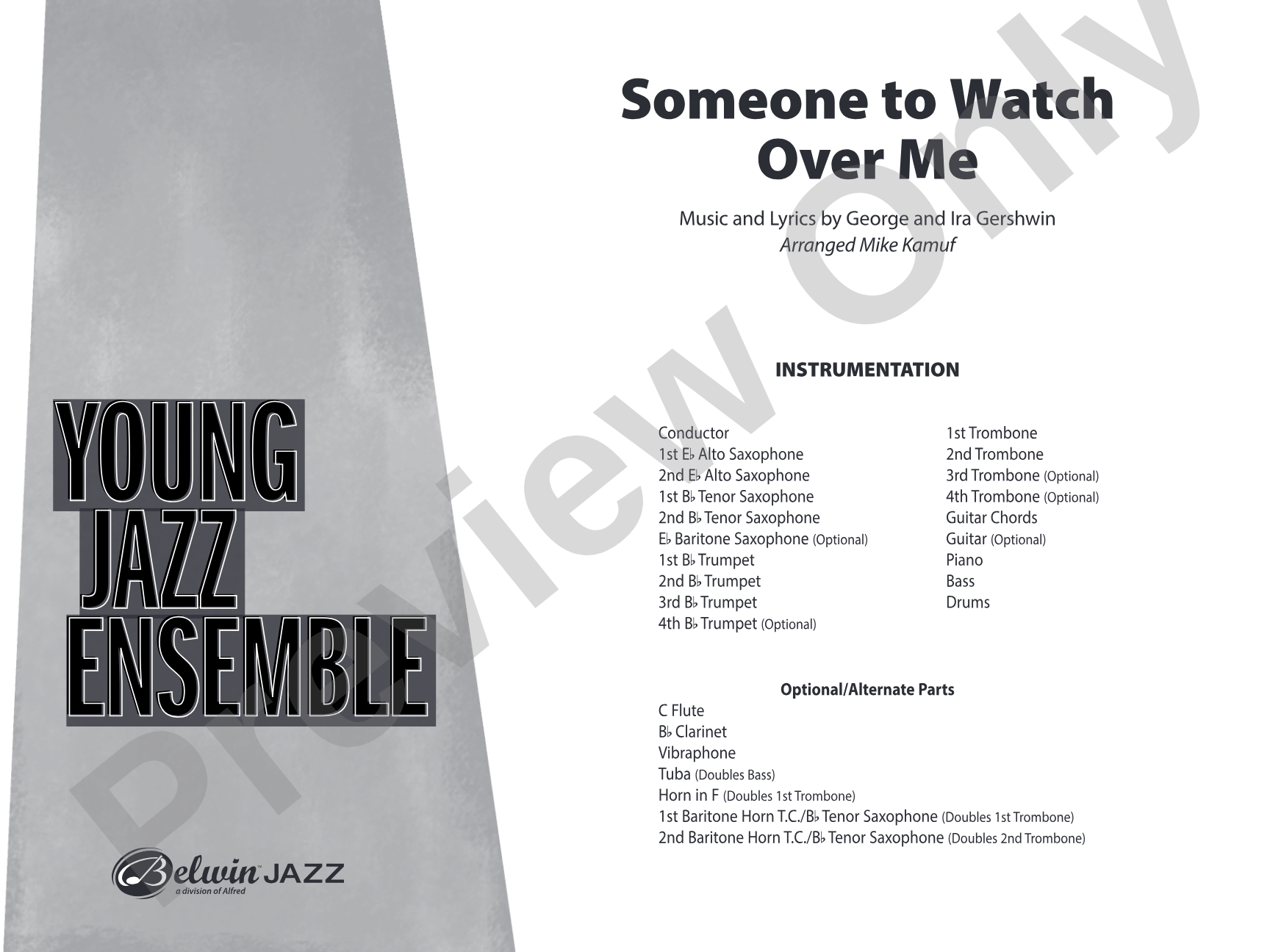
Music and Lyrics by George Gershwin and Ira Gershwin / arr. Mike Kamuf
Grade: 2.5
Item: 00-PK-0009571
$52.00
Pickup currently not available
Buy Extra Parts (Digital PDF Download)
Parts Added to Cart!
Description
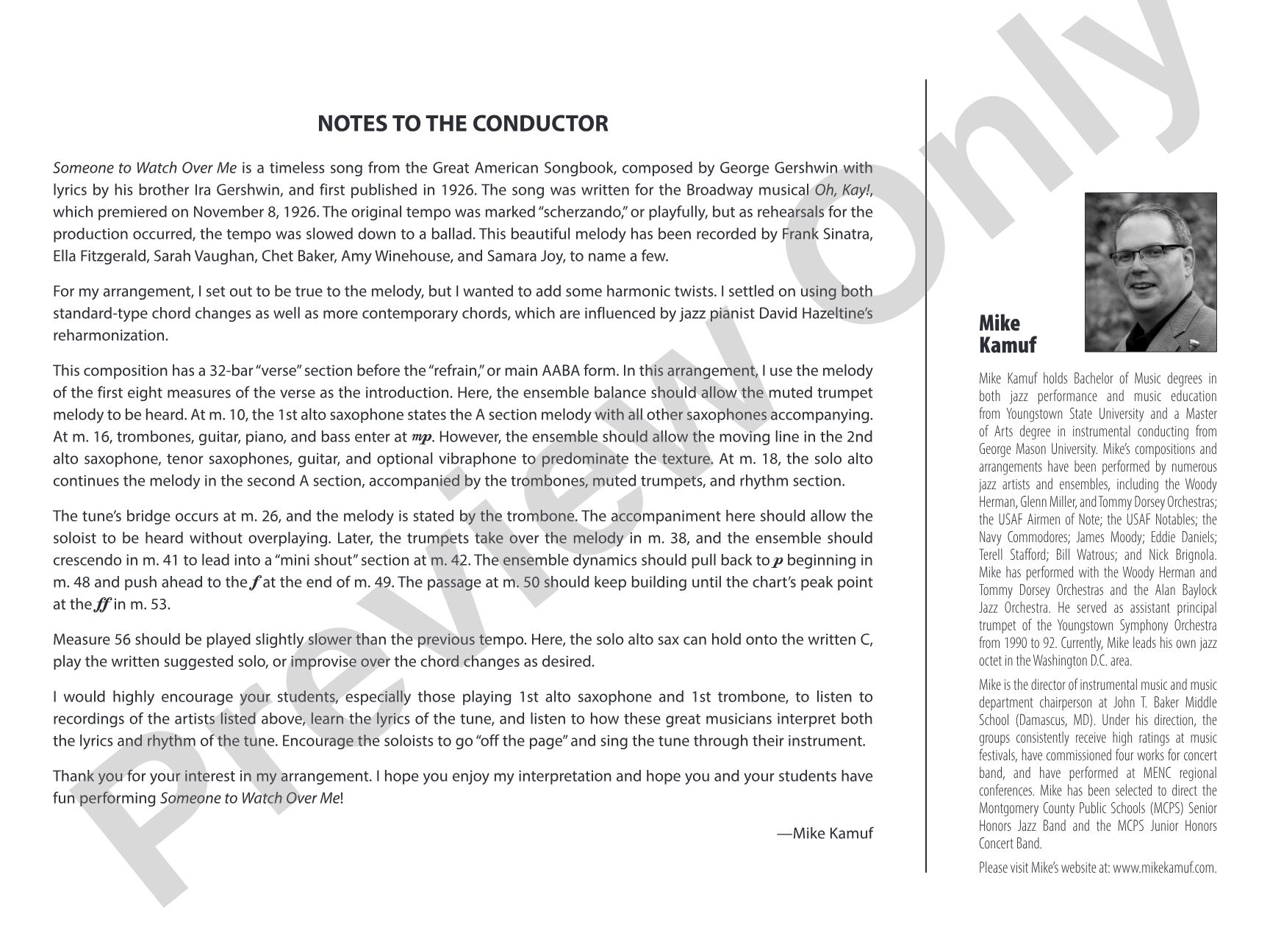
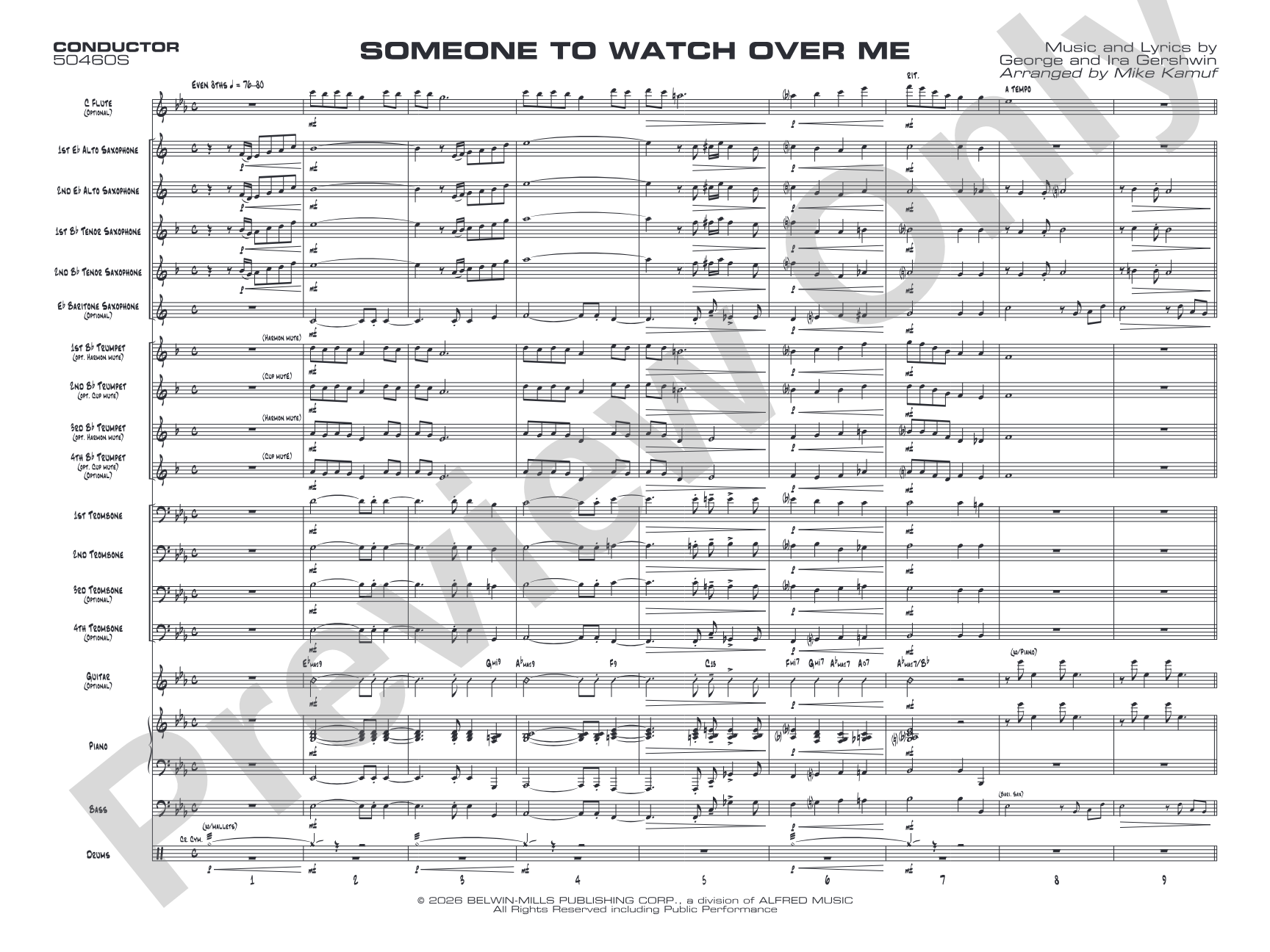
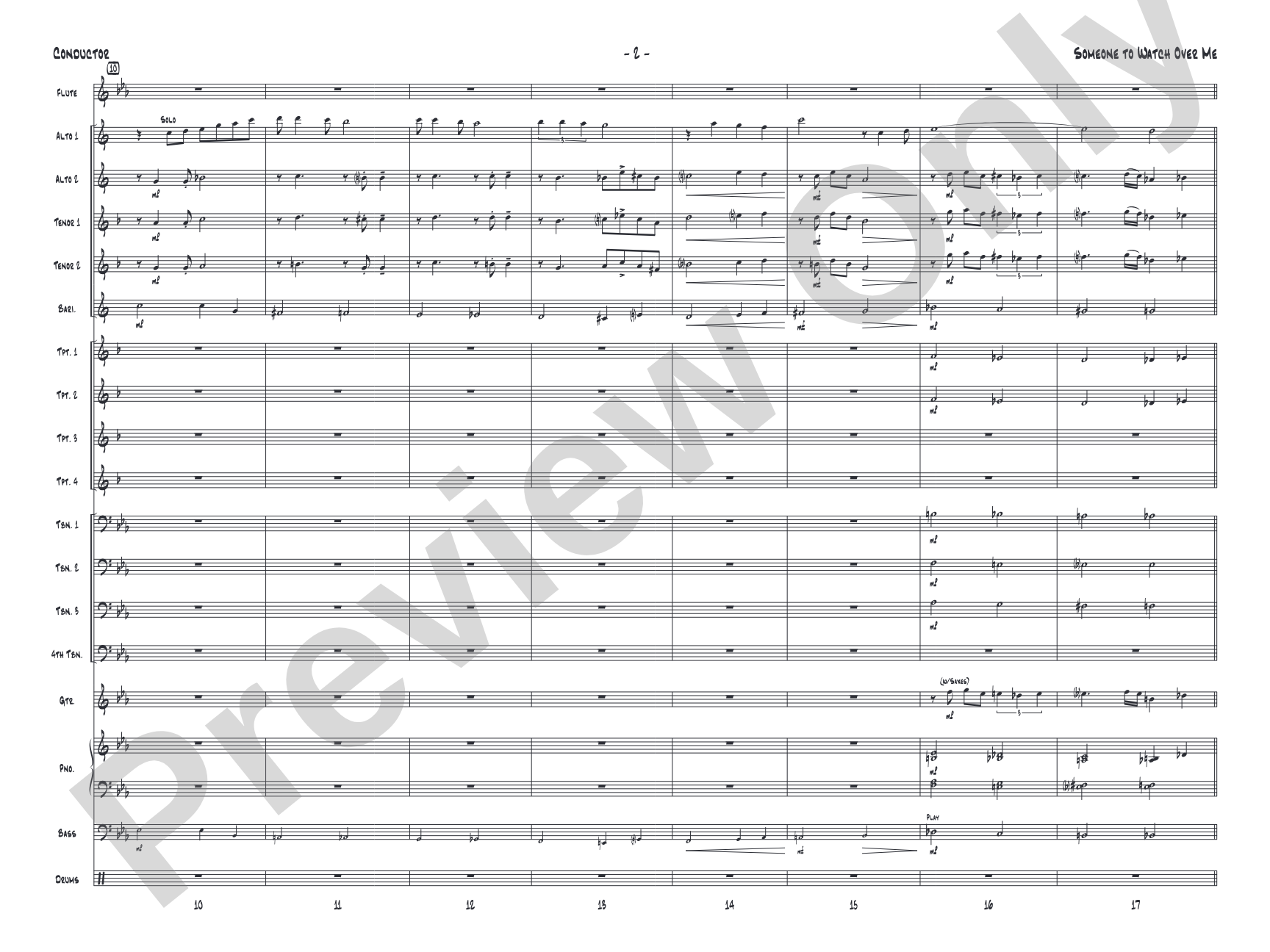
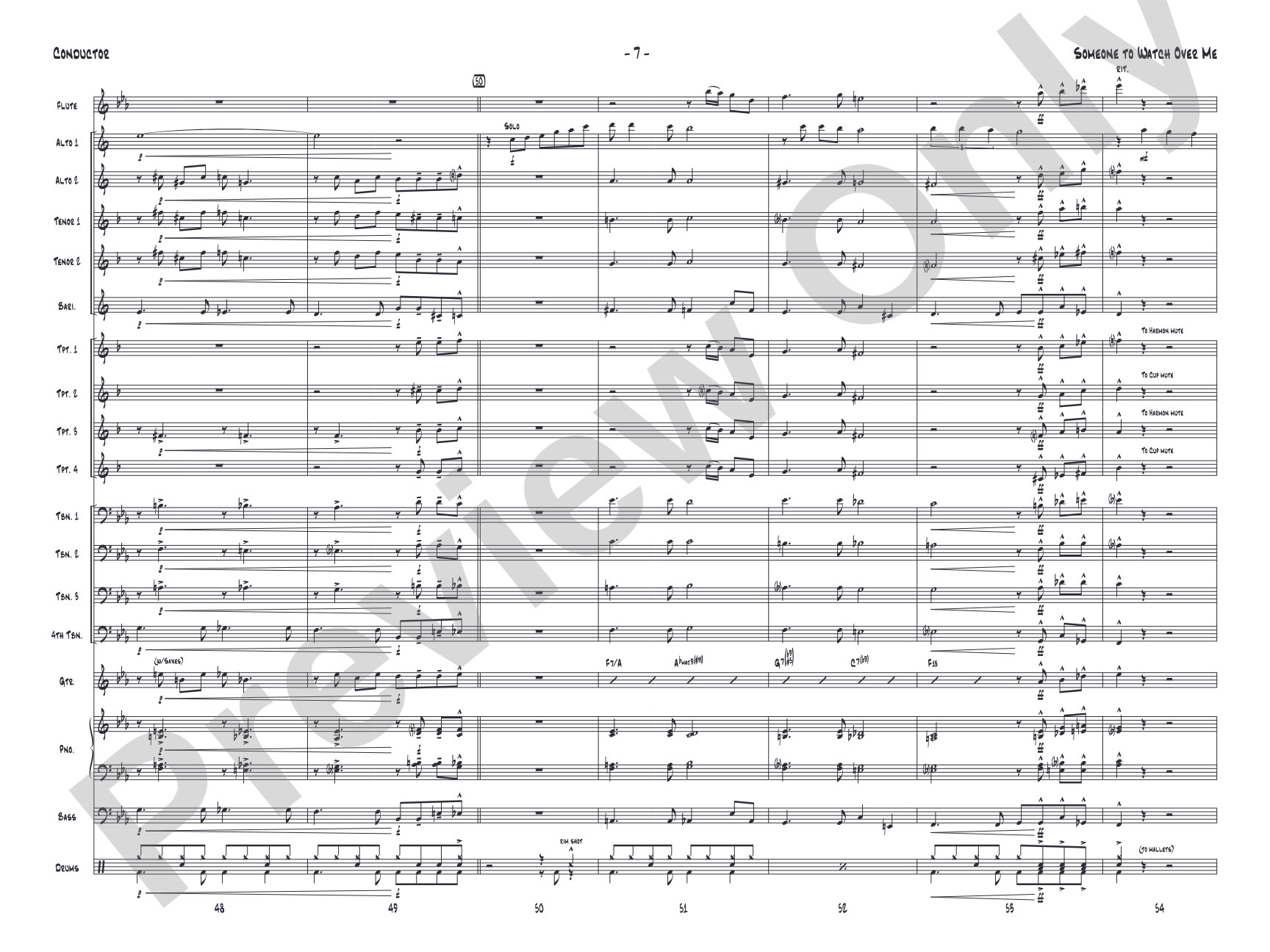
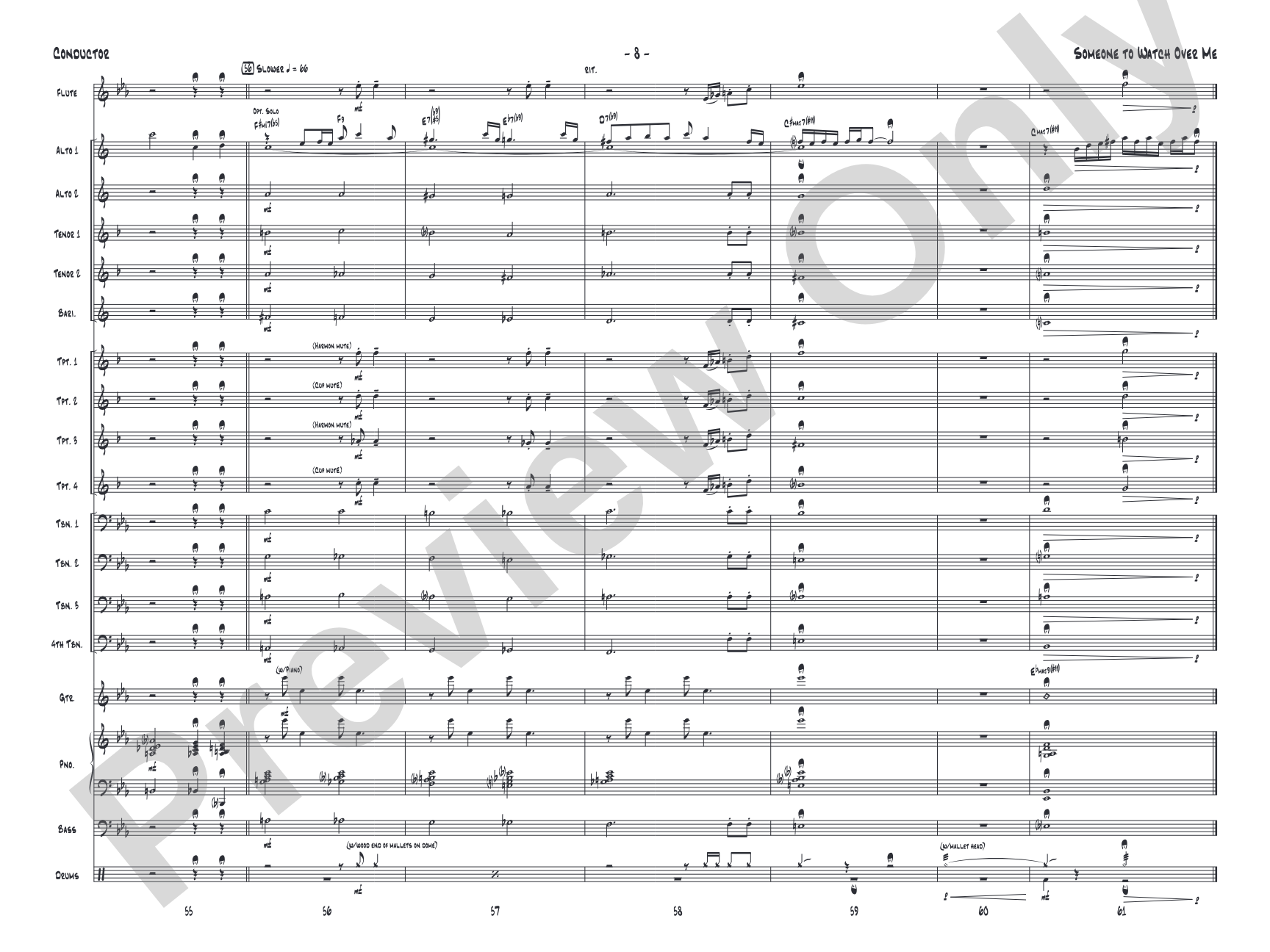
A show-stopping alto feature on this gorgeous Gershwin classic. A ballad played around 76 BPM, no improvisation (optional noodle), a sweet ensemble shout section, and the lead trumpet range to written G on the staff. Optional parts include flute and vibes.


Someone to Watch Over Me: Jazz Ensemble Conductor Score & Parts isn't in MakeMusic Cloud just yet...but it could be. Let us know you'd like to see it, and you'll help shape what comes next. In the meantime, start a free trial and dive into thousands of interactive titles your students can play along with today.
Request This Title
Tell us you want it.
Start Your Free Trial
Explore everything that's ready to play right now.
Sample Audio
1
Audio File
--:--
0:00
0:00
Sample Video
Additional Details
Series:
Belwin Young Jazz
Publisher:
Alfred Music
SKU:
00-PK-0009571
More about this title
About the Composer: George Gershwin
George Gershwin (1898, 1937) was an American composer who bridged the worlds of classical music and popular song with unprecedented ease. His ability to infuse jazz idioms, blues inflections, and sophisticated harmony into works ranging from concert pieces to Broadway shows made him one of the most influential composers of the twentieth century.
For music educators, Gershwin's catalog offers repertoire that authentically reflects the jazz vernacular while maintaining structural and harmonic integrity. His melodies are instantly recognizable, his harmonies reward close listening, and his orchestrations demonstrate how to balance accessibility with musicianship.
Why we love this
Mike Kamuf's arrangement preserves the song's intimacy while giving it ensemble warmth, and the alto feature role makes it immediately engaging for students who don't always get the spotlight. The optional improvisation and the written-out ensemble shout give you flexibility to shape rehearsal intensity based on where your group is in the season. Alto saxophonists rarely get ballads this beautiful at this level.
What to expect
Gershwin's melody carries genuine vulnerability under its sophistication, and this arrangement honors that emotional core. The ensemble support feels like genuine companionship with the alto rather than accompaniment; it's a conversation that deepens as the form unfolds. There's a sweet, accessible lyricism here that makes audiences lean in.
Who it's for
Jazz ensemble directors at the high school or advanced middle school level who want a showcase piece that's musically substantial without demanding advanced improvisation chops. This works beautifully for ensembles with a strong alto saxophonist and a supportive rhythm section that can maintain ballad feel at 76 BPM without dragging.
How to get the most out of it
- Shape the alto solo with conversational phrasing rather than mechanical note-reading. The accompaniment needs to breathe with the soloist, so conduct with flexibility around phrase endings.
- Balance the alto against the ensemble carefully in the shout section. The feature role should remain audible, not buried by rhythm section or ensemble support.
- If you use the optional improvisation, establish clear boundaries in rehearsal (number of choruses, when to return to written melody). The 76 BPM ballad tempo invites space and reflection, so encourage the soloist to use silence as expressively as notes.
- The lead trumpet's written G sits comfortably for most players at this level, but listen for secure intonation at the top of phrases where young brass players often drift sharp.
How to use it
Slot this as a concert closer or a second-set opener where you want to shift energy to something intimate and reflective. It pairs well with more up-tempo swing pieces earlier in the program, and the ballad setting gives your audience a moment of rest without sacrificing musical substance. The optional flute and vibes parts also let you costume the arrangement to the instrumentation you have available that particular season.
Skills your students will build
- Ballad phrasing and breath control on a sustained solo line
- Ensemble blend and responsiveness in accompanying a featured voice
- Reading and executing optional improvisation within a set structure
- Interpreting Gershwin's harmonic language and jazz vocabulary
- Leading (for trumpet) and supporting (for ensemble) in a feature arrangement