
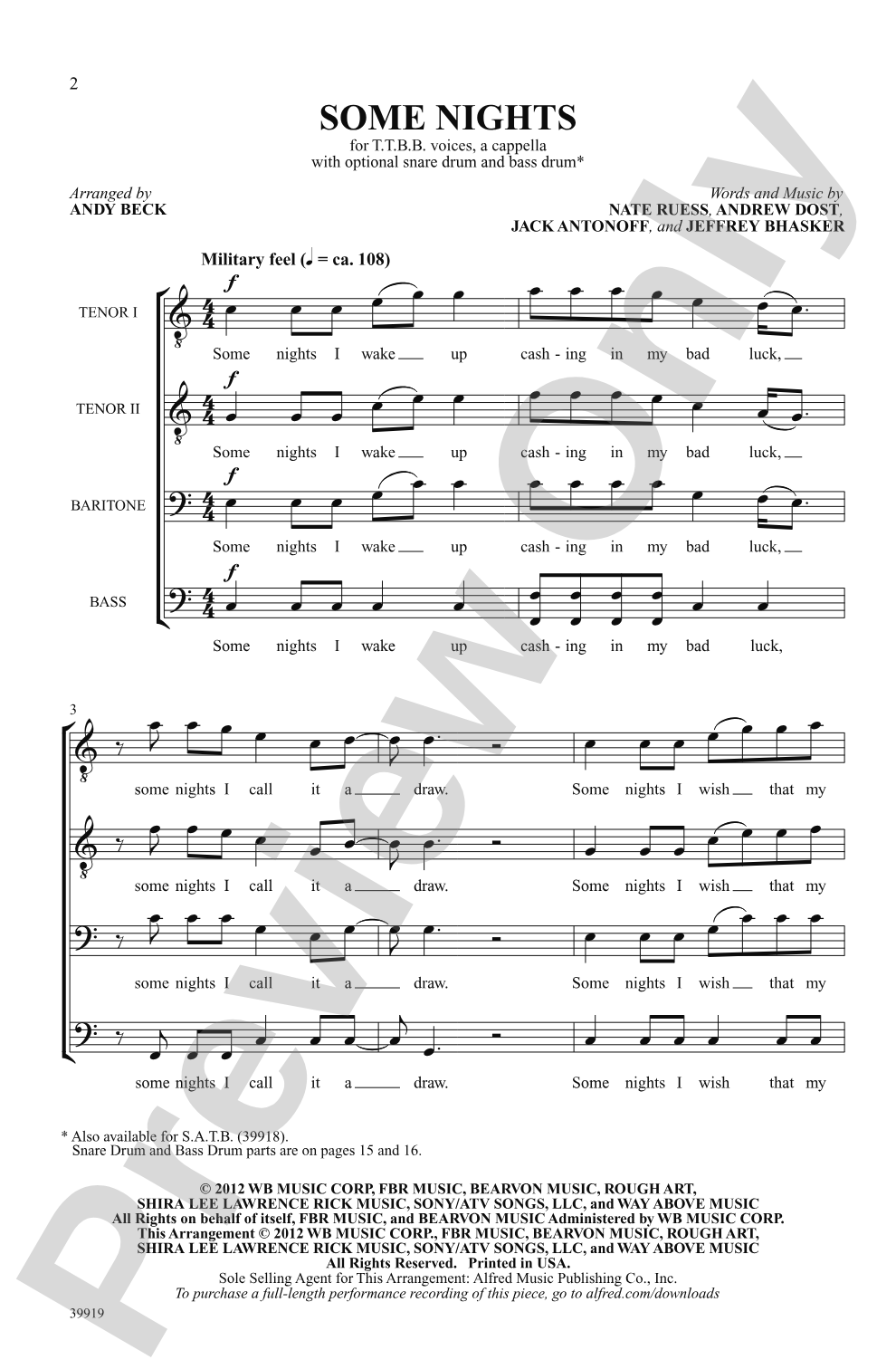
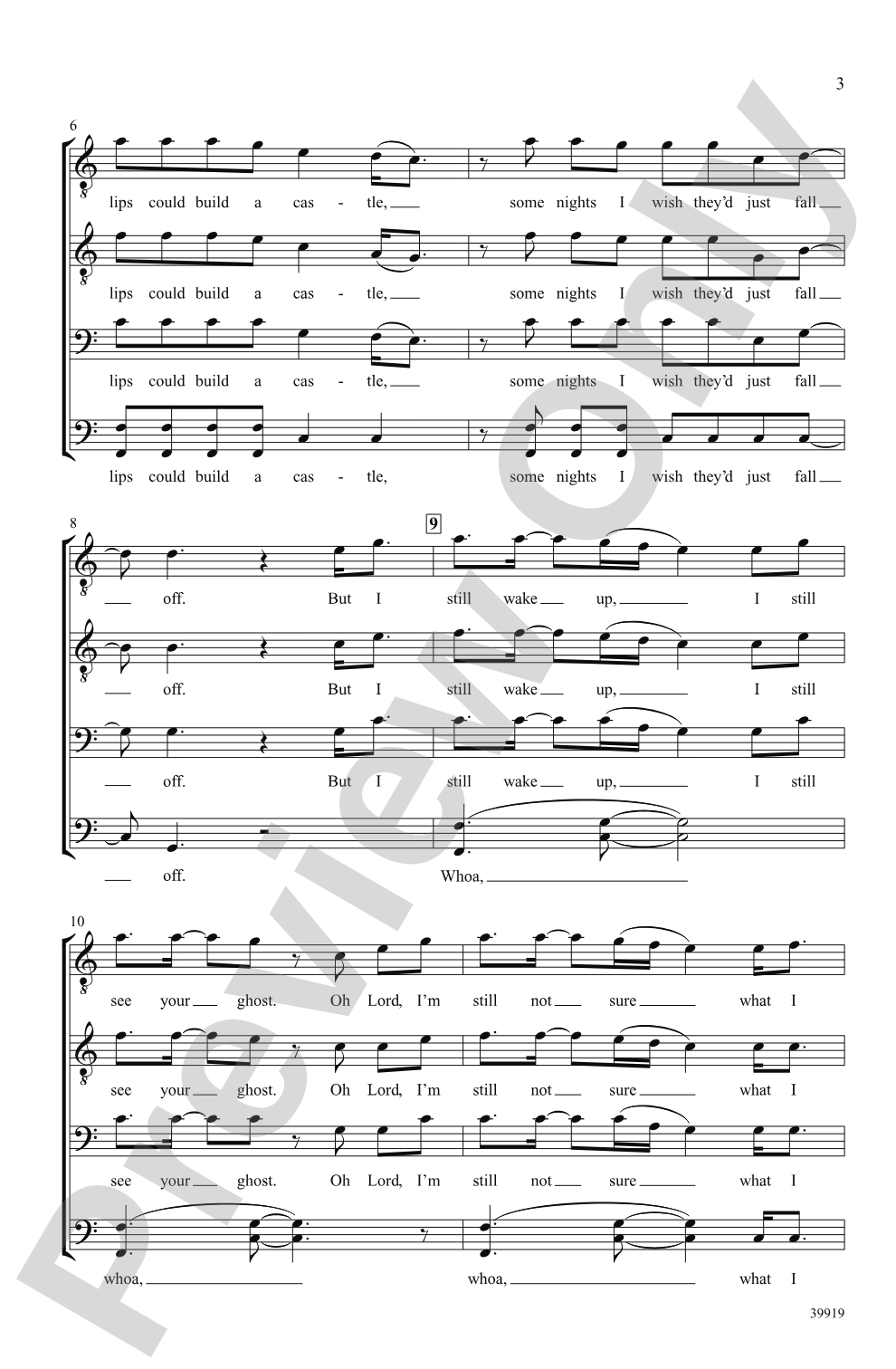
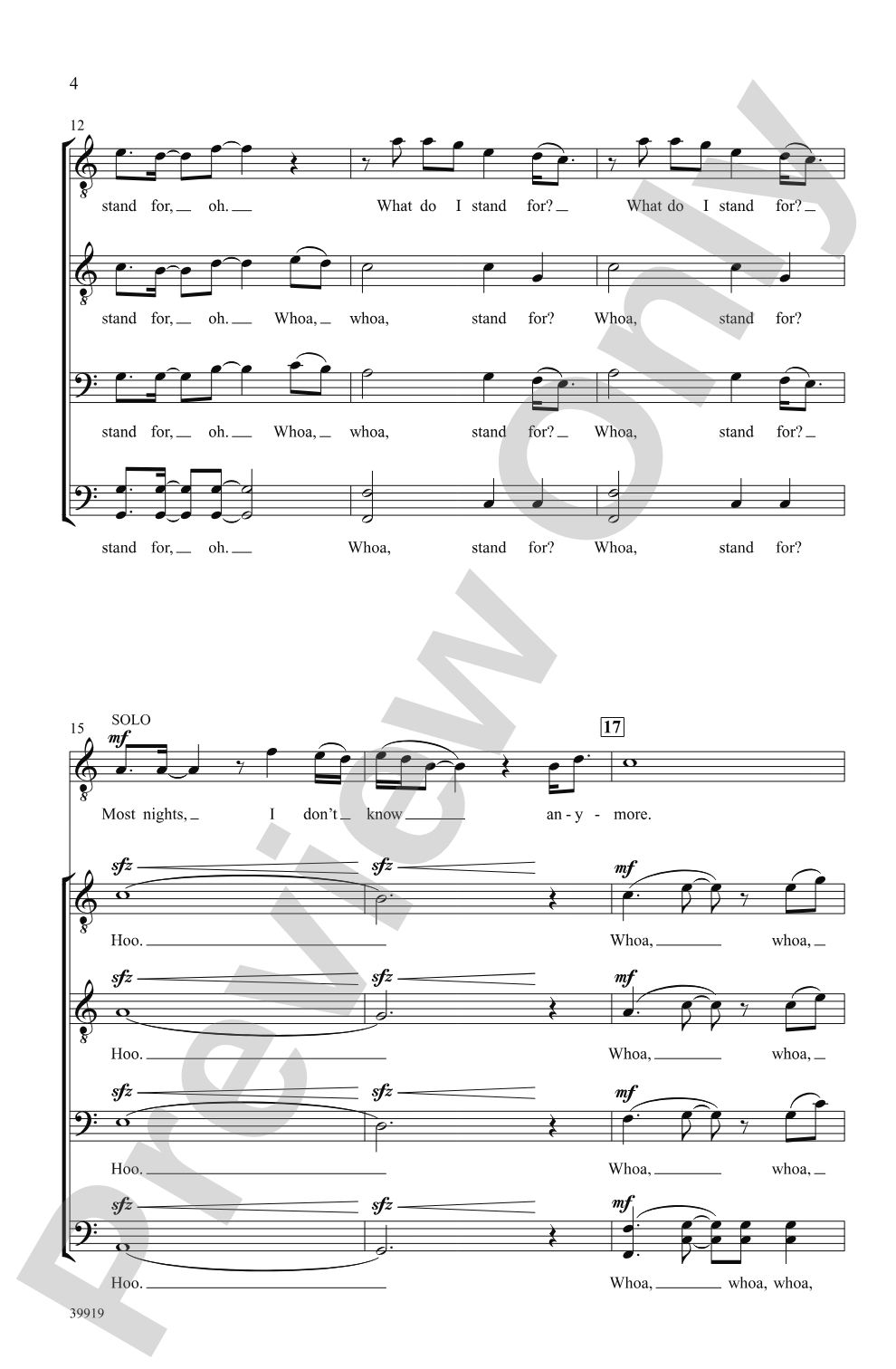

Some Nights: TTBB, a cappella Choral Octavo
Recorded by fun.
Words and music by Nate Ruess, Andrew Dost, Jack Antonoff, and Jeffrey Bhasker [fun.] / arr. Andy Beck
Item: 00-PO-0001701
$2.00
Minimum order quantity: 20 copies
One moment…
Description
This powerful anthem by the Grammy-award winning pop group FUN. became the band's second top-ten hit on the Billboard Hot 100, and has been featured on Glee. The intense lyrics explore the meaning of life, using war as a metaphor for the struggle between good and evil. Creatively arranged, pairing a strong a cappella choir with martial snare and bass drums.


Some Nights: TTBB, a cappella Choral Octavo isn't in MakeMusic Cloud just yet...but it could be. Let us know you'd like to see it, and you'll help shape what comes next. In the meantime, start a free trial and dive into thousands of interactive titles your students can play along with today.
Request This Title
Tell us you want it.
Start Your Free Trial
Explore everything that's ready to play right now.
Sample Audio
1
Audio File
--:--
0:00
0:00
Sample Video
No sample videos found.
Additional Details
Series:
Alfred Pop Choral Series
Publisher:
Alfred Music
Page Count:
16
SKU:
00-PO-0001701
More about this title
About the Composer: Nate Ruess
Nate Ruess is a singer, songwriter, and producer who rose to prominence as the lead vocalist of fun., the pop band that emerged in the early 2010s. Known for his distinctive vocal delivery and introspective songwriting, Ruess collaborates frequently with other artists and has contributed to numerous pop hits. His work balances accessibility with emotional depth, making his compositions natural fits for choral adaptation.
Why we love this
This arrangement captures the raw intensity of the original while giving lower voices genuine musical substance. The creative pairing of a cappella singing with the suggestion of percussive elements creates a driving, theatrical energy that holds student singers' attention while remaining singable across mixed ability levels.
What to expect
Urgent and defiant, with an undercurrent of introspection. The song builds like a gathering storm, moving from personal doubt to collective determination. Even sung without accompaniment, the implied percussion gives the writing a cinematic, almost cinematic quality that keeps the listener engaged.
Who it's for
TTBB ensembles seeking contemporary, high-impact repertoire that resonates with student singers. This piece works equally well in concert settings and festival competitions, and its pop origins give it immediate appeal without sacrificing musical substance.
How to get the most out of it
- Establish the rhythmic pulse early in rehearsal. The march-like quality of the snare and bass drum accompaniment (notated or implied in the score) depends on tight ensemble cohesion, so lock the fundamental beat before layering harmonic details.
- Find the emotional arc within individual phrases rather than treating the piece as one long build. Strategic use of dynamics and articulation will prevent the intensity from feeling monotonous.
- Balance the lower voices prominently. TTBB voicing can bury the bass line, so ensure tenors and basses understand they're carrying harmonic weight equal to the higher parts.
- Lean into the metaphorical language. The war imagery works best when singers grasp the philosophical content and let that understanding shape their phrasing and expression.
How to use it
Program this as a centerpiece for a contemporary pop set, or pair it with other meaningful secular works to create a thematic concert exploring identity and resilience. Its moderate length and strong narrative arc also make it suitable for festival competitions or as a show-stopping finale to a winter or spring concert.
Skills your students will build
- Maintaining ensemble cohesion in energetic, rhythmically driven pop arrangements
- Balancing individual voice part independence with choral blend in a cappella writing
- Interpreting lyrical content and translating it into expressive vocal performance
- Managing sustained intensity and dynamic contrast over multiple repetitions of similar musical material