
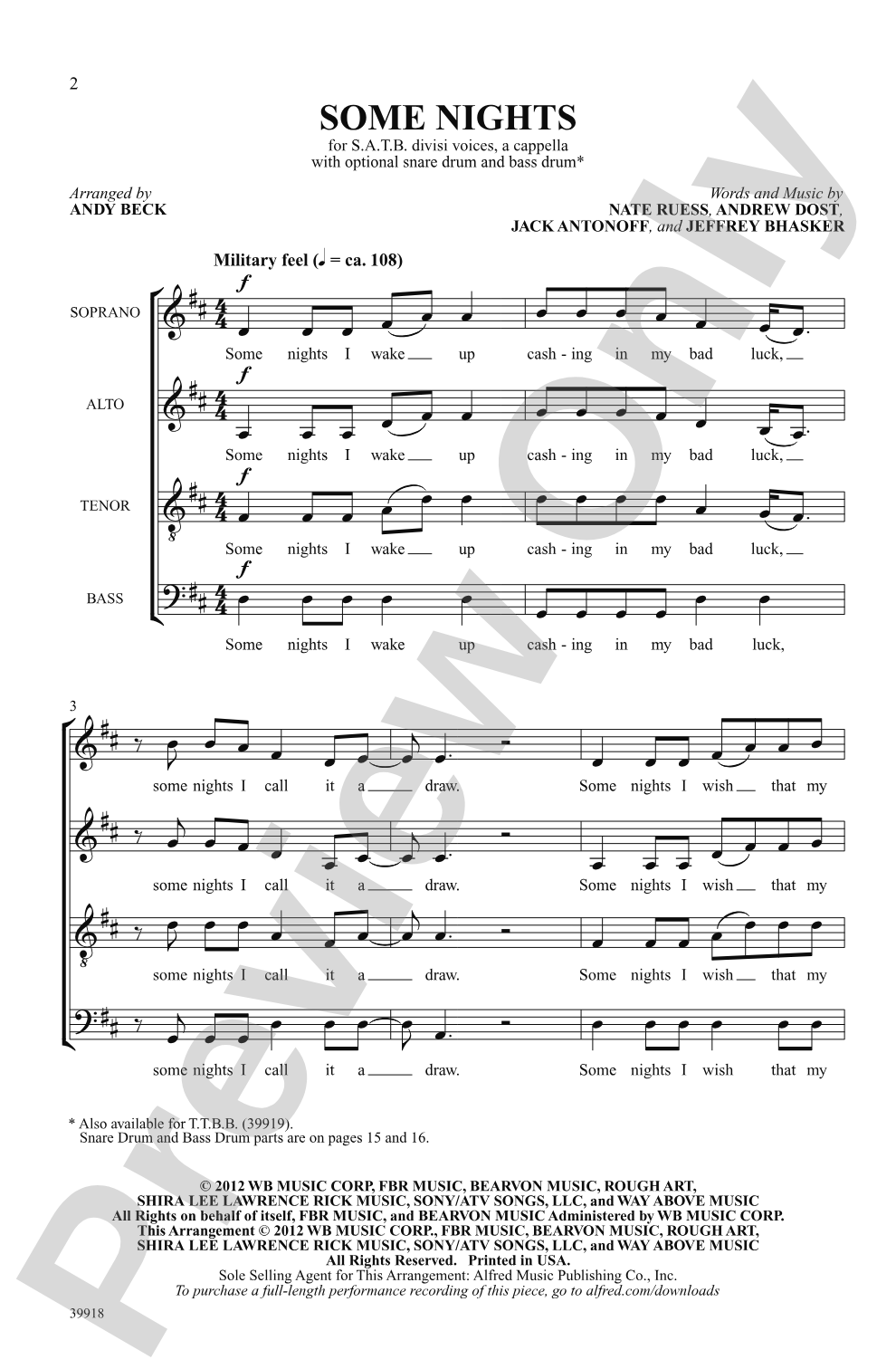
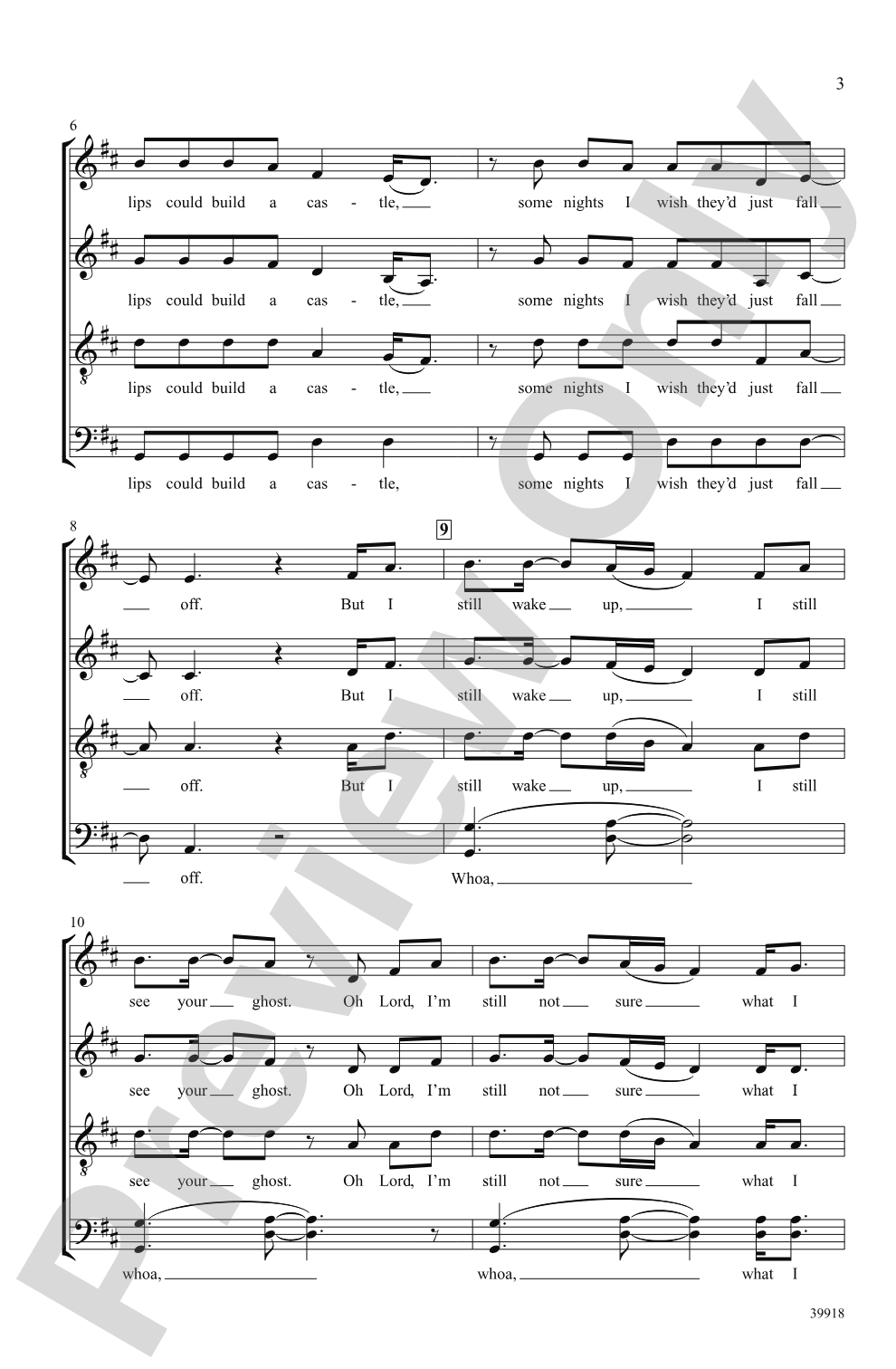
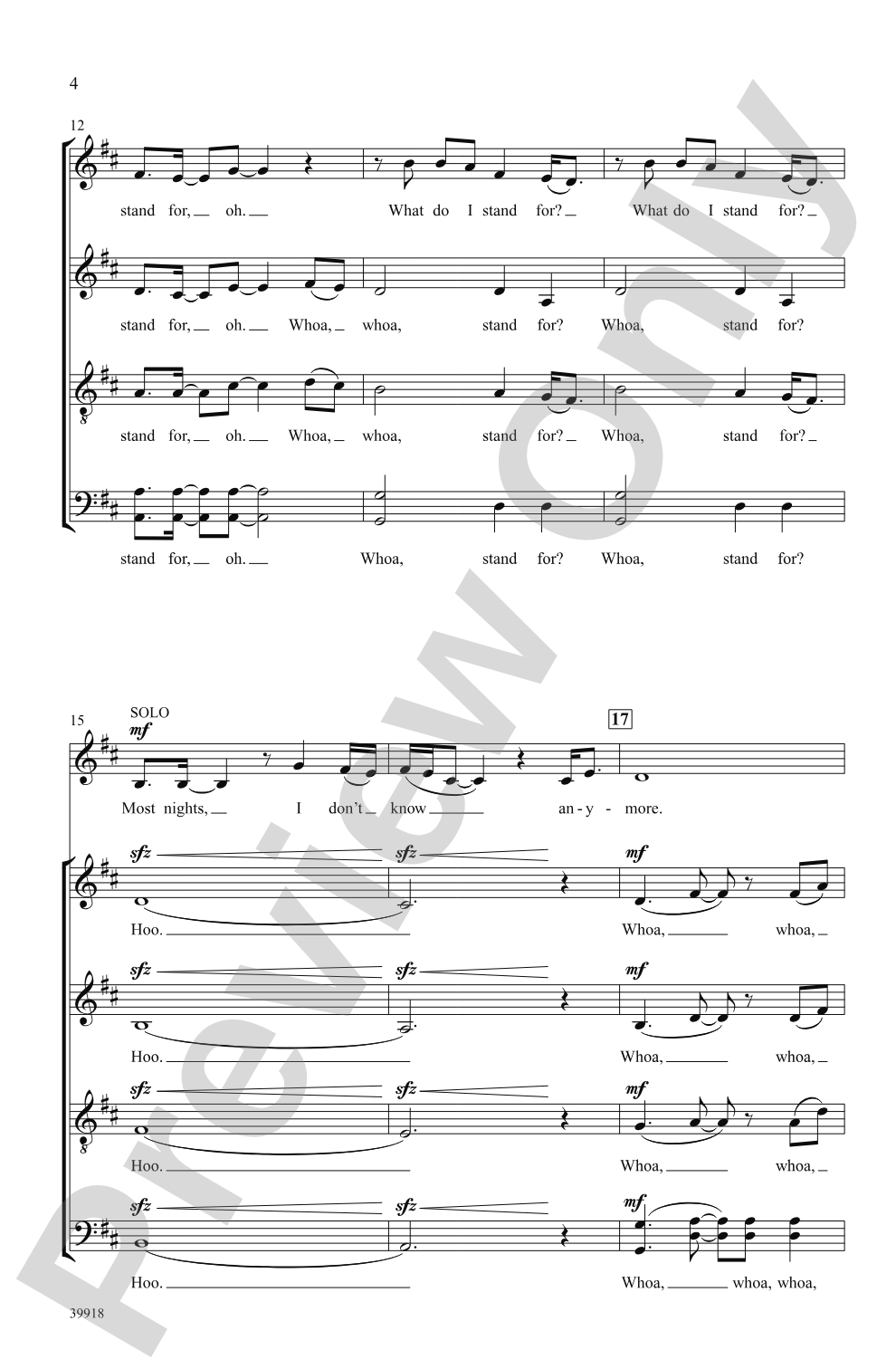

Some Nights: SATB, a cappella Choral Octavo
Recorded by fun.
Words and music by Nate Ruess, Andrew Dost, Jack Antonoff, and Jeffrey Bhasker [fun.] / arr. Andy Beck
Item: 00-PO-0001700
$2.25
Minimum order quantity: 20 copies
One moment…
Description
This powerful anthem by the Grammy-award winning pop group FUN. became the band's second top-ten hit on the Billboard Hot 100, and has been featured on Glee. The intense lyrics explore the meaning of life, using war as a metaphor for the struggle between good and evil. Creatively arranged, pairing a strong a cappella choir with martial snare and bass drums.


Some Nights: SATB, a cappella Choral Octavo isn't in MakeMusic Cloud just yet...but it could be. Let us know you'd like to see it, and you'll help shape what comes next. In the meantime, start a free trial and dive into thousands of interactive titles your students can play along with today.
Request This Title
Tell us you want it.
Start Your Free Trial
Explore everything that's ready to play right now.
Sample Audio
1
Audio File
--:--
0:00
0:00
Sample Video
No sample videos found.
Additional Details
Series:
Alfred Pop Choral Series
Publisher:
Alfred Music
Page Count:
16
SKU:
00-PO-0001700
More about this title
About the Composer: Nate Ruess
Nate Ruess is a singer, songwriter, and producer who co-founded the pop group fun. in the early 2010s. As the band's primary vocalist and creative force, he co-wrote and performed on their breakthrough album "Some Nights" (2012), which achieved international commercial success and critical recognition. Ruess has since pursued a solo career while continuing to write and produce across multiple genres.
In the music education space, Ruess's work represents contemporary songwriting that engages serious lyrical content within accessible pop structures. His compositions for fun. demonstrate how chart-successful music can carry thematic weight and emotional depth, making them valuable additions to choral repertoire that speaks directly to student singers' own cultural reference points.
Why we love this
This arrangement captures the theatrical intensity of a contemporary pop anthem while fully embracing the a cappella medium. The integration of martial percussion effects (snare and bass drums) into the vocal fabric creates a striking soundscape that keeps singers engaged with the larger musical architecture rather than settling into a simple vocal cover. It's the kind of piece that demonstrates to students how modern composition can honor both the source material and the specific ensemble they're singing with.
What to expect
The piece builds from introspective beginnings into a defiant vocal landscape, with the persistent pulse of percussion undergirding every phrase. The harmonic language feels both familiar and sophisticated, moving between pop sensibilities and choral writing that demands precision and blend. There's an undeniable energy in the a cappella texture; every breath matters, and every voice is heard.
Who it's for
This octavo works for intermediate to advanced choirs with solid intonation skills and the ability to sustain focus across 16 pages of contemporary material. High school and college choirs, as well as community ensembles seeking modern repertoire with depth, will find this both musically engaging and programmatically relevant.
How to get the most out of it
- Establish the snare and bass drum sounds through precise articulation and breath control. These are not added effects but integral vocal percussion voices; treat them with the same attention to tone and balance you'd give to melodic lines.
- Build intensity gradually across the form. The arrangement's power emerges from cumulative vocal layers and rhythmic momentum, so resist the urge to sing loudly from the beginning.
- Lock the harmonic foundation in the lower voices before layering soprano and alto counterpoint. A cappella settings expose every tuning decision, so intonation rehearsals should focus on roots and chord identity first.
- Shape the lyrical content through dynamic and articulation choices. The exploration of struggle and meaning in the text deserves clarity and conviction from every voice section, which strengthens both the message and the musical cohesion.
How to use it
Program this as a centerpiece piece that bridges contemporary and classical choral traditions. It works powerfully as a season opener that immediately signals to audiences and singers alike that the ensemble takes modern music seriously, or as a second-half anchor that provides textural and emotional contrast to art song or traditional choral literature. The 16-page length makes it substantial enough to justify programming at a solo choral concert.
Skills your students will build
- Sustaining pitch and blend in a cappella settings without instrumental support
- Performing vocal percussion techniques (articulation patterns for snare and bass drum simulation)
- Reading and balancing complex harmonic layers in contemporary pop arrangements
- Shaping narrative arc and emotional progression across extended contemporary text
- Maintaining rhythmic precision and ensemble cohesion within intricate syncopated passages