
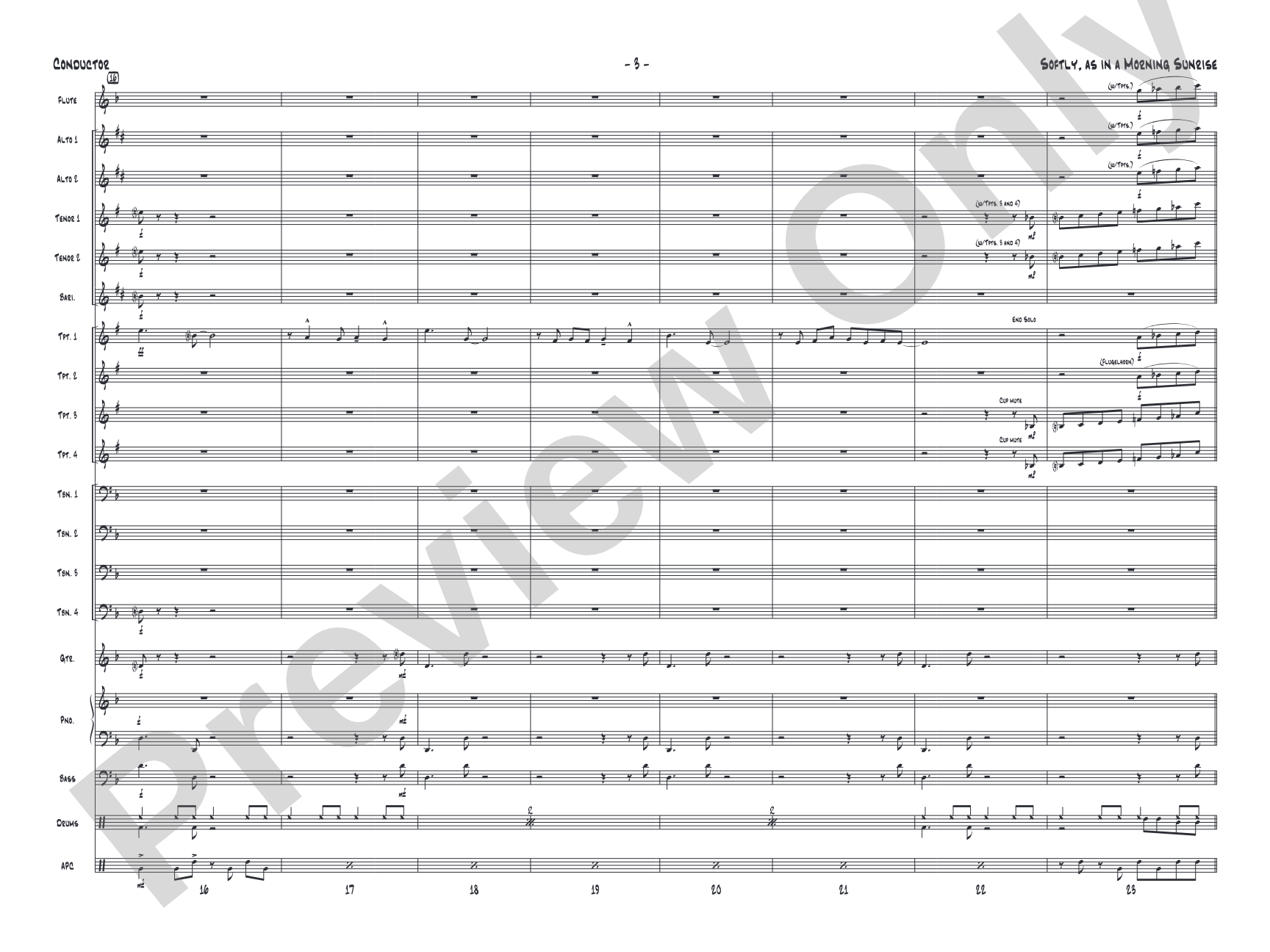
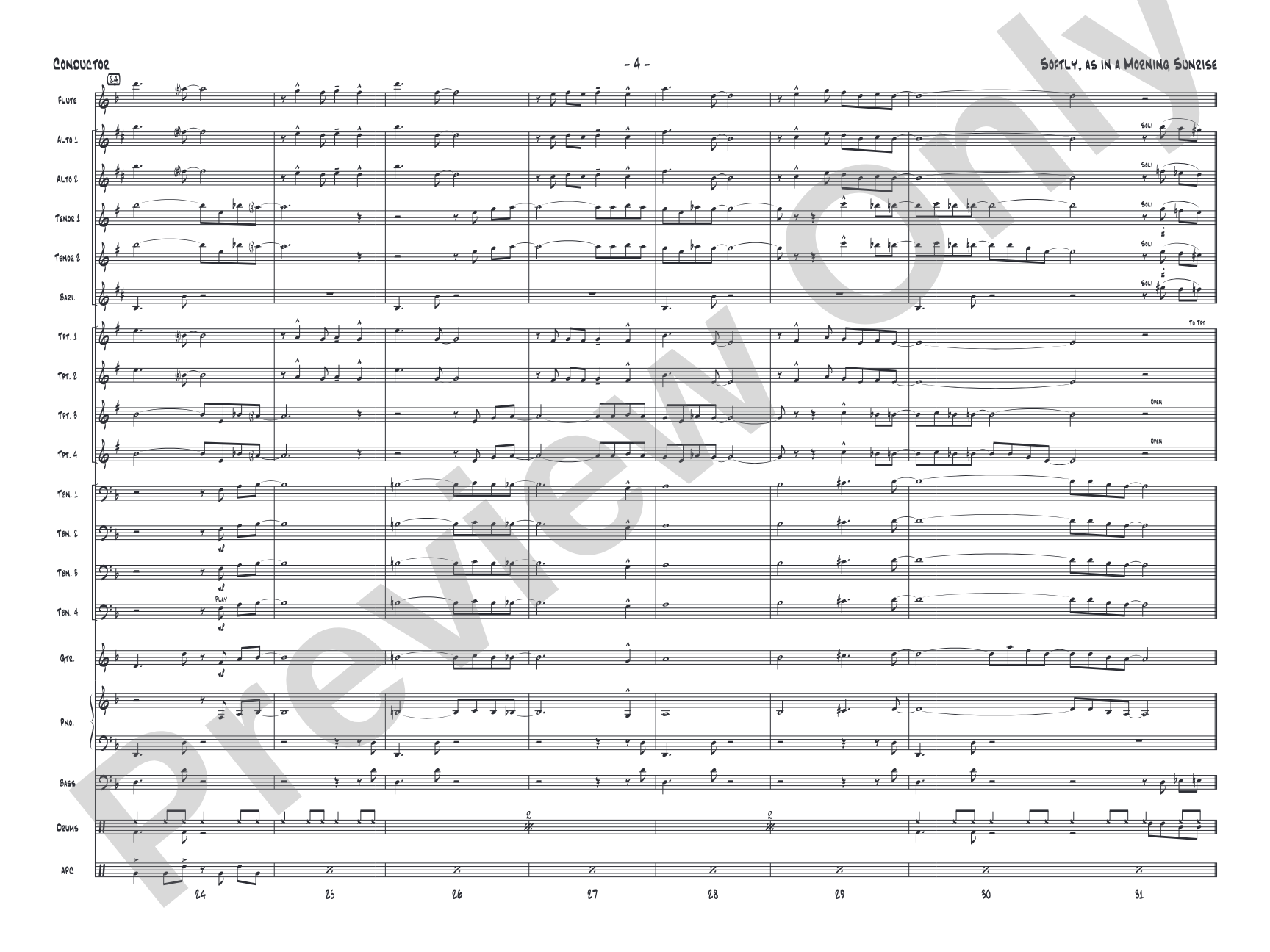
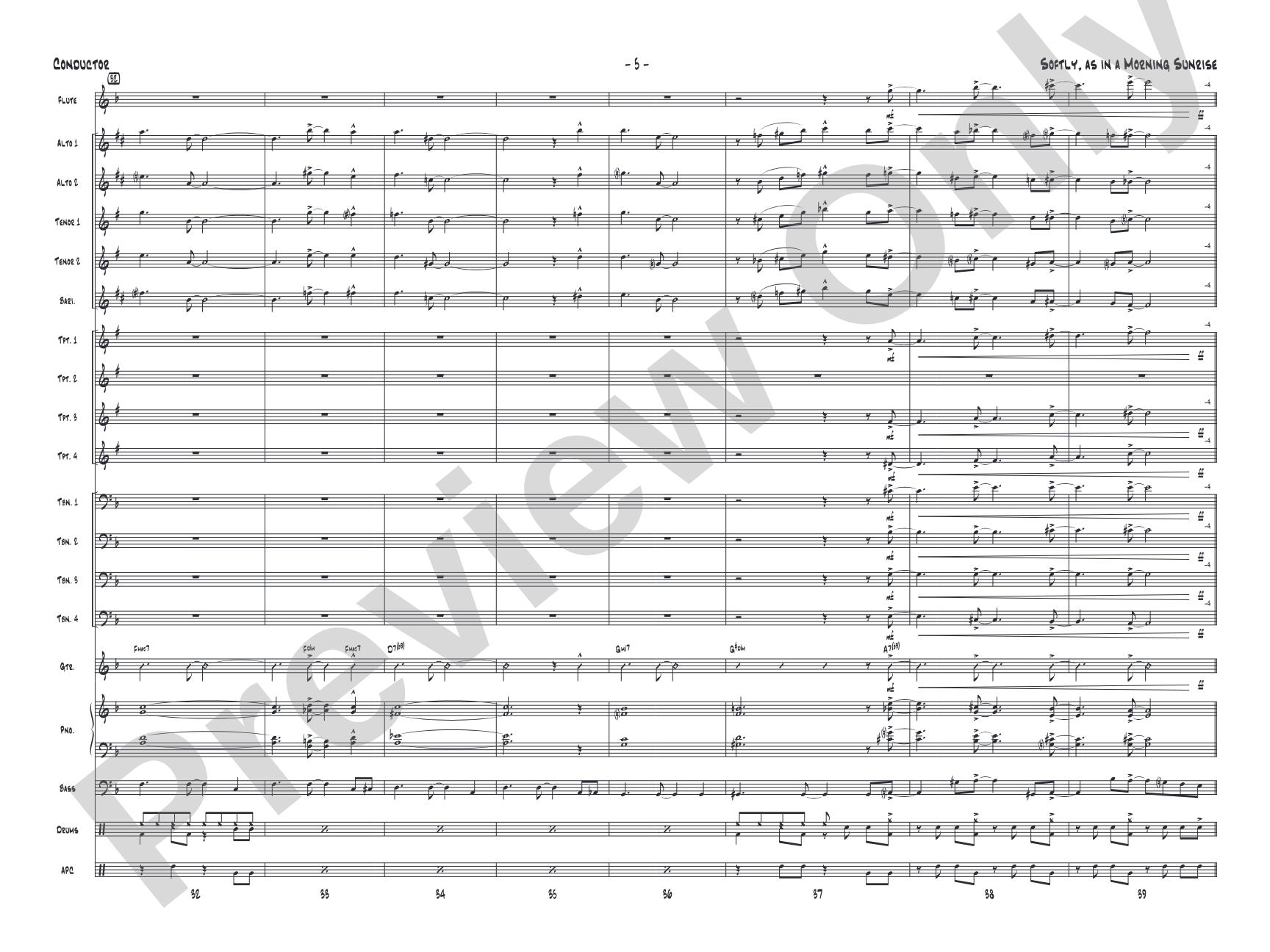
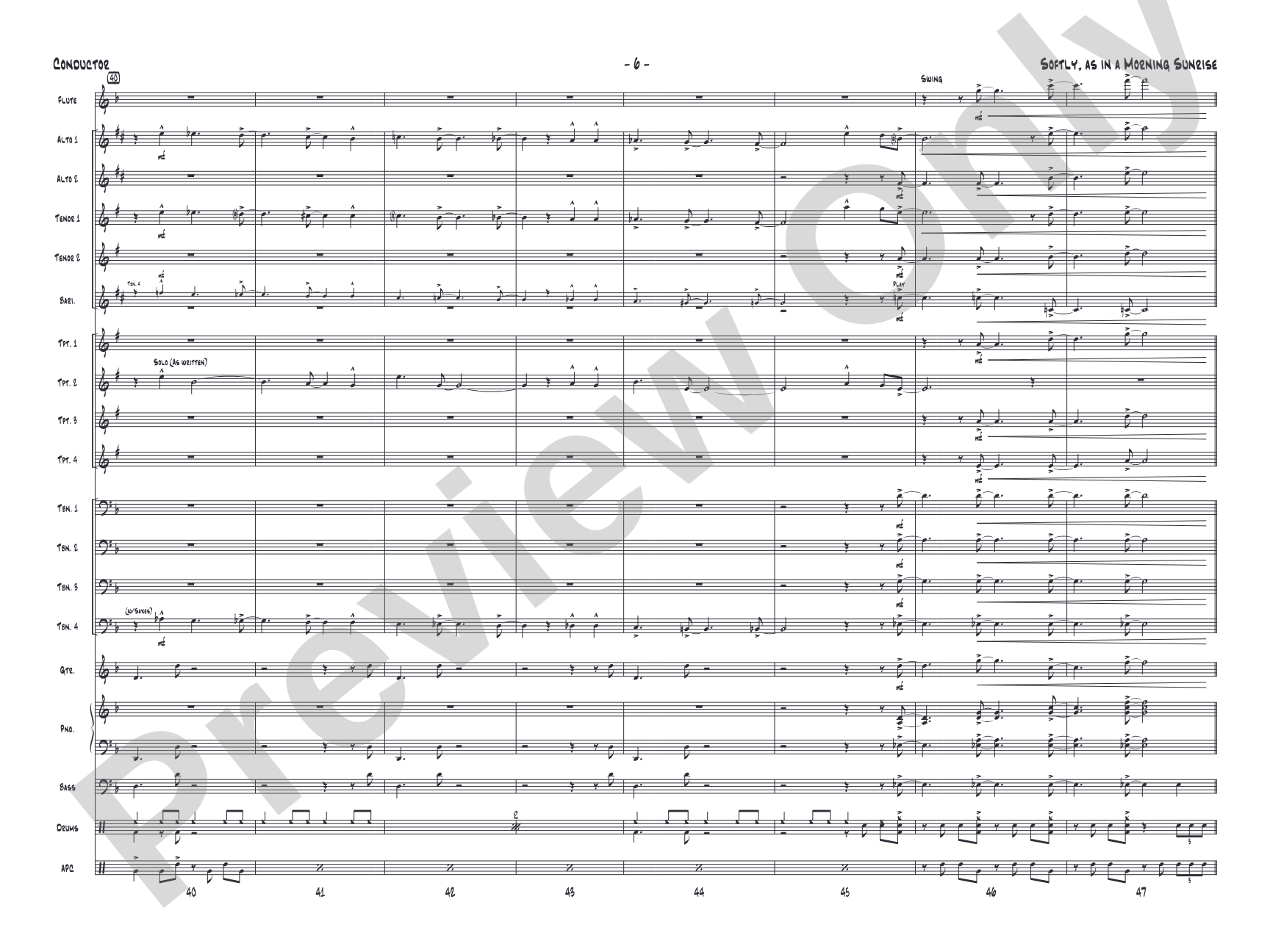
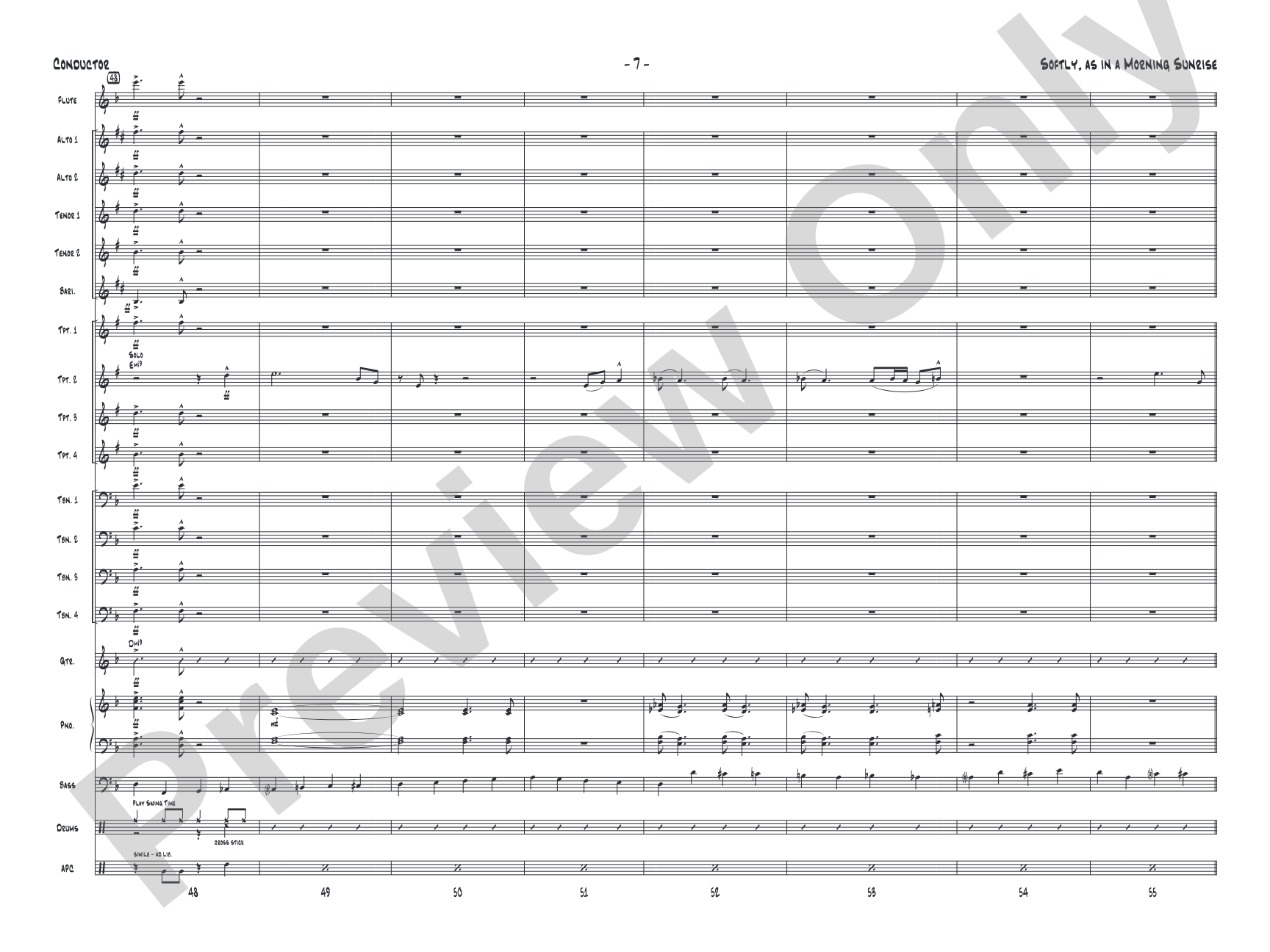
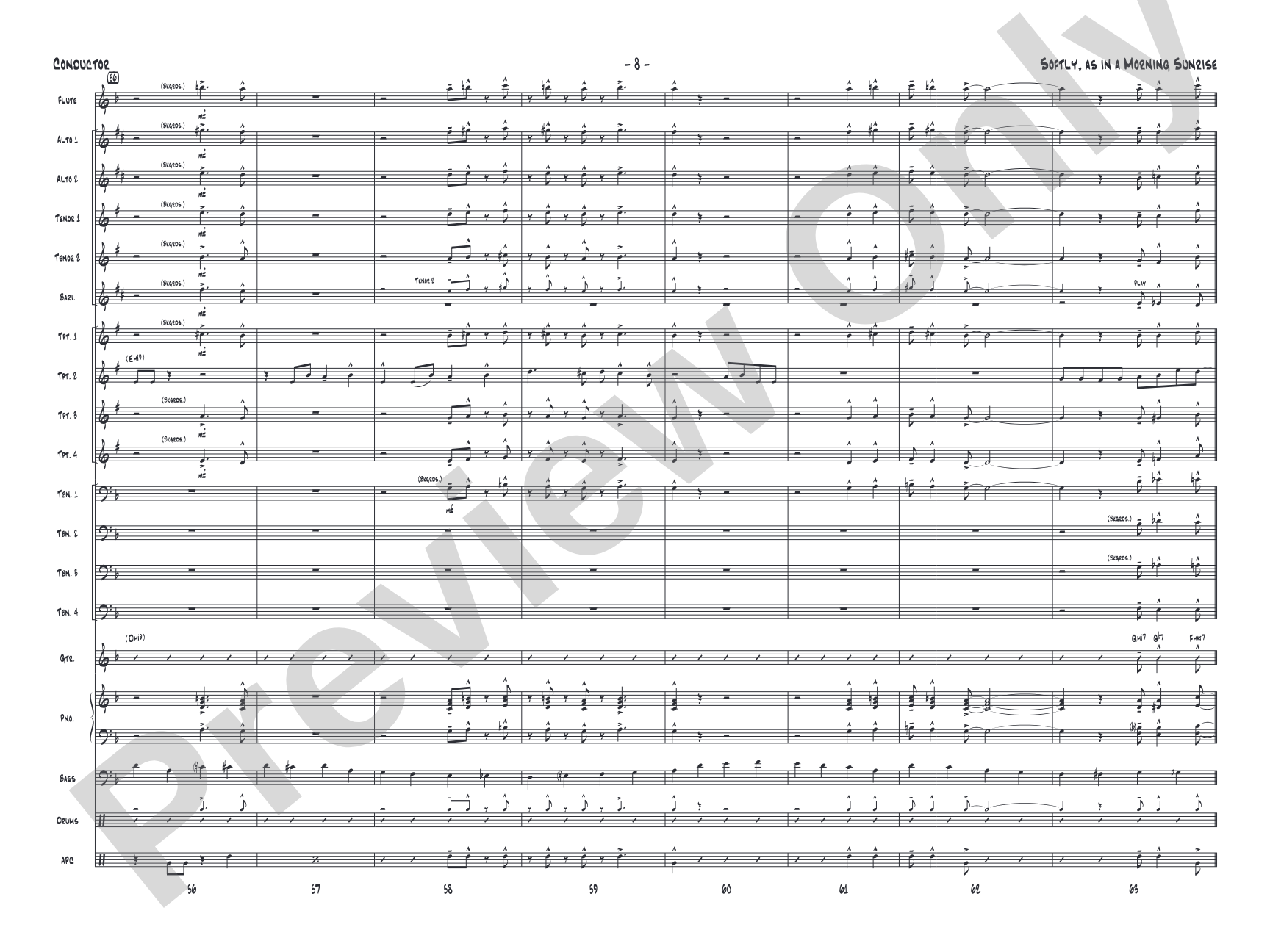
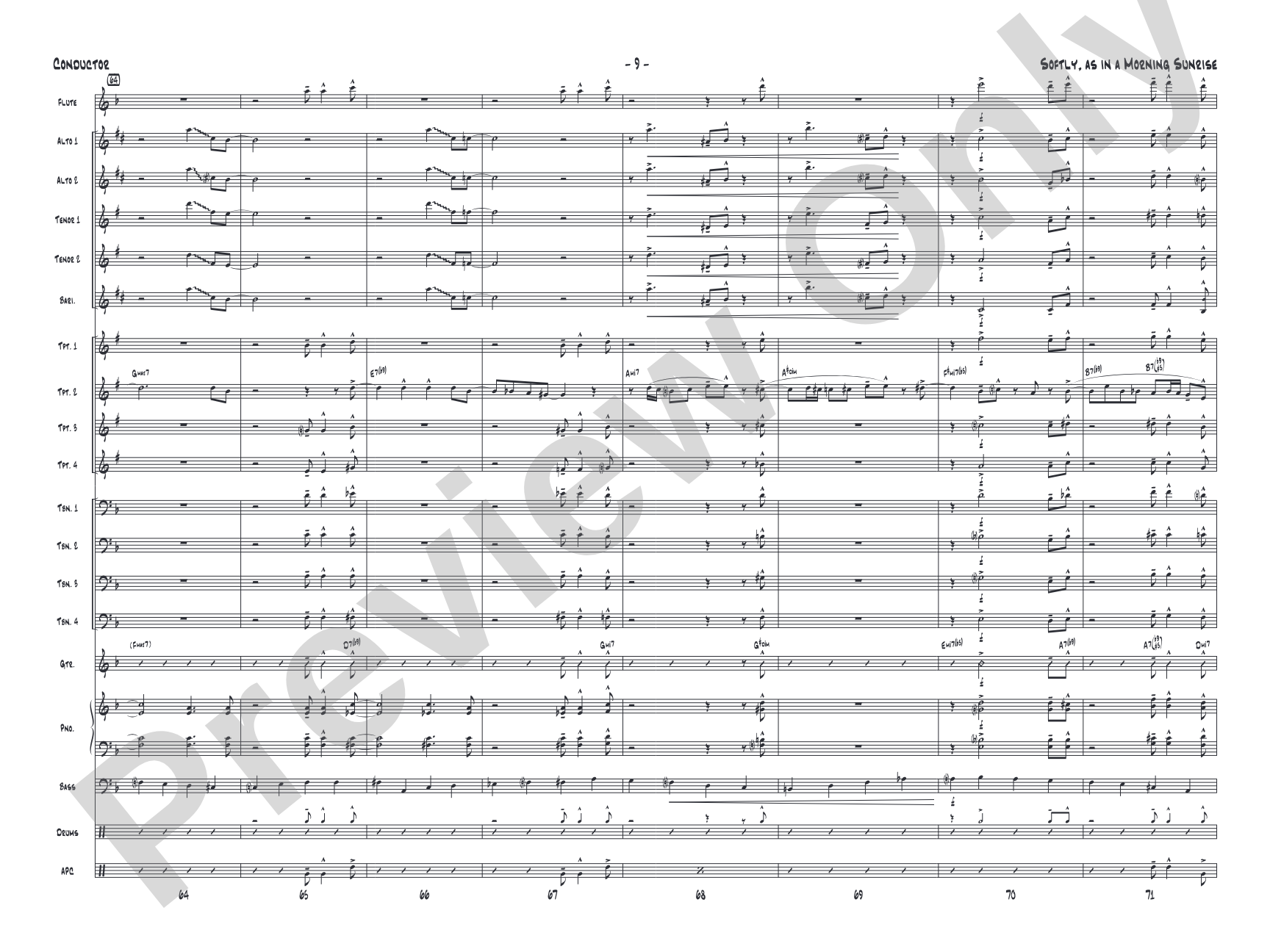
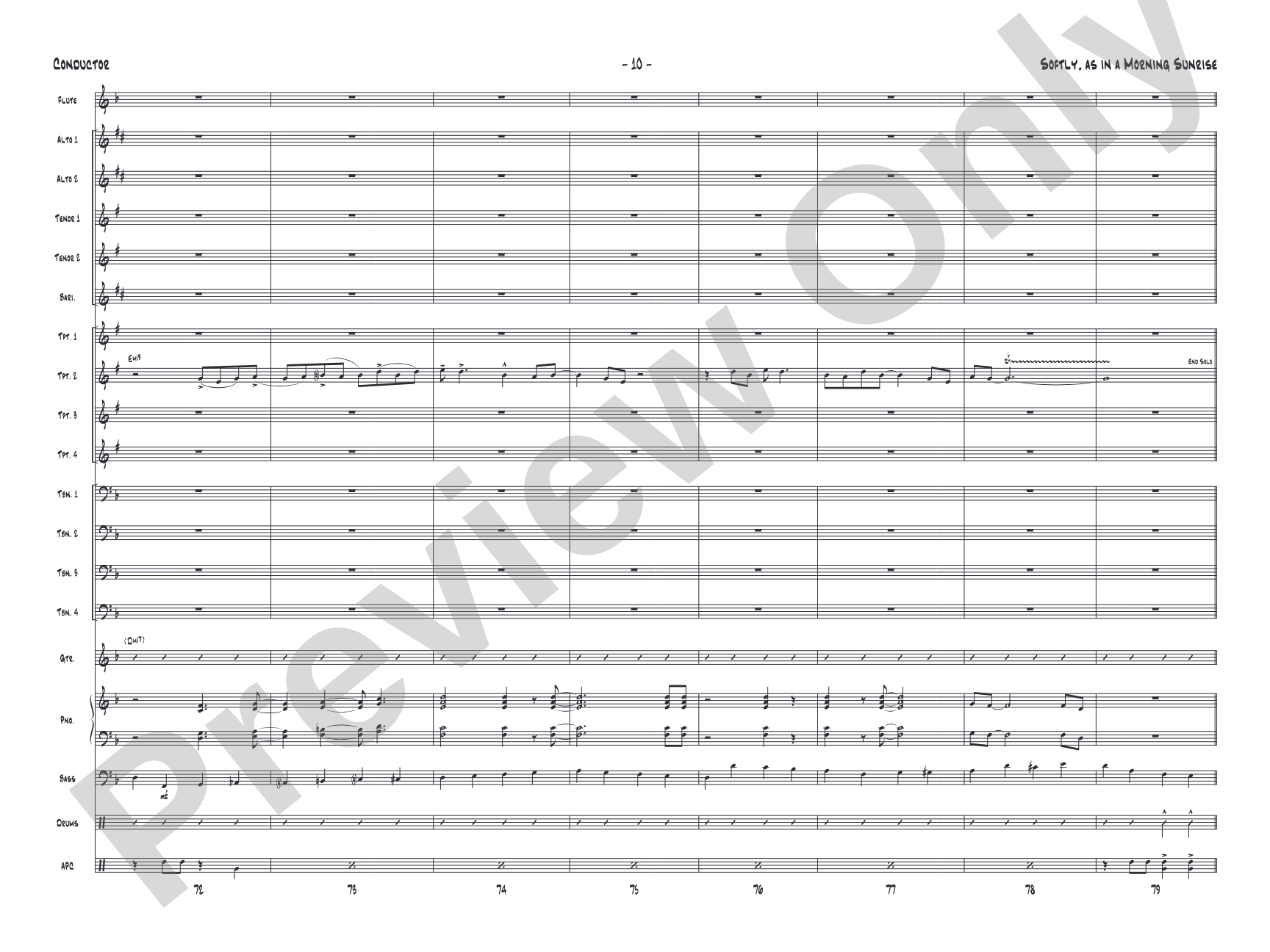
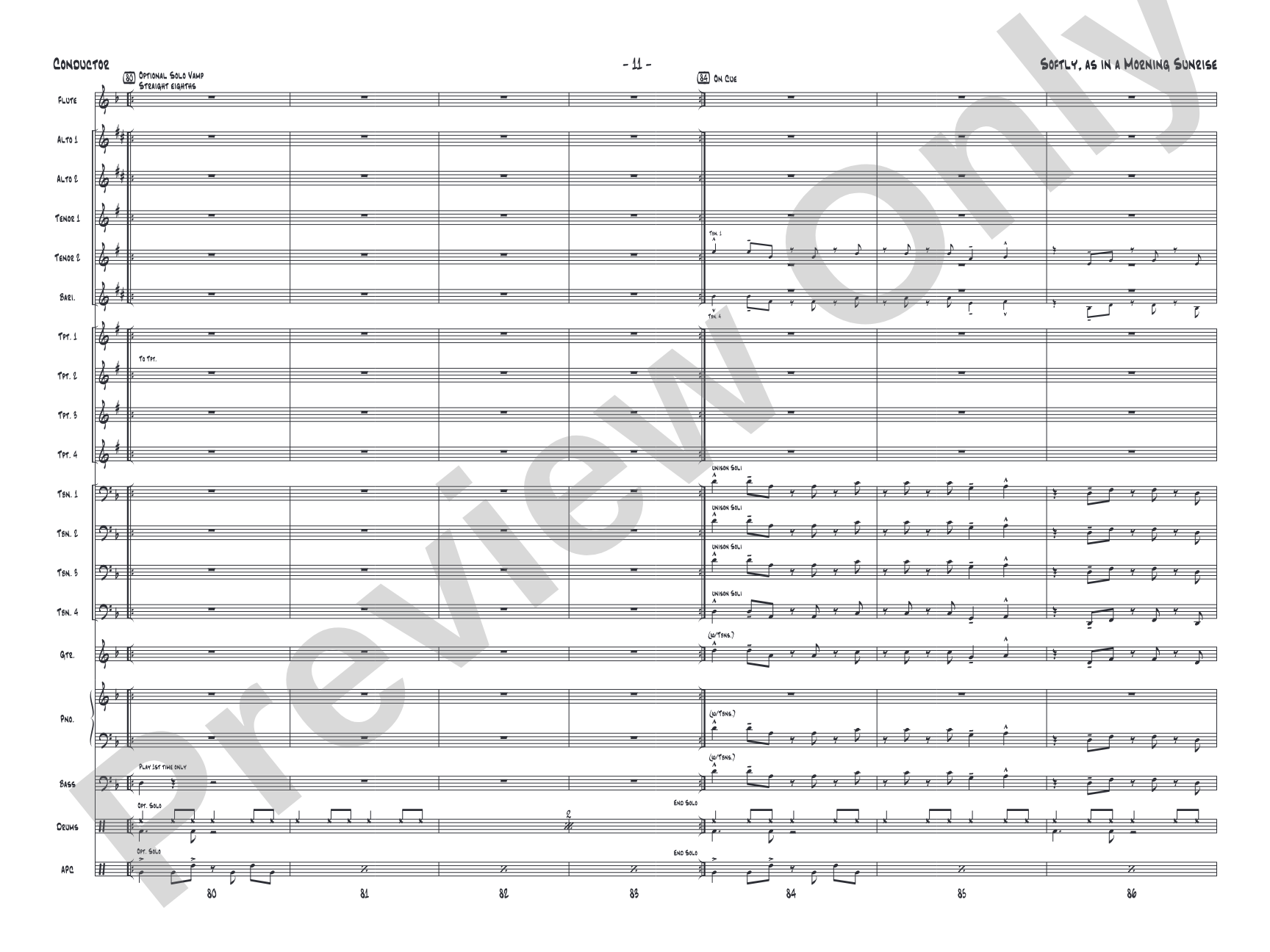
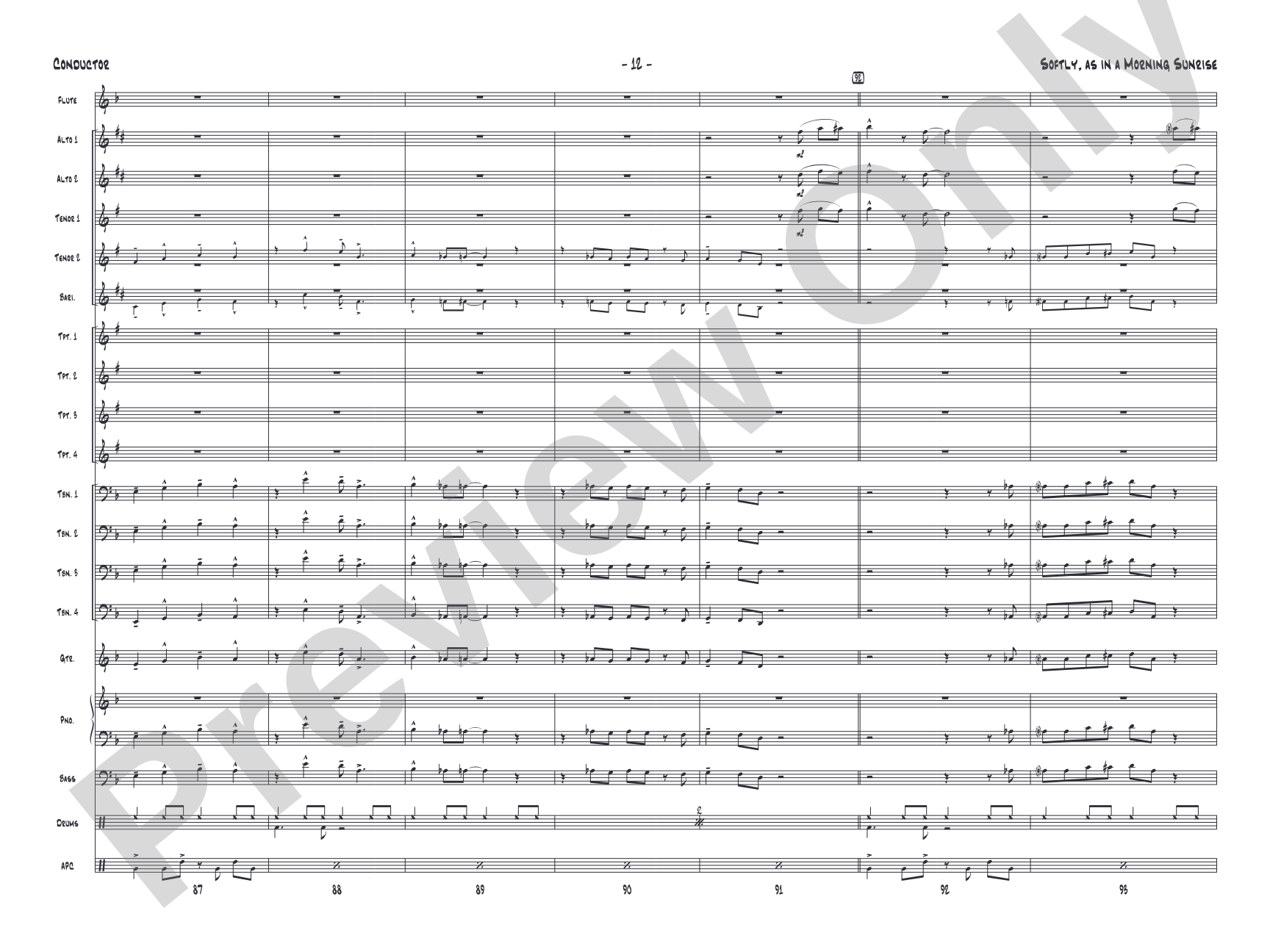
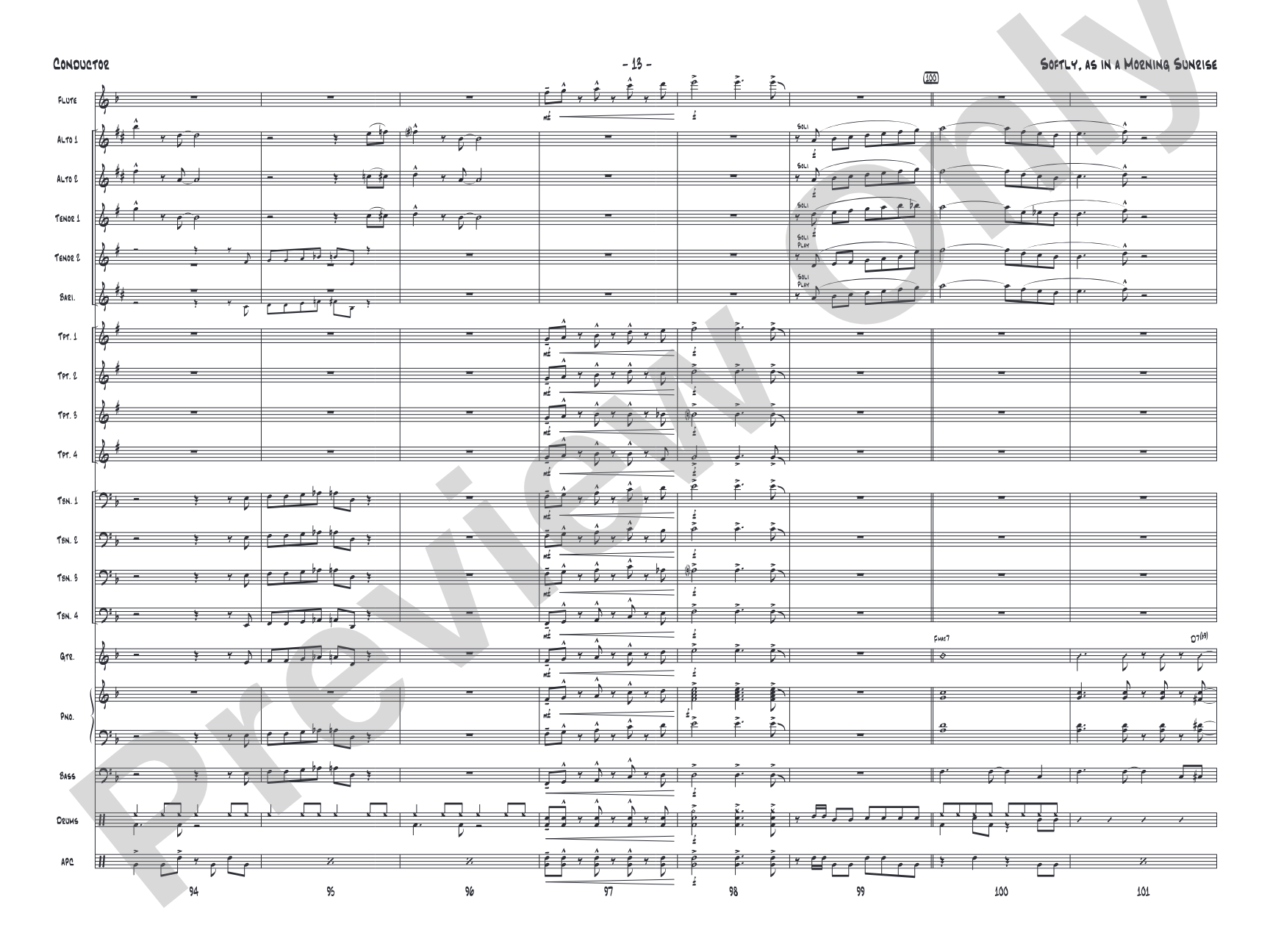
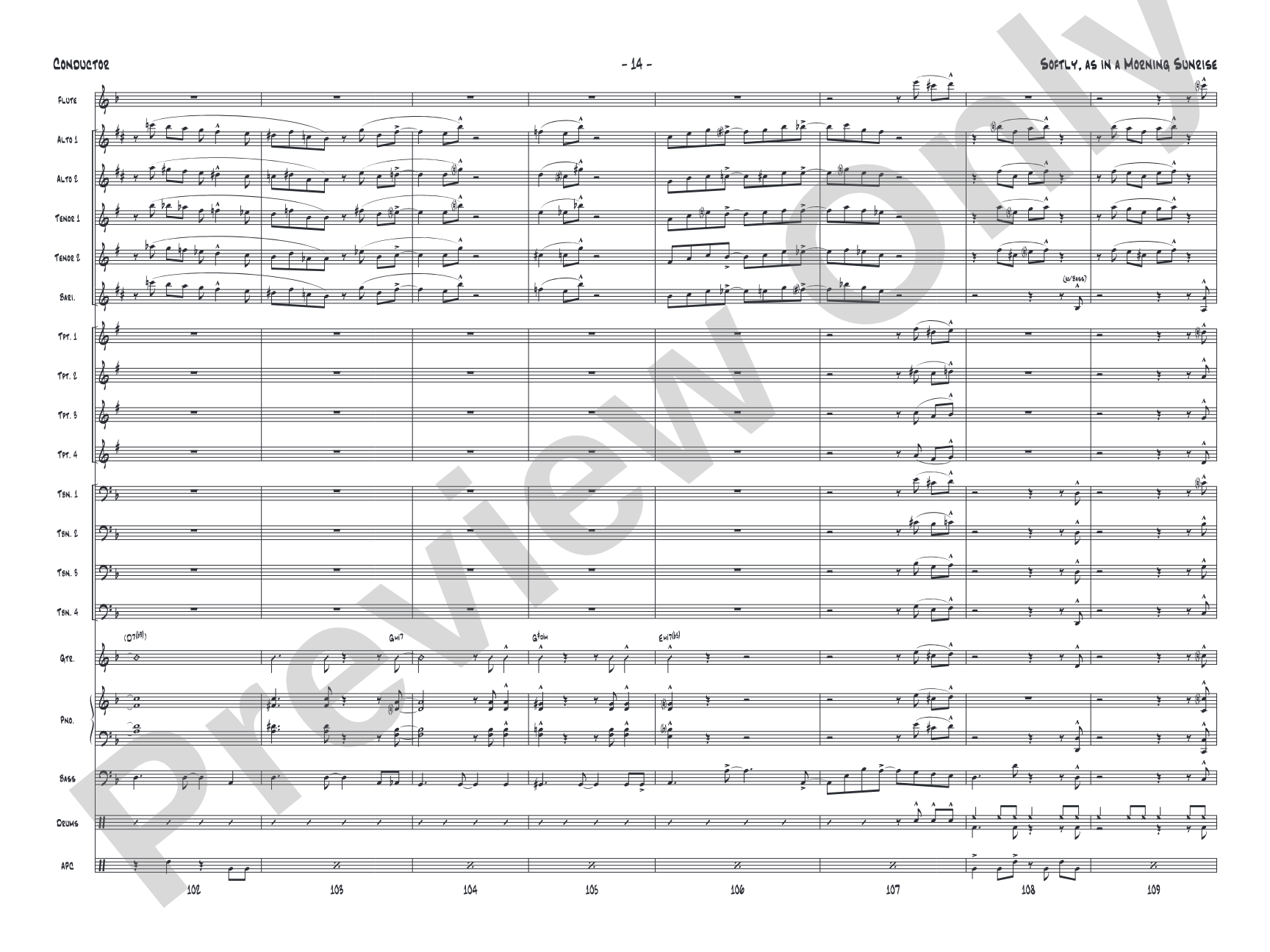
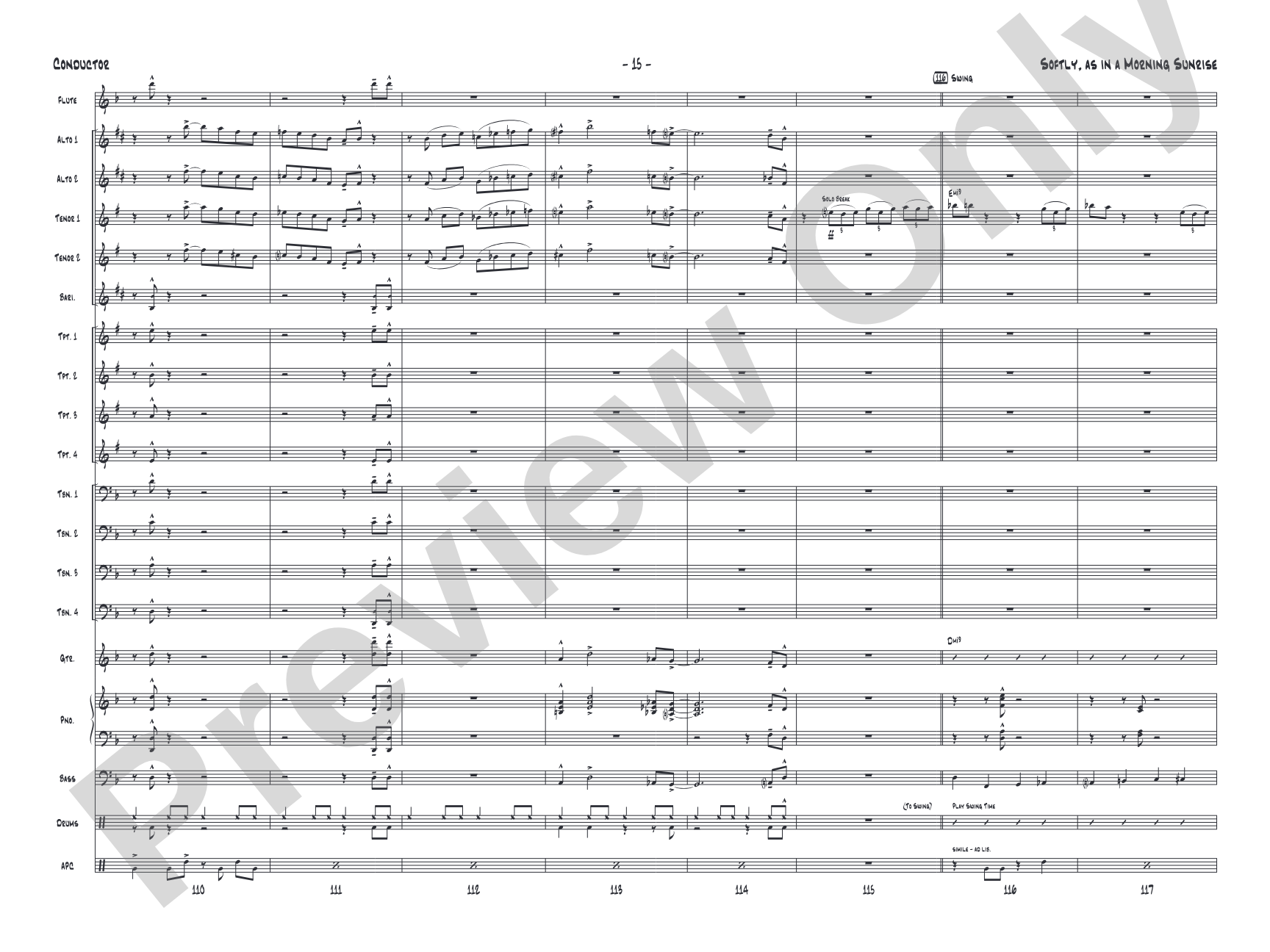
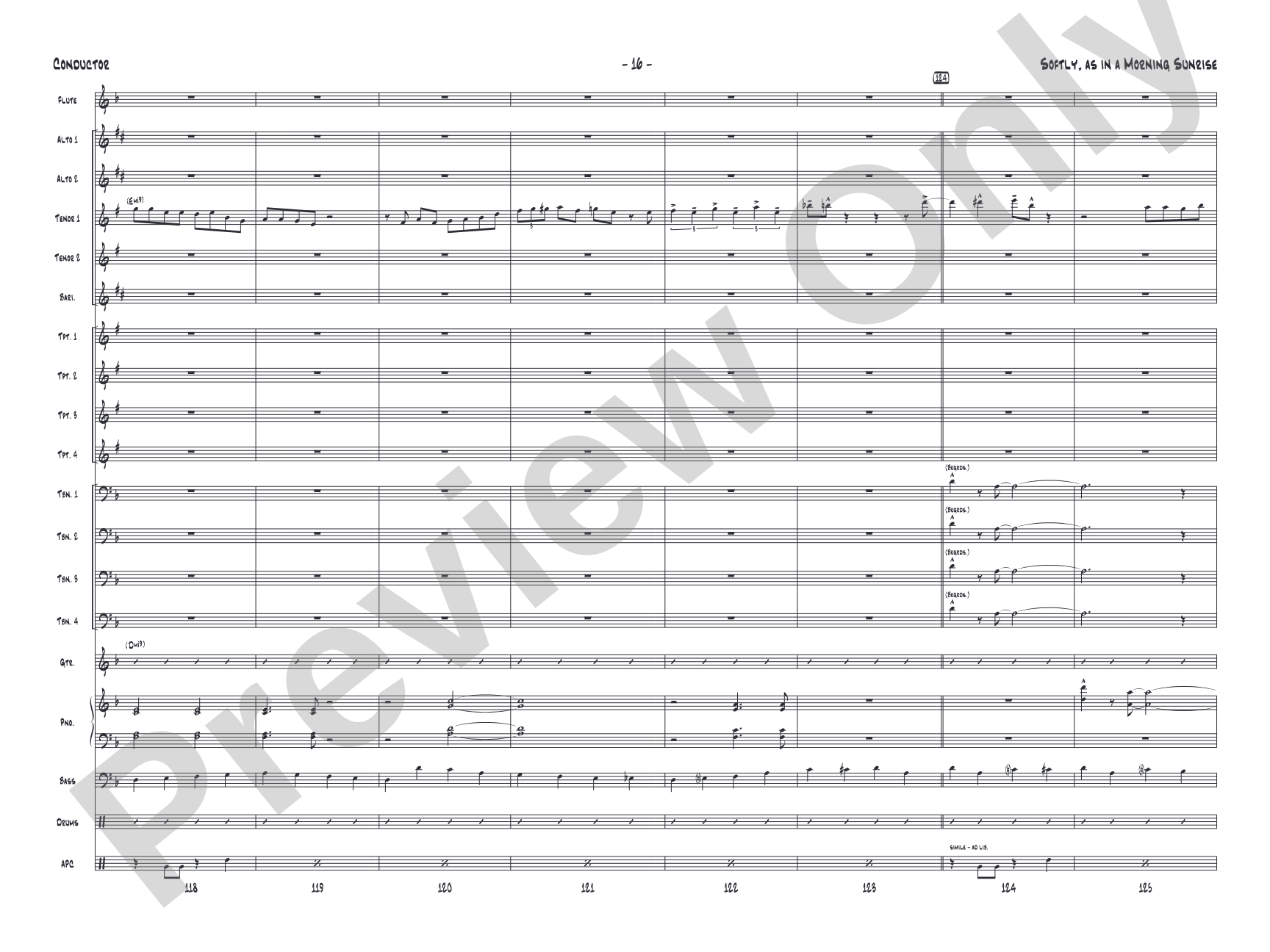
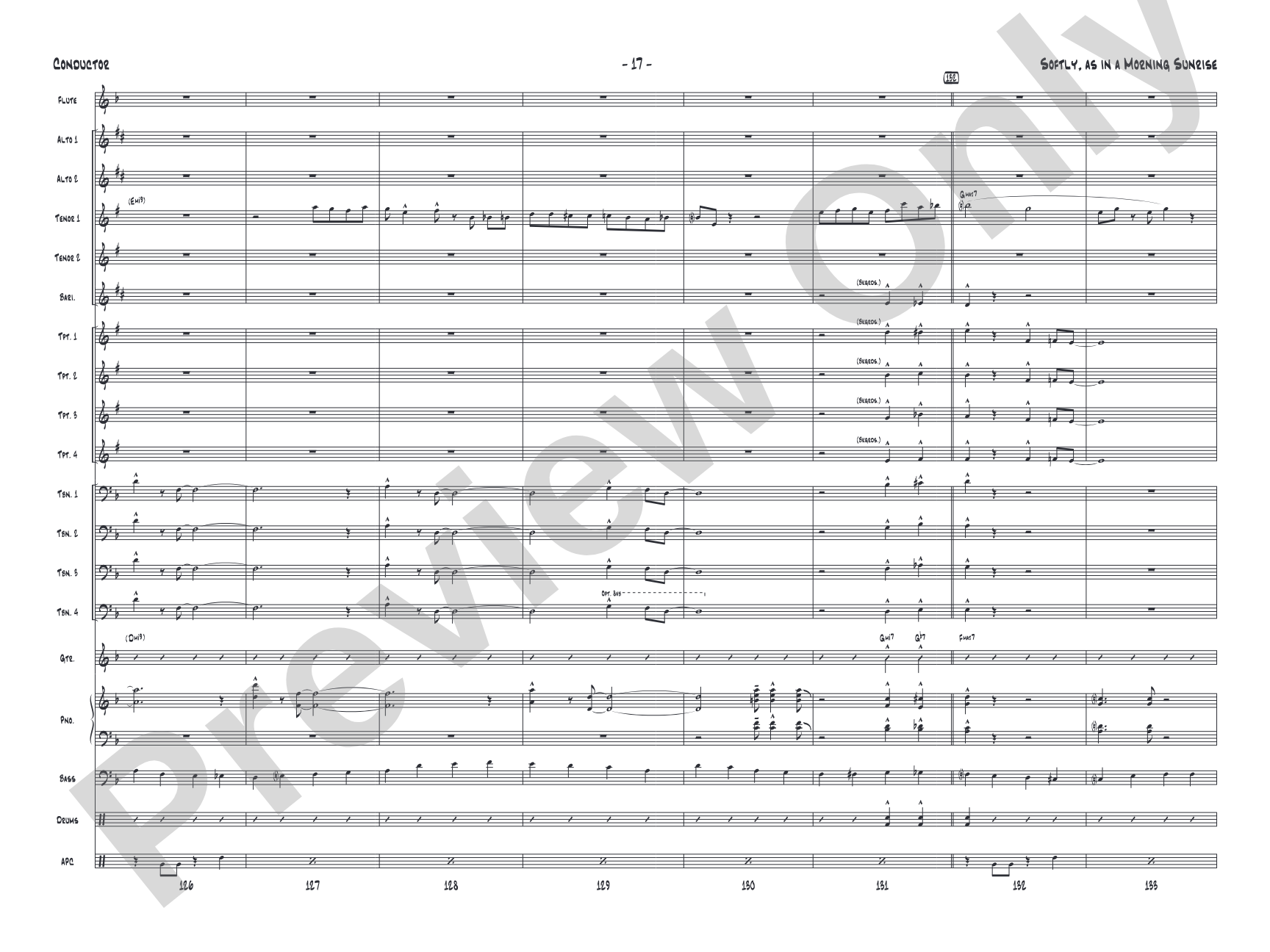
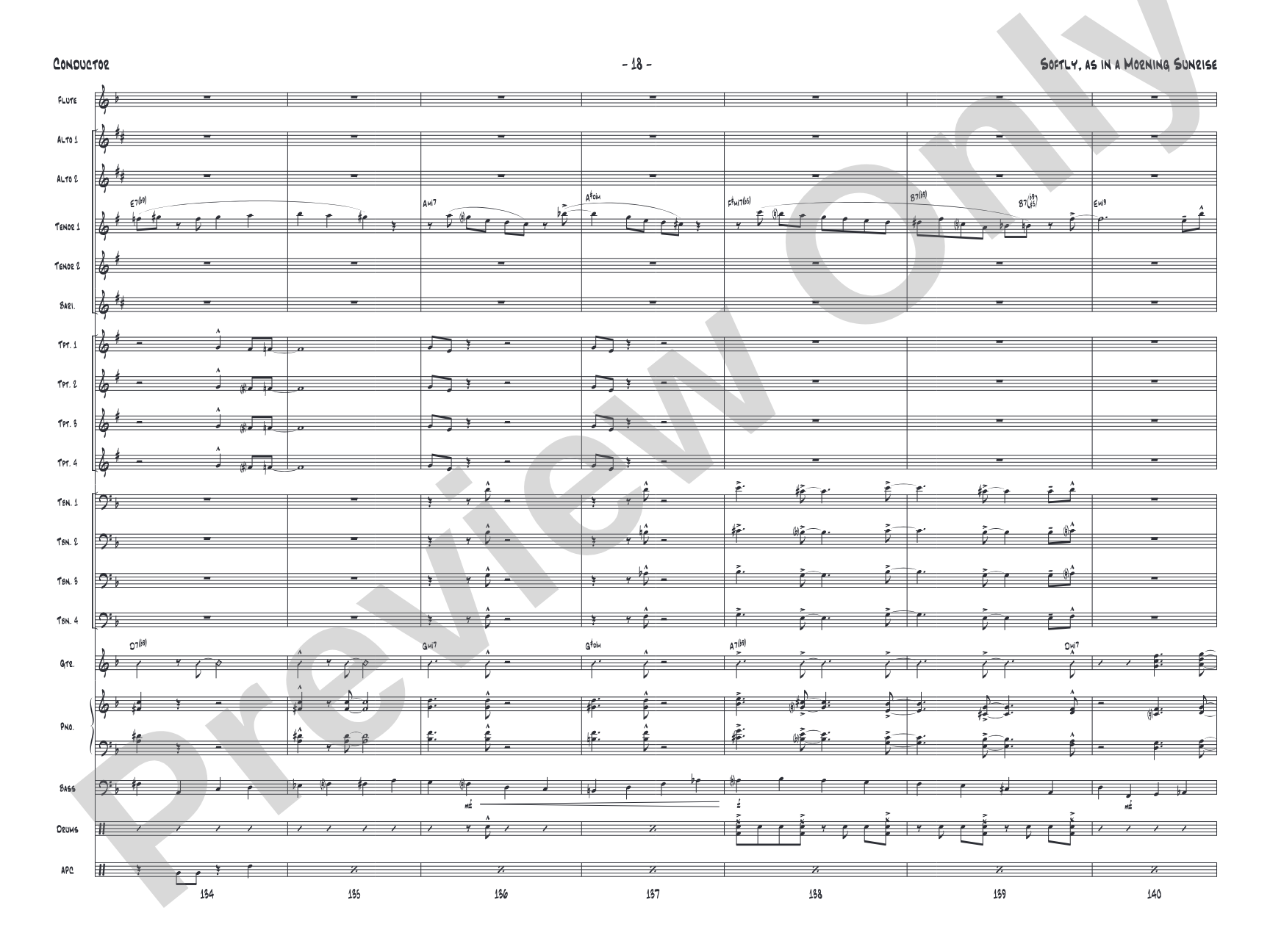
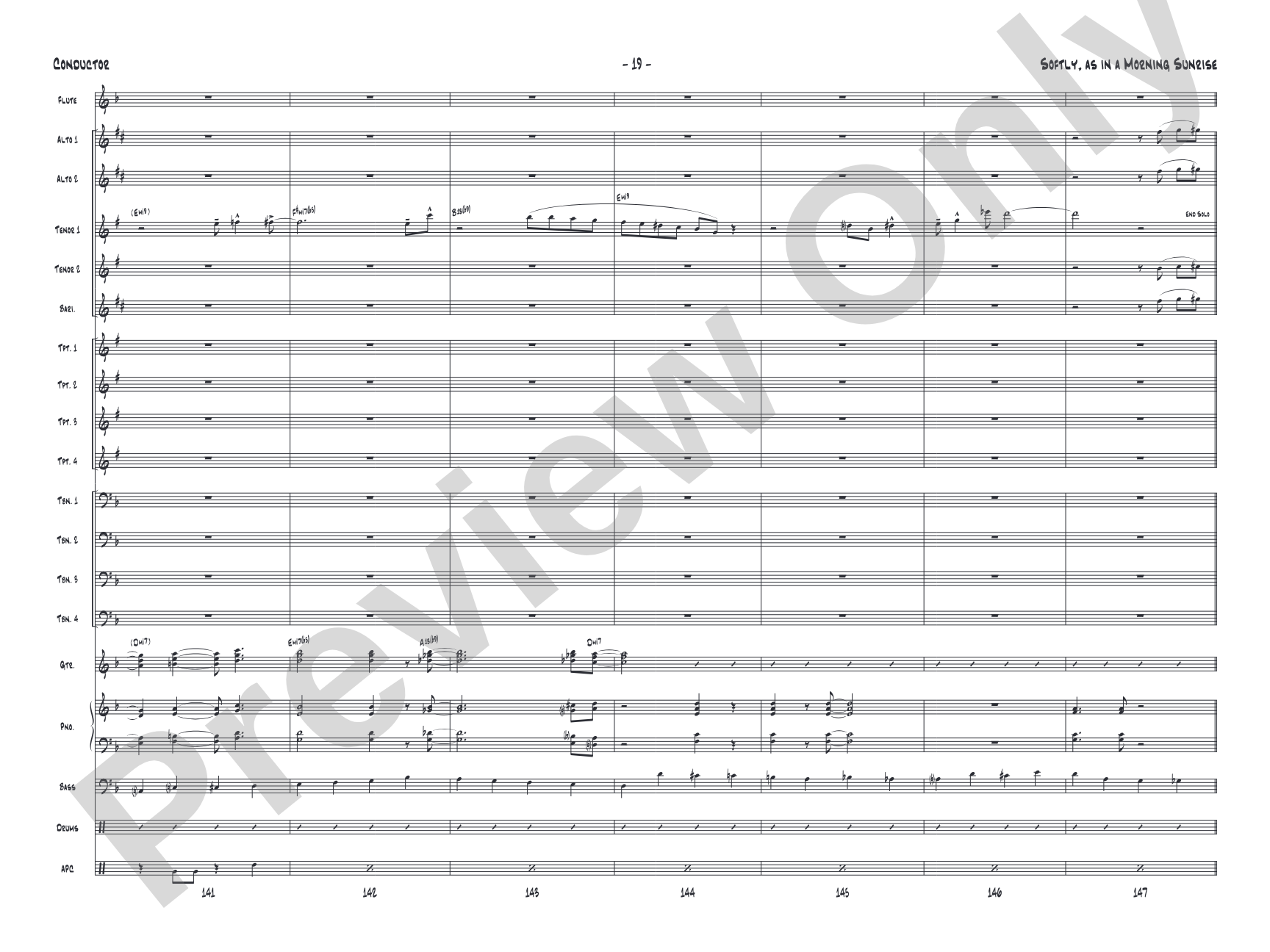
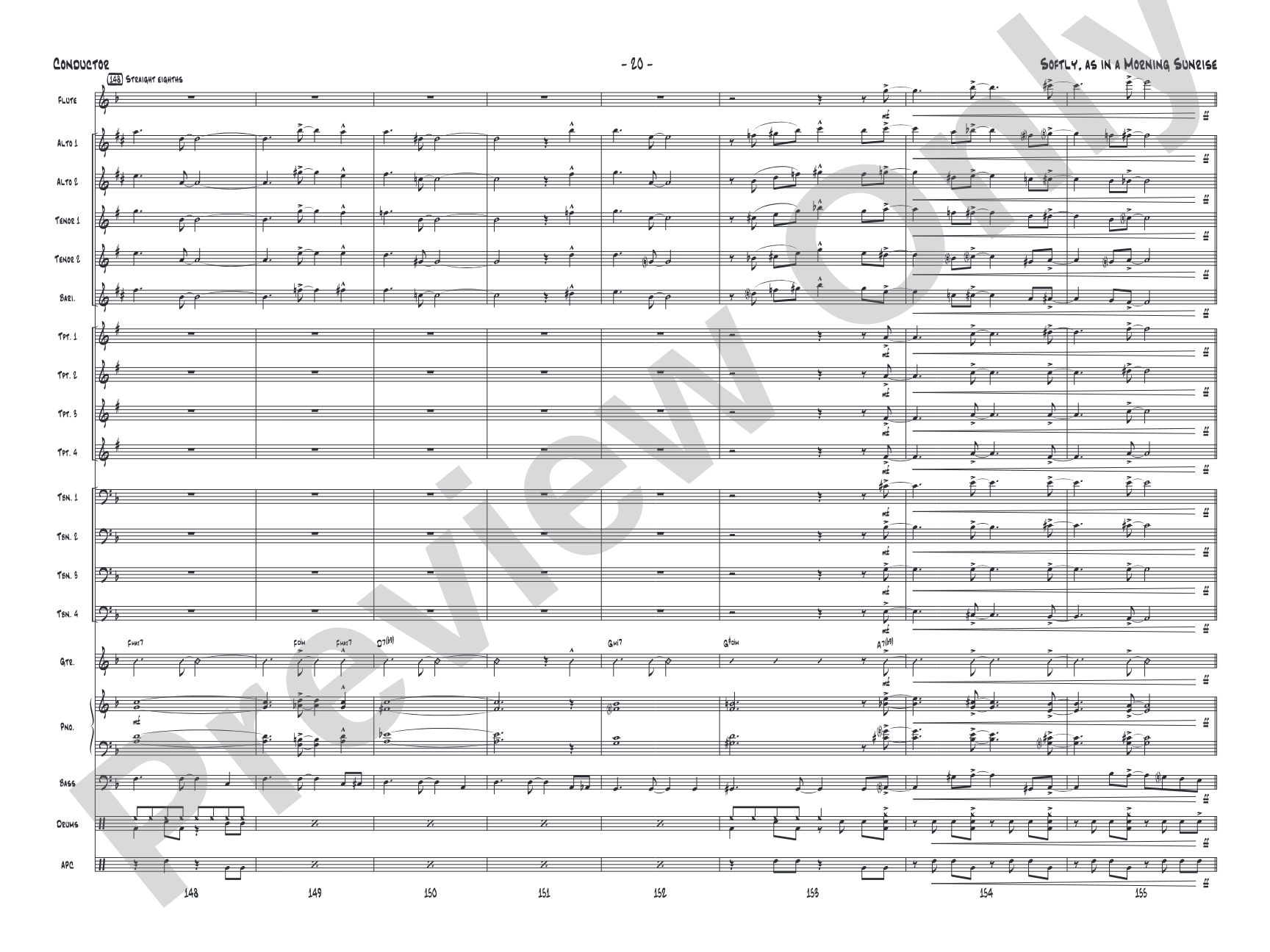
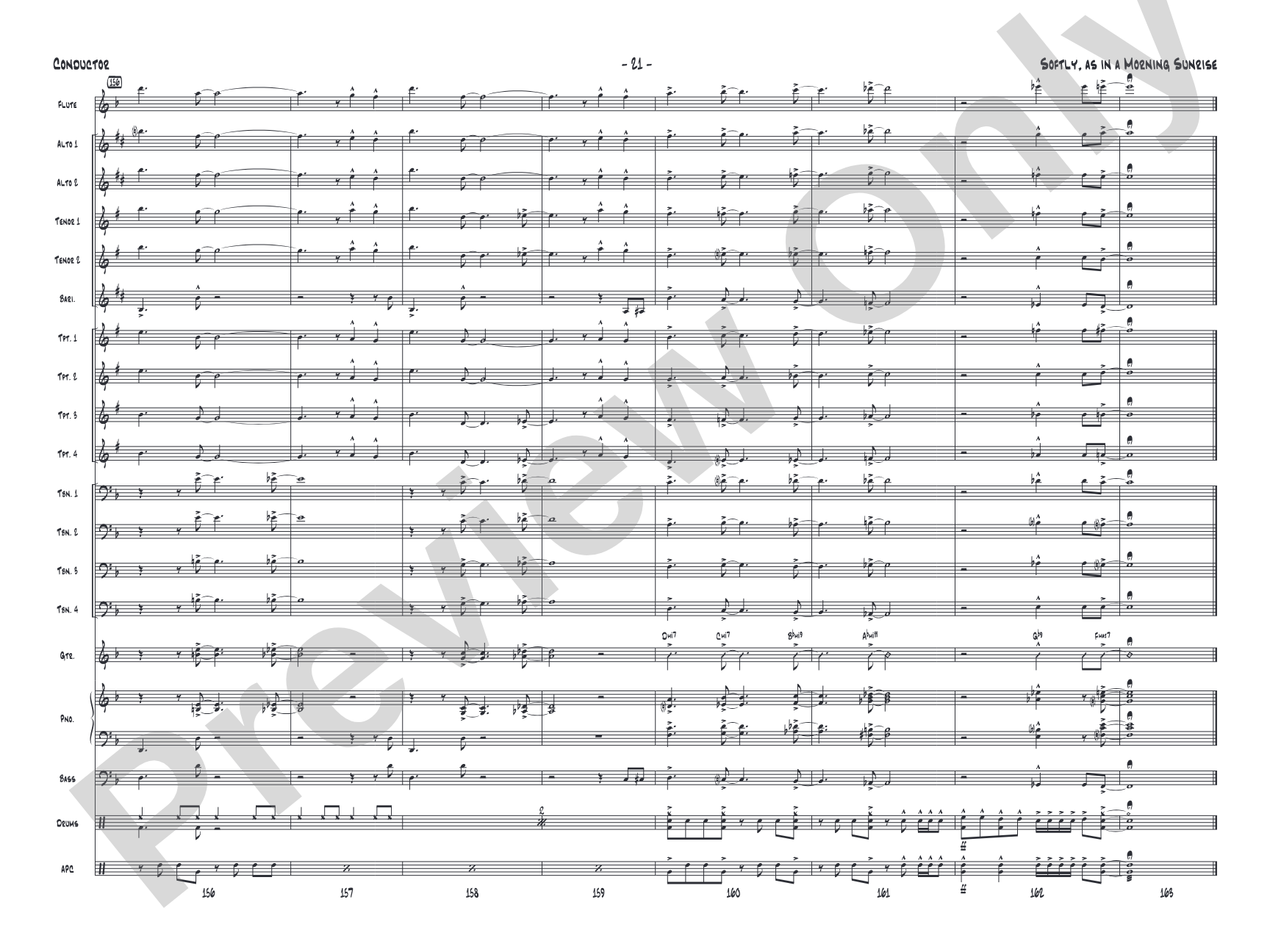

Softly, as in a Morning Sunrise: Jazz Ensemble Conductor Score & Parts
Music by Sigmund Romberg, lyrics by Oscar Hammerstein II / arr. Paul Baker
Grade: 2.5 (Medium Easy)
Item: 00-PK-0008298

$50.00
One moment…
Description
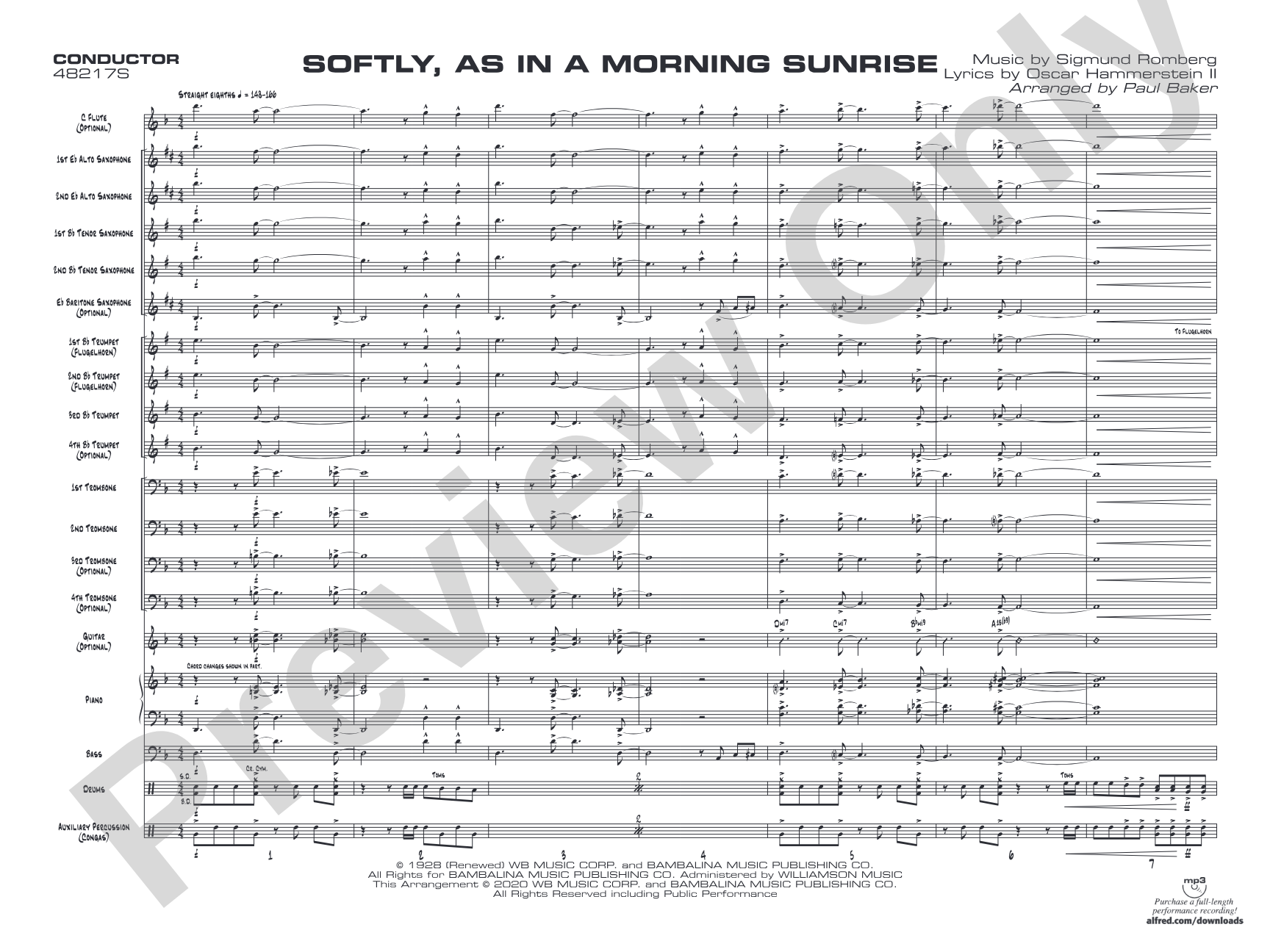
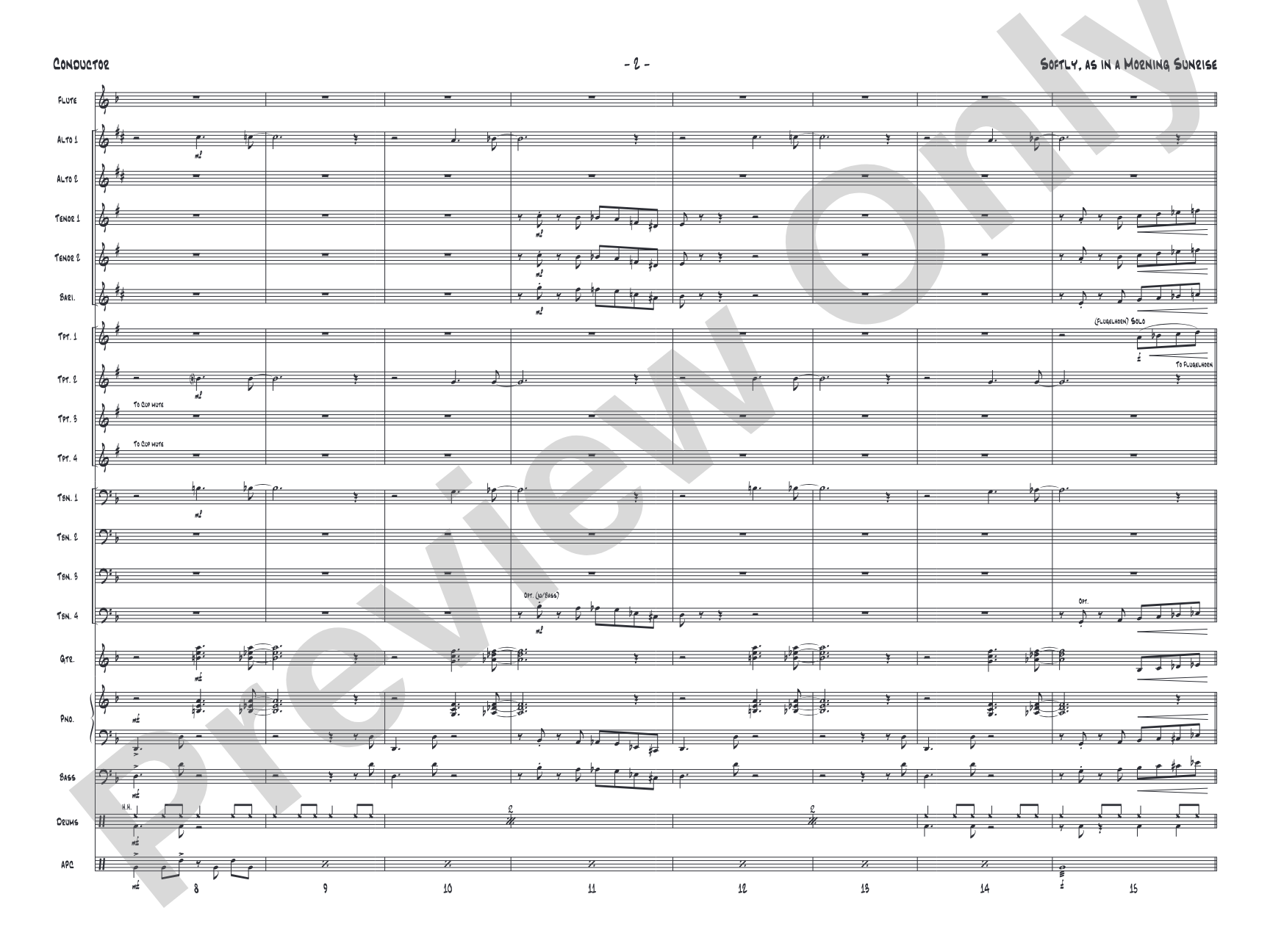
Softly, as in a Morning Sunrise arranged by Paul Baker is a jazz standard that switches between straight eighth and swing feel at a tempo around 150 BPM. Trumpet 1 has a written melody solo on flugelhorn, trumpet 2 and tenor 1 have written-out solos plus a drum solo. The lead trumpet range is to written G on top of the staff, a nice sax soli and an auxiliary percussion part along with optional flute and vibes parts. (4:34) This title is available in MakeMusic Cloud.


Don't just read it, hear it, play along with it, and watch your students grow with it. In MakeMusic Cloud, Softly, as in a Morning Sunrise: Jazz Ensemble Conductor Score & Parts comes alive with professional accompaniment, adjustable tempo, and built-in practice tools that turn solo practice into real progress.
Open in the Player
Jump straight in and assign it today.
Start Your Free Trial
Open this title and explore the full library in minutes.
Sample Audio
1
Audio File
--:--
0:00
0:00
Sample Video
Additional Details
Series:
Young Jazz Ensemble
Publisher:
Alfred Music
Page Count:
106
SKU:
00-PK-0008298
More about this title
About the Composer: Sigmund Romberg
Sigmund Romberg (1887–1951) was a Hungarian-American composer who dominated the operetta and musical theater landscape of the early 20th century. His gift for lyrical melody and sophisticated harmonic writing produced standards that have endured far beyond their original theatrical contexts, including "The Student Prince," "The Desert Song," and this piece, which remains a staple of jazz arrangements across skill levels.
Romberg's melodies translate beautifully into jazz settings because they contain the kind of singable, memorable lines that jazz musicians instinctively want to interpret and embellish. His work continues to provide educators with rich material for teaching both classical tradition and contemporary reinterpretation.
Why we love this
Paul Baker's arrangement captures everything that makes this melody irresistible while giving your ensemble genuine soloists to shine. The written-out solos for trumpet 2, tenor 1, and drums provide structure for players building improvisation confidence, while the flugelhorn melody on trumpet 1 sits in a comfortable range that lets young lead players focus on tone and phrasing rather than technical survival. The optional flute and vibes parts add textural variety without creating staffing obstacles.
What to expect
Warm, introspective, and gently swinging. The melody unfolds with the unhurried elegance of dawn breaking over water, and Baker's arrangement honors that reflective quality while keeping the ensemble engaged with rhythmic vitality and textural detail. It's a piece that invites listeners in rather than dazzling them.
Who it's for
Jazz ensembles at the middle school through early high school level, and community groups looking for approachable jazz that still demands musical maturity. The grade 2.5 designation reflects a piece that rewards careful phrasing and ensemble listening without overwhelming young soloists or section players with technical demands.
How to get the most out of it
- Establish the swing/straight eighth division early in sectional rehearsals. Have the rhythm section lock the feel first; too much uncertainty here will drag the ensemble off the tempo grid.
- The flugelhorn melody benefits from a warm, connected legato approach. Encourage your trumpet 1 player to think of the line as vocal, not flashy.
- Balance the sax soli against the full ensemble by checking blend in the section before full-band rehearsals. Saxes can easily get buried if the brass enters without dynamic awareness.
- Use the recorded accompaniment to build solo confidence in your trumpet 2 and tenor players, especially if they are new to jazz interpretation. The rhythm section pocket will anchor them.
How to use it
Place this on a concert that needs a quieter, more sophisticated moment. It pairs well alongside more energetic jazz standards or pop-influenced pieces, giving your audience a chance to experience the lyrical side of jazz arranging. It also works beautifully in a program exploring theatrical music or the relationship between classical composition and jazz interpretation.
Skills your students will build
- Swing interpretation and the distinction between swing and straight eighth feels
- Jazz phrasing and legato melodic line playing
- Solo construction using written frameworks as stepping stones to improvisation
- Ensemble balance and blend in a mixed texture (melody, countermelody, soli, rhythm section)
- Reading and interpreting jazz notation and articulation