
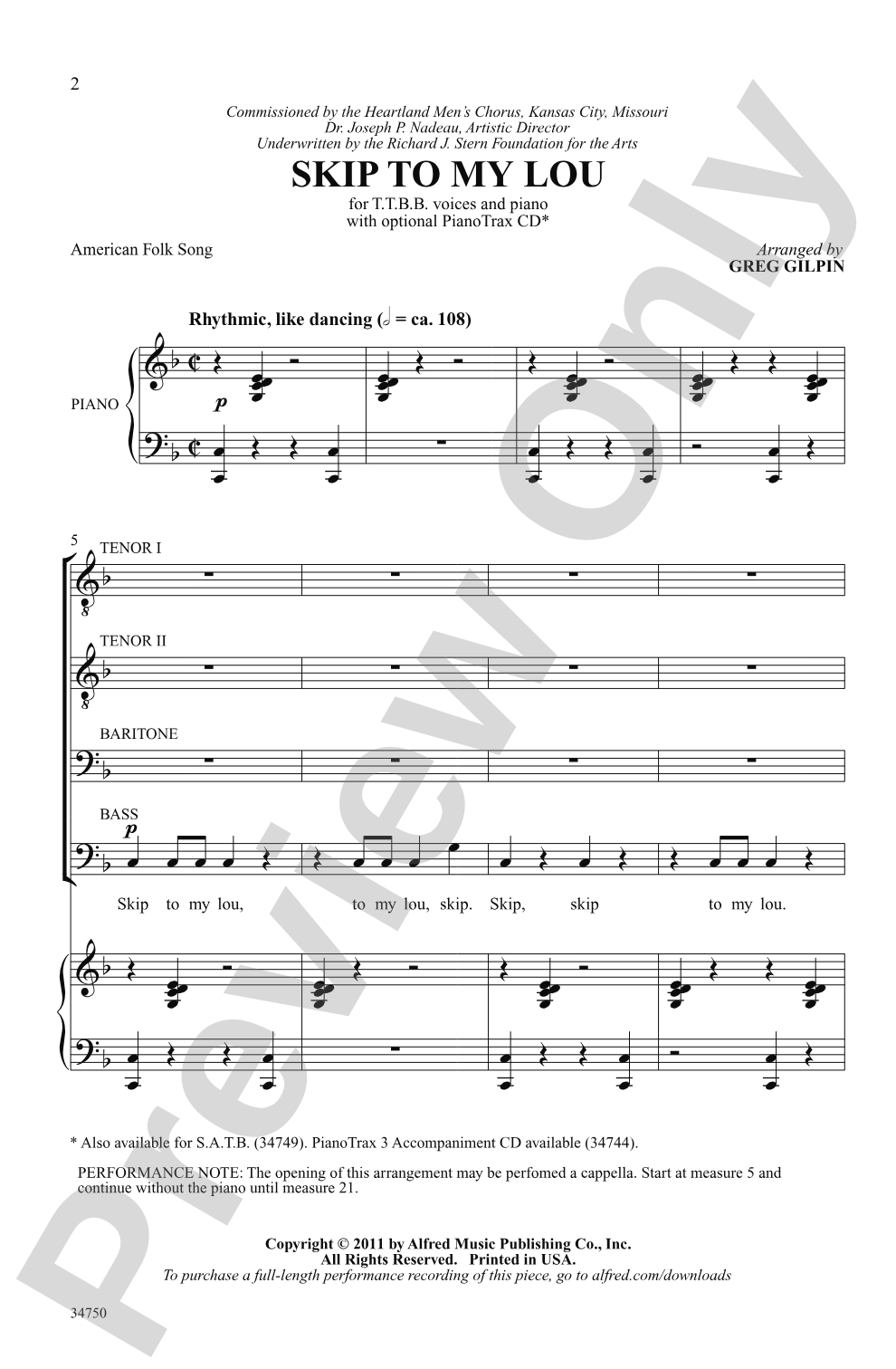

Skip to My Lou: TTBB Choral Octavo
American Folk Song / arr. Greg Gilpin
Item: 00-PO-0000869
$1.95
Minimum order quantity: 20 copies
Pickup currently not available
Description
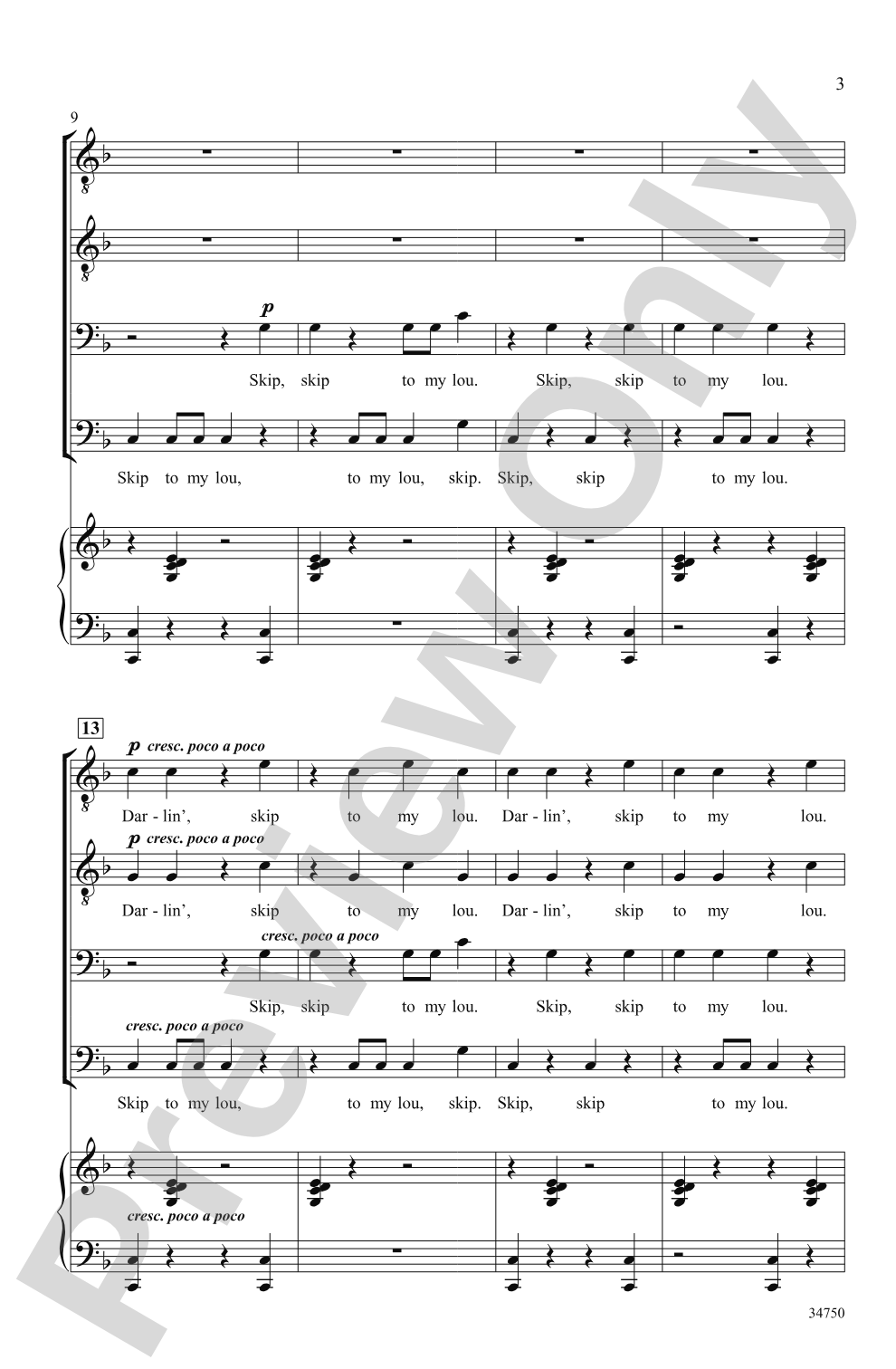
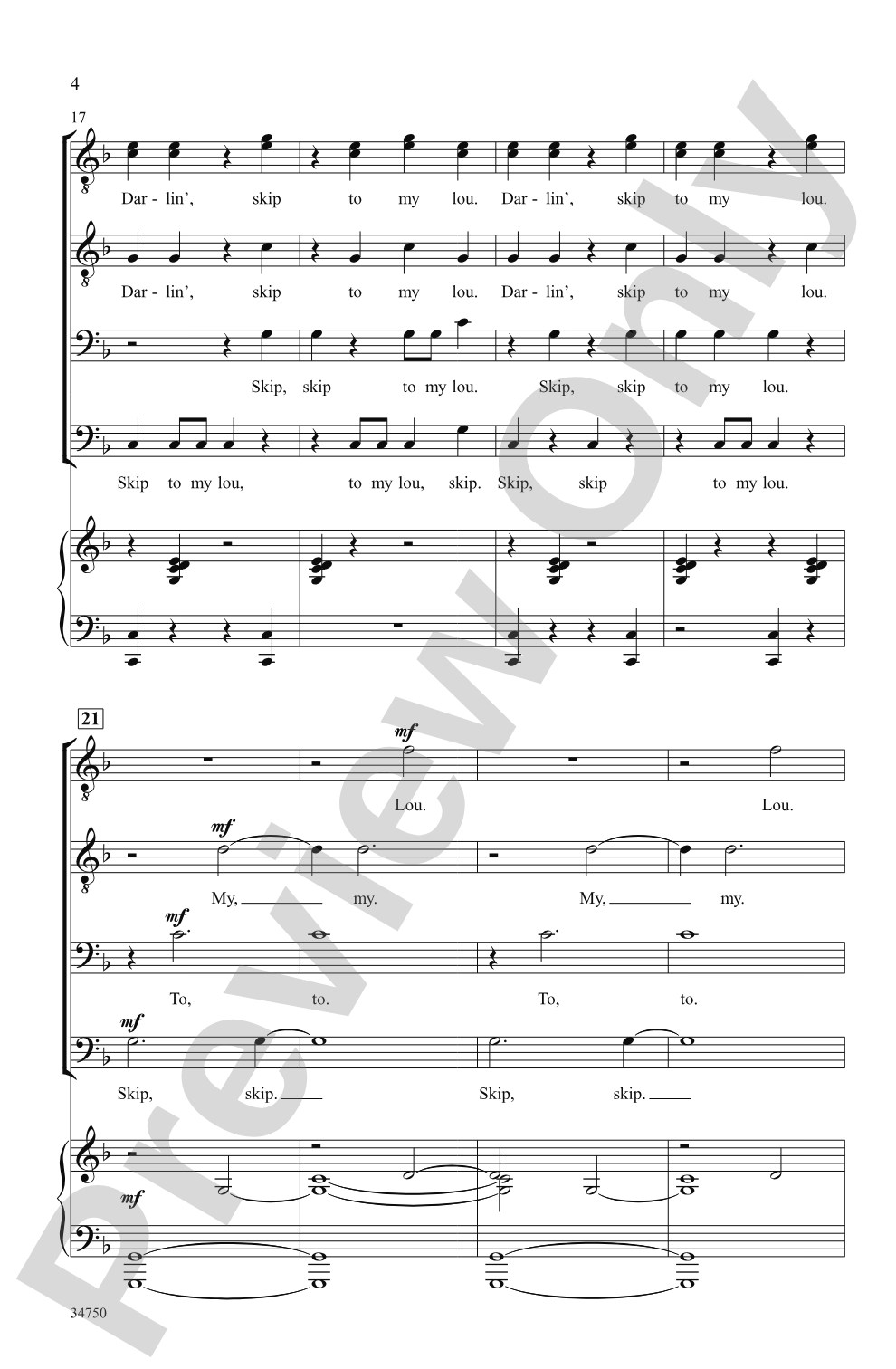
Solid arranging techniques and a playful spirit give this old dance a few new steps. Listen for the add-on ostinati, ear-bending chord progressions, unexpected rhythmic twists, falsetto tenors, descant sopranos, poignant "lost my partner" solos, and . . . buzzing bees?! Sounds silly, but requires serious singing. Featured on PianoTrax 3 Accompaniment CD (00-34744).


Skip to My Lou: TTBB Choral Octavo isn't in MakeMusic Cloud just yet...but it could be. Let us know you'd like to see it, and you'll help shape what comes next. In the meantime, start a free trial and dive into thousands of interactive titles your students can play along with today.
Request This Title
Tell us you want it.
Start Your Free Trial
Explore everything that's ready to play right now.
Sample Audio
1
Audio File
--:--
0:00
0:00
Sample Video
No sample videos found.
Additional Details
Series:
Alfred Choral Designs
Publisher:
Alfred Music
Page Count:
16
SKU:
00-PO-0000869
More about this title
About the Arranger: Greg Gilpin

Greg Gilpin has established himself as both a prolific choral arranger and an accomplished conductor, earning ASCAP recognition for his contributions to choral music. His work has been performed at some of the world's most prestigious venues, from Carnegie Hall and Lincoln Center in New York to the Sydney Opera House, Royal Festival Hall in London, and Harpa Concert Hall in Reykjavik. As Director of Educational Choral Publications for Shawnee Press, Gilpin shapes the landscape of accessible, engaging choral repertoire for singers at all levels.
Beyond the concert hall, Gilpin has ventured into film scoring, composing the award-winning score for the short film "Rosie's Rescue" in 2021. He has also collaborated with opera singer Angela Brown on a contemporary arrangement of "What Child is This?" that debuted with the Indianapolis Symphonic Choir. An active member of ACDA, NAfME, SAG-AFTRA, and a Life Loyal Member of Phi Mu Alpha Sinfonia, Gilpin continues to teach, compose, and conduct while bringing fresh energy to choral music education.
Why we love this
Gilpin takes a folk standard that students think they know and dismantles it with sophistication: unexpected harmonic moves, rhythmic interruptions, and textural tricks that sound deceptively simple but demand real musicianship. The falsetto tenor passages and descant sopranos add theatrical flair, while the "lost my partner" solos ground the playfulness in emotional truth. Your singers will discover that arranging cleverness and genuine artistry aren't opposites.
What to expect
A familiar tune reimagined as a modern, slightly cheeky conversation between voices. The arrangement pulses with witty energy and unexpected turns while maintaining the warmth of a folk tradition, punctuated by moments of genuine poignancy and small theatrical gestures that make singers smile.
Who it's for
Tenor and baritone singers in male or mixed ensembles who are ready for contemporary arranging sophistication. This piece rewards groups with solid rhythmic literacy and a willingness to embrace color and character in their tone production.
How to get the most out of it
- Bring out the ostinati layered beneath the main melody; these create the piece's pulse and rhythmic identity. Balance them so they support without overwhelming the text.
- Shape the "lost my partner" solos with vulnerability and slight rubato. These moments provide emotional contrast to the more energetic sections and deserve space to breathe.
- Isolate the rhythmic twists in sectional rehearsals. Mark where the expected beat pattern shifts and practice the new rhythm multiple times so singers lock in confidently rather than tentatively.
- Embrace the buzzing bees sound effect as a moment of collective character and fun. It's easier to sing with commitment when the ensemble knows the effect is intentional and earned.
How to use it
Program this after a set of more traditional pieces to signal a shift in mood and energy. It works particularly well in pops or family concerts where audiences appreciate arranging craft alongside accessibility. The piece also functions as an excellent teaching tool for rehearsals focused on rhythmic precision and blended texture.
Skills your students will build
- Singing rhythmic interruptions and syncopation within a familiar melody
- Balancing multiple ostinati while maintaining harmonic integrity
- Producing falsetto and descant passages with control and intonation
- Shaping solo lines with emotional nuance within an ensemble context
- Interpreting unconventional vocal effects (buzzing, tone color changes) as intentional musical choices