
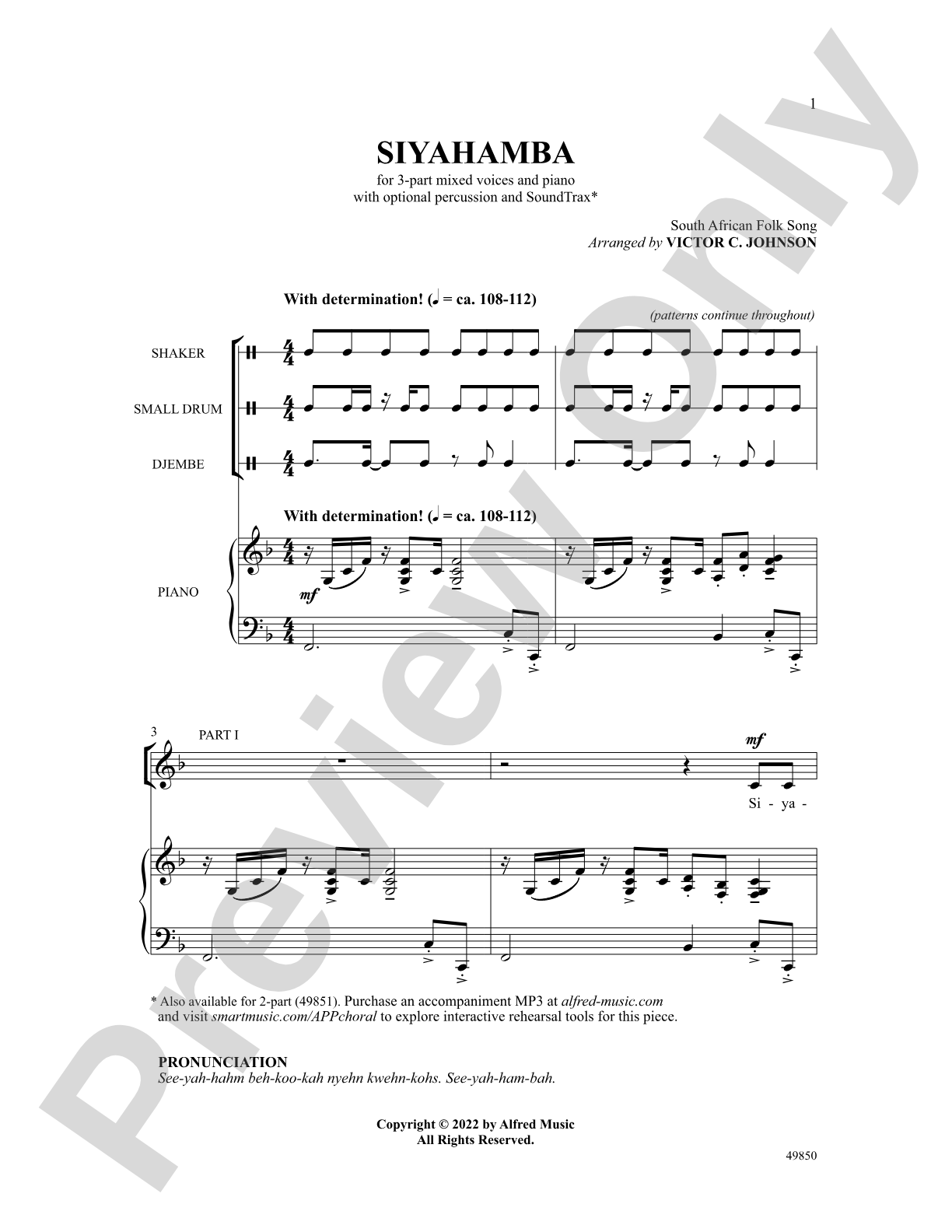
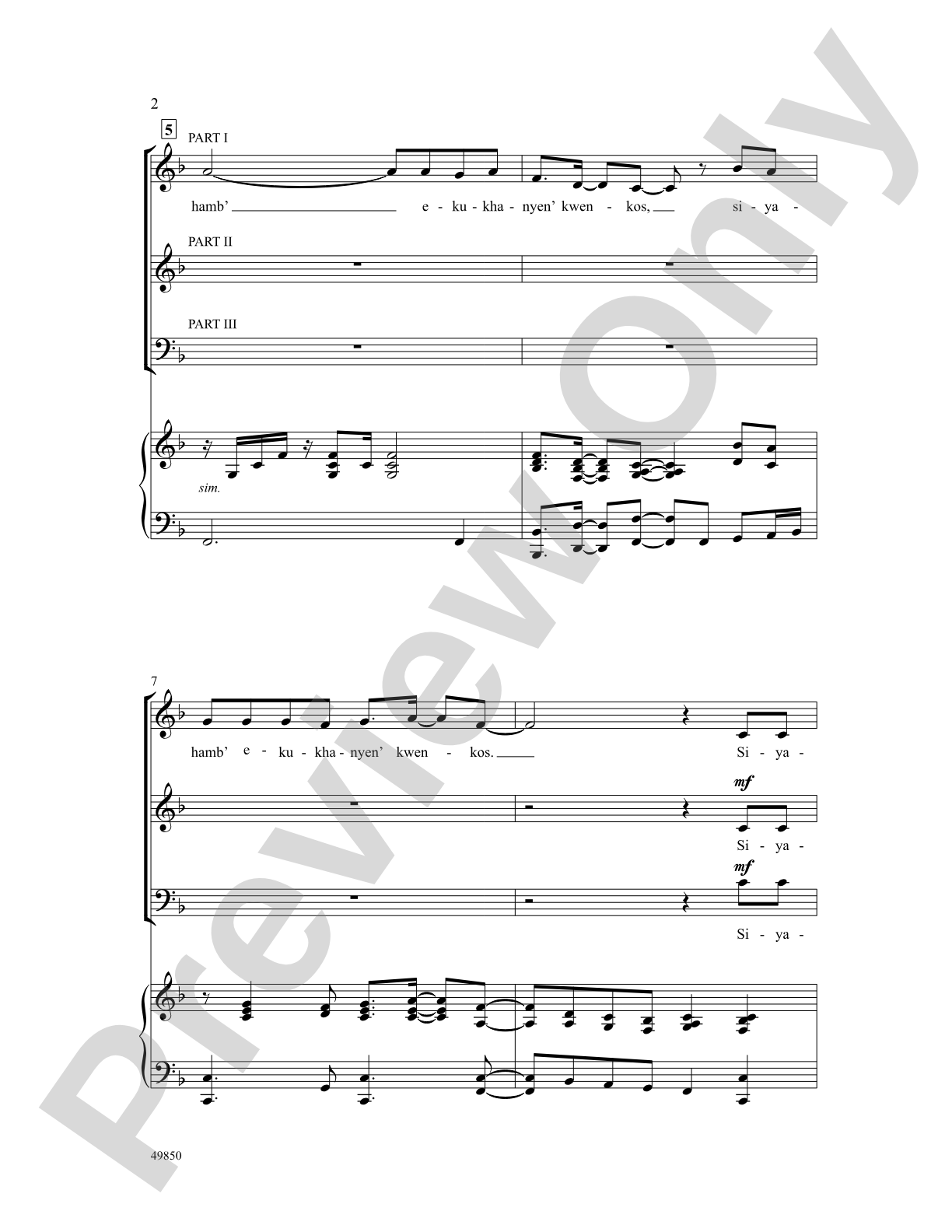
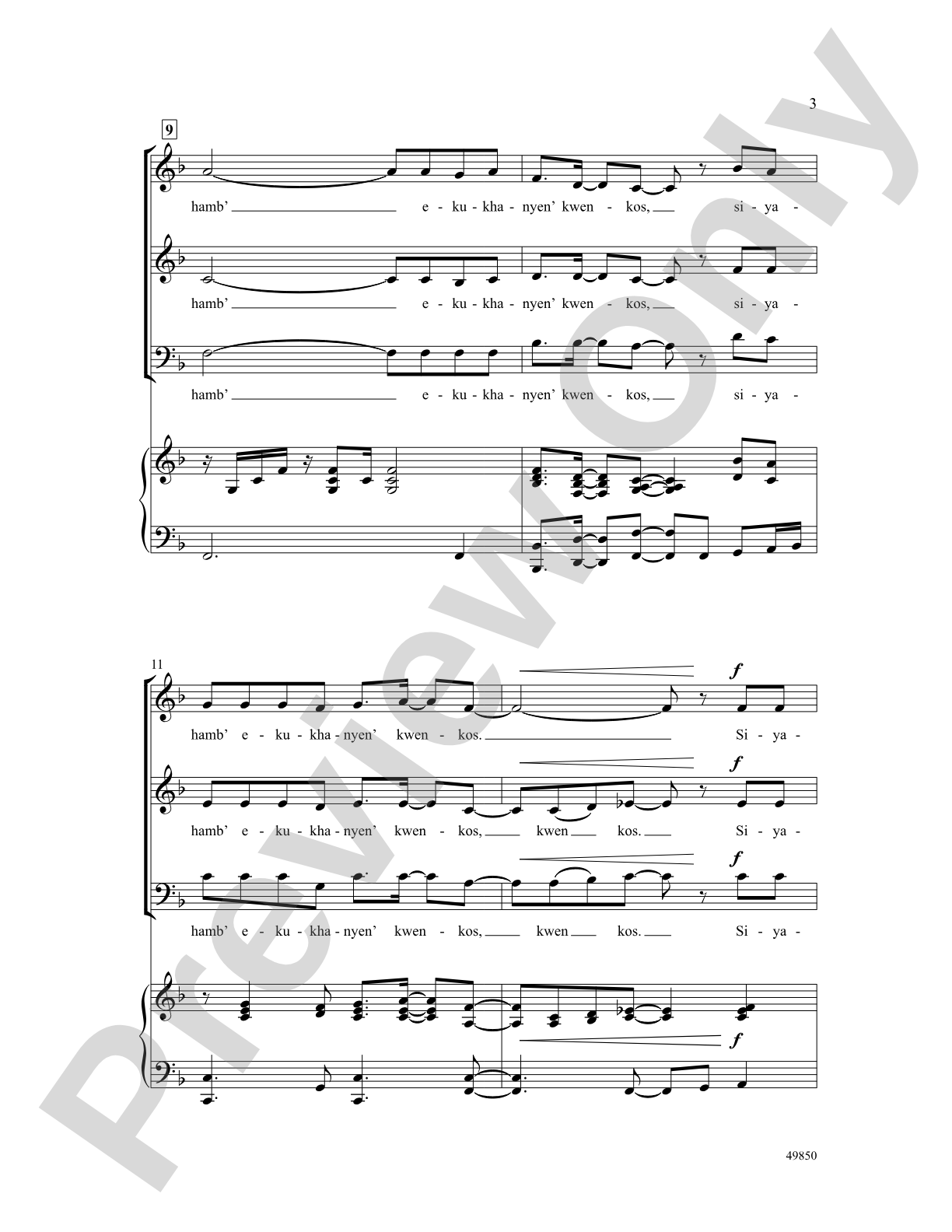

Siyahamba: 3-Part Mixed Choral Octavo
South African Folk Song / arr. Victor C. Johnson
Item: 00-PO-0006968

$2.40
Minimum order quantity: 20 copies
Pickup currently not available
Description
A stellar setting of the South African folk song for developing singers with logical part-writing, stylistic rhythms, and an energized accompaniment!
The PerformancePlus+ series is an innovative addition to the ever-expanding MakeMusic Cloud interactive library. These engaging selections are presented with educational resources designed to enrich the rehearsal process and create outstanding performances. Including:


The PerformancePlus+ series is an innovative addition to the ever-expanding MakeMusic Cloud interactive library. These engaging selections are presented with educational resources designed to enrich the rehearsal process and create outstanding performances. Including:
- Assignment, recording, and assessment tools within MakeMusic Cloud
- Part-predominant and accompaniment tracks
- Printable sheet music (with a standard MakeMusic Cloud subscription)
- Correlated rehearsal guides and performance notes
- Rights to perform in a live or virtual setting
Don't just read it, hear it, play along with it, and watch your students grow with it. In MakeMusic Cloud, Siyahamba: 3-Part Mixed Choral Octavo comes alive with professional accompaniment, adjustable tempo, and built-in practice tools that turn solo practice into real progress.
Open in the Player
Jump straight in and assign it today.
Start Your Free Trial
Open this title and explore the full library in minutes.
Sample Audio
1
Audio File
--:--
0:00
0:00
Sample Video
Additional Details
Series:
Alfred Choral Designs
Publisher:
Alfred Music
Page Count:
16
SKU:
00-PO-0006968
More about this title
About the Arranger: Victor C. Johnson

Victor C. Johnson serves as School Choral Editor for Sing!, the educational publishing arm of Choristers Guild. His output spans over 500 published works across choral settings, vocal solos, and keyboard collections, establishing him as one of the most prolific voices in contemporary choral music education.
From 2000 through 2018, Johnson directed choral ensembles at Fort Worth Academy of Fine Arts, where he led the Academy Singers and Academy Men's Choir while serving as Artistic Director for both the Singing Girls of Texas and Children's Choir of Texas. Since 2022, he has conducted the Dallas Symphony Children's Chorus Mixed Ensemble, the resident children's choir for the Dallas Symphony Orchestra. His professional memberships include the American Choral Directors Association, Texas Choral Directors Association, National Association for Music Education, and ASCAP.
Why we love this
Johnson's arrangement respects both the harmonic integrity and cultural authenticity of this beloved South African hymn while writing idiomatically for developing singers. The rhythmic vitality and logical voice leading make this accessible without sacrificing musical substance, giving young ensembles a piece they can perform with genuine conviction rather than approximation.
What to expect
Warm, propulsive, and celebratory. The piece carries the spiritual depth of its folk origins while the rhythmic drive and energized accompaniment give it forward momentum that engages singers and audiences alike. There's an infectious quality here—the kind of music that makes students want to sing and listeners want to move.
Who it's for
Developing mixed choirs in middle school, early high school, or community settings who are ready to move beyond unison singing but still benefit from straightforward part-writing. This arrangement works equally well for singers encountering South African repertoire for the first time and for ensembles seeking culturally grounded material with genuine pedagogical value.
How to get the most out of it
- Capture the piece's rhythmic energy by having singers feel the pulse in their bodies during rehearsal; this folk song thrives on physical commitment rather than cerebral precision.
- Balance the three parts carefully in the opening sections so the piece doesn't collapse into a wall of sound; emphasize the individual melodic lines before blending them together.
- Use the part-predominant tracks in MakeMusic Cloud to isolate each voice section during rehearsal, then transition to full accompaniment to hear how each line sits within the texture.
- Let the energized accompaniment drive the ensemble's phrasing rather than fighting against it; the piano part is your rhythmic anchor and interpretive guide.
How to use it
This octavo works beautifully in a concert exploring world music or spirituals, or as a contrasting selection alongside European art songs to show the breadth of choral literature. Its joyful character and accessible difficulty make it an excellent choice for a winter or spring concert that aims to program material beyond the standard repertoire while still maintaining strong audience connection.
Skills your students will build
- Singing sustained lines within a three-part texture
- Intonation across parallel voice parts in folk idiom
- Rhythmic precision while maintaining forward pulse
- Stylistic interpretation of world music repertoire
- Ensemble blend and balance in mixed voicing