

Siyahamba: 2-Part Choral Octavo
South African Folk Song / arr. Donald Moore
Level: Moderate
Item: 00-PO-0002750
$2.05
Minimum order quantity: 20 copies
Pickup currently not available
Description
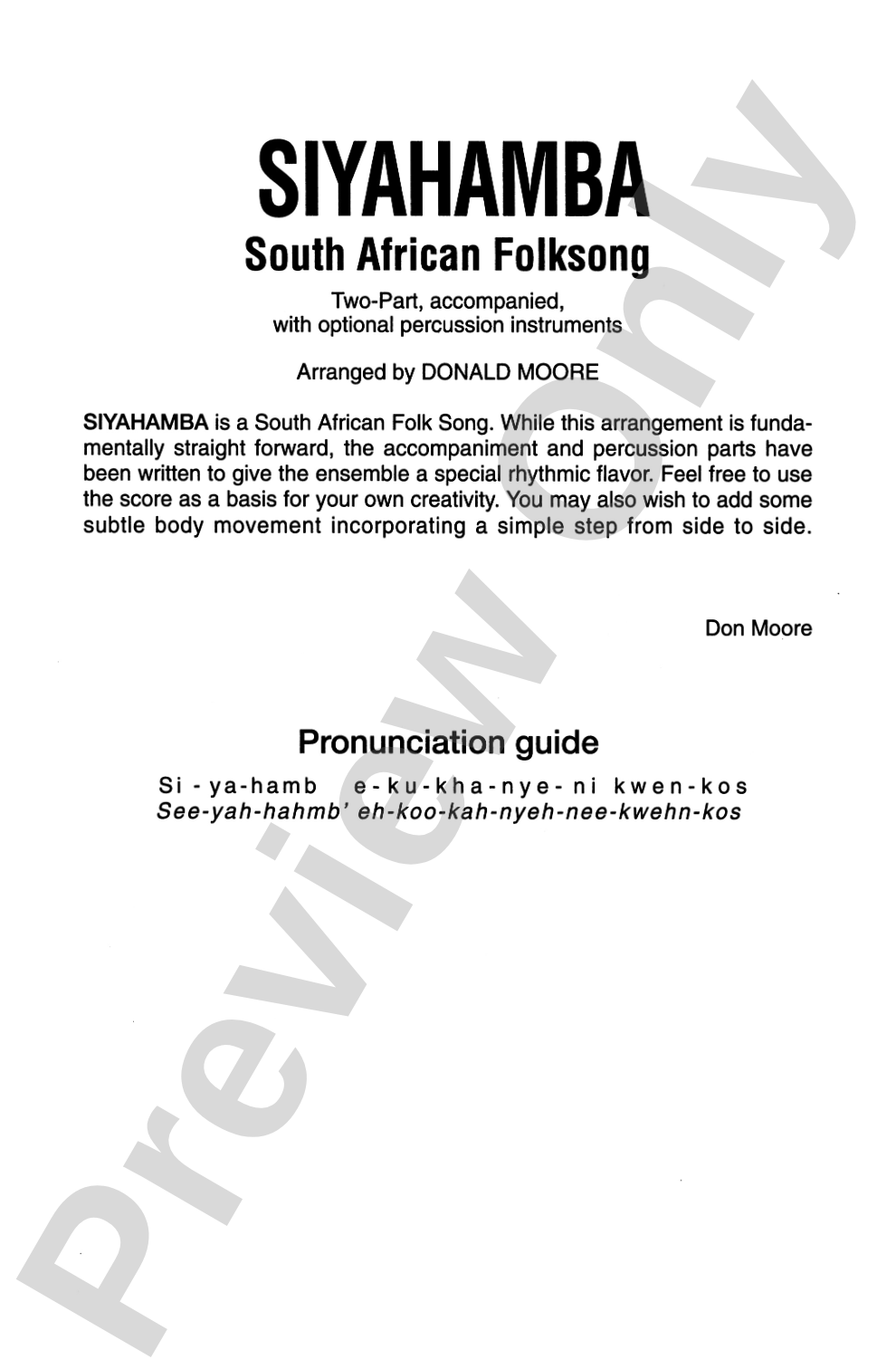
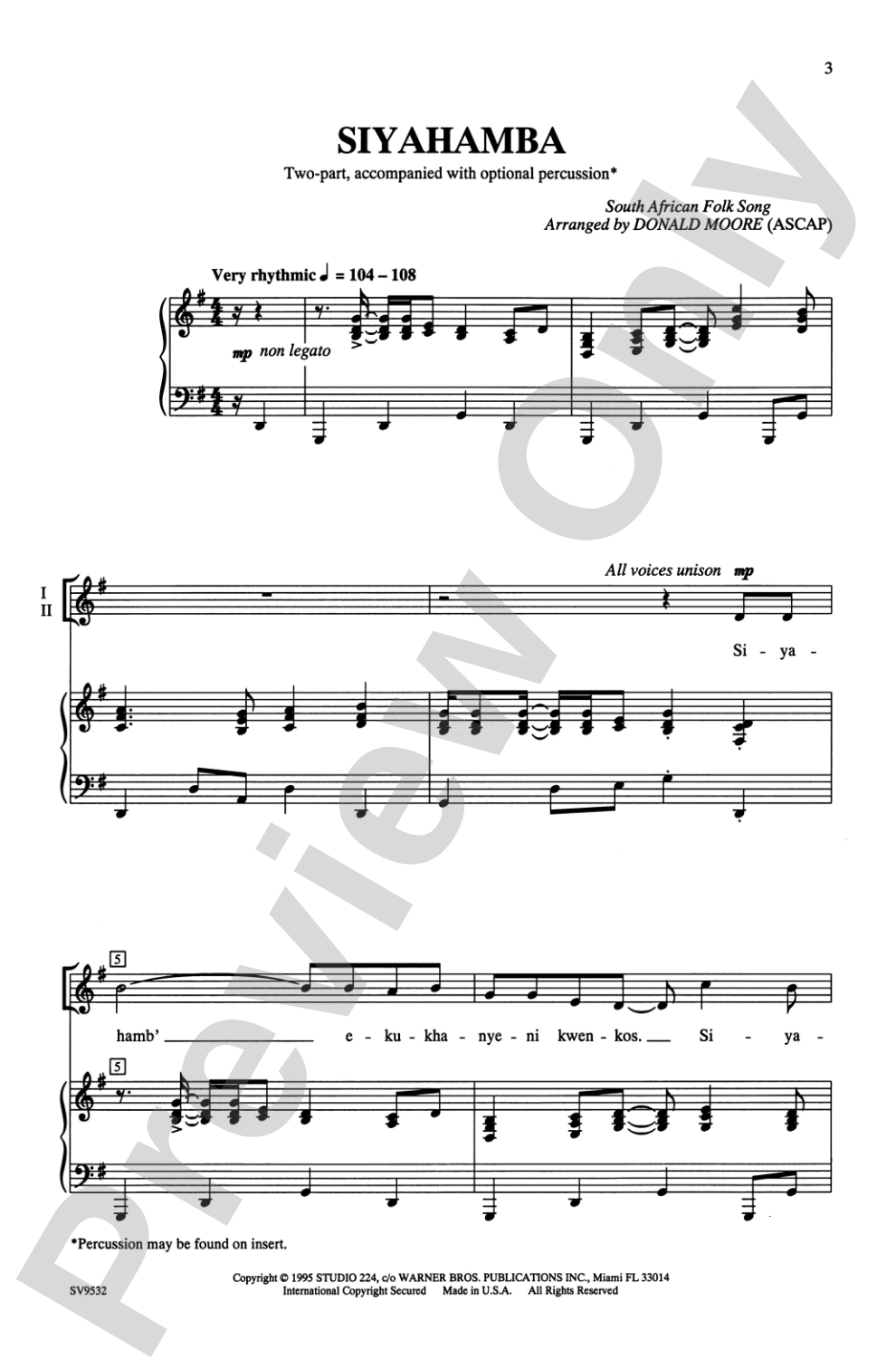
This South African folk song is set rhythmically, and includes the potential for using many percussion instruments. A must for the multiculturally diverse performance. It's fun for singers and audience alike!


Siyahamba: 2-Part Choral Octavo isn't in MakeMusic Cloud just yet...but it could be. Let us know you'd like to see it, and you'll help shape what comes next. In the meantime, start a free trial and dive into thousands of interactive titles your students can play along with today.
Request This Title
Tell us you want it.
Start Your Free Trial
Explore everything that's ready to play right now.
Sample Audio
No sample audio found.
Sample Video
No sample videos found.
Additional Details
Series:
World Music Series
Publisher:
Alfred Music
Page Count:
12
SKU:
00-PO-0002750
Instrumentation:
Opt. Percussion Instruments
More about this title
About the Arranger: Donald Moore
Donald Moore studied organ performance at Kent State University and earned a Master of Arts in Teaching from the same institution. He has established himself as a prolific composer and arranger whose works span sacred, secular, and educational choral music alongside organ and piano compositions. His catalog of over 500 published pieces appears with major publishers including Alfred, Hal Leonard, Heritage Music Press, and others, and his compositions regularly appear in state and national music competitions and festivals. Moore has received the ASCAP Composers Standard Award seventeen times and was recognized by the American Choral Directors Association as one of 400 historically significant American choral composers.
Serving as Organist-Choirmaster at Pilgrim United Church of Christ in Cuyahoga Falls, Ohio, Moore brings both academic training and active church music experience to his arrangements. His work reflects deep understanding of what singers and audiences respond to across educational and worship settings.
Why we love this
Moore's setting captures the rhythmic vitality of this South African song while keeping the arrangement accessible for Grade 3 singers. The optional percussion parts turn this into an ensemble experience that engages your whole group, regardless of who sings or who plays, making it genuinely inclusive rather than tacking instruments on as an afterthought.
What to expect
Siyahamba pulses with a steady, grounded energy rooted in South African musical tradition. The rhythmic writing gives the piece forward momentum and joy, inviting singers to feel the groove rather than count through mechanical phrases; add even simple percussion and the whole arrangement comes alive with texture and cultural authenticity.
Who it's for
This arrangement works for upper elementary and middle school choirs, particularly groups that value multicultural repertoire and enjoy kinesthetic engagement through percussion. It suits both classroom music programs and more formal choral ensembles, as the two-part voicing accommodates mixed comfort levels with reading while remaining musically rewarding.
How to get the most out of it
- Lock in the rhythmic foundation before layering any percussion; have singers establish the steady pulse first so instrumentalists have a clear reference point.
- Assign percussion strategically across your choir. Singers without active parts can hold shakers or play frame drums, which keeps energy distributed and everyone invested.
- Record a quick rehearsal run-through and play it back so singers hear how their part sits within the full harmonic and rhythmic picture.
- Balance vocal dynamics carefully; the arrangement's rhythmic interest can easily overshadow the singing if percussion isn't managed during mixed sections.
How to use it
Pair this with other World Music Series selections to build a culturally rich concert segment, or use it as an energizing opener or closer that shifts the mood and leaves audiences smiling. Its accessibility and built-in percussion potential also make it ideal for assembly performances or community events where visual engagement matters alongside the singing.
Skills your students will build
- Reading and performing in 2-part treble voicing
- Maintaining steady rhythmic pulse in syncopated patterns
- Coordinating singing with optional percussion parts
- Developing awareness of non-Western musical traditions and rhythmic approaches
- Building ensemble blend across melody and harmony parts