

Siyahamba: 3-Part Mixed Choral Octavo
South African Folk Song / arr. Donald Moore
Level: Moderate
Item: 00-PO-0003545
$2.05
Minimum order quantity: 20 copies
Pickup currently not available
Description
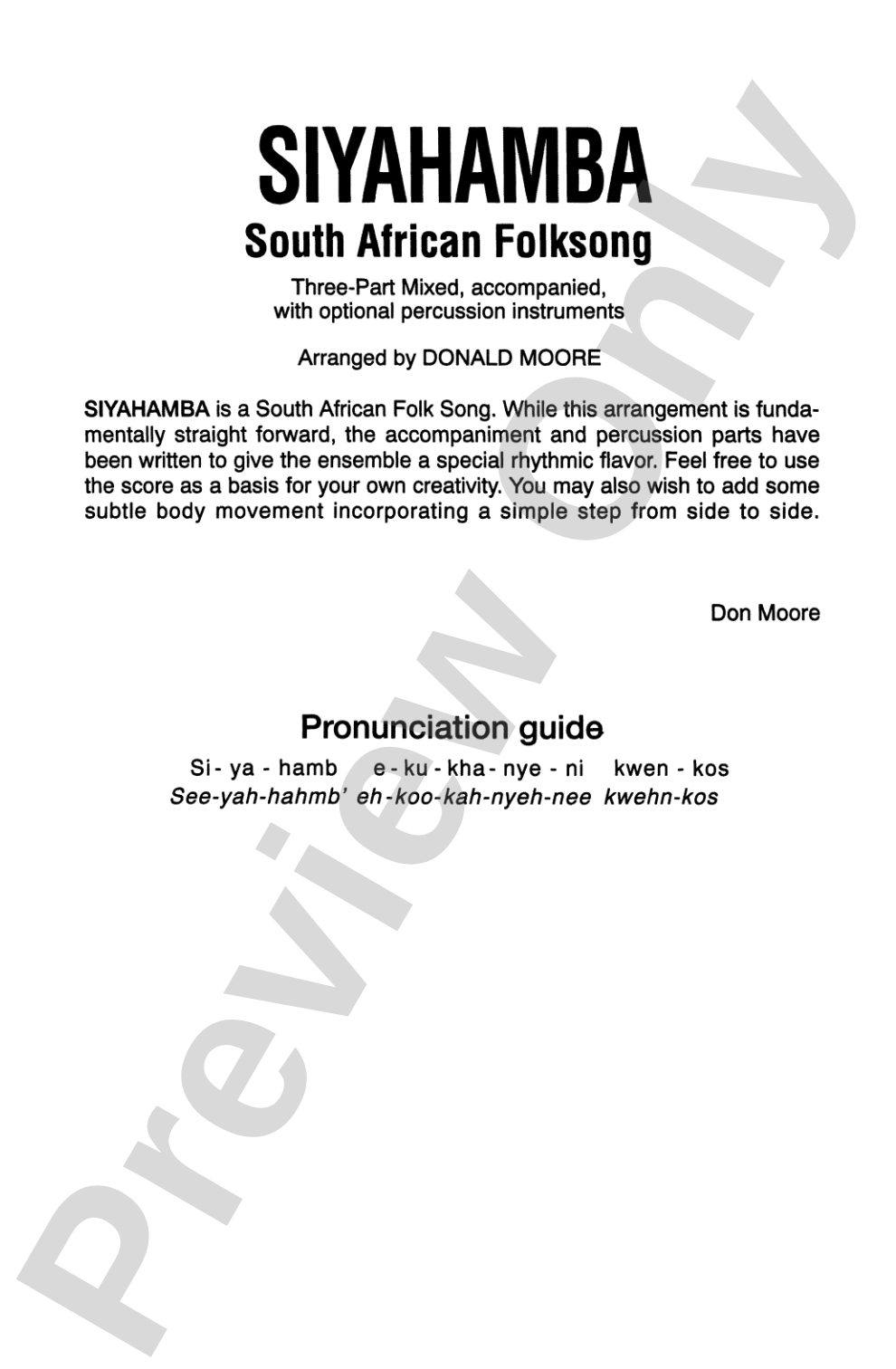
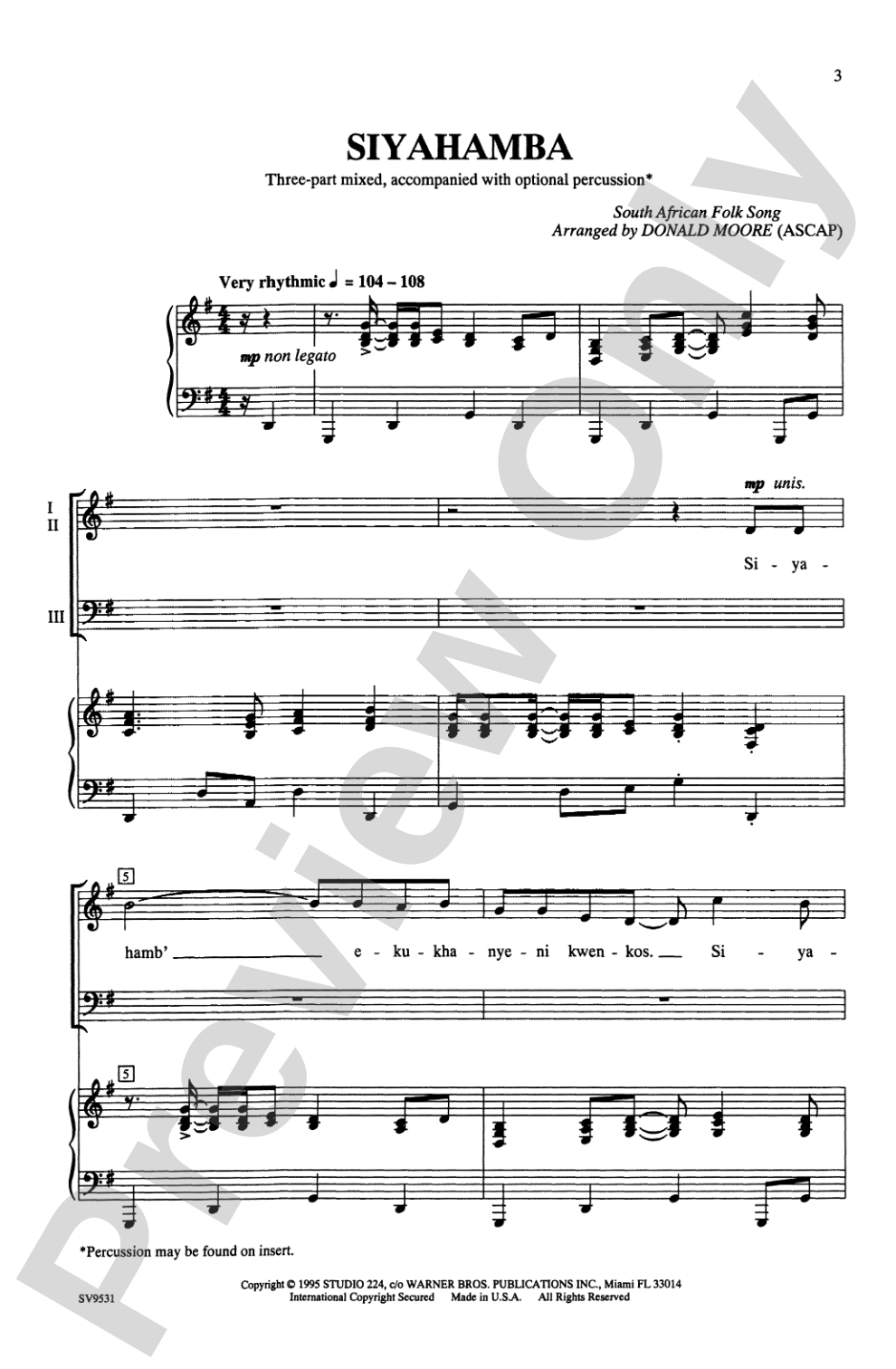
This South African folk song is set rhythmically, and includes the potential for using many percussion instruments. A must for the multiculturally diverse performance. It's fun for singers and audience alike!


Siyahamba: 3-Part Mixed Choral Octavo isn't in MakeMusic Cloud just yet...but it could be. Let us know you'd like to see it, and you'll help shape what comes next. In the meantime, start a free trial and dive into thousands of interactive titles your students can play along with today.
Request This Title
Tell us you want it.
Start Your Free Trial
Explore everything that's ready to play right now.
Sample Audio
No sample audio found.
Sample Video
No sample videos found.
Additional Details
Series:
World Music Series
Publisher:
Alfred Music
Page Count:
12
SKU:
00-PO-0003545
Instrumentation:
Opt. Percussion Instruments
More about this title
About the Arranger: Donald Moore
Donald Moore earned his Bachelor of Music in organ performance and Master of Arts in Teaching from Kent State University. He has built an extraordinary catalog of over 500 published works across sacred, secular, and educational genres, with compositions appearing regularly in state contests, regional festivals, and national music conventions. His arrangements and original pieces are published by Alfred Music, Hal Leonard, Heritage Music Press, and other major houses.
Recognized as one of 400 elite composers of significance in American choral music by the American Choral Directors Association, Moore has received the ASCAP Composers Standard Award seventeen times. He serves as Organist-Choirmaster at Pilgrim United Church of Christ in Cuyahoga Falls, Ohio, and maintains an active presence in both music education and competitive motorsports.
Why we love this
Moore's rhythmic treatment transforms this beloved South African folk song into something immediately singable for middle grades while preserving its cultural authenticity. The optional percussion parts give you genuine flexibility: teach it with voices alone, or activate the arrangement with hand drums, shakers, and other instruments that let your singers feel the song's rhythmic heartbeat. This is the kind of arrangement that works equally well in a concert setting and in a classroom celebration.
What to expect
Energetic and grounded. The rhythmic setting has a steady, hypnotic quality that propels the song forward, while the three-part voicing creates warmth and harmonic interest without complexity. There's joy in the simplicity here, and permission for your singers to move, feel, and celebrate rather than merely deliver notes on a page.
Who it's for
Mixed choirs in Grades 3-4 with singers ready for three-part writing and a modest range. This arrangement works well for school choirs, church choirs serving youth singers, and any ensemble looking to expand its multicultural repertoire without overwhelming rhythmic or harmonic demands.
How to get the most out of it
- Let percussion enter gradually across rehearsals. Start with voices establishing the groove, then layer in hand drums, then add shakers or other unpitched instruments in subsequent sections.
- Encourage your singers to feel the South African rhythmic pulse rather than fight it; the steady, driving quality of the arrangement comes from committing to the groove rather than rushing through phrases.
- Use the recorded accompaniment during early rehearsals to anchor tuning and phrasing, then work toward removing it as singers internalize the harmonic progression.
- If using live percussion, assign those parts to confident students who can maintain the rhythm independently while singers focus on their own lines.
How to use it
Program this to open a concert segment exploring music of the African diaspora, or place it as a centerpiece in a multicultural or world music showcase. Its accessibility and joyful character also make it effective as a standalone concert closer that sends audiences out energized. Consider programming it alongside other sacred or folk traditions to contextualize its cultural roots.
Skills your students will build
- Reading and sustaining three-part SAB voicing
- Maintaining steady rhythmic groove while singing independent lines
- Responding to percussion accompaniment and rhythmic cues
- Performing music from South African cultural traditions
- Blending voices in straightforward harmonic progressions