
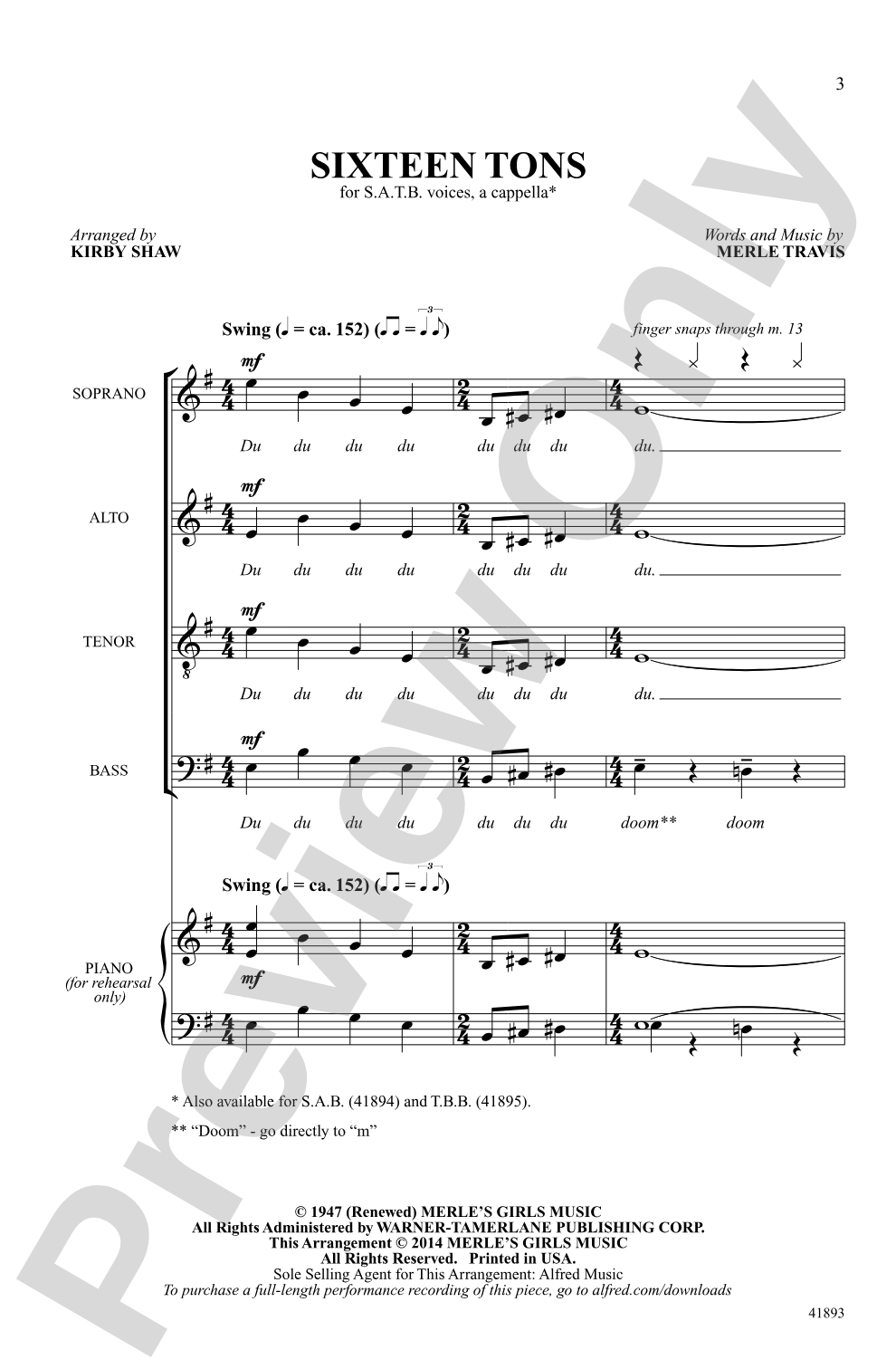
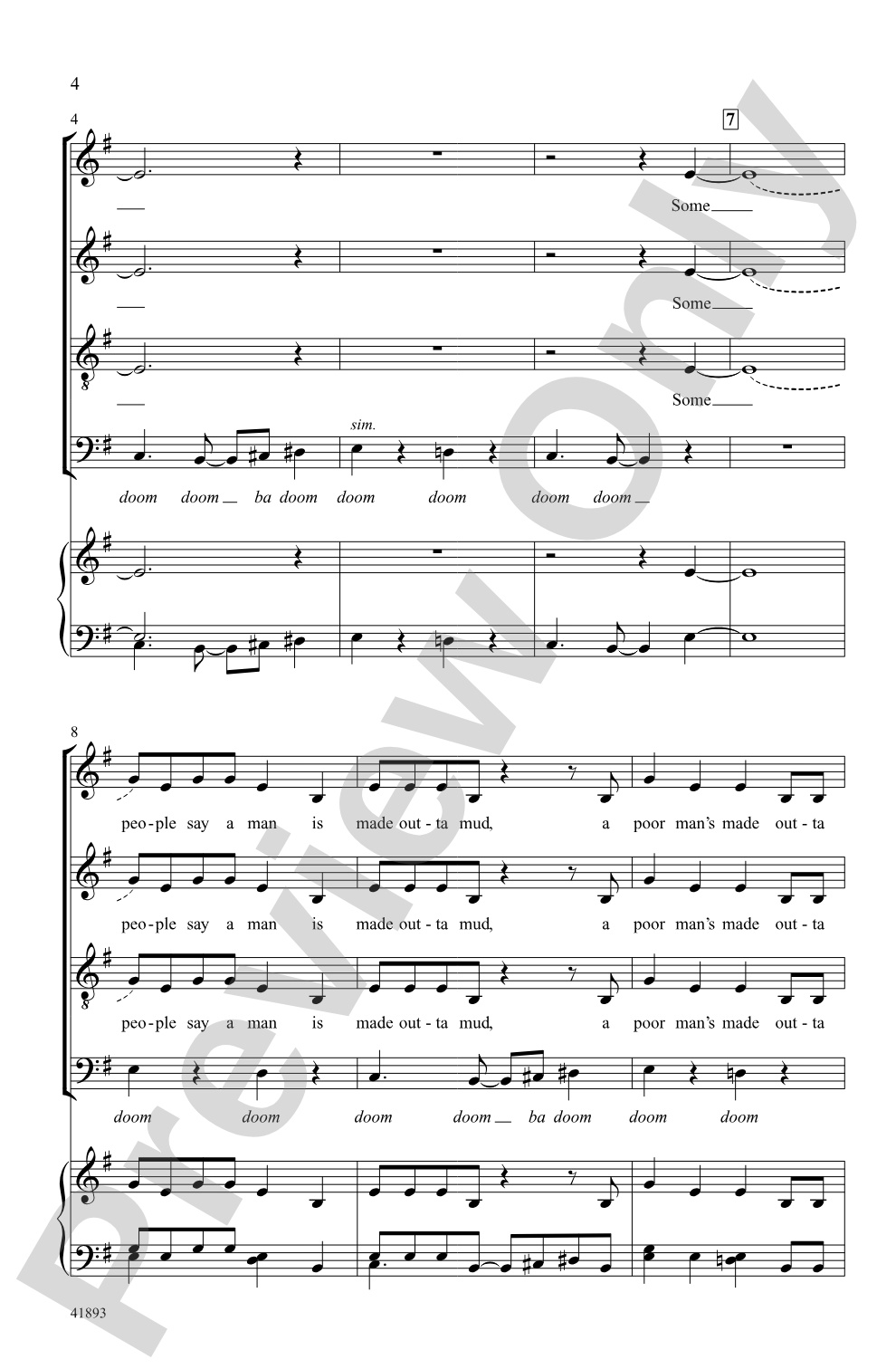
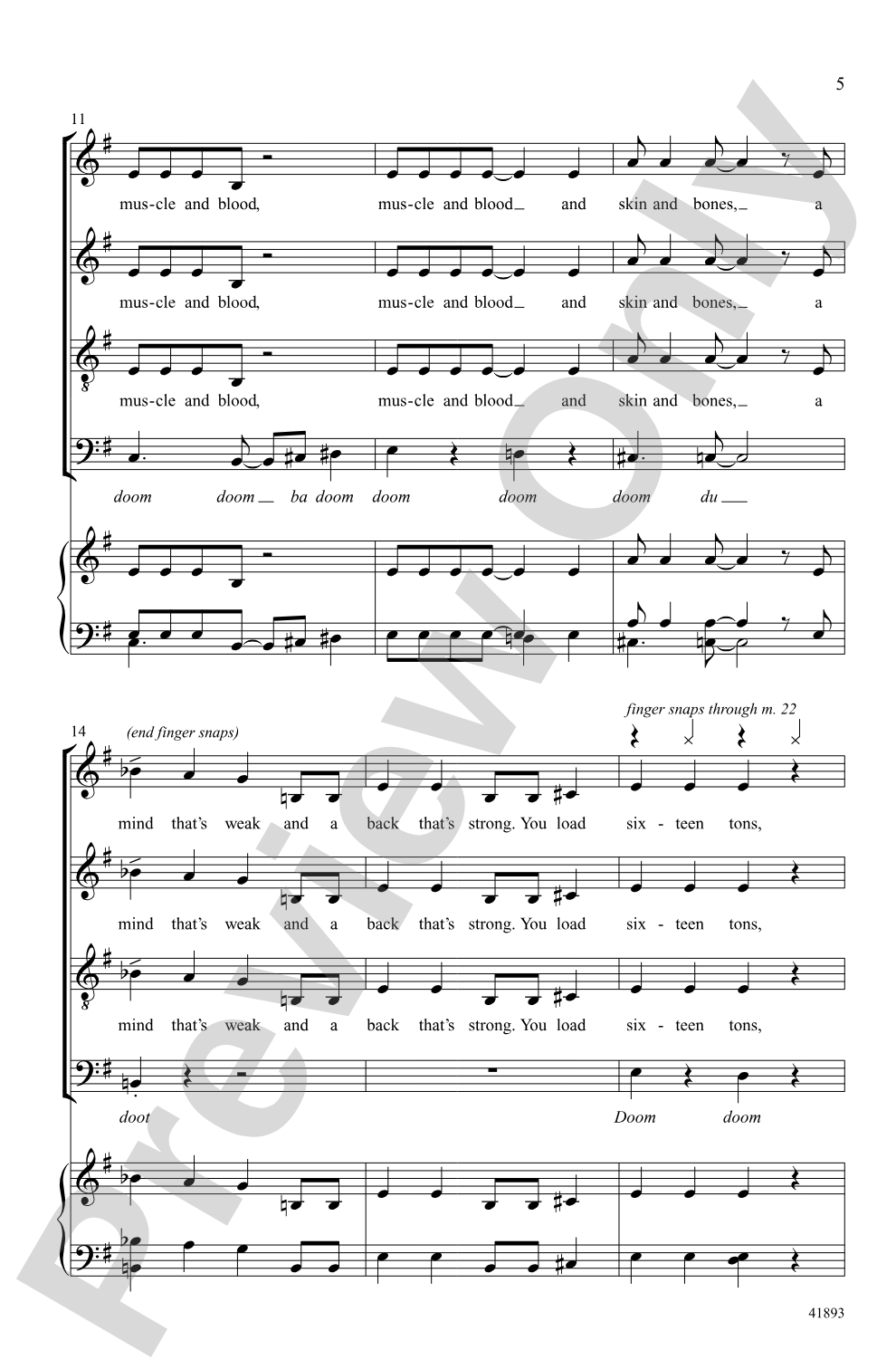

Sixteen Tons: SATB, a cappella Choral Octavo
Words and music by Merle Travis / arr. Kirby Shaw
Item: 00-PO-0002011
$2.25
Minimum order quantity: 20 copies
One moment…
Description
It's been performed by Elvis, Stevie Wonder, and a host of others, but it was the Tennessee Ernie Ford recording that brought this song to national attention and the top of the Billboard charts. Great voice-leading and a tight rhythmic groove make it fun to sing.


Sixteen Tons: SATB, a cappella Choral Octavo isn't in MakeMusic Cloud just yet...but it could be. Let us know you'd like to see it, and you'll help shape what comes next. In the meantime, start a free trial and dive into thousands of interactive titles your students can play along with today.
Request This Title
Tell us you want it.
Start Your Free Trial
Explore everything that's ready to play right now.
Sample Audio
1
Audio File
--:--
0:00
0:00
Sample Video
No sample videos found.
Additional Details
Series:
Alfred Pop Choral Series
Publisher:
Alfred Music
Page Count:
16
SKU:
00-PO-0002011
More about this title
About the Composer: Merle Travis
Merle Travis (1917-1983) was a Kentucky-born singer-songwriter and guitarist who helped define the sound of country and folk music in the mid-20th century. Beyond his performing career, Travis was a prolific songwriter whose compositions crossed genre lines and proved enduring; "Sixteen Tons" stands as one of his most recorded works, recorded by artists ranging from rock to soul to pop.
Travis's gift for storytelling through song and his understanding of working-class narratives made his writing relatable across musical styles. His influence on American popular music extends beyond country into the broader landscape of folk, rock, and contemporary music.
Why we love this
Kirby Shaw's arrangement captures the original's conversational groove and gives each voice part something genuinely musical to sing rather than just filling harmonies. The tight rhythmic interplay keeps students engaged and gives your choir an immediate sense of cohesion, even at early rehearsals. This is the kind of secular piece that reminds singers why they love being in a choir.
What to expect
Confident and grounded. The piece has the feel of someone telling you the truth over a steady beat, with enough harmonic sophistication to keep musicians interested. There's a wry, no-nonsense character to it that appeals to singers who want substance alongside fun.
Who it's for
This octavo works for intermediate to advanced high school choirs and any community or college ensemble comfortable with a cappella singing and rhythmic precision. It's especially valuable for groups looking to add a secular pop standard that doesn't talk down to singers or rely on accompaniment to carry the arrangement.
How to get the most out of it
- Treat the rhythm section (alto and bass lines especially) as a percussion section. Lock those parts into a steady, almost mechanical groove so the sopranos and tenors can float over them with ease.
- Work the text deliberately. The lyrics carry a working-person's dignity that can get lost if the piece feels too polished. Let some conversational quality into the phrasing.
- Balance the chord clarity against the energy of the groove. A cappella singing means every vertical sonority is exposed; mark where blend matters most and where you want slight separation for rhythmic punch.
- Record a full run-through early in rehearsals and listen back as a choir. A cappella work benefits from hearing how the parts actually sit together, and this piece's groove becomes obvious once singers hear the whole texture.
How to use it
Program this as a centerpiece of a pop or secular-music concert, or pair it with other mid-century American song standards to create a "Great American Songbook" set. It also works as a strong closing piece for a mixed repertoire concert because audiences recognize it immediately and the choir's energy becomes infectious.
Skills your students will build
- A cappella blend and intonation without instrumental support
- Maintaining rhythmic precision and groove in a four-part texture
- Voice-leading awareness (understanding how individual lines contribute to the whole)
- Stylistic interpretation of secular, popular-song material
- Ensemble balance when melodic interest shifts between voice parts