
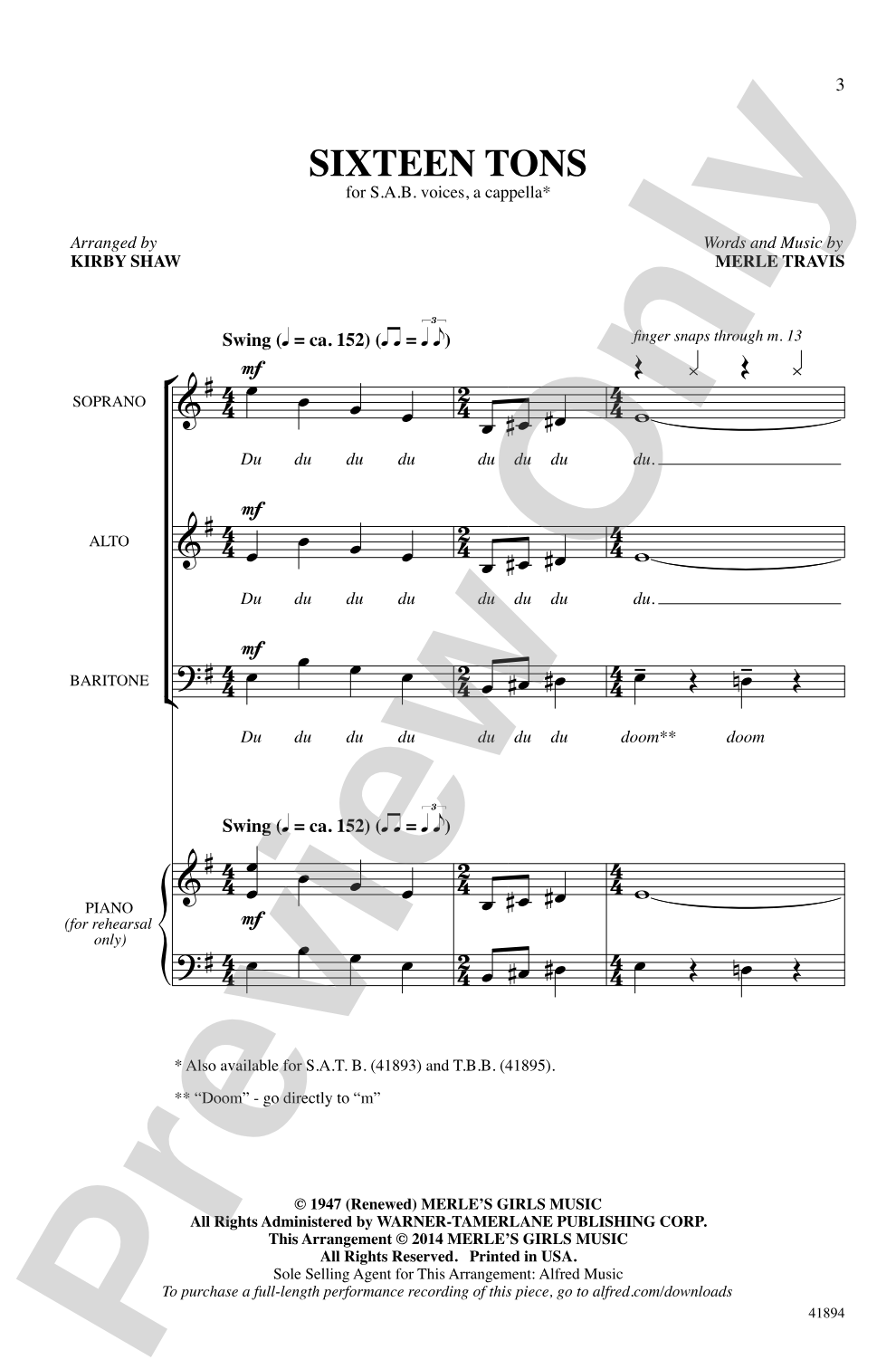
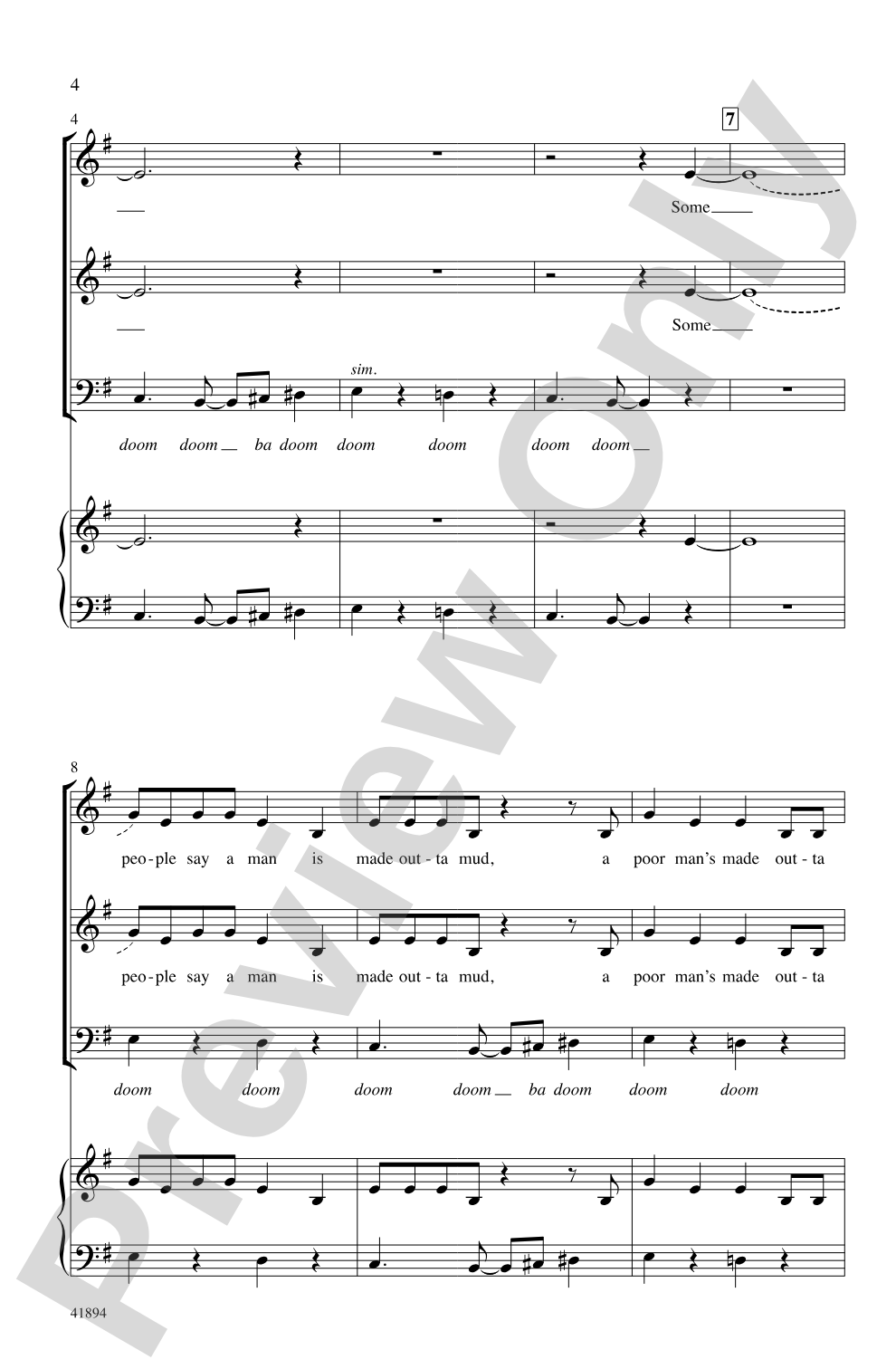
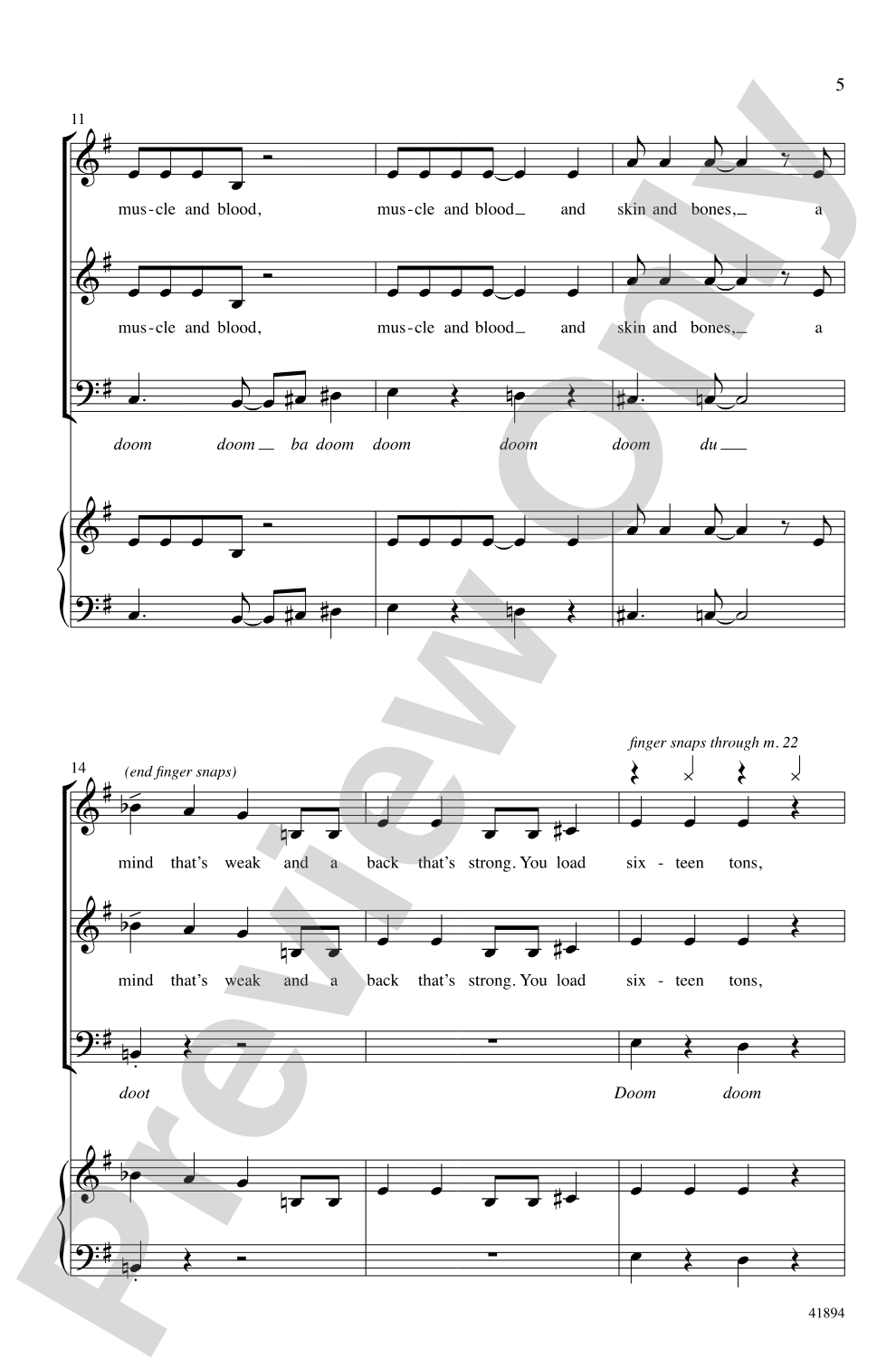

Sixteen Tons: SAB, a cappella Choral Octavo
Words and music by Merle Travis / arr. Kirby Shaw
Item: 00-PO-0002012

$2.25
Minimum order quantity: 20 copies
One moment…
Description
It's been performed by Elvis, Stevie Wonder, and a host of others, but it was the Tennessee Ernie Ford recording that brought this song to national attention and the top of the Billboard charts. Great voice-leading and a tight rhythmic groove make it fun to sing.


Don't just read it, hear it, play along with it, and watch your students grow with it. In MakeMusic Cloud, Sixteen Tons: SAB, a cappella Choral Octavo comes alive with professional accompaniment, adjustable tempo, and built-in practice tools that turn solo practice into real progress.
Open in the Player
Jump straight in and assign it today.
Start Your Free Trial
Open this title and explore the full library in minutes.
Sample Audio
1
Audio File
--:--
0:00
0:00
Sample Video
No sample videos found.
Additional Details
Series:
Alfred Pop Choral Series
Publisher:
Alfred Music
Page Count:
16
SKU:
00-PO-0002012
More about this title
About the Composer: Merle Travis
Merle Travis (1917-1983) was a Kentucky-born singer, songwriter, and guitarist who became one of country music's most influential figures. His composition "Sixteen Tons" emerged from his deep connection to Appalachian coal mining culture and working-class narratives, drawing on the real struggles of miners he knew. The song's enduring popularity across genres speaks to Travis's gift for writing melodies and lyrics that resonate far beyond their original context.
Travis was also a technical innovator on guitar, pioneering fingerpicking techniques that influenced generations of players. His work as a songwriter extended into film and television, and his catalog reveals a craftsman equally comfortable with topical ballads, novelty numbers, and deeply human character studies. For music educators, his legacy demonstrates how songs rooted in specific cultural and historical moments can achieve remarkable staying power.
Why we love this
Kirby Shaw's arrangement captures the grit and swagger of "Sixteen Tons" while making it genuinely singable for mixed voices in three parts. The tight rhythmic groove and smart voice-leading create momentum that keeps singers engaged and audiences entertained, and the a cappella format means you can perform it anywhere without accompaniment infrastructure.
What to expect
"Sixteen Tons" radiates working-class dignity and hard-earned fatigue. The arrangement captures the song's simmering tension between complaint and defiance, with harmonies that feel contemporary and unpretentious rather than overly polished. There's swagger in this music.
Who it's for
This arrangement works well for high school and adult choirs looking for repertoire with immediate appeal and strong cultural recognition. Singers enjoy the groove and the famous story behind the song, while audiences respond to its authenticity and accessibility.
How to get the most out of it
- Lock the rhythm section (SAB altos and basses) into a unified pulse first; the whole arrangement depends on that pocket staying tight.
- Shape the melody line with confidence rather than softness; this song needs presence and attitude to land properly.
- Balance the parts so the top voice cuts through during the chorus, but don't let sopranos dominate the verse harmonies.
- Commit to the groove and let the lyrics drive the phrasing; oversinging the notes will drain the arrangement of its punch.
How to use it
Program this in a concert section exploring American popular song or working-class narratives. It pairs well with other folk-rooted pieces and works as a strong closer or warm-up number because audiences recognize it immediately and singers feed off that energy.
Skills your students will build
- Rhythmic precision in syncopated ensemble singing
- Maintaining harmonic integrity within a tight groove
- Balancing lyrical authenticity with choral blend
- Reading three-part SAB voicing