

Sit Down Servant: 3-Part Choral Octavo
Arr. Patsy Ford Simms
Item: 00-PO-0007929
$1.65
Minimum order quantity: 20 copies
Pickup currently not available
Description
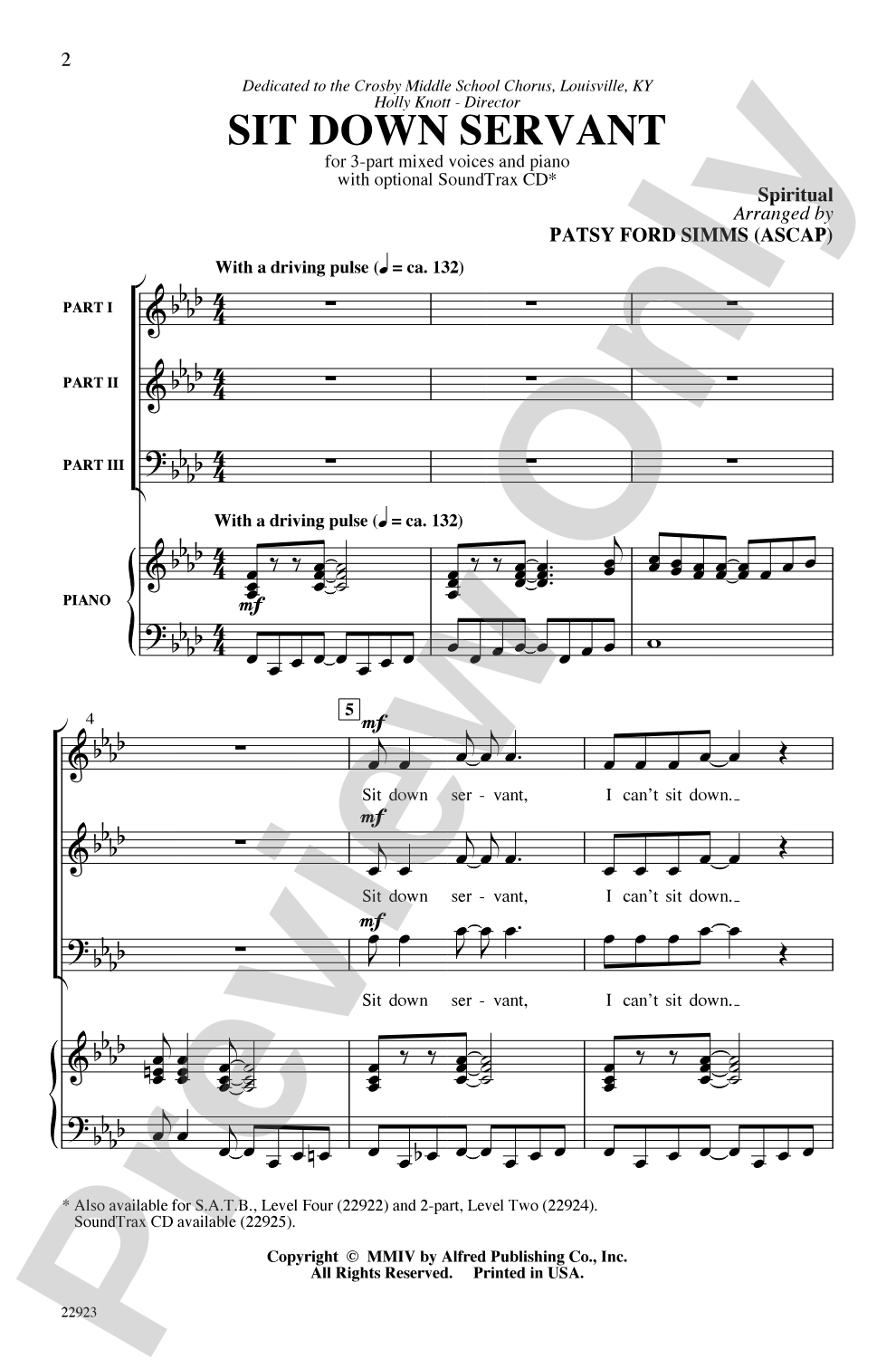
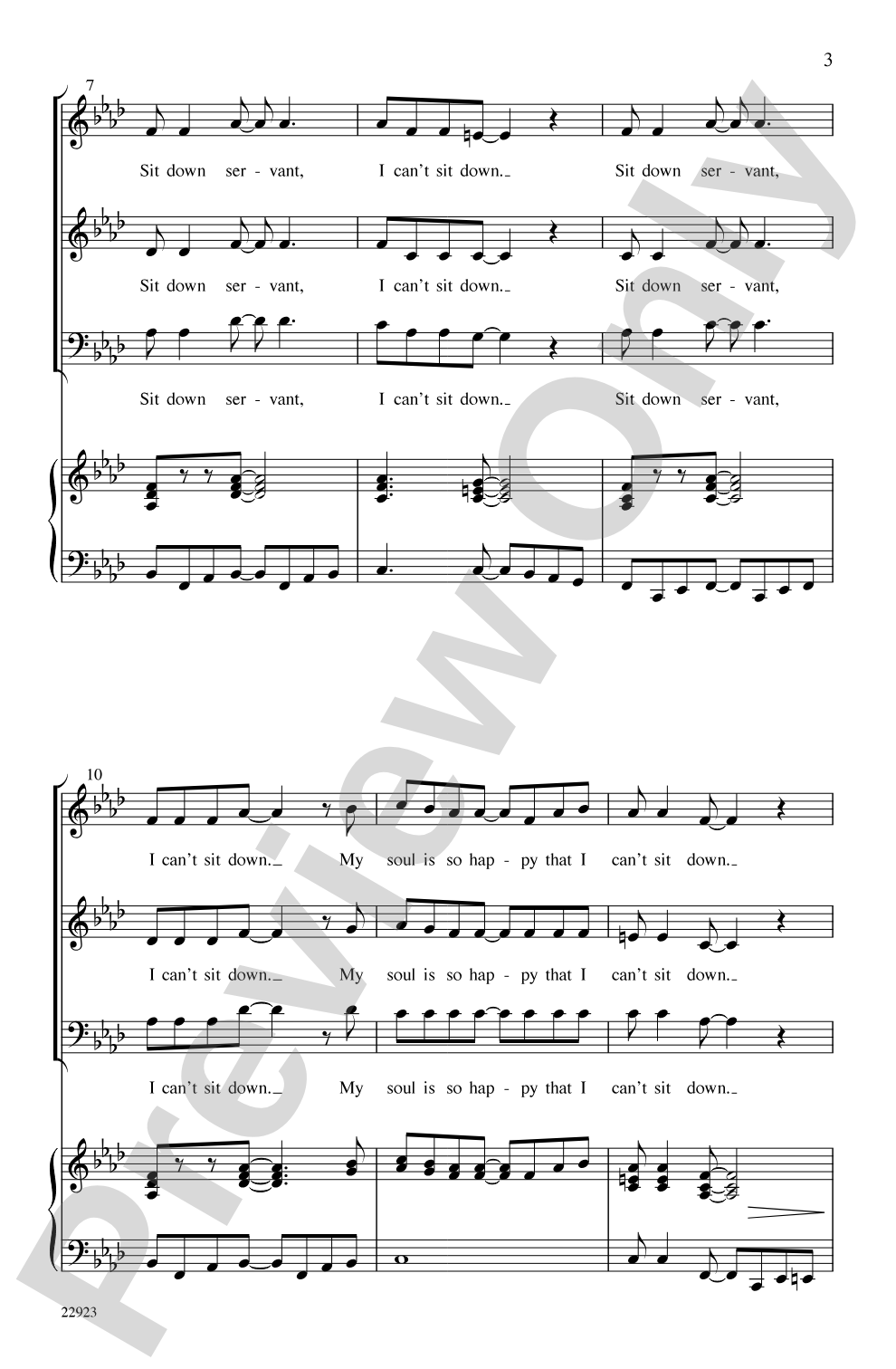
This spiritual arrangement features a driving rhythmic pulse, logical chords, and easy to learn vocal syncopation. And what fun it is to sing in a minor key in our most comfortable ranges. No-fuss treble divisi while the guys take their turn on the melody in the mixed arrangements. The energetic SoundTrax CD (optional) really cooks, or play the driving piano accompaniment which provides great rhythmic and harmonic support.


Sit Down Servant: 3-Part Choral Octavo isn't in MakeMusic Cloud just yet...but it could be. Let us know you'd like to see it, and you'll help shape what comes next. In the meantime, start a free trial and dive into thousands of interactive titles your students can play along with today.
Request This Title
Tell us you want it.
Start Your Free Trial
Explore everything that's ready to play right now.
Sample Audio
1
Audio File
--:--
0:00
0:00
Sample Video
No sample videos found.
Additional Details
Series:
Alfred Choral Designs
Publisher:
Alfred Music
Page Count:
12
SKU:
00-PO-0007929
More about this title
About the Arranger: Patsy Ford Simms
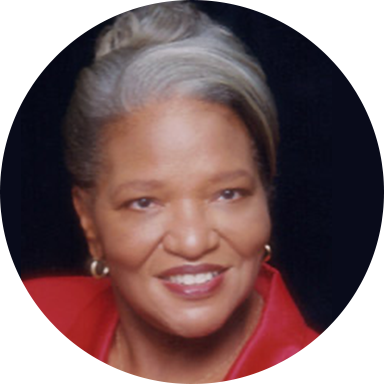
Patsy Ford Simms began her publishing career in 1981, driven by a practical problem: middle school choirs needed accessible octavos written for their developing voices. Over three decades of classroom teaching across grades K-12, including work at the Youth Performing Arts School, she created more than 300 pieces for educational and church settings with major publishers like Shawnee Press. Her formal training includes a Bachelor of Science in Music Education from Knoxville College, a Master of Education from the University of Louisville, and a doctorate in Music Education from Columbia Pacific University.
Simms has earned international recognition as both composer and clinician, presenting her work in Italy and Africa. Two of her compositions were included in MENC World's Largest Concerts, and she has received multiple ASCAP Special Music Awards. She has also composed commissioned works and short musicals exploring African American history, cementing her legacy as an educator who writes from real classroom experience.
Why we love this
Simms understands what actually works in a rehearsal room, and this arrangement proves it. The syncopation lands naturally in the singers' voices rather than fighting their instincts, while the minor key keeps everyone in a comfortable range where they can find confidence. The optional recorded accompaniment drives with genuine energy, making rehearsals feel less like woodshedding and more like making music.
What to expect
The driving pulse gives this spiritual a contemporary energy without losing its roots. Singing in the minor key feels natural and grounded, with the syncopation creating rhythmic swagger rather than complexity, and voices find themselves settled in ranges where they can sing with real resonance.
Who it's for
Middle school and early high school choirs, particularly those with divided rehearsal schedules or mixed ensembles looking for spirituals that don't demand extended range. It also works beautifully for treble choirs pairing with a men's group for special programming.
How to get the most out of it
- Lock the rhythm section early by having singers isolate the syncopated rhythms without the accompaniment first; once they own the groove, layer in the harmonic support.
- Let the piano part breathe and lead, especially in transitions; this arrangement gives accompaniment real character, so resist the urge to overpower it with vocal volume.
- Highlight the textural shift when the men's voices take the melody in mixed voicings; it's a moment that energizes the ensemble when voices shift from harmony to feature.
- Use the minor key as an emotional anchor in rehearsal; it creates a naturally warm, introspective quality that sits well with the spiritual's narrative.
How to use it
Place this early in a spiritual or sacred music set where its rhythmic momentum can energize the program and draw the audience in. It pairs well with slower, more reverent arrangements and makes a strong concert closer when you want to send audiences out with forward motion and warmth.
Skills your students will build
- Singing syncopated rhythms in minor keys
- Blending three-part harmony while maintaining rhythmic precision
- Responding to piano accompaniment as a rhythmic/harmonic guide
- Executing clean divisi voicings in treble and mixed settings
- Building confidence in extended vocal range within middle school comfort zones