

Singin' in the Rain: 2-Part Choral Octavo
Music by Nacio Herb Brown, lyrics by Arthur Freed / arr. Ruth Elaine Schram
Item: 00-PO-0002954
$2.25
Minimum order quantity: 20 copies
One moment…
Description
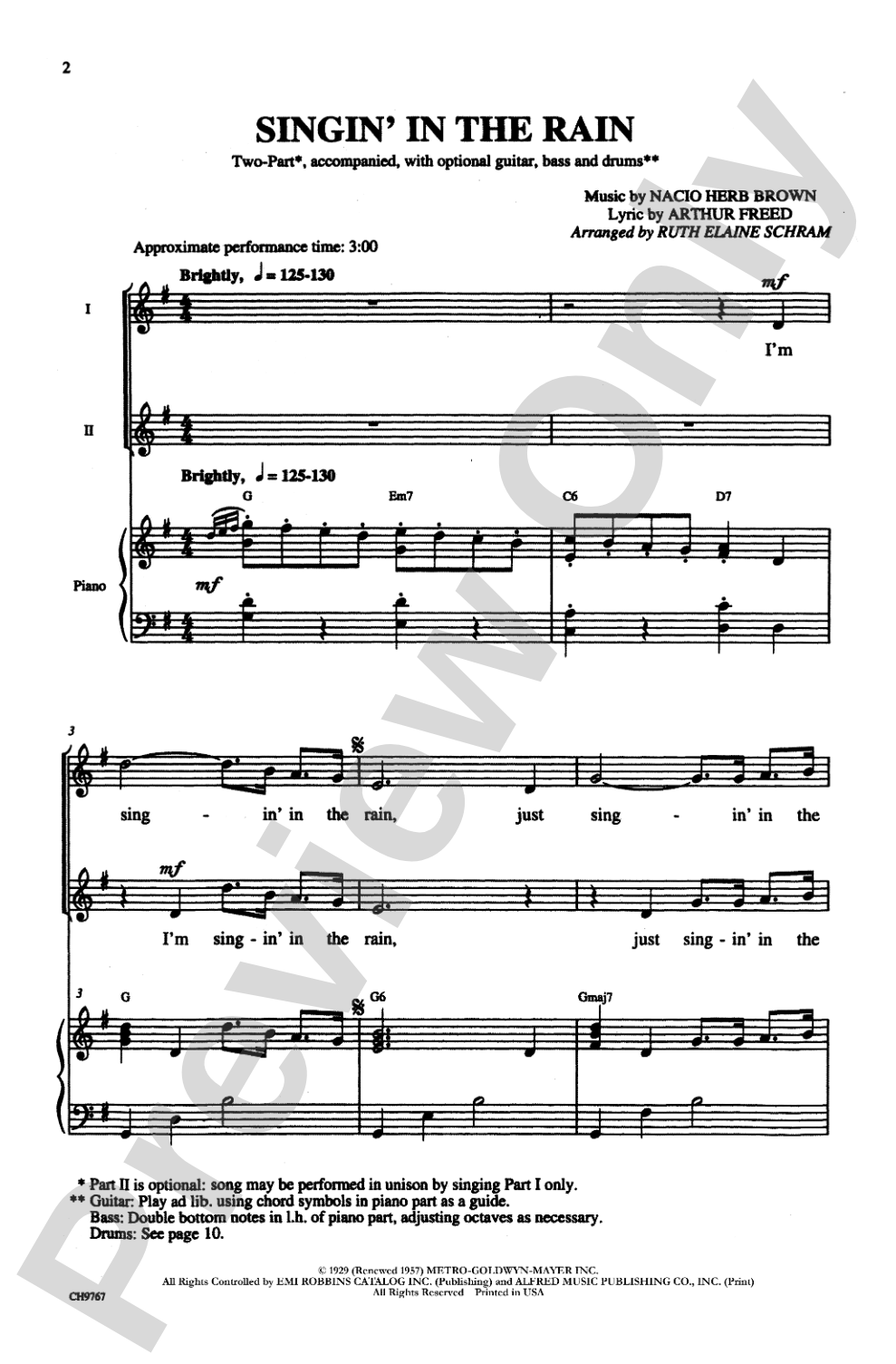
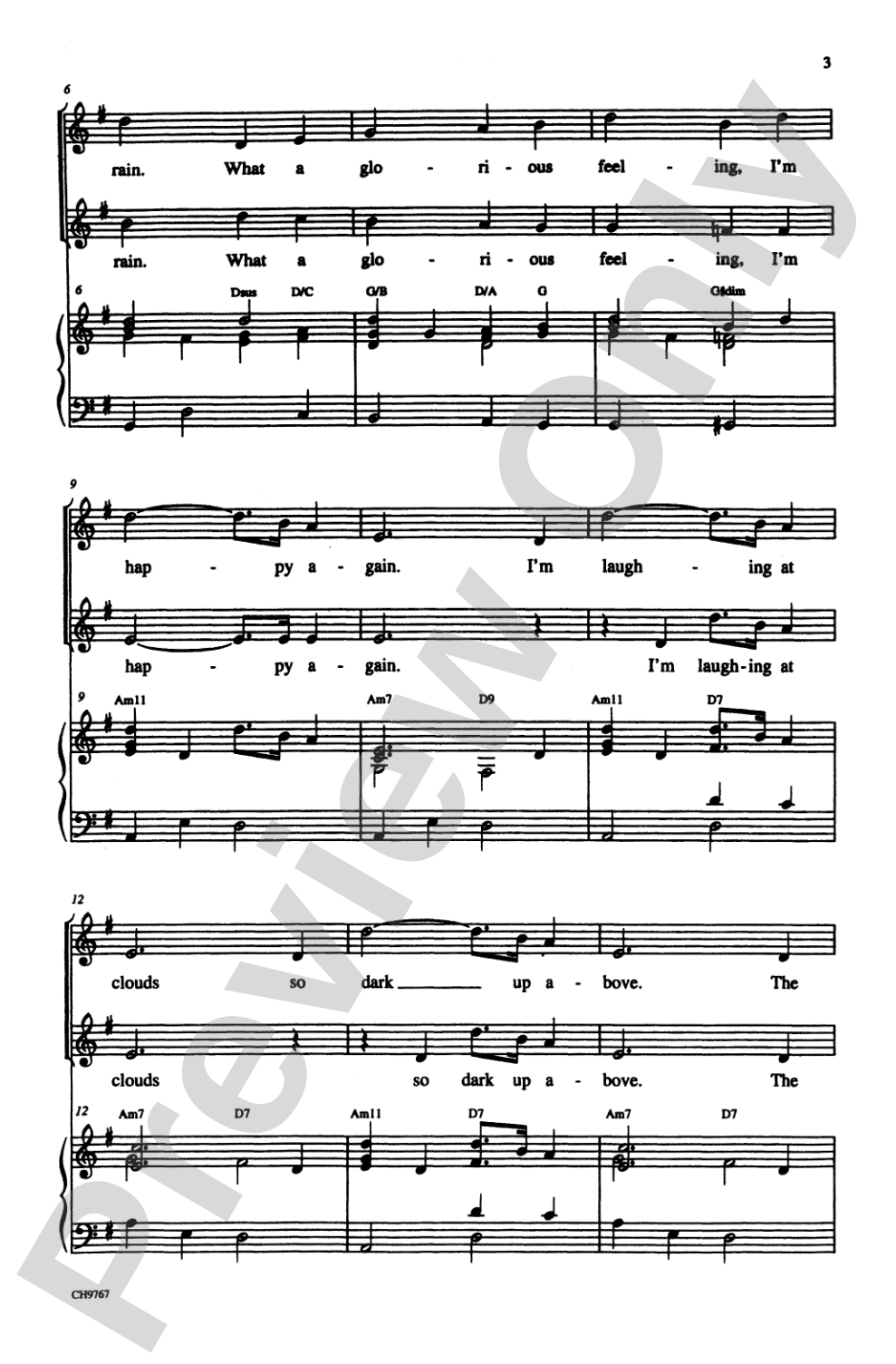
Who can hear this wonderful show tune without picturing Gene Kelly singin' and dancin' in the driving rain, umbrella in hand! Ruth has captured the wonderful sense of the original and added her own touch of lovely voice-leading to make the most of this extraordinary song. A touch of movement could enhance any performance.


Singin' in the Rain: 2-Part Choral Octavo isn't in MakeMusic Cloud just yet...but it could be. Let us know you'd like to see it, and you'll help shape what comes next. In the meantime, start a free trial and dive into thousands of interactive titles your students can play along with today.
Request This Title
Tell us you want it.
Start Your Free Trial
Explore everything that's ready to play right now.
Sample Audio
No sample audio found.
Sample Video
No sample videos found.
Additional Details
Series:
Alfred Archive Edition: Alfred Pop Choral Series
Publisher:
Alfred Music
Page Count:
12
SKU:
00-PO-0002954
More about this title
About the Composer: Nacio Herb Brown
Nacio Herb Brown (1896-1964) was one of Hollywood's most prolific songwriters during the golden age of cinema. Working primarily with lyricist Arthur Freed, Brown composed the music for dozens of MGM films throughout the 1920s and 1930s, creating standards that remain instantly recognizable to audiences nearly a century later.
Brown's gift was for melody that captures both sophistication and accessibility. His songs were written to serve storytelling and character in film, which means they carry dramatic weight and emotional clarity alongside their musical elegance. For choral directors, this translates to repertoire with genuine substance and audience recognition.
Why we love this
Schram's arrangement respects the iconic melody while solving a real pedagogical challenge: how to give younger or less experienced singers access to a beloved standard without oversimplifying it. The voice-leading demonstrates how thoughtful part-writing lifts a two-part texture beyond mere unison support, creating independence and musicality in both lines. Your singers will feel like they're performing a grown-up song, not singing down to their level.
What to expect
Pure optimism. The arrangement captures the buoyancy of the original without trying to replicate the full orchestration, leaving room for movement and personality. You hear Gene Kelly's confidence in every note, along with that particular quality of joy that comes from dancing through something difficult.
Who it's for
This works beautifully for middle and high school choirs, children's choirs working at an intermediate level, and any ensemble that wants to perform a recognizable crowd-pleaser without excessive difficulty. It's equally at home in concert settings, festivals, and events where accessibility and audience connection matter.
How to get the most out of it
- Balance the melody clearly in the soprano line while maintaining phrase shape in the lower voices. Schram's part-writing gives the second part genuine musical content; don't let it disappear into accompaniment.
- Let the text paint the story. The imagery of rain and movement is built into the arrangement, so commit to the character throughout. This isn't a concert exercise; it's a moment of joy.
- Shape phrases with gentle dynamic movement rather than staying static. Two-part writing benefits from subtle breathing and lift between musical ideas to keep momentum alive.
- If using the recorded accompaniment, rehearse with it early and often. Your singers need to trust the tempo and feel supported by the harmony underneath.
How to use it
This is a natural fit for pops concerts, spring performances, or any program seeking a moment of theatrical lift. It pairs well alongside other standards or contemporary pop arrangements, and its familiar melody makes it a smart choice for community engagement and family audiences. The suggested movement element also makes it ideal for concerts where you want to break up static staging.
Skills your students will build
- Singing independent melodic lines in two-part texture
- Maintaining phrase shape and line integrity as the lower voice
- Connecting text to character and physical storytelling
- Balancing blend and projection in a commercial arrangement