
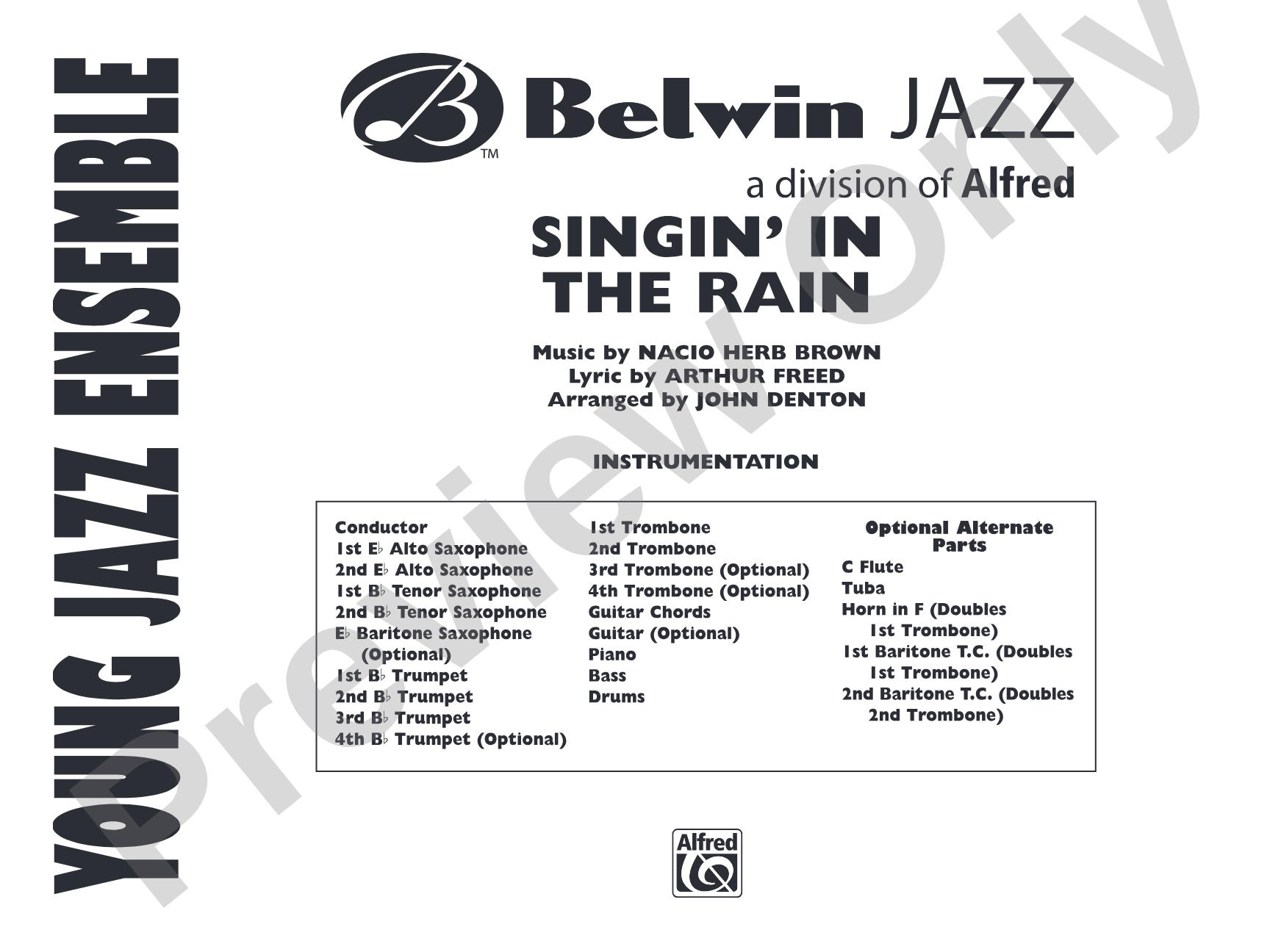
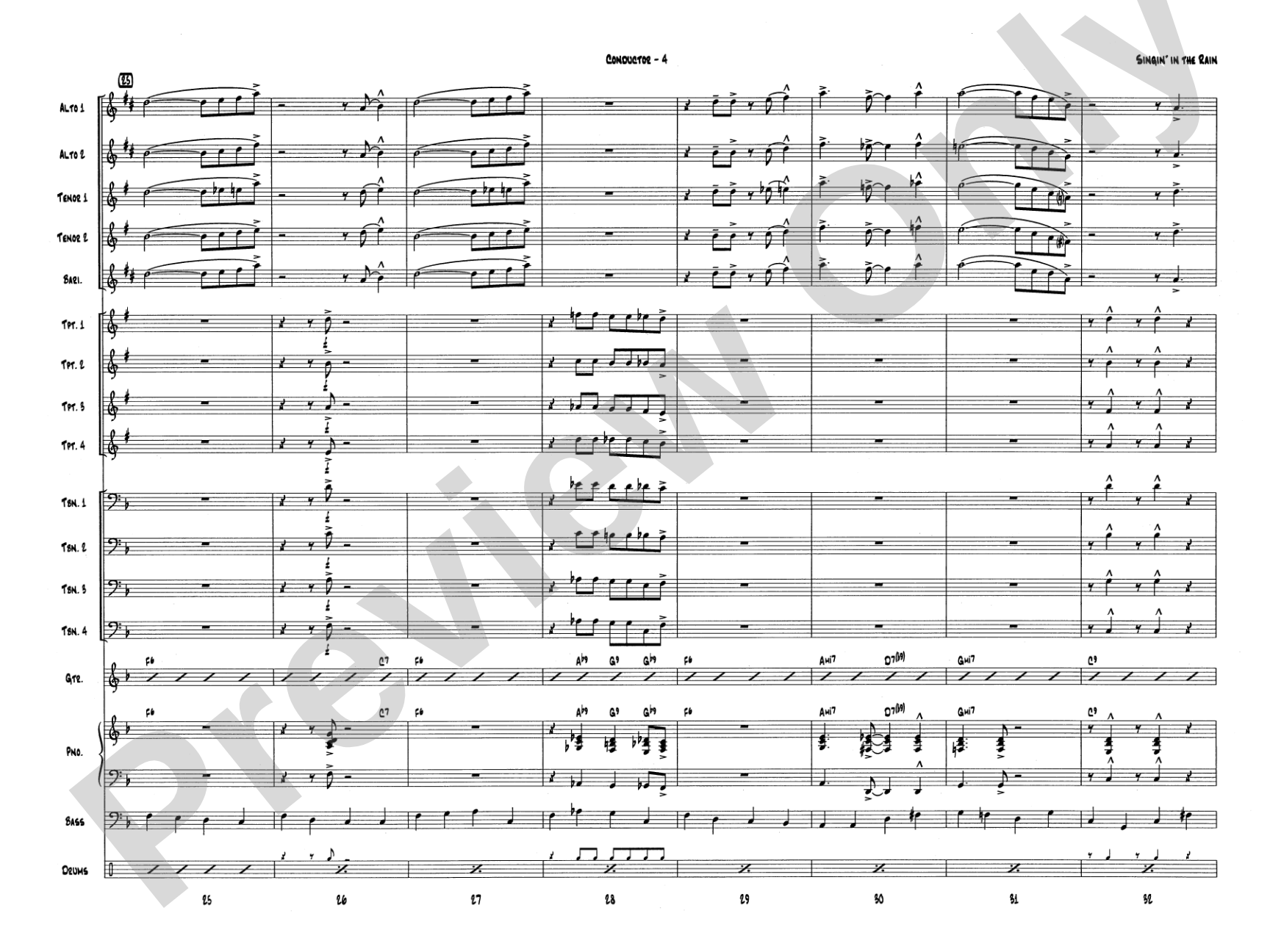
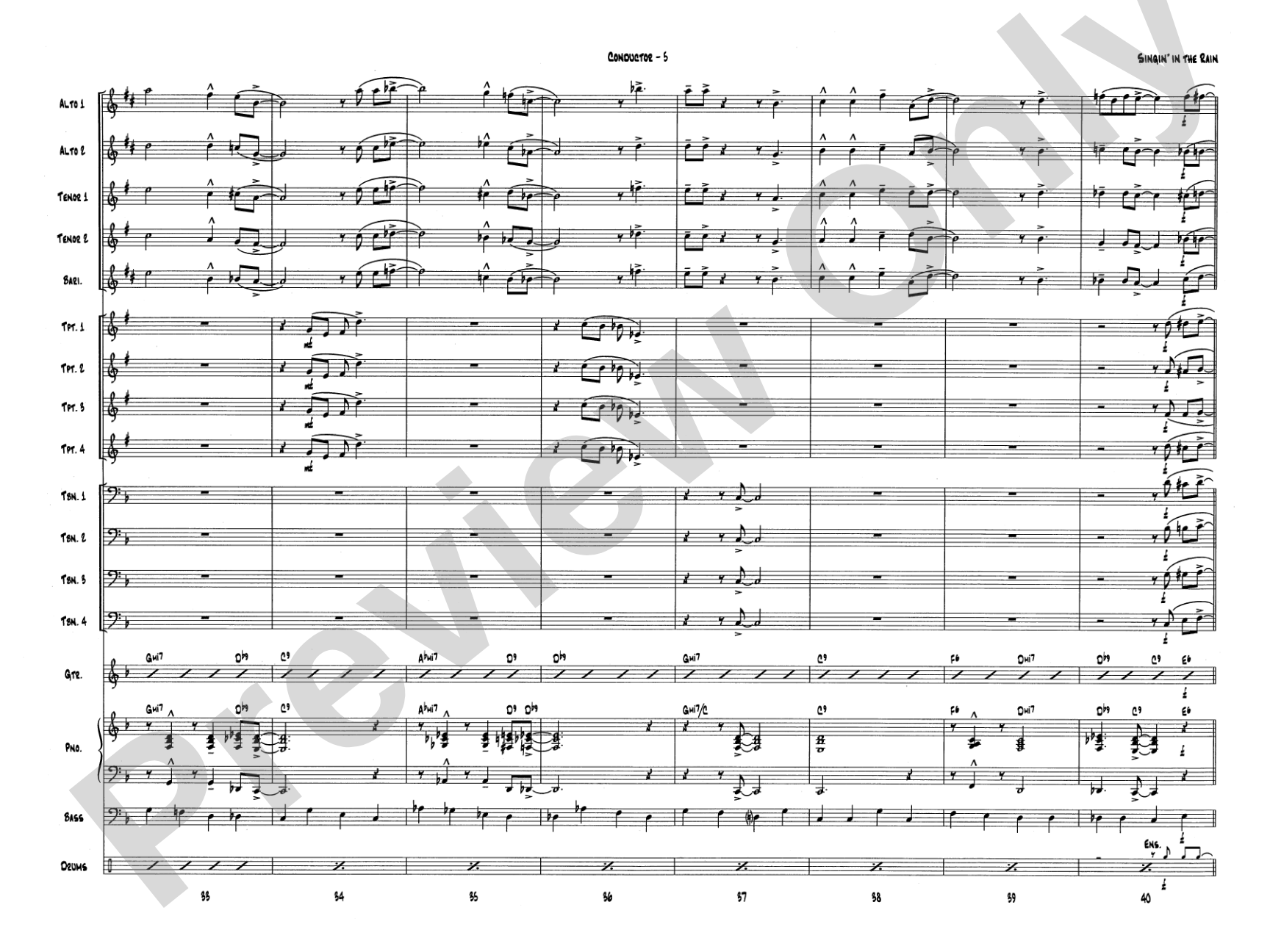
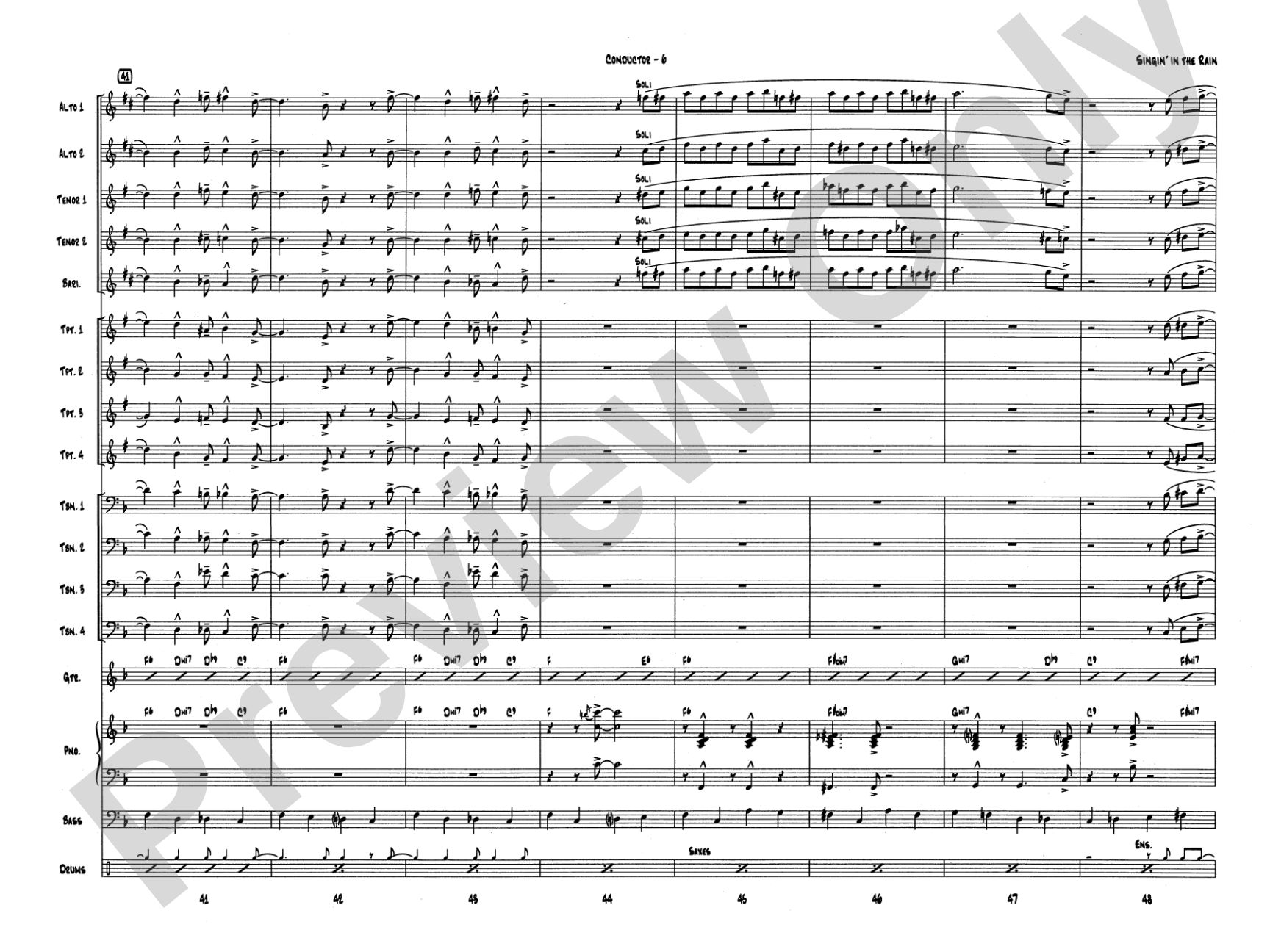
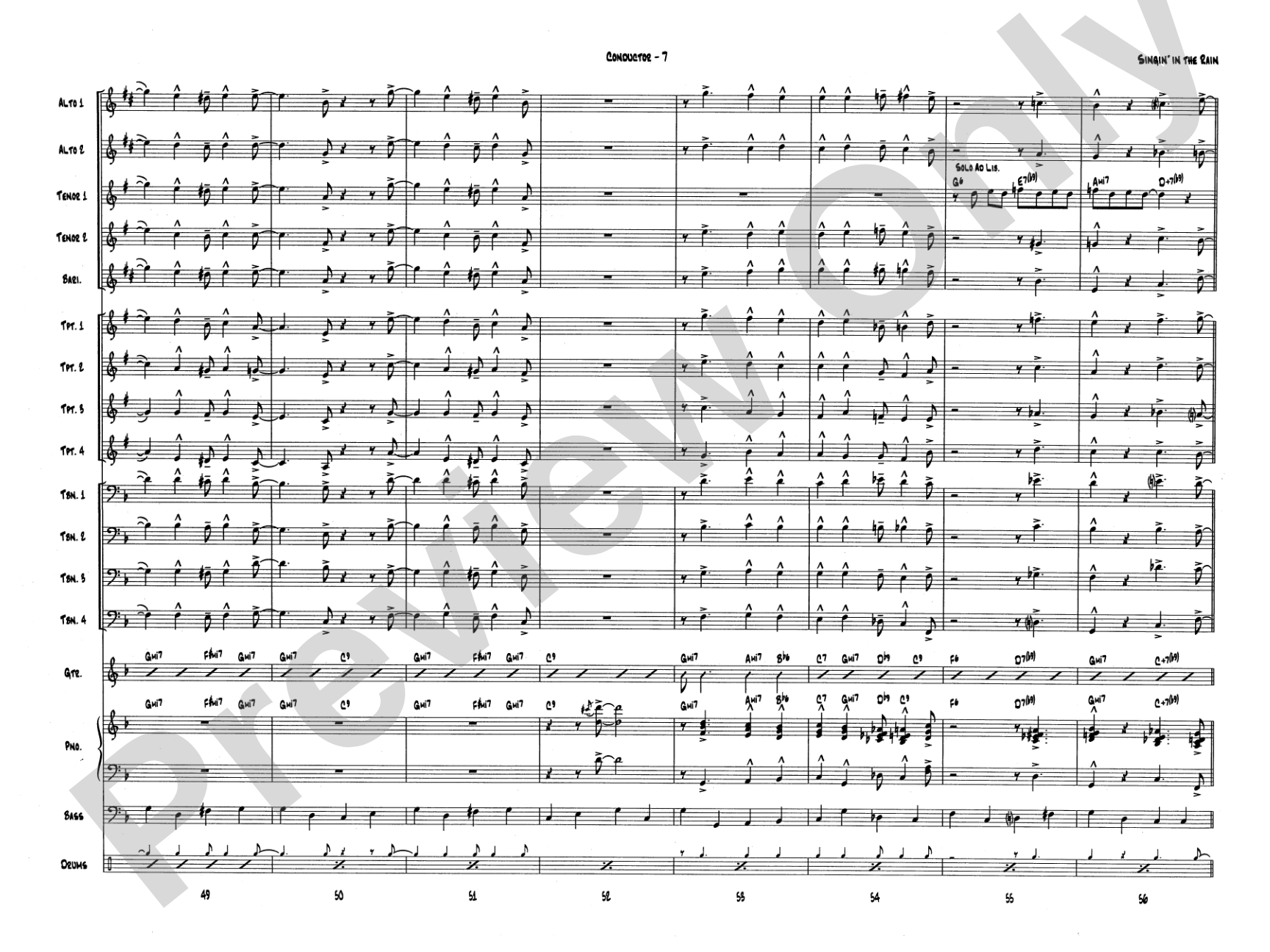
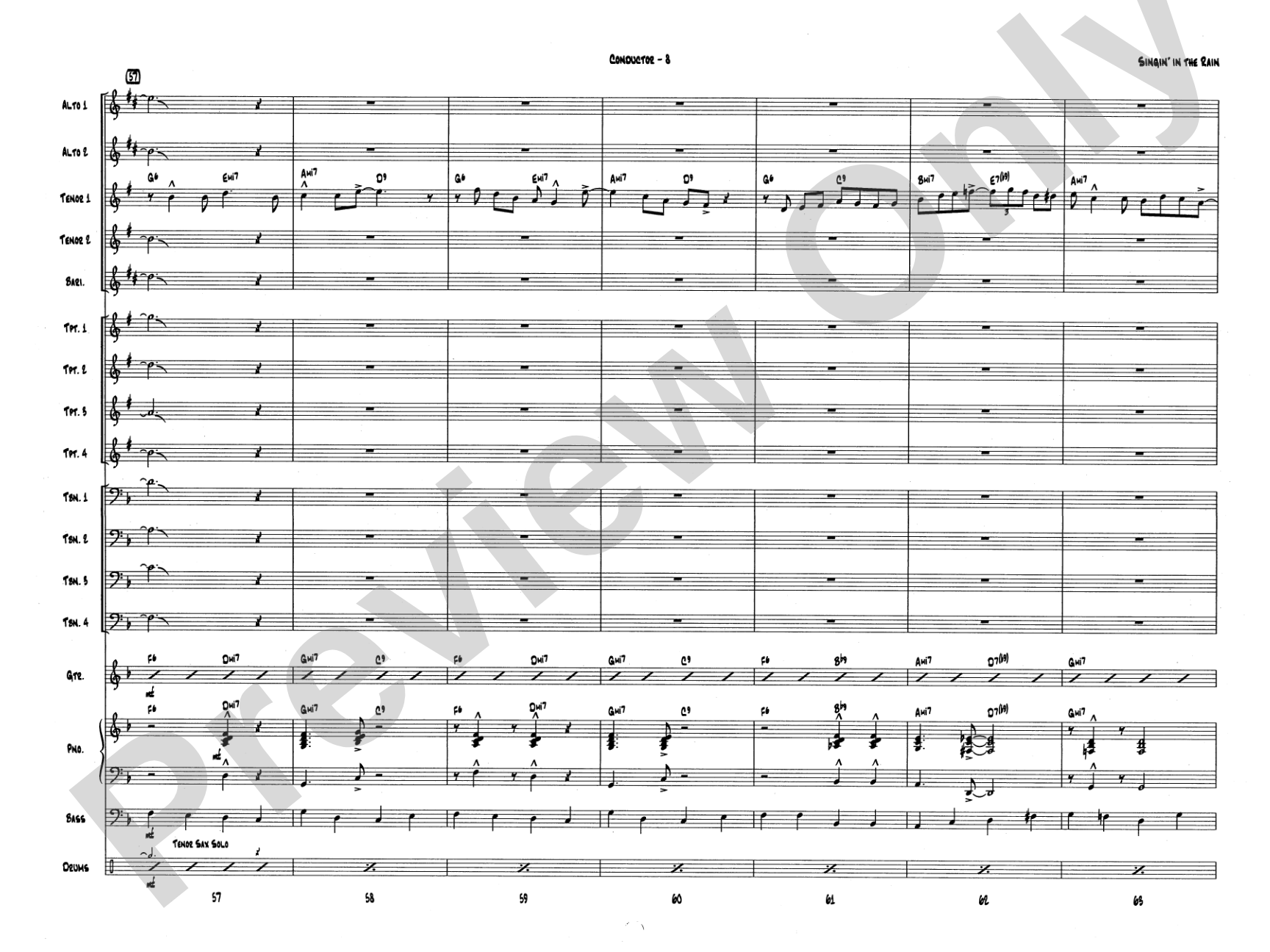
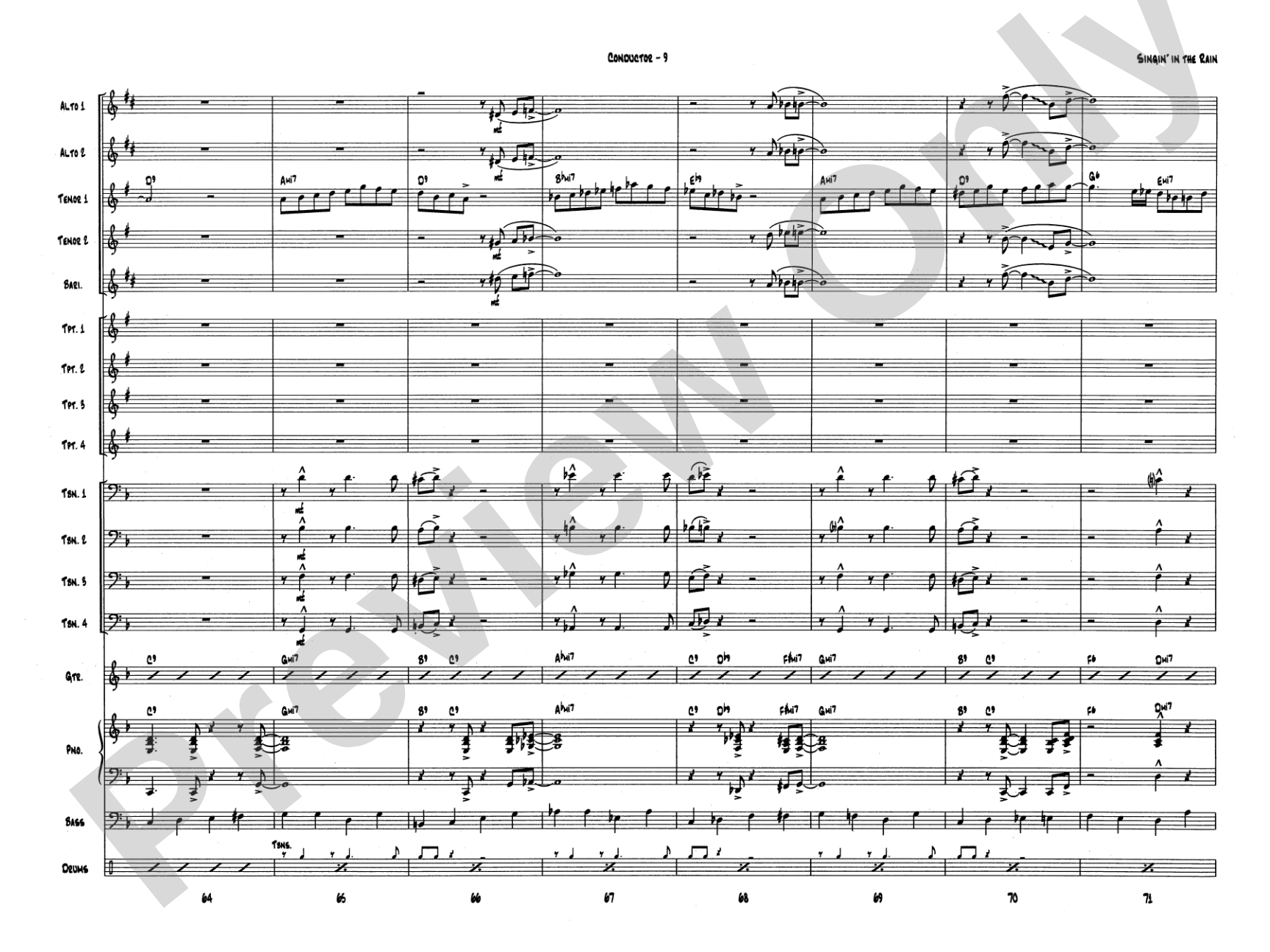
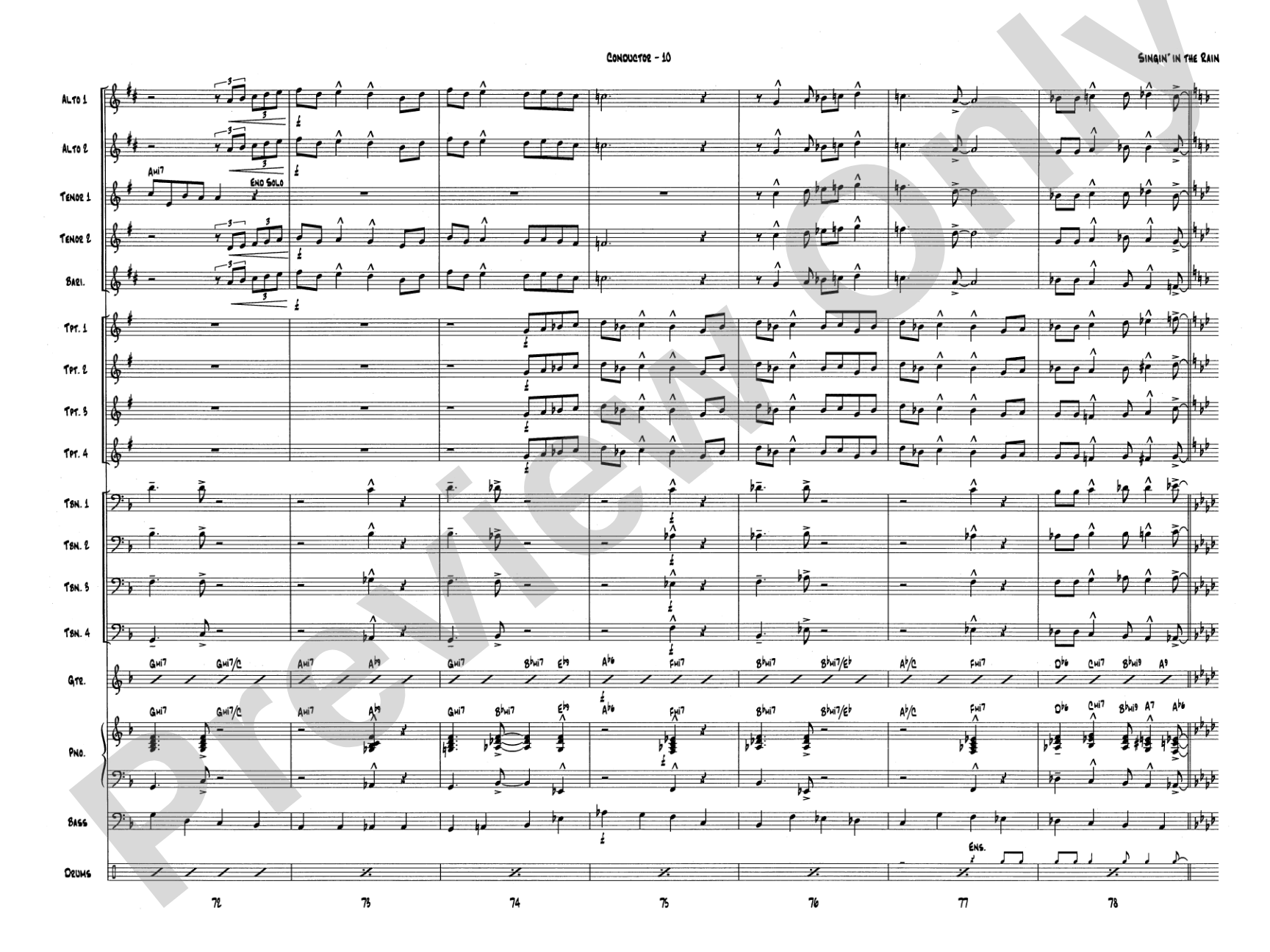
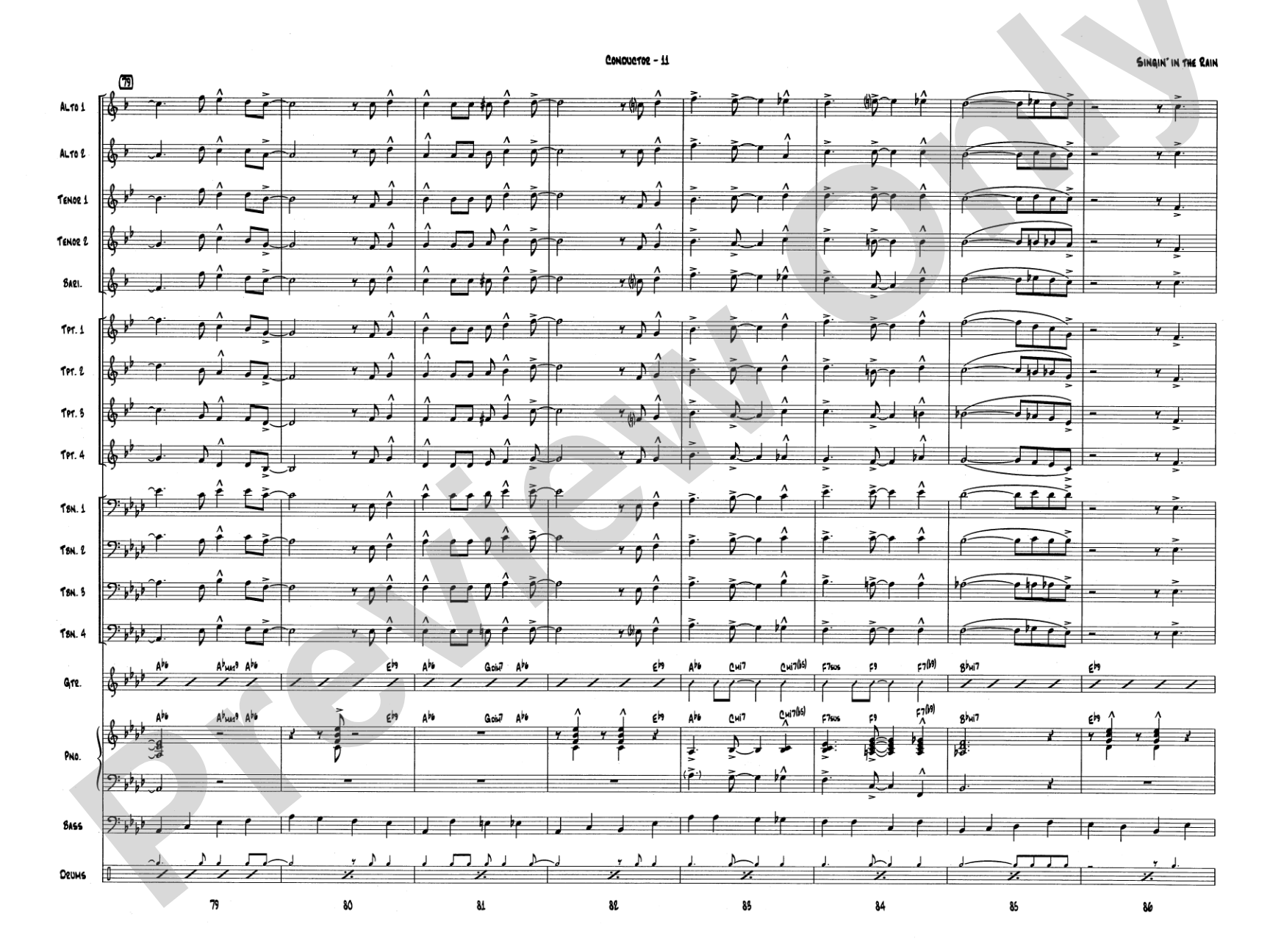
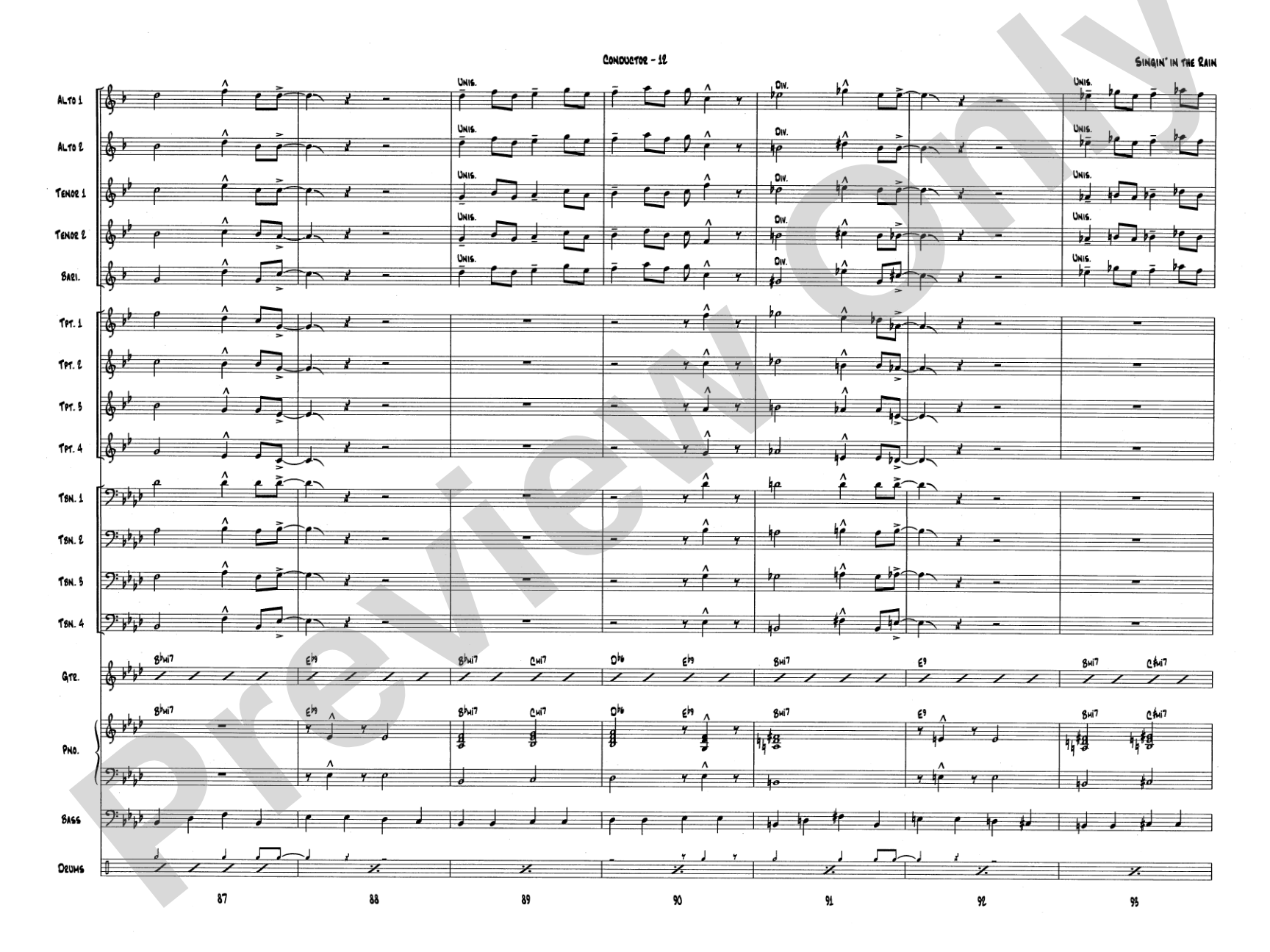
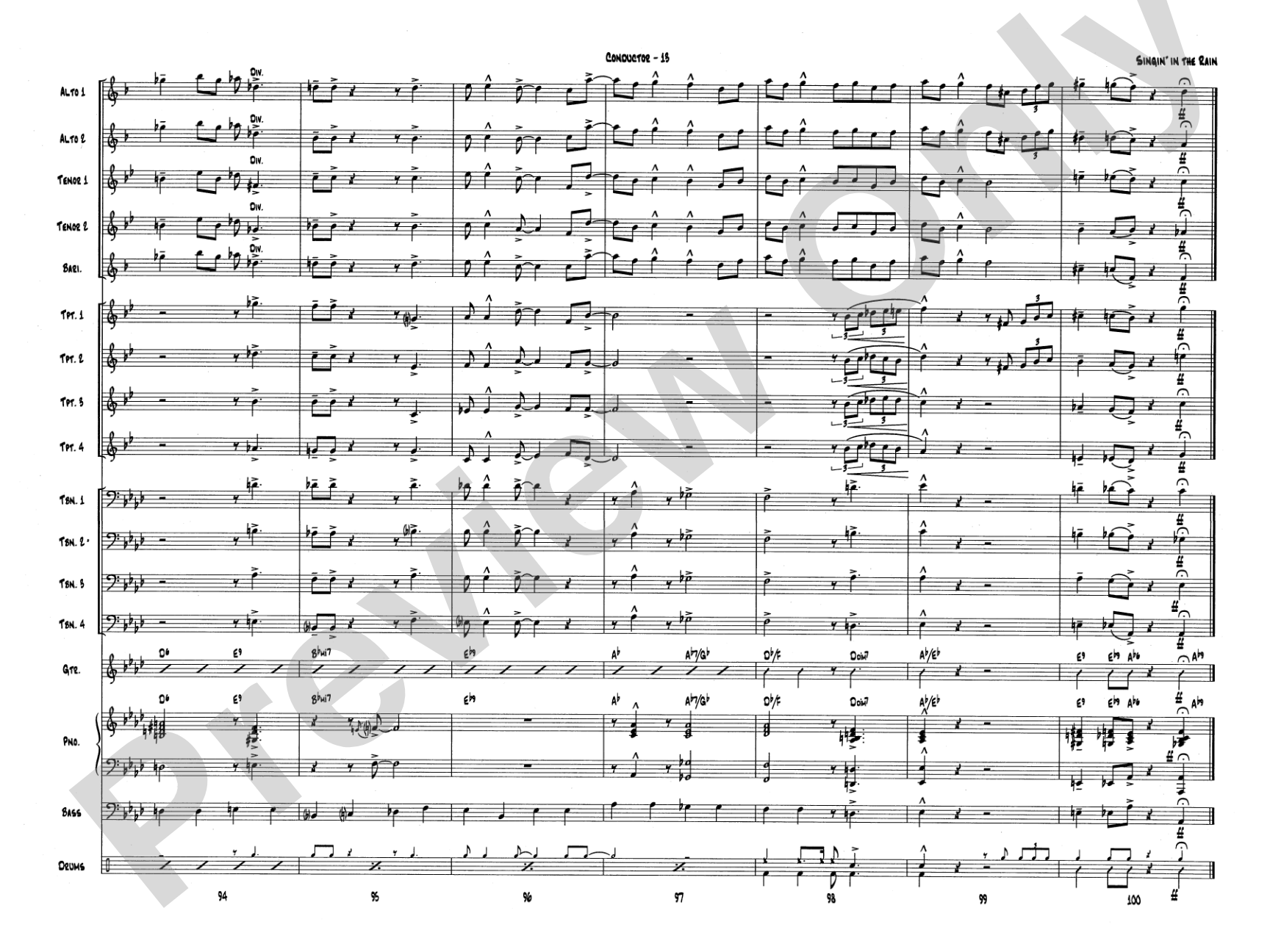



Singin' in the Rain: Jazz Ensemble Conductor Score & Parts
Music by Nacio Herb Brown, lyrics by Arthur Freed / arr. John Denton
Grade: 2 (Medium Easy)
Item: 00-PK-0002488

$48.00
One moment…
Description
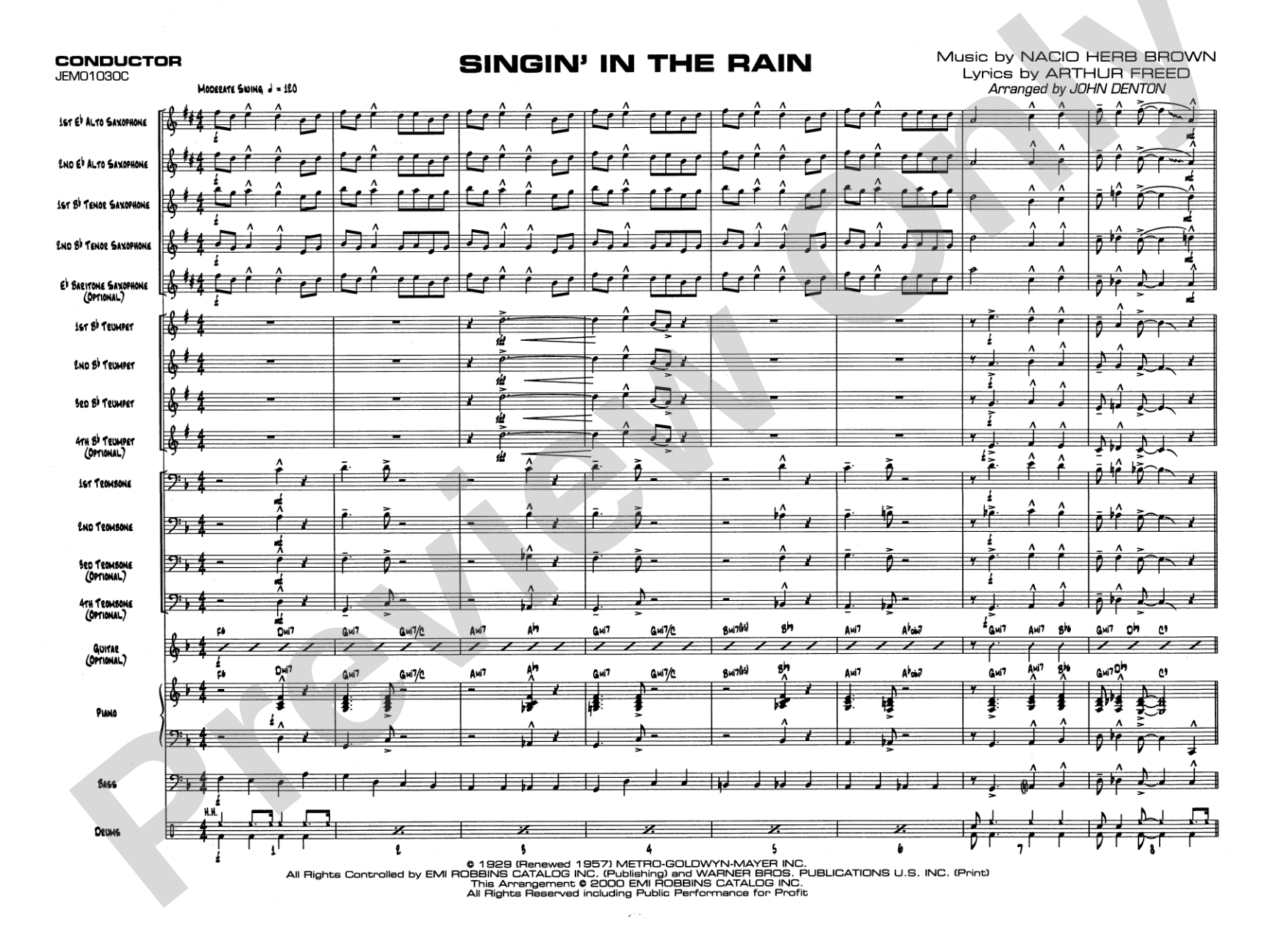
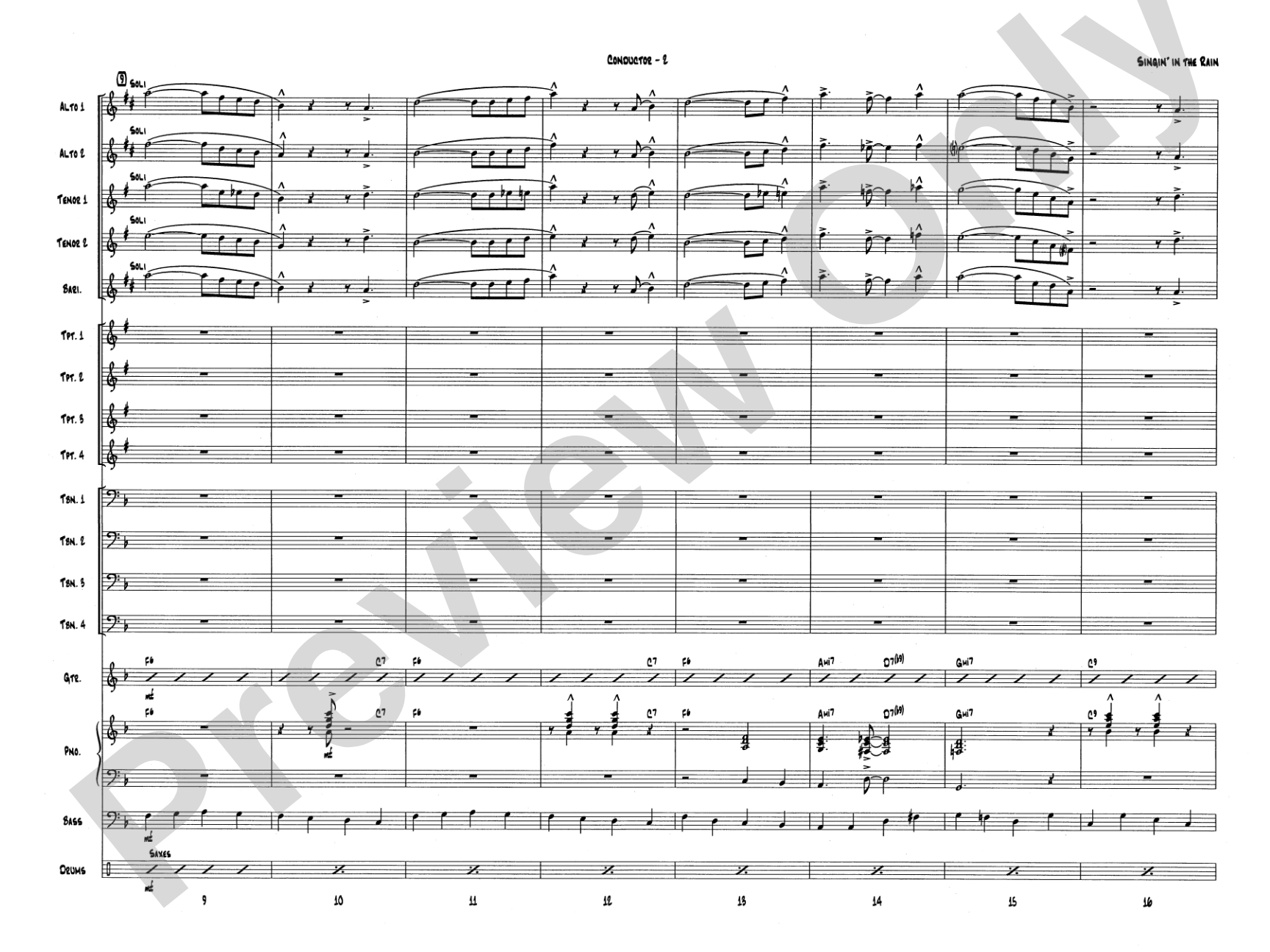
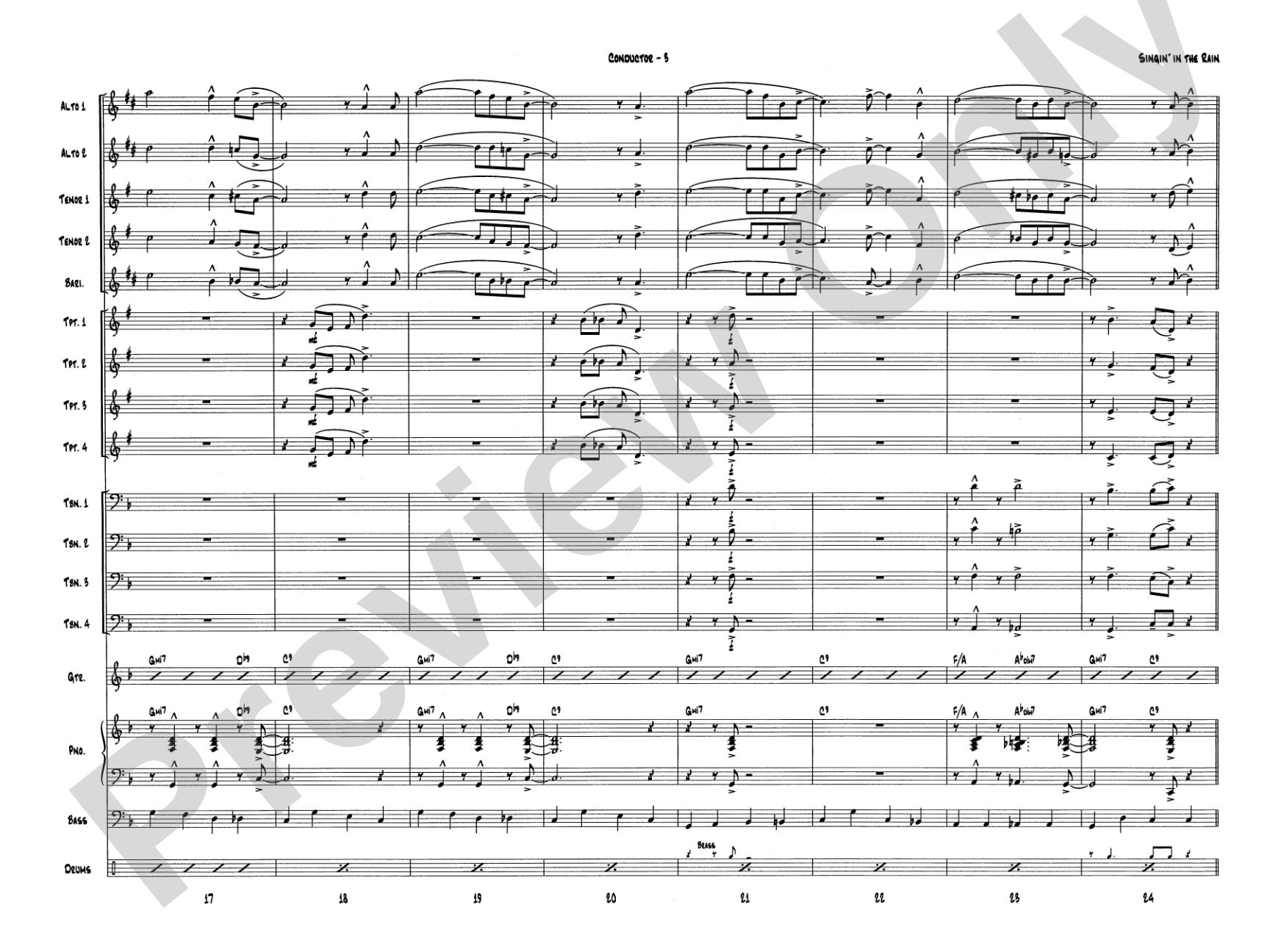
Here's a super swing chart for the younger player from arranger John Denton. From the MGM movie of the same name, this melody is well known to all ages. John has included a tenor solo with written solo provided and carefully kept the brass ranges and tempo quite reasonable keeping this chart accessible to this level. You'll really like the simple but clever harmonic twist and modulation that John included, and the swing figures are all logical and easy to teach. Singing in the Rain will make you happy again!


Don't just read it, hear it, play along with it, and watch your students grow with it. In MakeMusic Cloud, Singin' in the Rain: Jazz Ensemble Conductor Score & Parts comes alive with professional accompaniment, adjustable tempo, and built-in practice tools that turn solo practice into real progress.
Open in the Player
Jump straight in and assign it today.
Start Your Free Trial
Open this title and explore the full library in minutes.
Sample Audio
1
Audio File
--:--
0:00
0:00
Sample Video
No sample videos found.
Additional Details
Series:
Young Jazz Ensemble
Publisher:
Alfred Music
Page Count:
114
SKU:
00-PK-0002488
More about this title
About the Composer: Nacio Herb Brown
Nacio Herb Brown composed for Hollywood during the golden age of MGM musicals, creating some of the most durable melodies in American film. His gift for writing singable, memorable tunes made him a natural collaborator with lyricist Arthur Freed, and their partnership produced standards that have outlasted the films they graced.
Brown's melodies are treasured in music education precisely because they sit comfortably in the voice and instrument ranges, with clear harmonic logic that students can understand and perform with genuine musicality. "Singin' in the Rain" exemplifies his skill: a tune so accessible that it survives in jazz, pop, classical, and educational arrangements without losing its essential character.
Why we love this
John Denton's arrangement respects the Grade 2 ensemble without reducing the melody to something bland. The written tenor solo (rather than an ad-lib) gives young improvisers a secure foundation, while the harmonic twist and key modulation add sophistication that makes this feel fresh even when students know the tune from every context imaginable. Directors appreciate that the brass ranges stay reasonable and the swing figures teach themselves through their logic, which means more rehearsal time spent refining phrasing and less time debugging rhythmic confusion.
What to expect
Optimistic and buoyant, with the kind of good humor that comes from a melody everyone recognizes. The swing groove feels natural and not forced, and when the key shifts, there's a moment of pleasant surprise that makes the ensemble sound more inventive than a simple head arrangement.
Who it's for
Young jazz ensemble students in high school or advanced middle school who are ready for real swing style but need arrangements that don't demand extreme range or complex rhythmic reading. This works equally well for a youth jazz band or a school ensemble adding jazz to a traditional band program.
How to get the most out of it
- Let the tenor soloist own the solo section with space and confidence. Keep the rhythm section locked and grooving so the soloist has a stable foundation to play against.
- Shape the main melody with subtle dynamic contour in the first statement. Resist over-playing; the tune's familiarity is its strength, and restraint invites the audience in rather than overwhelming them.
- Isolate the modulation section in rehearsal to make sure the entire ensemble hears and feels the key change together. It should sound intentional, not accidental.
- Balance the written swing figures so they sit comfortably in the groove. Young players often rush swing eighths; anchor them to the walking bass line.
How to use it
Program this as a concert opener or closer to build audience goodwill with a piece that bridges classical and jazz audiences. It works beautifully in a spring pops concert or as part of a film music program, and its accessibility makes it an ideal piece for demonstrating jazz fundamentals at a student assembly or feeder school showcase.
Skills your students will build
- Swing articulation and feel across the ensemble
- Reading and performing a written solo with stylistic confidence
- Following key modulations as a full ensemble
- Balancing melody, harmony, and groove in jazz texture
- Grade 2 rhythm reading in swing context