
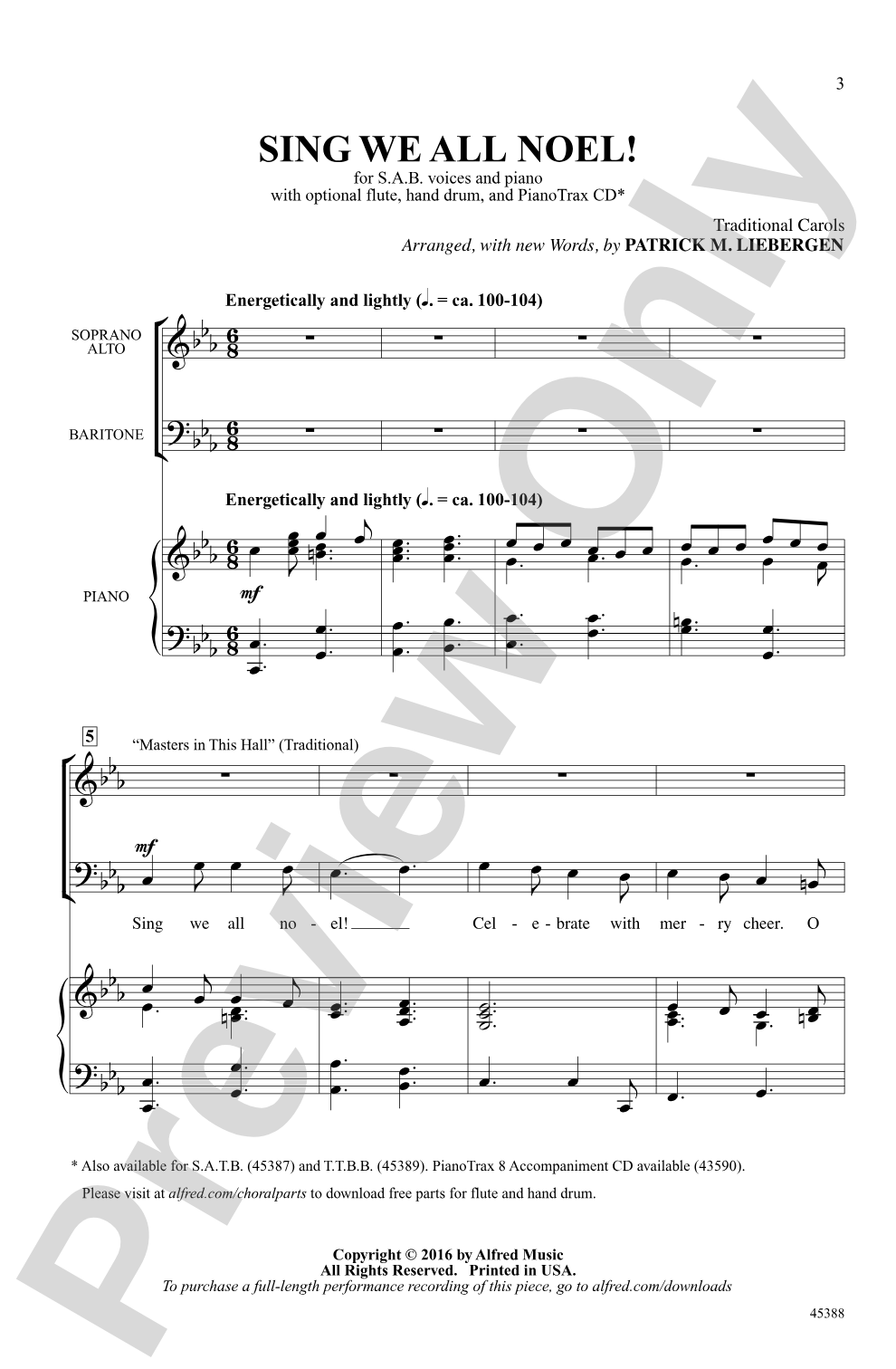
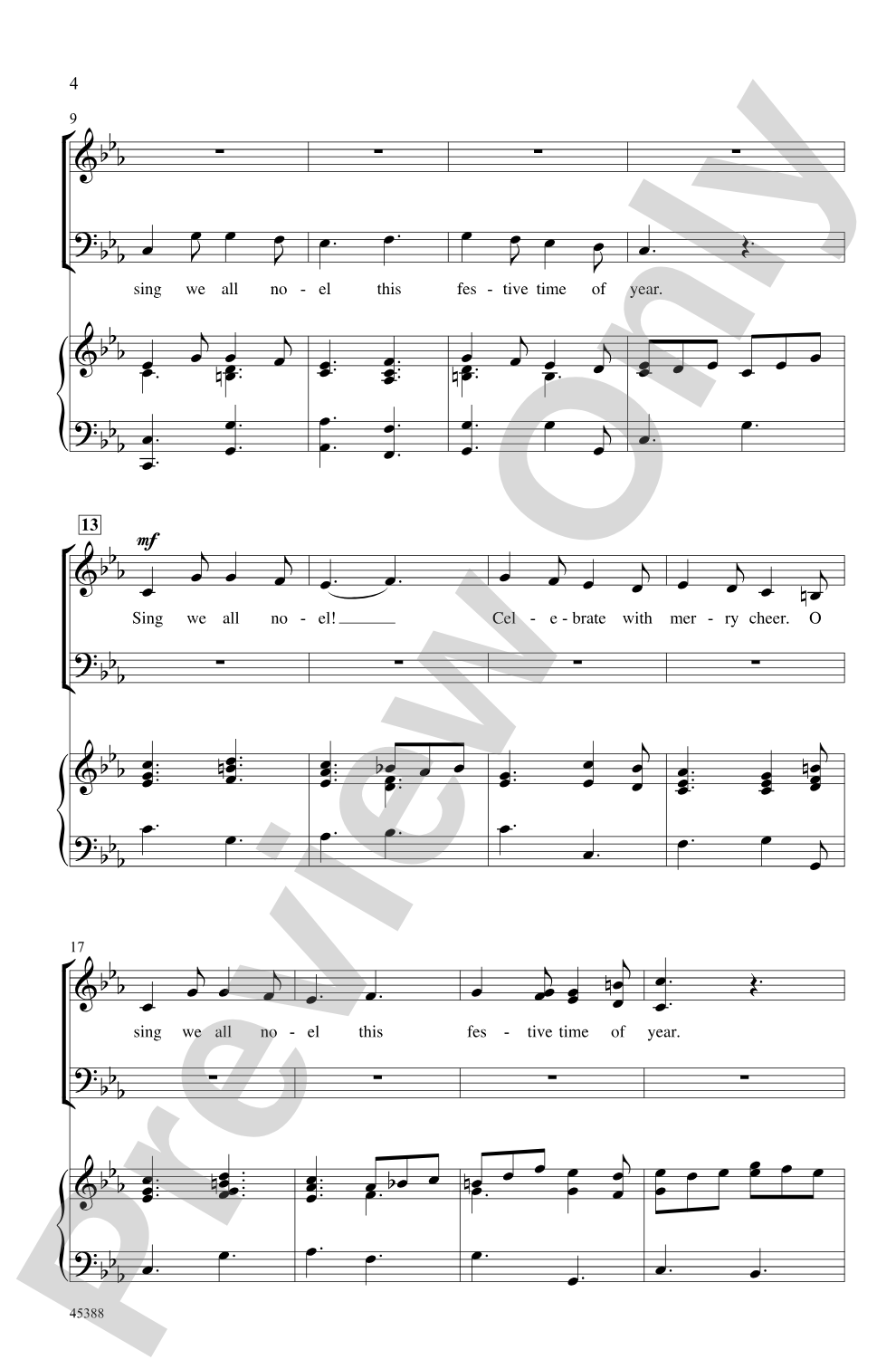

Sing We All Noel!: SAB Choral Octavo
Traditional Carols / arr., with new words, by Patrick M. Liebergen
Item: 00-PO-0003637
$1.90
Minimum order quantity: 20 copies
Pickup currently not available
Related Items
Sing We All Noel!: PianoTrax Digital Download |
$9.99
|
View | |
Sing We All Noel!: SATB Choral Octavo |
$1.90
|
View | |
Sing We All Noel!: TTBB Choral Octavo |
$1.90
|
View | |
Sing We All Noel!: SATB Choral Octavo |
$1.90
|
View | |
Sing We All Noel!: SAB Choral Octavo |
$1.90
|
View | |
Sing We All Noel!: TTBB Choral Octavo |
$1.90
|
View |
Description
This majestic mash-up of "Masters in This Hall" and "We Three Kings of Orient Are" includes a joyful new text and optional parts for flute and hand drum. A lively 6/8 tempo and a buoyant minor tonality create a festive feel.


Sing We All Noel!: SAB Choral Octavo isn't in MakeMusic Cloud just yet...but it could be. Let us know you'd like to see it, and you'll help shape what comes next. In the meantime, start a free trial and dive into thousands of interactive titles your students can play along with today.
Request This Title
Tell us you want it.
Start Your Free Trial
Explore everything that's ready to play right now.
Sample Audio
1
Audio File
--:--
0:00
0:00
Sample Video
No sample videos found.
Additional Details
Series:
Alfred Choral Designs
Publisher:
Alfred Music
Page Count:
12
SKU:
00-PO-0003637
Instrumentation:
with Opt. Flute & Hand Drum
More about this title
About the Arranger: Patrick M. Liebergen
Patrick M. Liebergen is an accomplished arranger and composer whose work spans choral, instrumental, and educational music. His arrangements have earned recognition for their musicality, accessibility, and ability to energize singers while respecting the integrity of source material.
Liebergen's contributions to choral literature reflect a deep understanding of voice leading and ensemble sound. His work appears regularly in school and community choral programs, where directors value both his technical craftsmanship and his gift for creating arrangements that singers find genuinely rewarding to perform.
Why we love this
This arrangement solves a real programming need by fusing two beloved carols into a single, cohesive piece that sounds fresh without losing the weight of tradition. The minor tonality in 6/8 time gives the mashup personality and momentum that keeps singers and audiences engaged; it never feels like a novelty. SAB voicing means stronger soprano and alto lines, with a straightforward alto-tenor split that sits naturally for mixed ensembles.
What to expect
This arrangement captures the spirit of celebration without sacrificing musical substance. The minor key and lilting 6/8 time create forward momentum and gentle sophistication, while the mashup of two recognizable melodies adds warmth and a touch of playful delight.
Who it's for
Any choir singing three-part mixed voicing will find this arrangement accessible and immediately engaging. It works equally well for school choirs seeking a standout holiday concert piece and for community or church choirs looking to refresh their Christmas rotation with something that feels both familiar and unexpected.
How to get the most out of it
- The 6/8 meter should feel lilting and forward rather than plodding; think of the beat as the dotted quarter, not the eighth note.
- Balance the optional flute and hand drum parts carefully in rehearsal. They enhance color without overwhelming the voices, so light dynamic control makes a difference.
- Emphasize the new text's syllable clarity. The buoyant minor tonality can blur diction if singers get swept up in the energy; crisp consonants will keep the joy audible.
- Blend the two familiar melodies where they intertwine. Singers instinctively know both tunes, so mark where one takes the lead and where the other supports underneath.
How to use it
Place this in the second half of your holiday concert, after your opening serious or contemplative numbers. Its energy and familiarity will reconnect the audience with the season, and if you include the optional instruments, it becomes a natural moment to feature younger musicians or instrumental ensembles alongside the singers. The 12-page score makes it substantial enough to anchor a concert segment without overstaying its welcome.
Skills your students will build
- Reading compound meters and maintaining forward motion in 6/8 time
- Balancing melody and countermelody when two familiar tunes sound simultaneously
- Blending SAB voicing with clear, confident alto-tenor splits
- Sustaining diction clarity in minor tonality and quick harmonic movement
- Coordinating with optional instrumental parts and responding to light dynamic cues