

Sing Unto God (from Judas Maccabaeus): SSA Choral Octavo
From Judas Maccabaeus
Music by George Frideric Handel / arr. Russell Robinson
Item: 00-PO-0000854
$1.95
Minimum order quantity: 20 copies
Pickup currently not available
Description
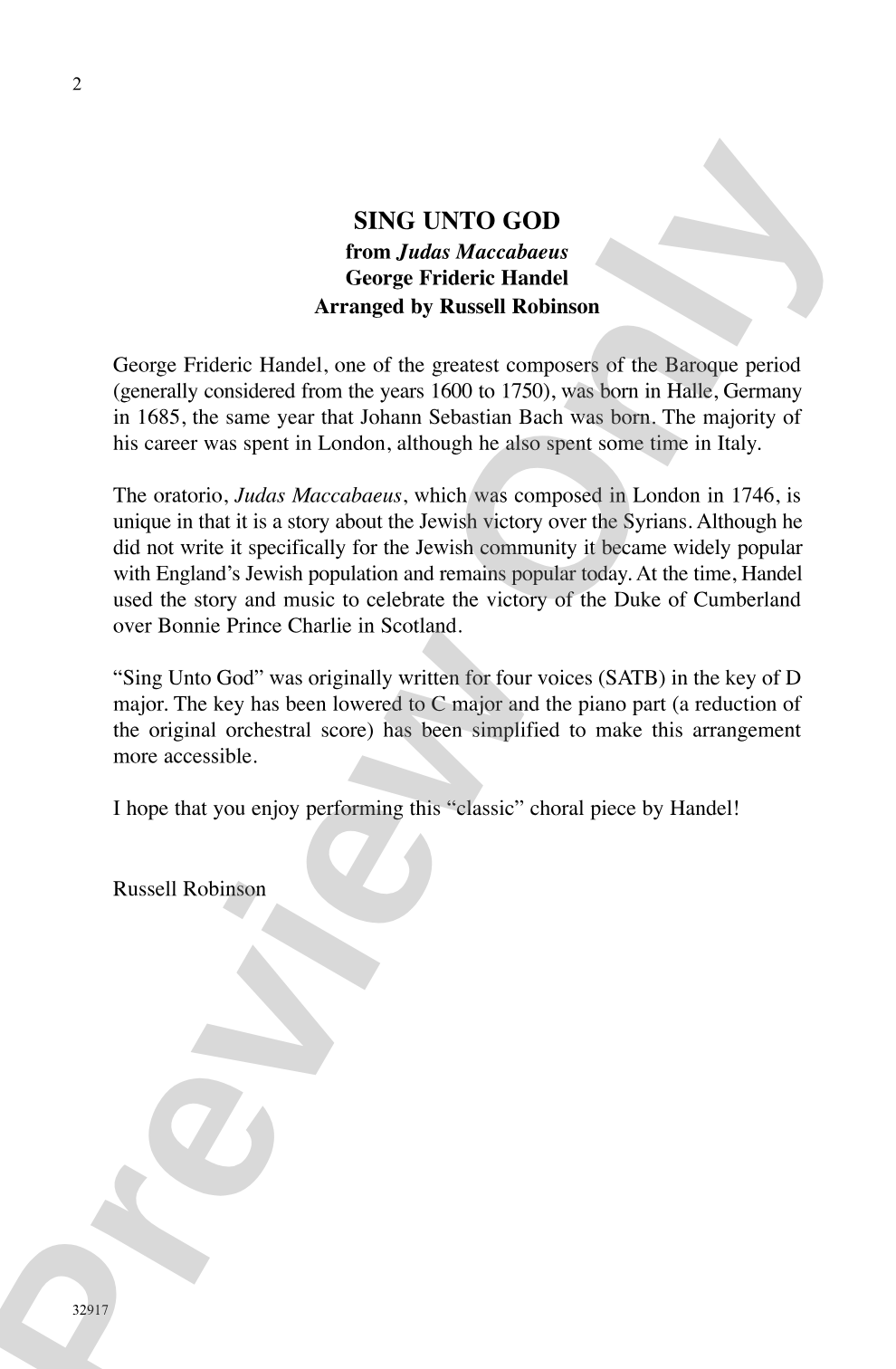
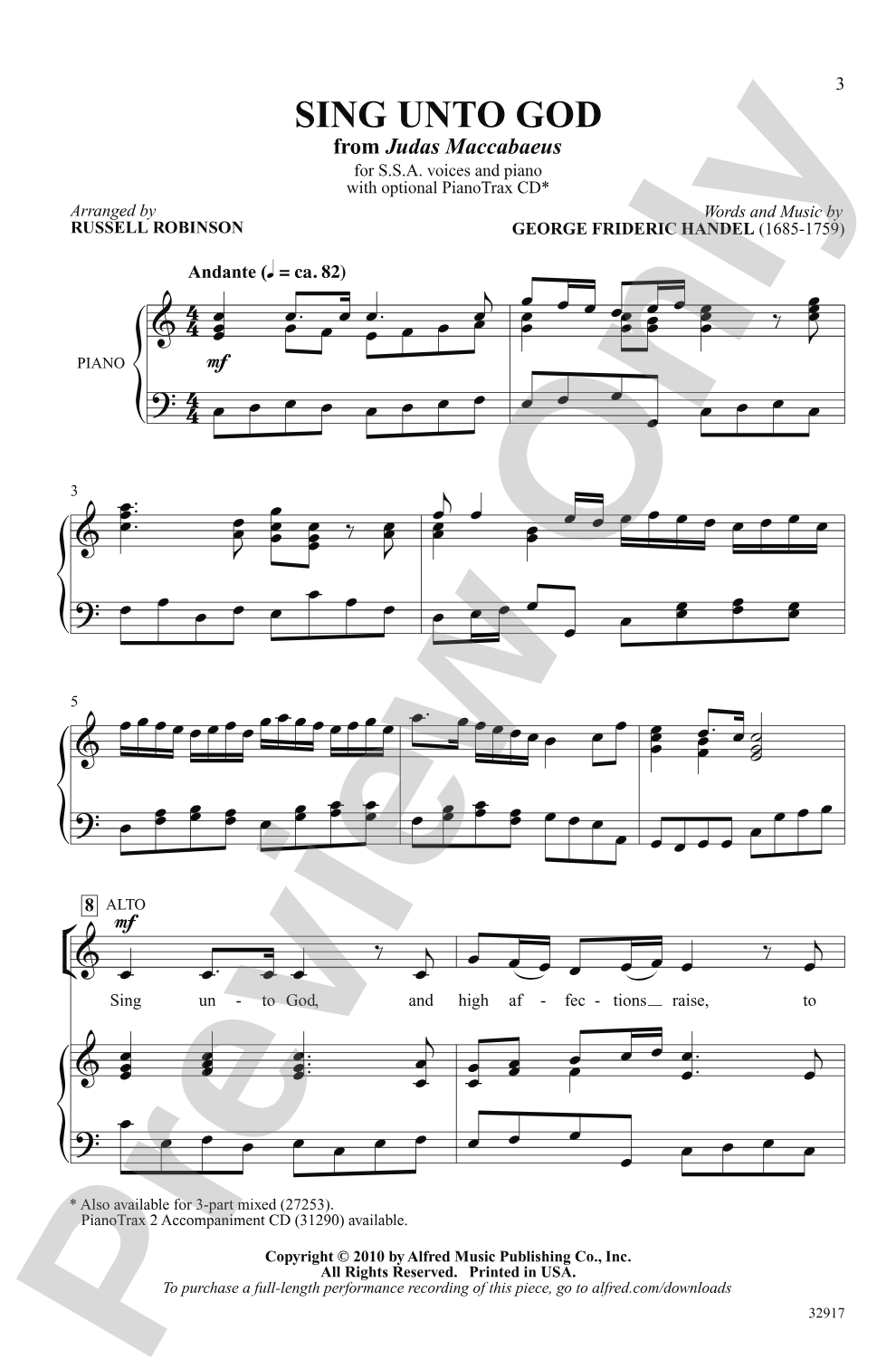
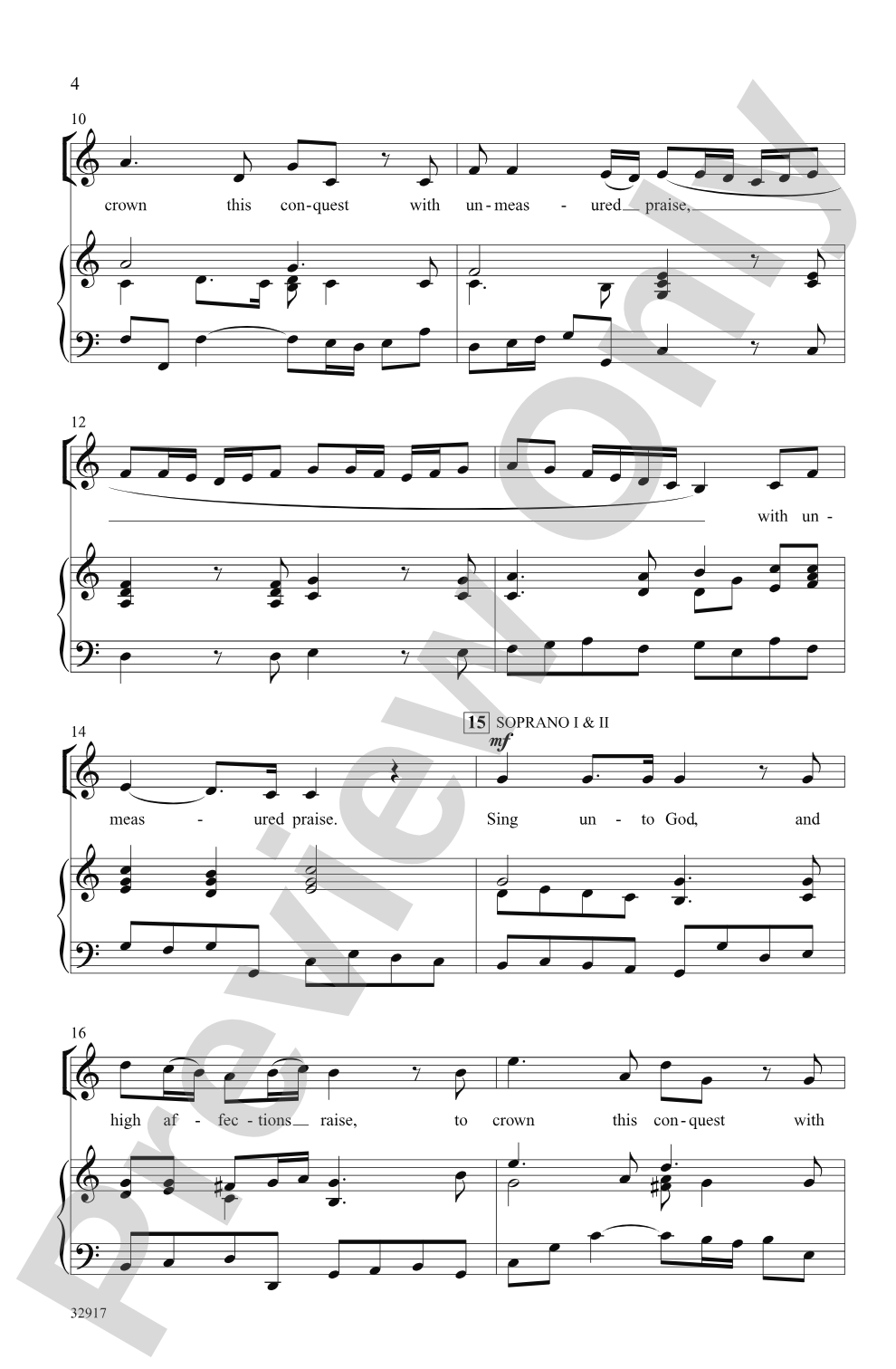
One of Handel's most famous oratorio choruses is now available for SSA choirs. The piano part has been simplified to make this arrangement more accessible, and special care is given to melismatic passages making them easier to sing. Accompaniment included on PianoTrax 2 CD (00-31290).


Sing Unto God (from Judas Maccabaeus): SSA Choral Octavo isn't in MakeMusic Cloud just yet...but it could be. Let us know you'd like to see it, and you'll help shape what comes next. In the meantime, start a free trial and dive into thousands of interactive titles your students can play along with today.
Request This Title
Tell us you want it.
Start Your Free Trial
Explore everything that's ready to play right now.
Sample Audio
1
Audio File
--:--
0:00
0:00
Sample Video
No sample videos found.
Additional Details
Series:
Alfred Choral Designs
Publisher:
Alfred Music
Page Count:
16
SKU:
00-PO-0000854
More about this title
About the Composer: George Frideric Handel
George Frideric Handel (1685-1759) stands as one of the Baroque era's most prolific and commercially savvy composers. Born in Halle, Germany, he spent much of his career in London, where he dominated the musical landscape through operas, instrumental concertos, and especially oratorios. His gift for memorable melody and dramatic vocal writing made his music immediately popular with audiences.
Handel's oratorios occupy a unique place in Western music. Unlike the staged Italian opera seria he also composed, oratorios used English texts on biblical or classical themes and were performed in concert settings. Judas Maccabaeus (1746) premiered during the Jacobite rising and became one of his most celebrated works, performed frequently for nearly three centuries. The chorus "Sing Unto God" exemplifies his ability to craft rousing, singable melodies that carry both spiritual weight and public appeal.
Why we love this
This arrangement opens one of Handel's most recognizable choral moments to singers who might otherwise never access it. Russell L. Robinson's thoughtful simplification of the piano part and careful shaping of the melismatic lines preserves the music's grandeur while solving real rehearsal challenges; your singers focus on communication and ensemble balance rather than technical survival.
What to expect
Triumphant and celebratory, yet architecturally clear and elegant. Handel's writing sits comfortably in the voice; the melismas flow rather than feel labored. There's a sense of joyful proclamation, with moments of harmonic richness that deepen the spiritual character without ever becoming ponderous.
Who it's for
SSA and SSAA choirs seeking a substantial Baroque masterwork that doesn't require advanced vocal technique or excessive rehearsal time. This works equally well for community choirs, school ensembles stepping up to classical repertoire, and professional groups wanting a crowd-pleasing festival or concert closer.
How to get the most out of it
- Shape the melismatic passages as vocal phrases rather than note-by-note exercises. Think of them as ornamental flourishes that decorate the harmonic structure, not hurdles to clear.
- Support the text's declarative character with forward-moving diction. "Sing unto God" demands confidence and clarity; avoid a tentative or overly reverent approach.
- Balance the three voices so the soprano line leads without drowning the alto and second soprano parts. The harmonies are strongest when each line projects equally.
- Use the simplified piano accompaniment to anchor harmonic clarity during rehearsals, then gradually lighten your dependence on it as the ensemble's internal tuning solidifies.
How to use it
Program this as a concert centerpiece or festival finale where its recognizable melody and robust energy will resonate with general audiences. It pairs beautifully with Renaissance motets or other Baroque sacred works for a thematic evening, or stands alone as a substantial single-piece concert offering.
Skills your students will build
- Singing Baroque melismatic passages with vocal control and musical shape
- Balancing three-part harmony with independent melodic lines
- Projecting confident diction on period English text
- Interpreting ornamental figuration as stylistically appropriate expression rather than technical display