

Sing Unto God (from Judas Maccabaeus): 3-Part Mixed Choral Octavo
From Judas Maccabaeus
Music by George Frideric Handel / arr. Russell Robinson
Item: 00-PO-0000343
$2.95
Minimum order quantity: 20 copies
Pickup currently not available
Description
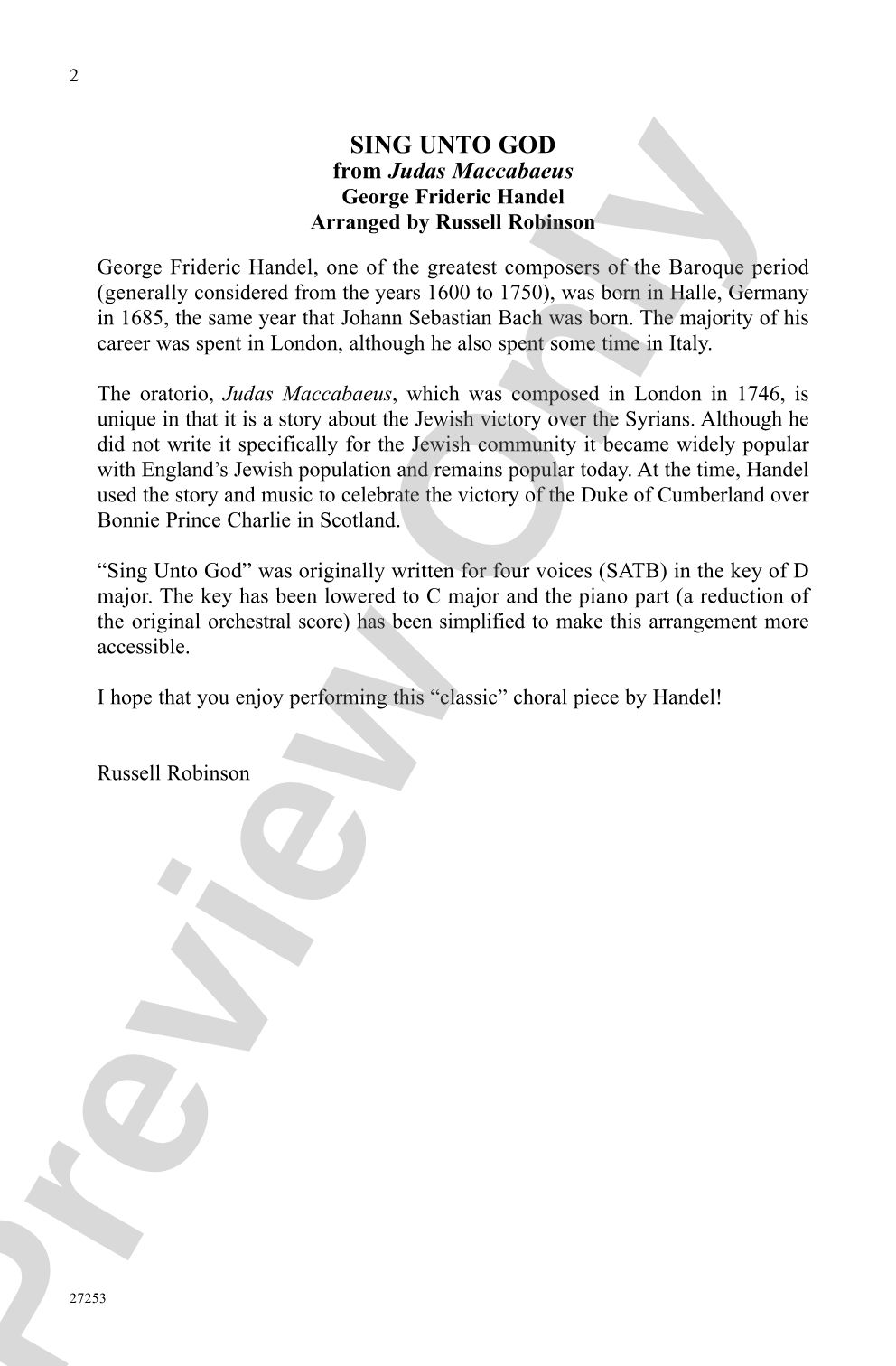
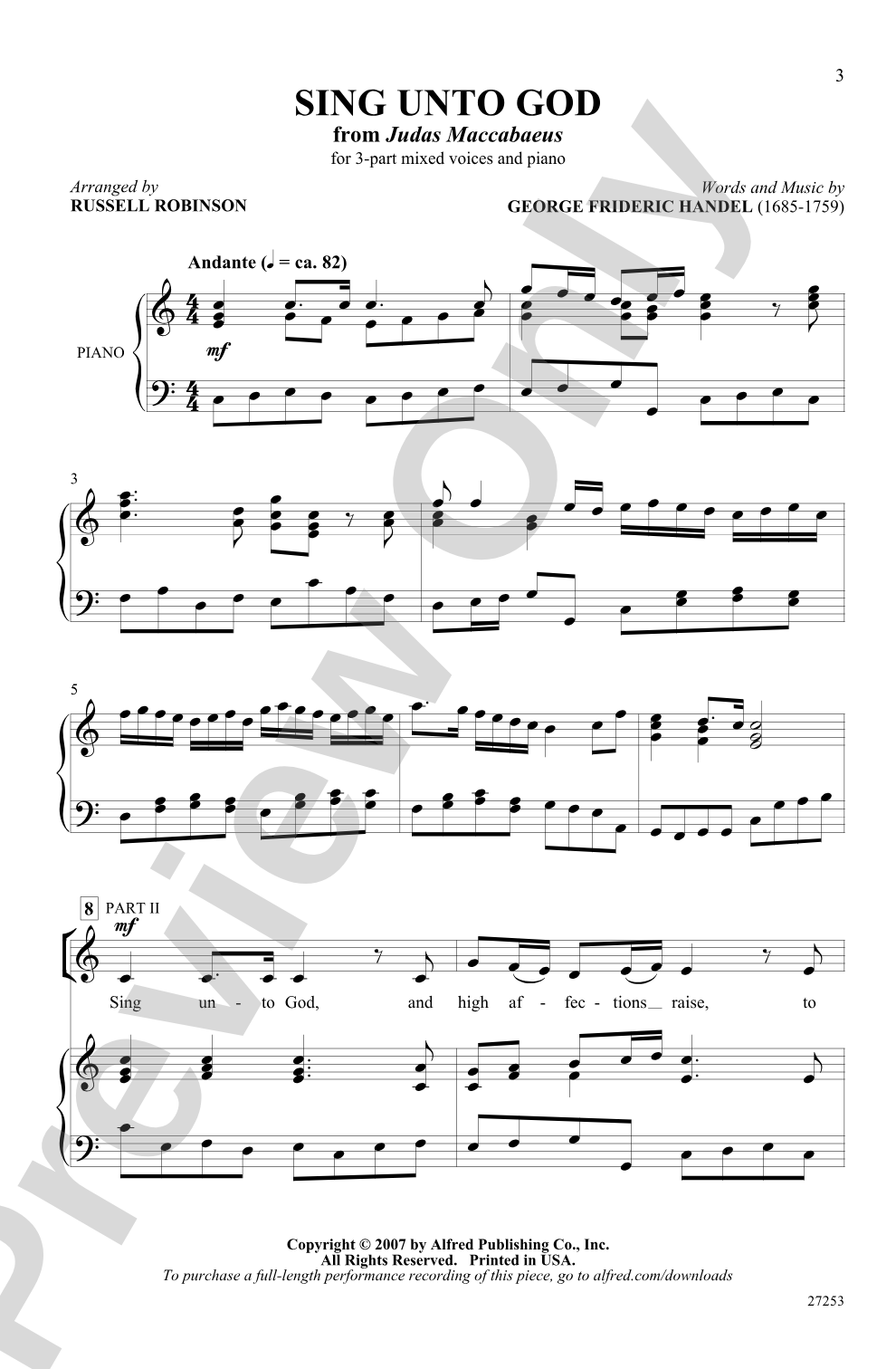
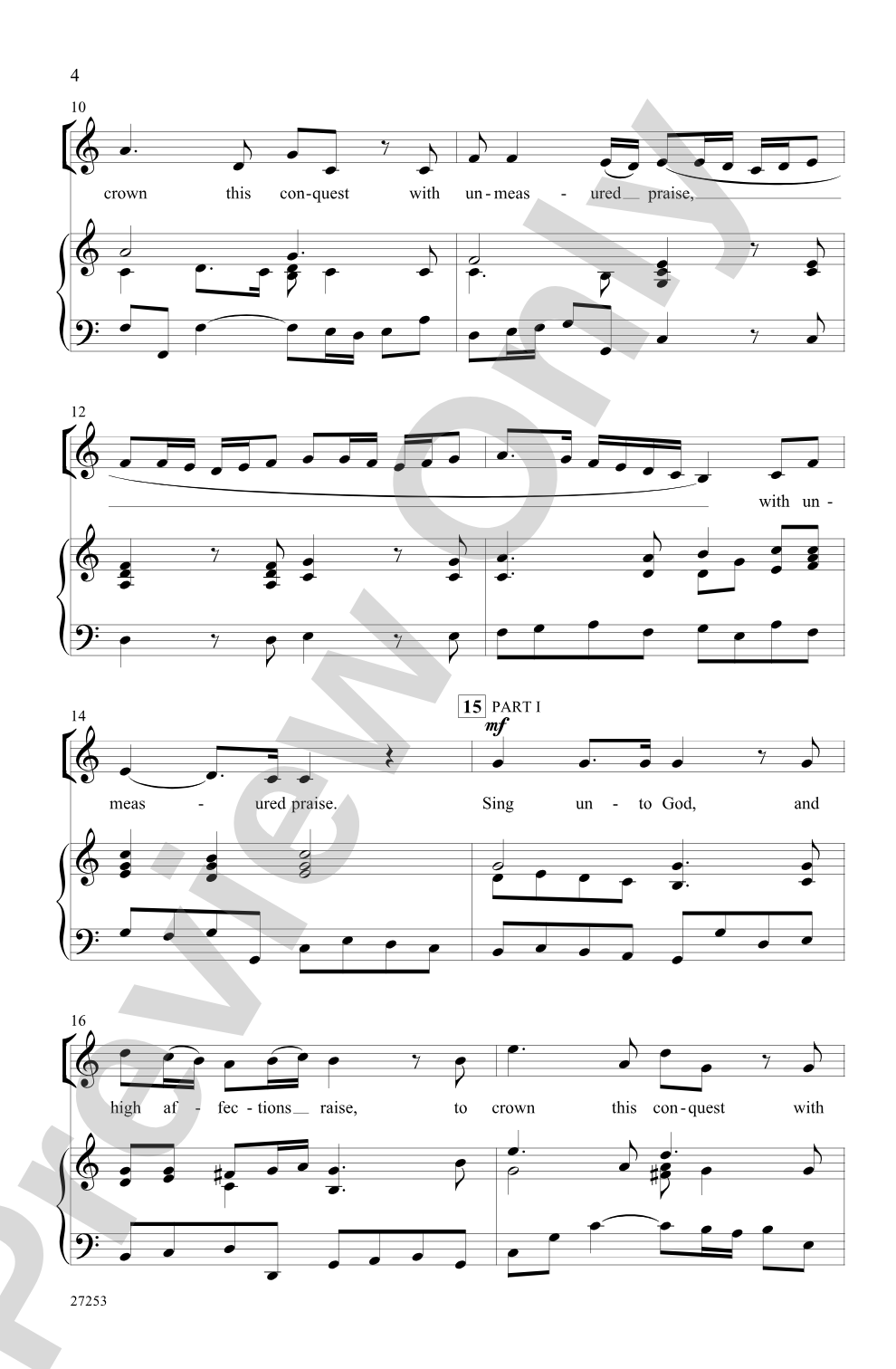
One of Handel's most famous oratorio choruses is now available for 3-part mixed choirs. The key of the original has been lowered and the piano part (a reduction of the original orchestral score) has been simplified to make this arrangement more accessible. In addition, special care is given to melismatic passages making them easier to sing while maintaining Handel's signature style. Accompaniment included on PianoTrax 2 CD (00-31290).


Sing Unto God (from Judas Maccabaeus): 3-Part Mixed Choral Octavo isn't in MakeMusic Cloud just yet...but it could be. Let us know you'd like to see it, and you'll help shape what comes next. In the meantime, start a free trial and dive into thousands of interactive titles your students can play along with today.
Request This Title
Tell us you want it.
Start Your Free Trial
Explore everything that's ready to play right now.
Sample Audio
1
Audio File
--:--
0:00
0:00
Sample Video
No sample videos found.
Additional Details
Series:
Alfred Archive Edition: Alfred Choral Designs
Publisher:
Alfred Music
Page Count:
16
SKU:
00-PO-0000343
More about this title
About the Composer: George Frideric Handel
George Frideric Handel (1685-1759) was a German-born composer who spent most of his career in England, becoming a cornerstone of the English musical establishment. His mastery of both instrumental and vocal forms made him one of the most performed composers of the Baroque era, and his oratorios in particular established a genre that blended dramatic narrative with choral grandeur.
Handel's choral writing balances elaborate counterpoint with direct emotional impact, making his works accessible to both professional and amateur singers. His influence on choral literature remains profound; educators continue to return to his oratorios as models of how to build climactic moments and sustain listener engagement across large-scale works.
Why we love this
Russell Robinson's arrangement respects Handel's architecture while making the piece genuinely singable for mixed choirs without the resources of a full orchestra. The lowered key and simplified accompaniment remove unnecessary barriers, yet the writing retains the ceremonial weight and melismatic elegance that makes this chorus instantly recognizable to any audience familiar with the oratorio.
What to expect
Majestic and purposeful, this chorus carries the ceremonial weight of an oratorio's climactic moment. The melodic lines unfold with both grandeur and clarity, inviting singers to shape long phrases while decorative passages add textural interest without overwhelming the musical architecture.
Who it's for
This arrangement serves mixed choirs of intermediate ability who want to perform a genuine masterwork without the vocal demands of the original orchestral score. Directors working with community, school, and volunteer choirs will find an accessible entry point into Handel's dramatic choral language.
How to get the most out of it
- Shape the text through phrasing rather than slowing down; Baroque language benefits from forward motion even in florid passages.
- Balance the parts carefully in the melismatic sections so individual syllables articulate clearly without sacrificing legato line.
- Use the PianoTrax 2 accompaniment to establish tempo and rhythmic precision, particularly in sections with intricate part writing.
- Allow sopranos and altos to breathe together on longer runs; coordinate breaths in rehearsal to maintain phrase coherence.
How to use it
Program this as a concert anchor or festival showcase that stands confidently alongside both contemporary sacred works and other Baroque choruses. Its accessibility makes it ideal for spring or holiday concerts where you want to introduce audiences to oratorio literature without requiring soloists or specialized vocal ranges.
Skills your students will build
- Reading and executing melismatic passage work (multiple notes per syllable)
- Balancing part independence with blend in three-part mixed harmony
- Shaping long melodic phrases across multiple bars with proper breath placement
- Coordinating text articulation across moving sixteenth and eighth note figures