
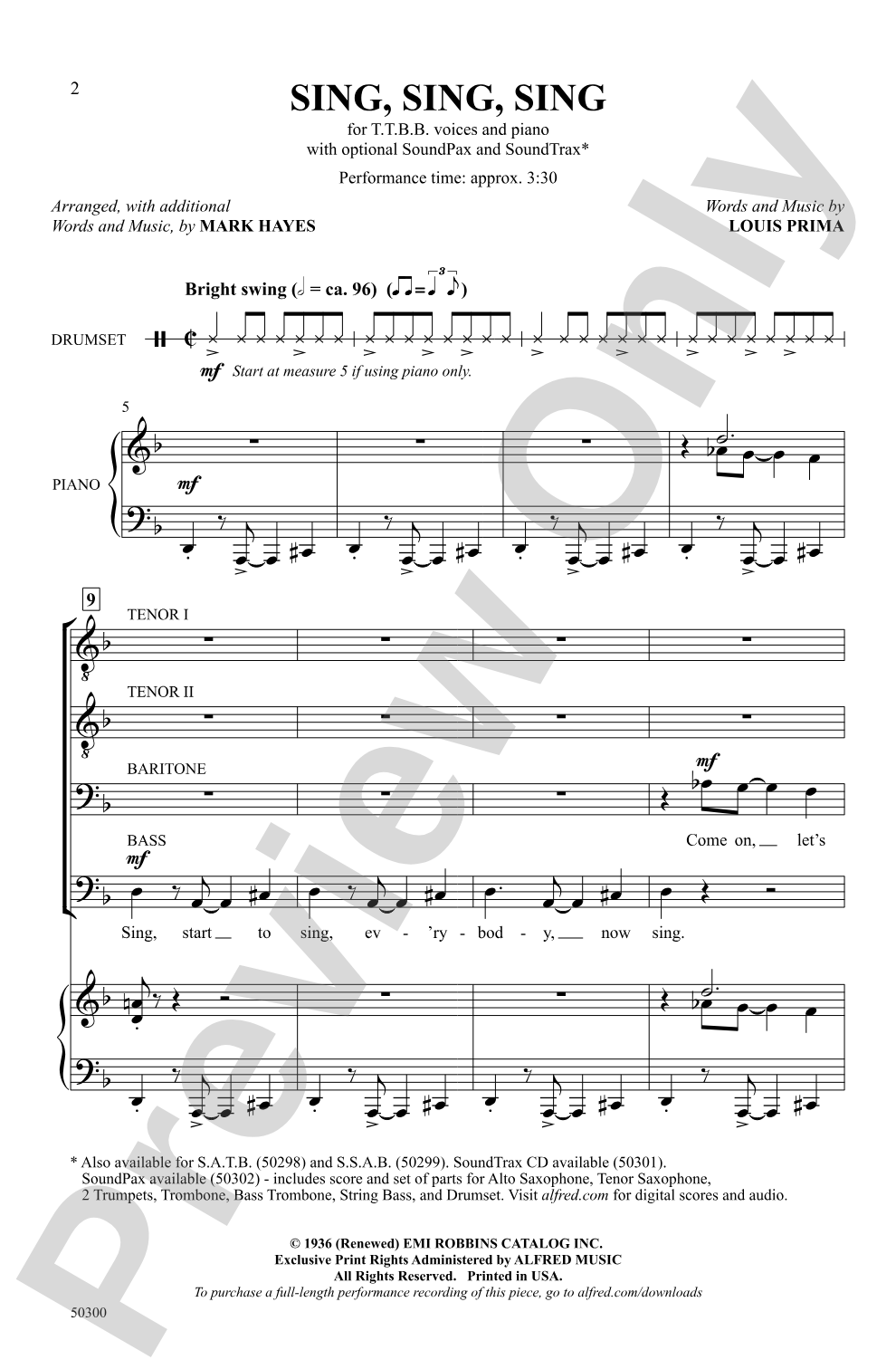
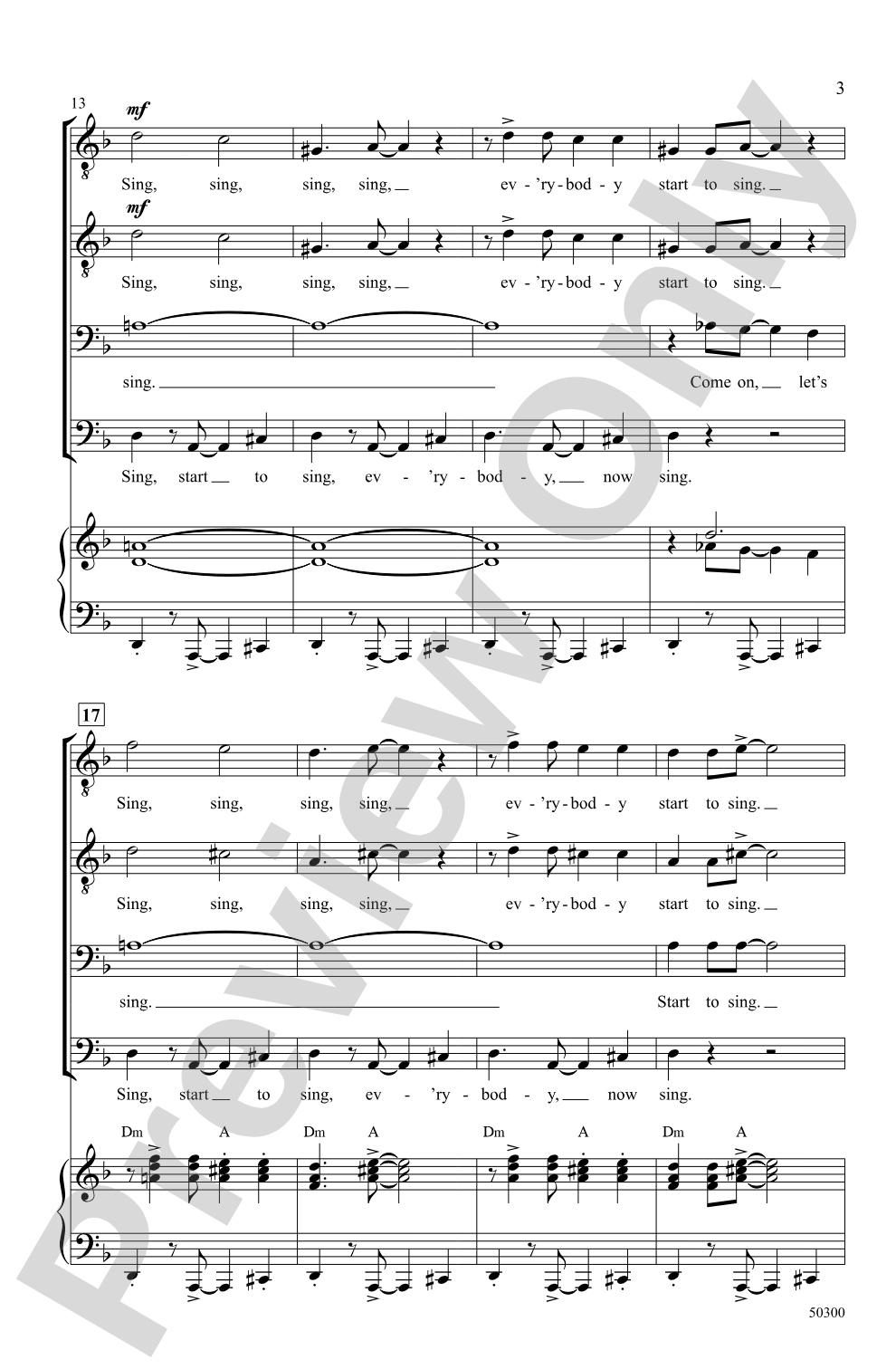
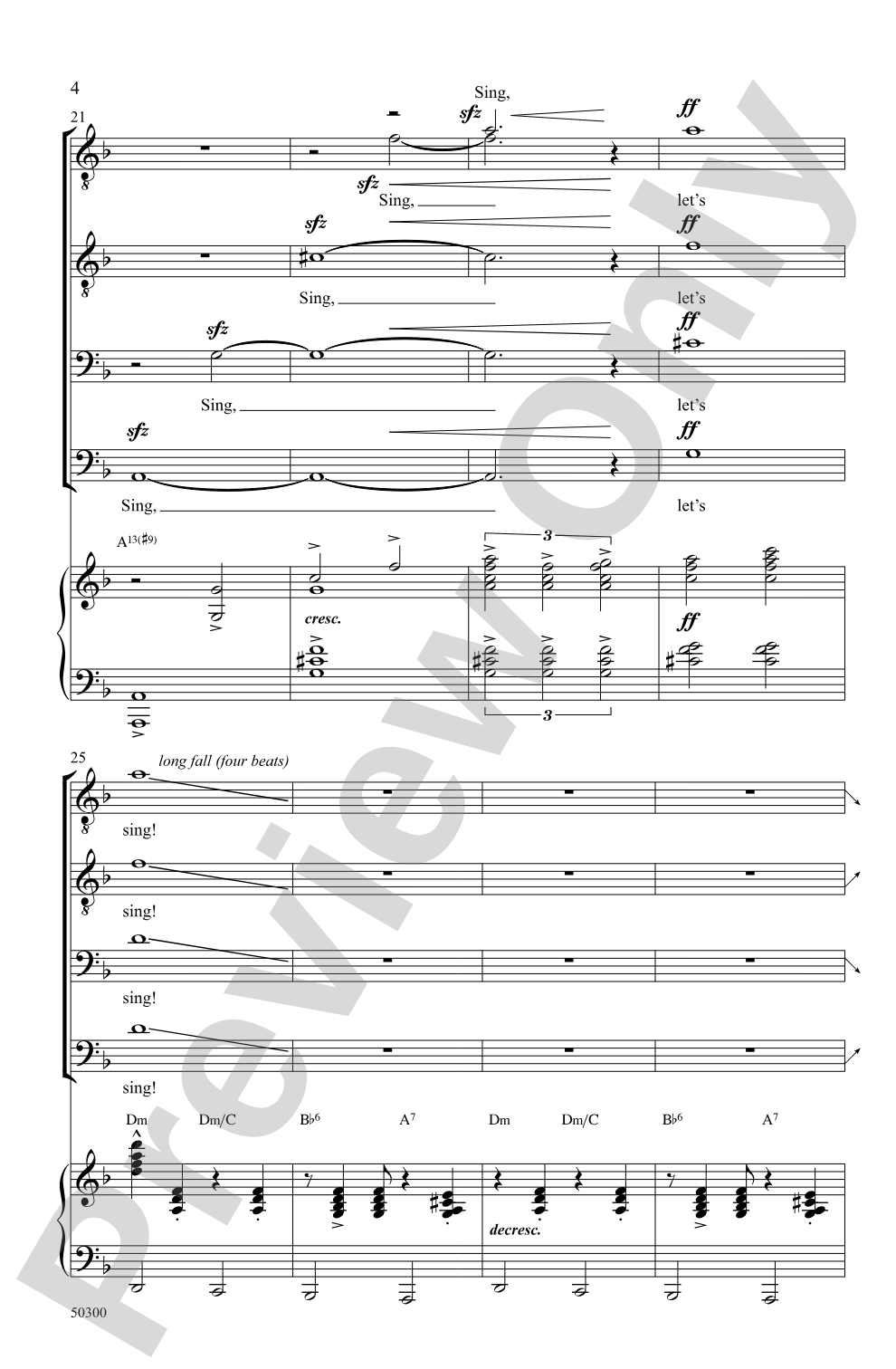
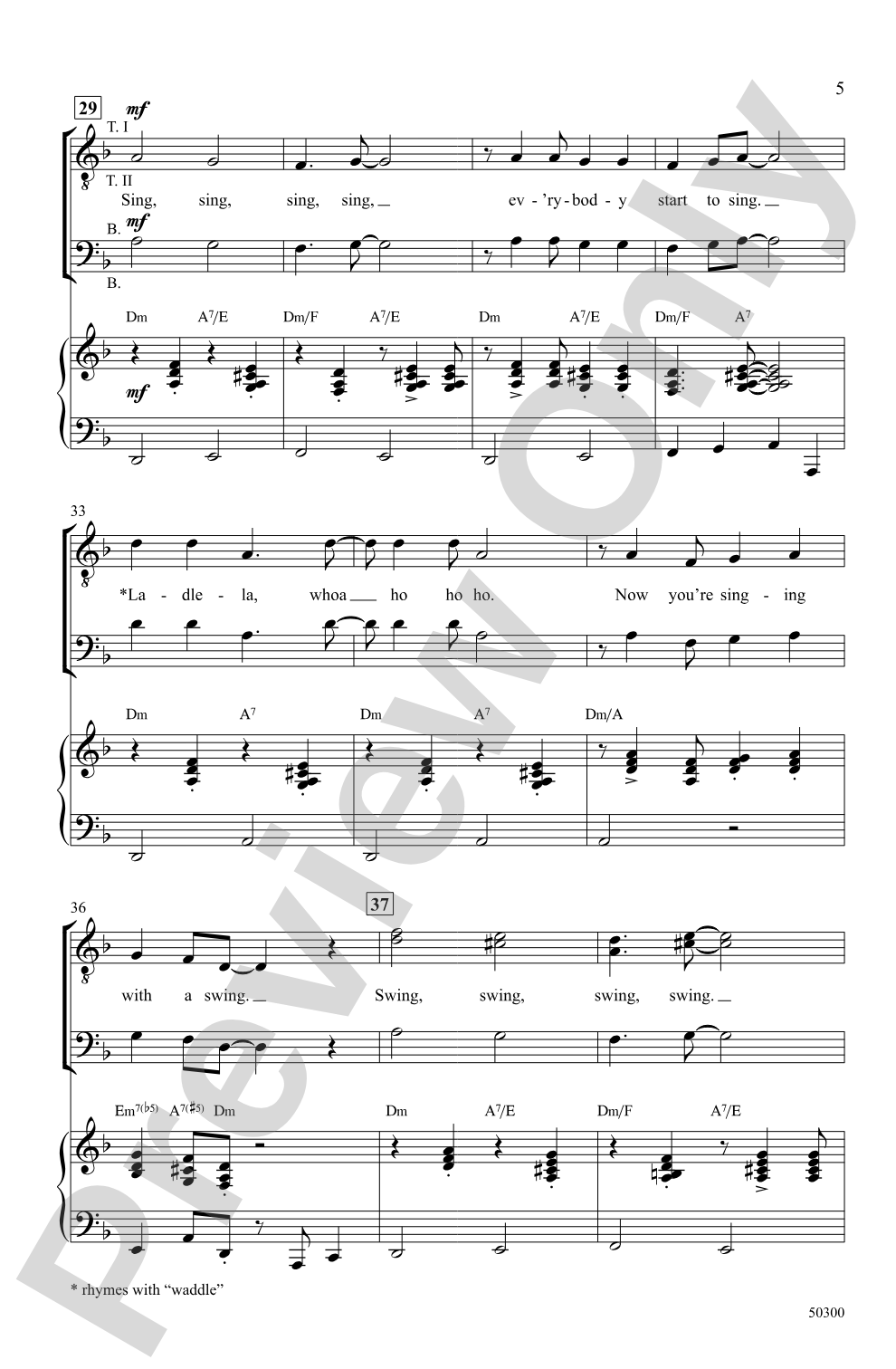
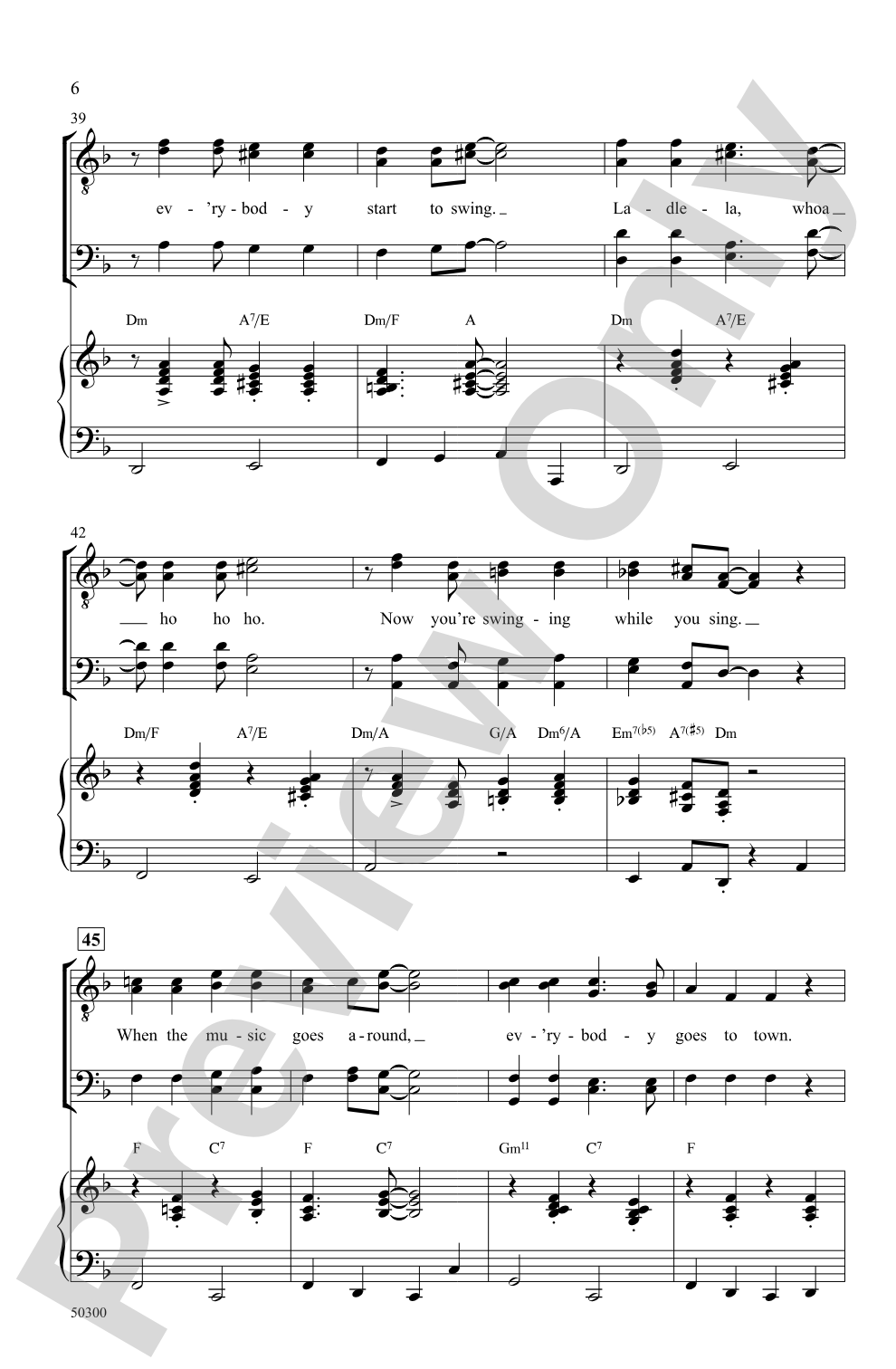

Sing, Sing, Sing: TTBB Choral Octavo
Words and music by Louis Prima / arr., with additional words and music, by Mark Hayes
Item: 00-PO-0007119
$2.35
Minimum order quantity: 20 copies
One moment…
Related Items
Sing, Sing, Sing: SoundTrax Digital Audio Download |
$29.98
|
View | |
Sing, Sing, Sing: SATB Choral Octavo |
$2.35
|
View | |
Sing, Sing, Sing: SSAB Choral Octavo |
$2.35
|
View | |
Sing, Sing, Sing: Choral SoundPax |
$35.00
|
View | |
Sing, Sing, Sing: SATB Choral Octavo |
$2.35
|
View | |
Sing, Sing, Sing: SSAB Choral Octavo |
$2.35
|
View | |
Sing, Sing, Sing: TTBB Choral Octavo |
$2.35
|
View | |
Sing, Sing, Sing: Choral Octavo SoundTrax CD |
$29.99
|
View | |
Sing, Sing, Sing: Choral SoundPax |
$35.00
|
View |
Description
Louis Prima's legendary big band-era showstopper is as exciting as ever in Mark Hayes' sizzling choral setting. Swinging rhythms, scintillating harmonies, independent vocal lines, and a sassy horns-and-rhythm instrumentation bring the heat. A few fresh lyrics add to the bright music theme, creating the ultimate opener or closer for school or community choirs. "Now you're singin' with a swing!"


Discover MakeMusic Cloud: thousands of interactive titles your students can play along with today.
Sample Audio
1
Audio File
--:--
0:00
0:00
Sample Video
1 / 2
Additional Details
Series:
Alfred Pop Choral Series
Publisher:
Alfred Music
Page Count:
24
SKU:
00-PO-0007119
More about this title
About the Composer: Louis Prima
Louis Prima (1910–1978) was a New Orleans-born trumpet player, singer, and bandleader whose exuberant style defined the swing era. He built his reputation on infectious energy, comedic timing, and an ability to blend jazz sophistication with popular appeal, recording dozens of hits and appearing in films throughout the 1930s and 1940s. Prima's "Sing, Sing, Sing" became one of the era's most recognizable standards, showcasing his gift for writing melodies that stick with audiences long after the final chorus.
For choral directors, Prima's catalog represents the pinnacle of accessible, high-energy American popular music. His compositions reward singers who commit to rhythmic precision and expressive delivery, making them ideal for building ensemble cohesion and infectious joy in the rehearsal room.
Why we love this
Mark Hayes' orchestration captures every ounce of Prima's original swagger while adapting it thoughtfully for TTBB voices, giving you a piece that sounds polished and professional without requiring a full big band. The independent vocal lines keep singers engaged throughout, and the optional horn parts add genuine shimmer when you're ready to build a fuller sound. Best of all, it programs like a dream: this opener or closer will energize your audience and your singers alike.
What to expect
Sunlight bouncing off brass, infectious good humor, and the unshakeable groove of a bandstand at its peak. Singers move through sections of tightly interlocking harmony that feel effortless once locked in, punctuated by moments of genuine showmanship that draw applause.
Who it's for
Experienced high school and college men's choirs looking for a crowd-pleasing, feel-good opener or finale. Singers need comfort with syncopation and independent voicing, but the piece rewards investment with swagger and audience connection.
How to get the most out of it
- Lock the swing feel early in rehearsals by having the rhythm section (or recorded accompaniment) establish the groove first, then layer in the vocal parts once that pocket is secure.
- Shape the phrase endings with a slight lift rather than a full cutoff; the sassy character demands energy all the way through to the final syllable.
- Bring out the independent lines in the verse sections by assigning intentional vowel colors to each part so listeners hear the interweaving melody, not a blend.
- Lean into the comedic moments with clear diction on the fresh lyrics; clarity here sells the fun and keeps the piece from sounding precious.
How to use it
Use this as your concert opener to set an upbeat tone immediately, or place it strategically near the end of your second half for a high-energy sendoff. It pairs naturally with other standards or jazzy contemporary pop arrangements, and it signals to your audience that your choir commands versatility.
Skills your students will build
- Singing swing rhythms with precision and forward energy
- Independent vocal line navigation while maintaining harmonic awareness
- Quick style shifts from tight harmony to syncopated, rhythmically independent sections
- Diction clarity at tempo in a jazz idiom
- Building ensemble cohesion through rhythmic lock with accompaniment