
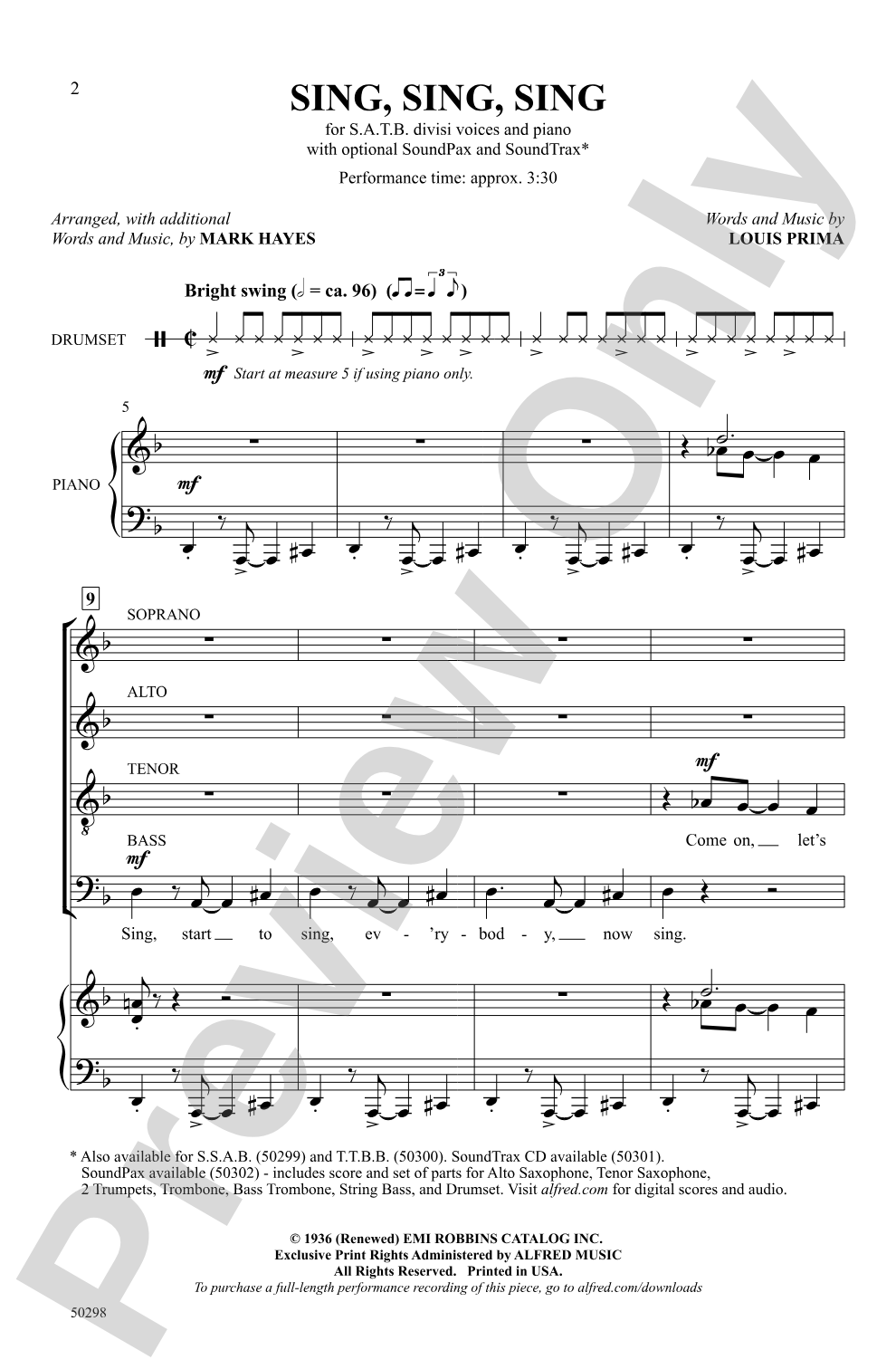

Sing, Sing, Sing: SATB Choral Octavo
Words and music by Louis Prima / arr., with additional words and music, by Mark Hayes
Item: 00-PO-0007117
$2.35
Minimum order quantity: 20 copies
One moment…
Related Items
Sing, Sing, Sing: SoundTrax Digital Audio Download |
$29.98
|
View | |
Sing, Sing, Sing: SSAB Choral Octavo |
$2.35
|
View | |
Sing, Sing, Sing: TTBB Choral Octavo |
$2.35
|
View | |
Sing, Sing, Sing: Choral SoundPax |
$35.00
|
View | |
Sing, Sing, Sing: SATB Choral Octavo |
$2.35
|
View | |
Sing, Sing, Sing: SSAB Choral Octavo |
$2.35
|
View | |
Sing, Sing, Sing: TTBB Choral Octavo |
$2.35
|
View | |
Sing, Sing, Sing: Choral Octavo SoundTrax CD |
$29.99
|
View | |
Sing, Sing, Sing: Choral SoundPax |
$35.00
|
View |
Description
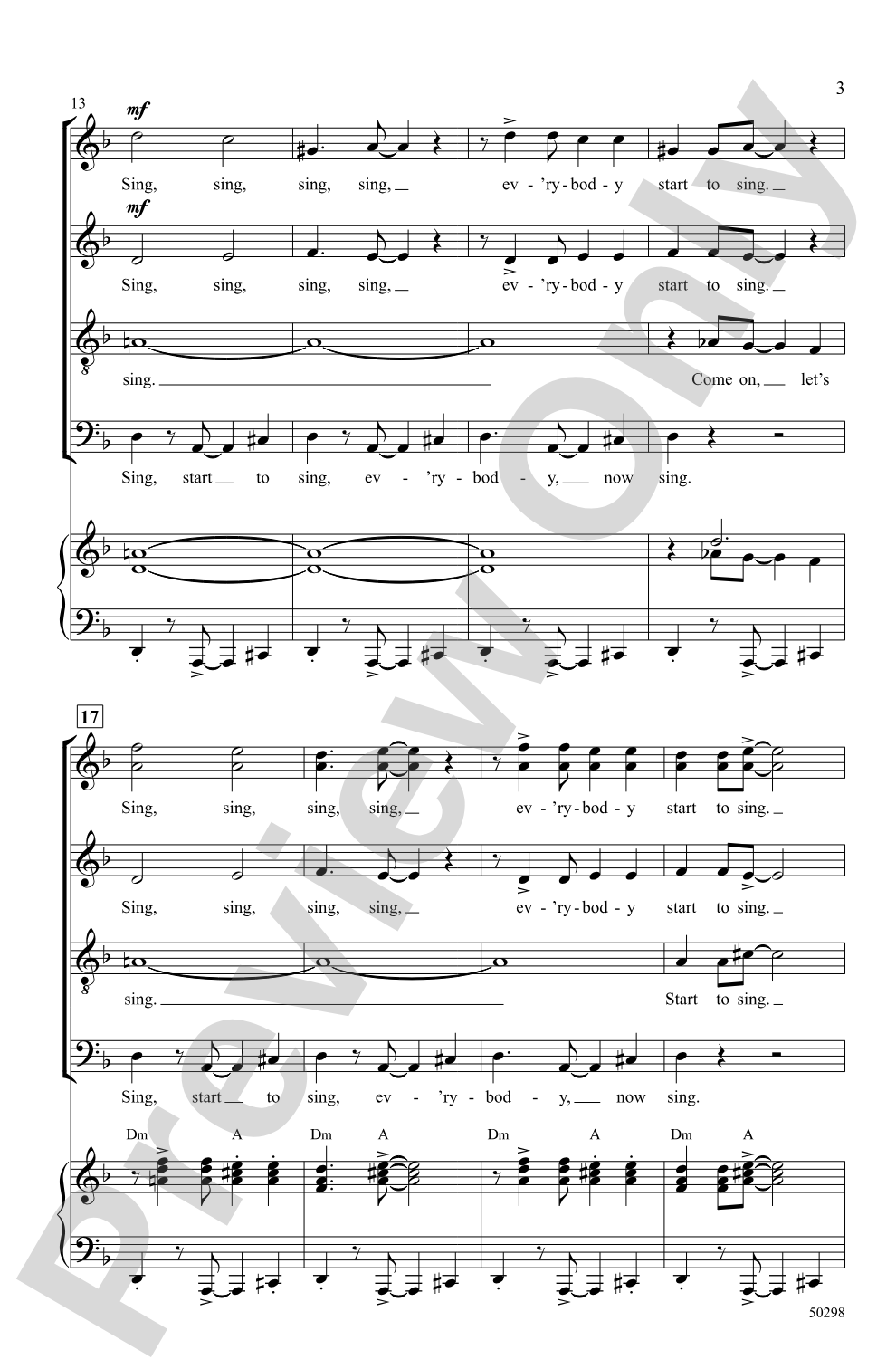
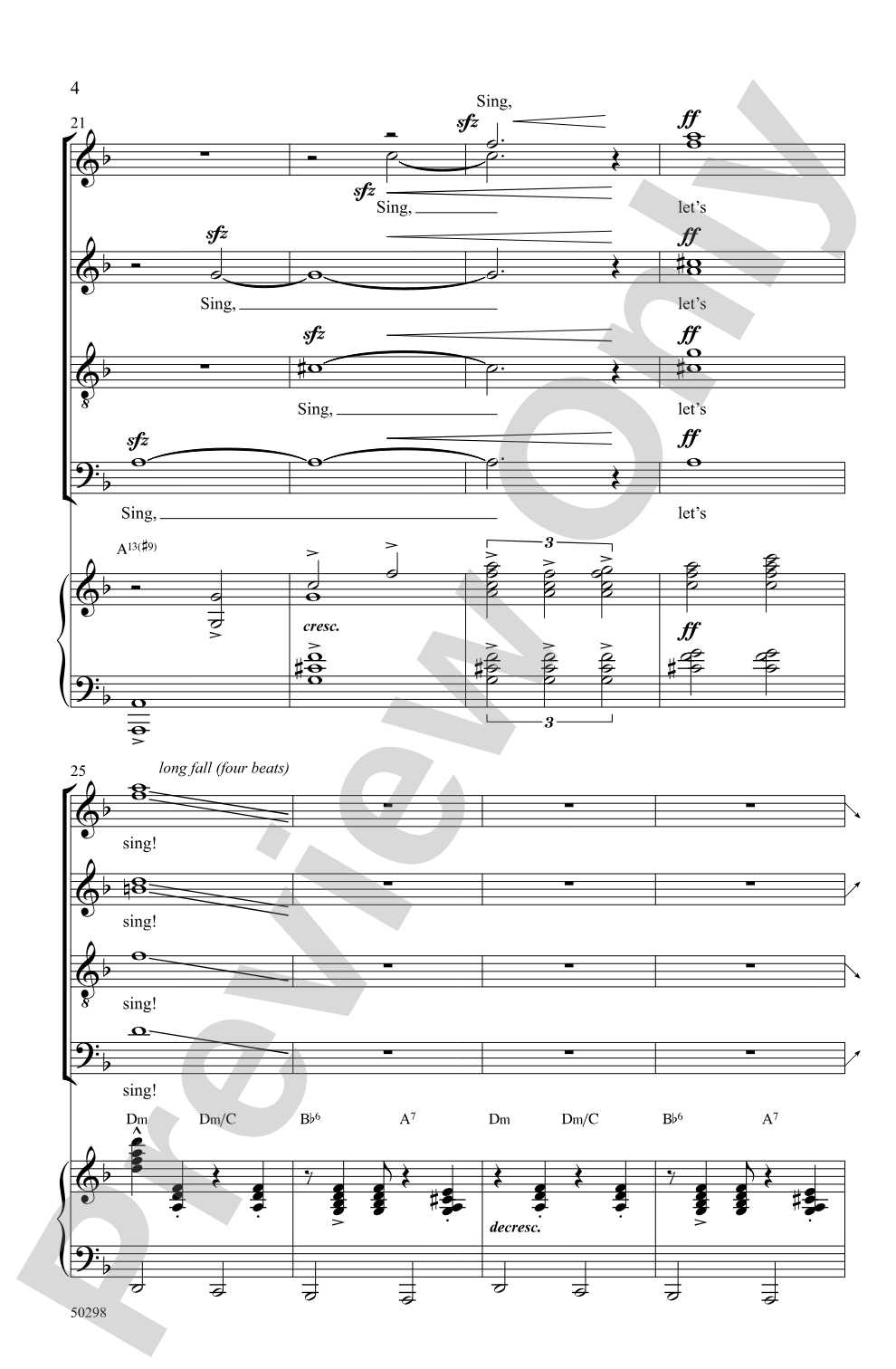
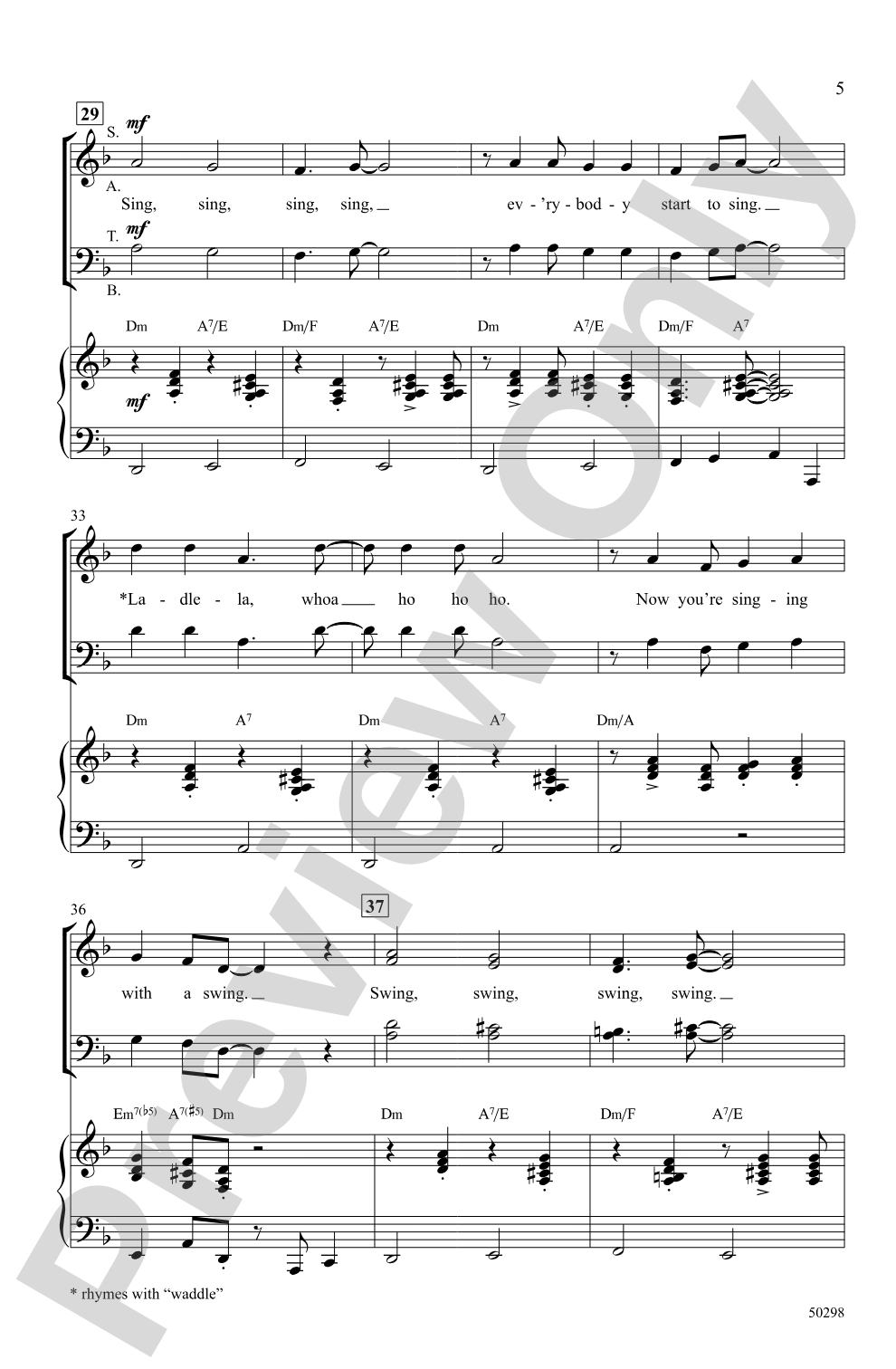
Louis Prima's legendary big-band era showstopper is as exciting as ever in Mark Hayes' sizzling choral setting. Swinging rhythms, scintillating harmonies, independent vocal lines, and a sassy horns and rhythm instrumentation bring the heat. A few fresh lyrics add to the bright music theme, creating the ultimate opener or closer for school or community choirs. "Now you're singin' with a swing!"


Discover MakeMusic Cloud: thousands of interactive titles your students can play along with today.
Sample Audio
1
Audio File
--:--
0:00
0:00
Sample Video
1 / 2
Additional Details
Series:
Alfred Pop Choral Series
Publisher:
Alfred Music
Page Count:
20
SKU:
00-PO-0007117
More about this title
About the Composer: Louis Prima
Louis Prima (1910-1978) was a trumpet player, singer, and bandleader who became one of the most distinctive voices of the swing era. His infectious energy, comedic timing, and ability to blend jazz improvisation with populist appeal made him a fixture in American entertainment from the 1930s through the 1960s. Prima's catalog includes some of the Great American Songbook's most enduring novelty standards, and his influence on popular music extends well beyond his lifetime.
Prima's genius lay in his refusal to take himself too seriously while maintaining genuine musicianship. He understood how to write and perform music that moved audiences to both laughter and dance, a skill that translates beautifully to choral settings where ensemble joy and theatrical flair matter equally to vocal technique.
Why we love this
Mark Hayes has captured the unshakeable optimism and propulsive swing of Prima's original without diluting its character for choir. The independent vocal lines demand real singers while the optional instrumental parts (when available) transform a choral piece into a full ensemble event. This works equally well as a concert opener that commands attention or a closer that sends audiences out smiling.
What to expect
Stepping into a 1940s jazz club where optimism and brass-driven exuberance collide. The harmonies sparkle and shift beneath a melody that refuses to sit still, propelled by rhythms that make standing still feel impossible. It's music designed to make singers grin and audiences lean forward.
Who it's for
School and community choirs with singers who can manage independent lines and are ready to dig into a piece built on style and rhythmic precision rather than vocal gymnastics. Ensembles comfortable with jazz vocabulary and willing to rehearse swing articulation will find this both fun and musically rewarding.
How to get the most out of it
- Commit fully to the rhythmic drive. Swing eighth notes rather than playing them straight; the groove depends on vocalists understanding themselves as part of the rhythm section.
- Balance the sassy text and bright harmonies with clarity. Each voice part has material worth hearing, so avoid letting any section disappear into the blend.
- If using the optional instrumental parts, rehearse the choir against them early. The horns and rhythm section set the vibe; your singers need to feel that pocket from day one.
- Lean into the theatrical moments and fresh lyrics without winking at the audience. Confidence and energy sell the piece far more than irony.
How to use it
Lead off a concert with this and you've already won the room. The piece announces that your choir swings and doesn't take itself too seriously while still singing with real skill. It pairs naturally with other jazz-inflected pop choral works or serves as a vibrant counterpoint to more formal classical repertoire in a mixed program.
Skills your students will build
- Swing articulation and rhythmic independence (singing syncopated lines while maintaining ensemble precision)
- Jazz harmony voicing and intonation (managing chromatic movement and close intervals)
- Theatrical interpretation and text projection in a secular, energetic context
- Listening for balance across independent SATB lines within a groove-based arrangement