

Sing, Sing!: 2-Part Choral Octavo
(Cantate Domino)
Words and music by Sally K. Albrecht
Item: 00-PO-0005767
$2.05
Minimum order quantity: 20 copies
Pickup currently not available
Description
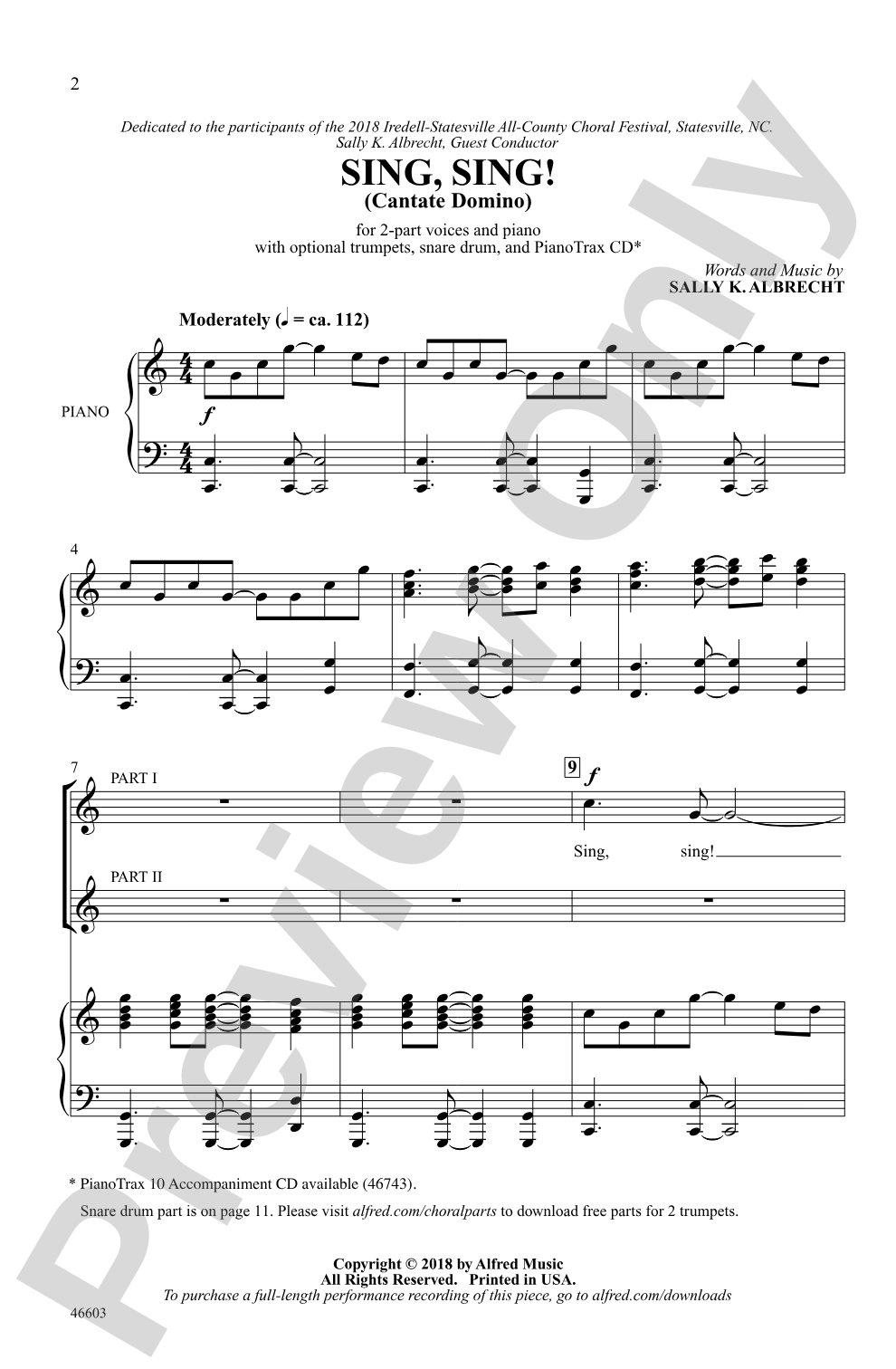
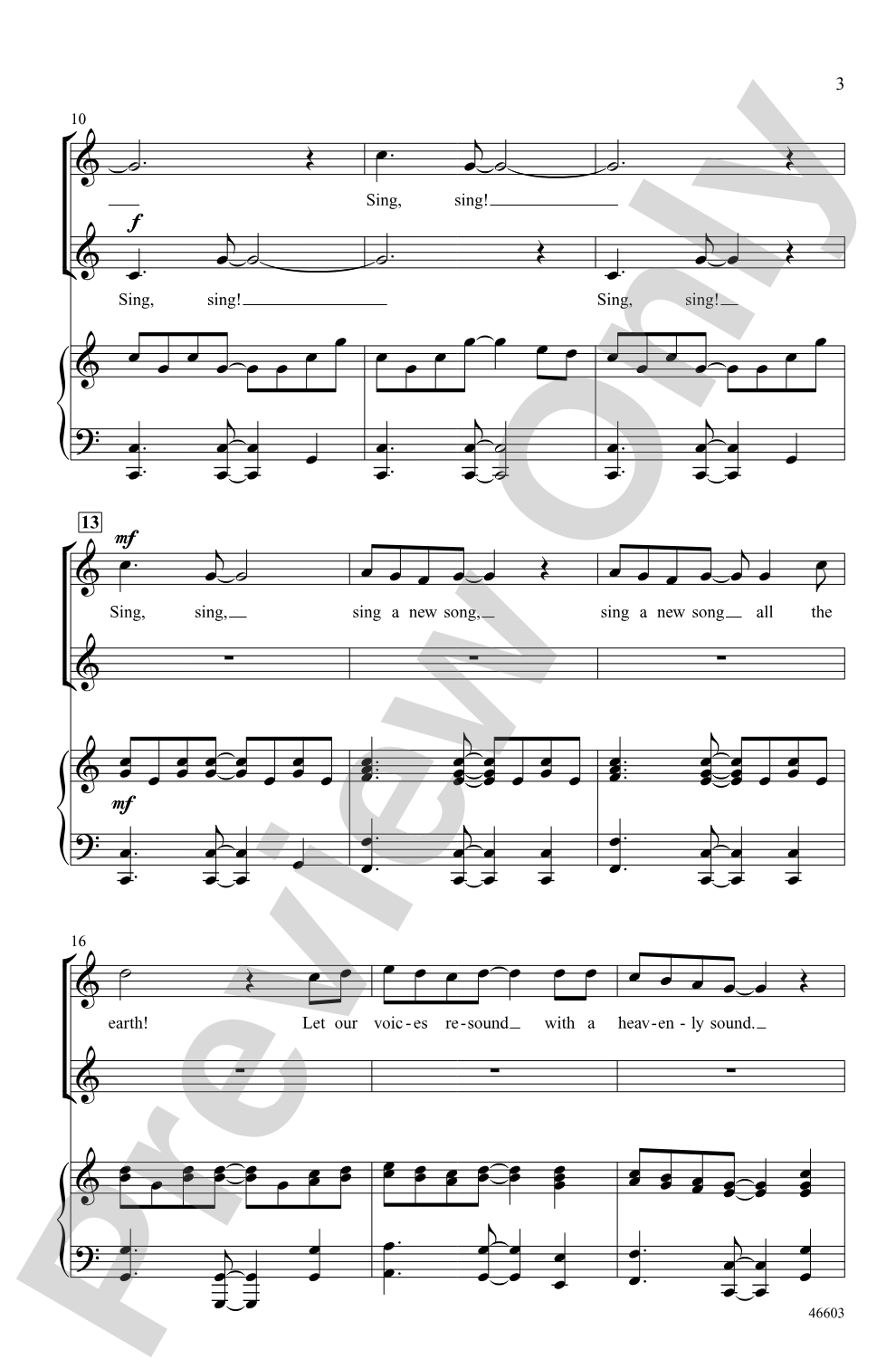
Antiphonal entrances of "Sing, sing!" open this majestic selection with optional parts for two trumpets and a snare drum. Two accented melodies stand alone before combining into an exuberant choral duet. A contrasting middle section provides the opportunity to sing briefly in Latin before returning to the stately fanfare.


Sing, Sing!: 2-Part Choral Octavo isn't in MakeMusic Cloud just yet...but it could be. Let us know you'd like to see it, and you'll help shape what comes next. In the meantime, start a free trial and dive into thousands of interactive titles your students can play along with today.
Request This Title
Tell us you want it.
Start Your Free Trial
Explore everything that's ready to play right now.
Sample Audio
1
Audio File
--:--
0:00
0:00
Sample Video
Additional Details
Series:
Alfred Choral Designs
Publisher:
Alfred Music
Page Count:
12
SKU:
00-PO-0005767
Instrumentation:
Opt. Trumpets, Snare Drum
More about this title
About the Composer: Sally K. Albrecht

Sally K. Albrecht has shaped American choral music for decades as a composer, conductor, and clinician with a particular gift for integrating movement into choral performance. Since 1987, she has been a consistent recipient of the ASCAP Special Music Award, and her catalog now includes over 600 published choral works alongside 75 larger-scale songbooks and musicals. She has led honor choirs at prestigious venues including Lincoln Center, Carnegie Hall, and The Kennedy Center, and spent more than thirty years directing school choral, vocal, and elementary publications for major educational publishers, including Alfred Music.
Albrecht holds degrees from Rollins College (B.A. in Music and Theater, 1976), the University of Miami (M.A. in Drama, 1977; M.M. in Accompanying, 1979), and has taught in university music departments at Oakland University, Jersey City State College, and Meredith College. She served as Chair of the Board of Trustees for the Omicron Delta Kappa National Leadership Honor Society and received their Pillar of Leadership award. In 2021, both the University of Miami Frost School of Music and Rollins College honored her with Distinguished Alumna Awards. She lives in North Carolina with her husband, composer and arranger Jay Althouse.
Why we love this
Albrecht's instinct for theatrical staging and antiphonal interplay creates an arrangement that feels fresh and dynamic despite its accessibility. The optional brass and percussion parts elevate what could be a simple 2-part number into a genuine showcase piece, while the Latin text in the middle section adds textual variety and cultural dimension without overwhelming young singers.
What to expect
The piece opens with stately, almost ceremonial dignity as the two voice parts announce their theme in alternation, then swells into joyful exuberance once the melodies intertwine. The Latin section softens the mood into something more reflective and solemn before the triumphant fanfare returns, creating an emotional arc that feels both substantial and celebratory.
Who it's for
Two-part choirs at the middle school through early high school level will find this piece appropriately sized and energizing. Directors seeking repertoire that combines sincerity with theatrical flair, and who have access to optional brass players, will appreciate how Albrecht layers accessibility with professional polish.
How to get the most out of it
- Balance the antiphonal entrances precisely in the opening so each voice part cuts through clearly; the staggered "Sing, sing!" entrances only work if listeners can track both lines distinctly.
- If using the optional trumpet and snare drum parts, rehearse the instrumental accompaniment separately first to establish the rhythmic pulse and fanfare character before layering in the vocal lines.
- Treat the shift to Latin text as a genuine textural moment; slightly adjust vowel shapes and phrasing to let the language change register in the listeners' ears and signal the contrasting middle section.
- Exploit the movement potential Albrecht built into this piece; coordinate simple staging for the antiphonal opening and the final return to the fanfare to reinforce the architecture.
How to use it
Open a concert with this piece to establish energy and confidence, or use it as a capstone moment in a program that explores sacred choral literature. Its festive character and optional instrumentation also make it ideal for festivals, competitions, or community sing-alongs where you want to showcase both vocal precision and theatrical presentation.
Skills your students will build
- Singing antiphonal (alternating) entrances with clear textural separation
- Blending two independent melodic lines into unified harmony
- Singing diction and inflection in Latin text
- Coordinating vocal performance with optional instrumental accompaniment
- Movement and staging integration with choral singing
- Dramatic contrast and phrasing across multiple sections