
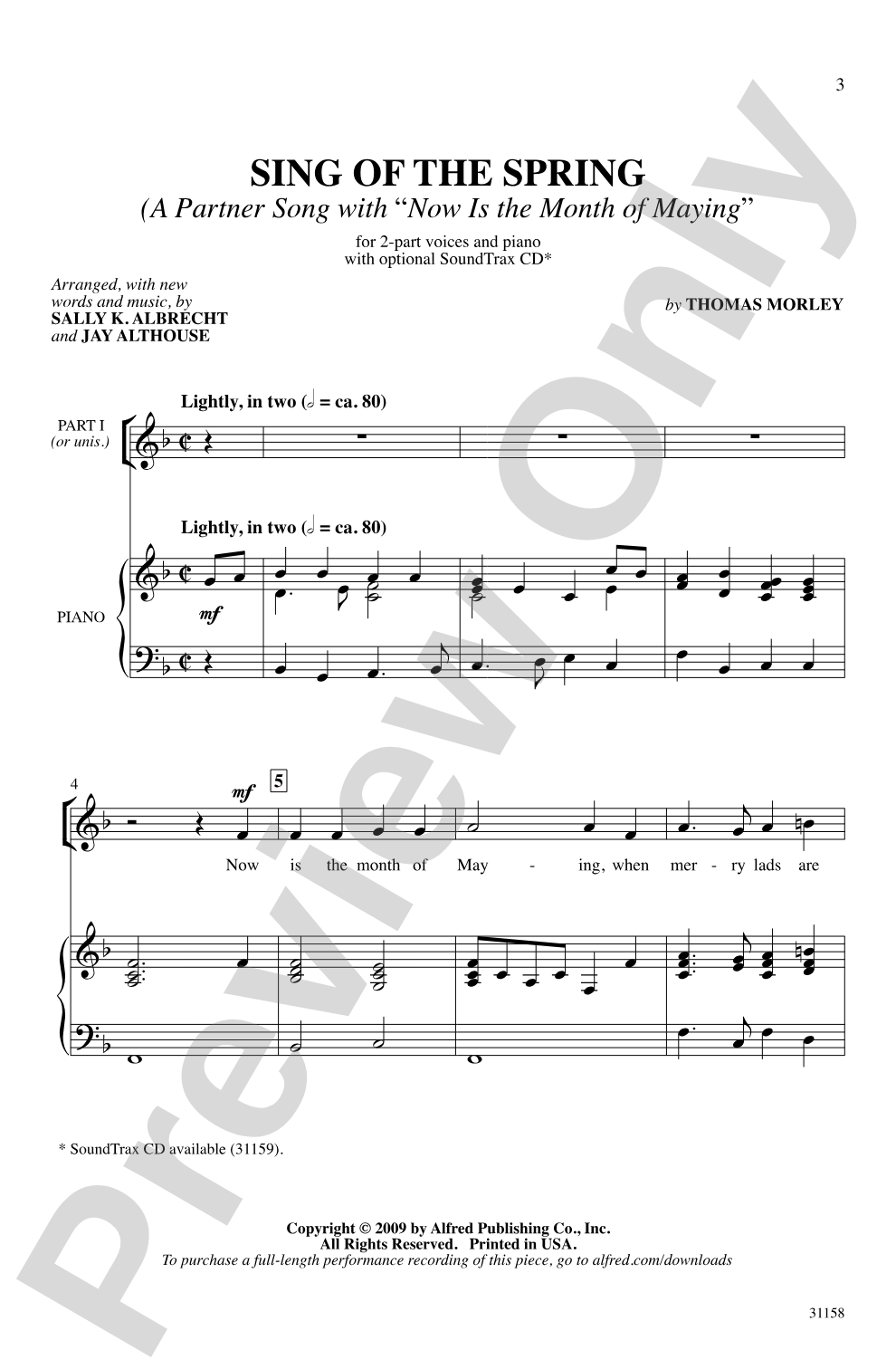

Sing of the Spring: 2-Part Choral Octavo
A Partner Song with Thomas Morley's Madrigal "Now Is the Month of Maying"
Arr. with new words and music by Sally K. Albrecht and Jay Althouse
Item: 00-PO-0000806
$2.25
Minimum order quantity: 20 copies
Pickup currently not available
Description
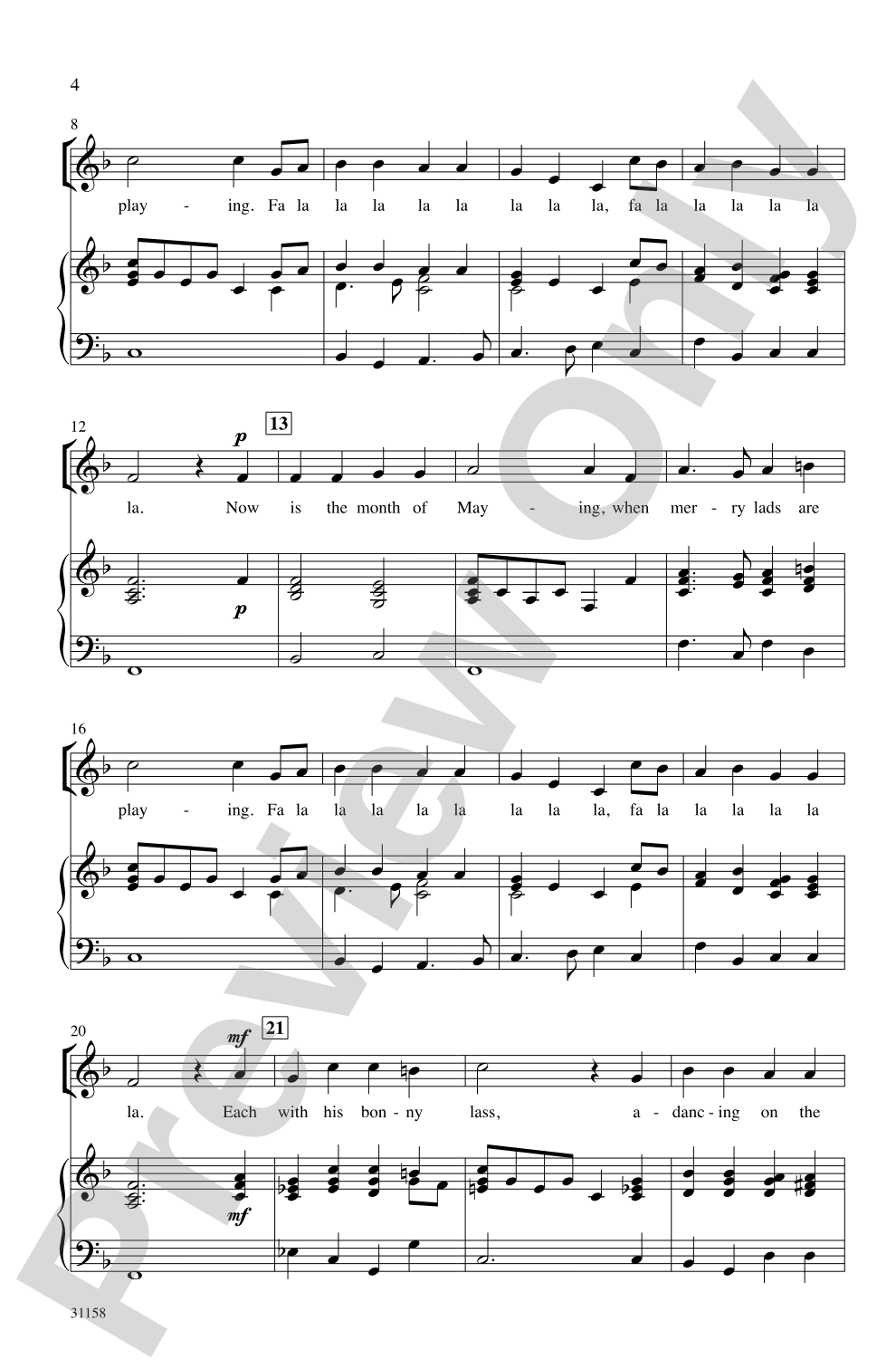
Here's the perfect introduction to both madrigals and partner song singing. A wonderful addition to any spring concert or festival. Light, fun, and great for teaching dynamic contrast.


Sing of the Spring: 2-Part Choral Octavo isn't in MakeMusic Cloud just yet...but it could be. Let us know you'd like to see it, and you'll help shape what comes next. In the meantime, start a free trial and dive into thousands of interactive titles your students can play along with today.
Request This Title
Tell us you want it.
Start Your Free Trial
Explore everything that's ready to play right now.
Sample Audio
1
Audio File
--:--
0:00
0:00
Sample Video
No sample videos found.
Additional Details
Series:
Alfred Choral Designs
Publisher:
Alfred Music
Page Count:
12
SKU:
00-PO-0000806
More about this title
About the Arranger: Sally K. Albrecht

Sally K. Albrecht has shaped choral music education through decades of publication work and active conducting. A composer and conductor with deep roots in ensemble pedagogy, she has led honor choirs at major venues including Lincoln Center, Carnegie Hall, and The Kennedy Center. Since 1987, she has received the ASCAP Special Music Award annually and maintains over 600 choral publications in print, alongside 75 larger works for stage and concert. She earned her B.A. from Rollins College in Music and Theater, then completed both an M.A. in Drama and an M.M. in Accompanying at the University of Miami.
Albrecht served as Director of School Choral, Vocal, and Elementary Publications for major educational publishers, most notably Alfred Music, a role that shaped her understanding of what students and teachers actually need in the rehearsal room. Her work is recognized across the profession: she received the Distinguished Alumna Award from both the University of Miami Frost School of Music and Rollins College in 2021 and serves on the Board of Trustees at Rollins. She lives in North Carolina with her husband, composer and arranger Jay Althouse.
Why we love this
Albrecht and Althouse have created a piece that introduces two important choral concepts at once—madrigal style and partner song texture—without overwhelming singers or directors. The explicit focus on dynamic contrast gives you built-in pedagogical scaffolding for teaching phrasing and expression in a playful context. Spring programming becomes more interesting when you have repertoire this light and engaging alongside your more substantial offerings.
What to expect
Sing of the Spring breathes with the lightness and joy of the season itself. The partner song structure creates a gentle conversation between the two parts, playful and warm, while the madrigal tradition lends it a timeless quality that feels both fresh and familiar. This is music that makes singers smile while they're learning.
Who it's for
This piece serves choirs new to partner song writing and madrigal-style part independence, making it ideal for middle school ensembles or beginning high school choirs ready to explore texture beyond unison or simple two-part homophony. Directors seeking accessible spring concert material that still teaches meaningful musicianship will find a reliable, engaging option here.
How to get the most out of it
- Balance the two melodic lines so neither dominates; this works best when both parts feel equally important and heard, which requires deliberate listening and adjustment during sectional rehearsals.
- Shape each phrase with intentional dynamic changes rather than singing at a single volume level throughout; mark your scores with specific dynamic goals for each section.
- Maintain consistent vowel shapes between parts so the blend feels unified despite the independence of each line.
- If using the recorded accompaniment, rehearse with it early and often so students become confident singers rather than followers.
How to use it
Place this early in your spring concert to set an uplifting tone, or use it as a bridge piece between more serious works to give your audience a moment of brightness. It pairs naturally with other seasonal selections and gives developing singers a confidence boost when programmed alongside pieces at or slightly above their current level.
Skills your students will build
- Reading and singing independent melodic lines in partner song texture
- Madrigal style singing with attention to Renaissance harmonic movement
- Dynamic contrast and phrase shaping in a secular context
- Blending two distinct parts while maintaining individual line integrity
- Seasonal thematic understanding in choral repertoire selection