
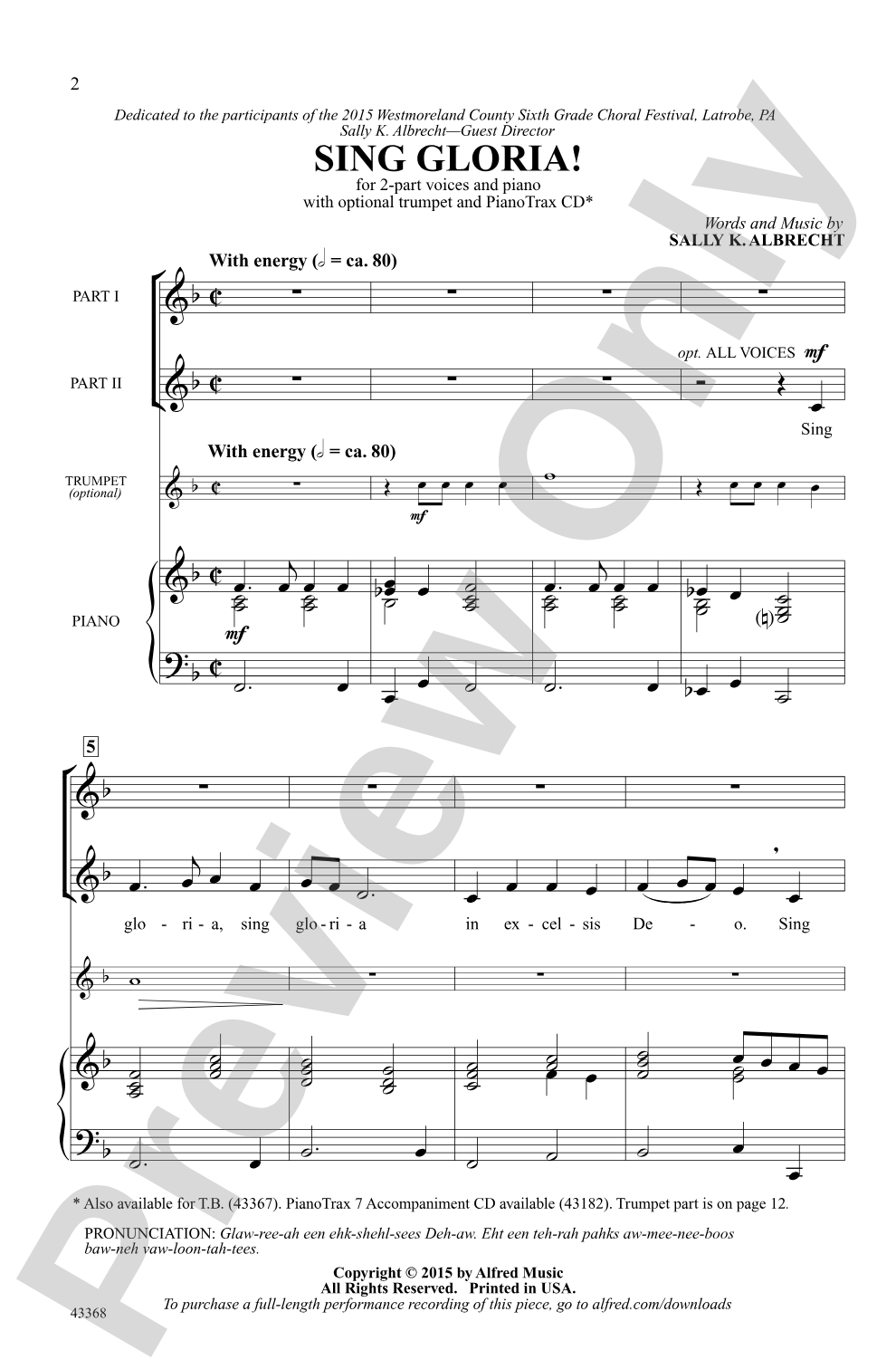

Sing Gloria!: 2-Part Choral Octavo
Words and music by Sally K. Albrecht
Item: 00-PO-0003315
$1.90
Minimum order quantity: 20 copies
Pickup currently not available
Description
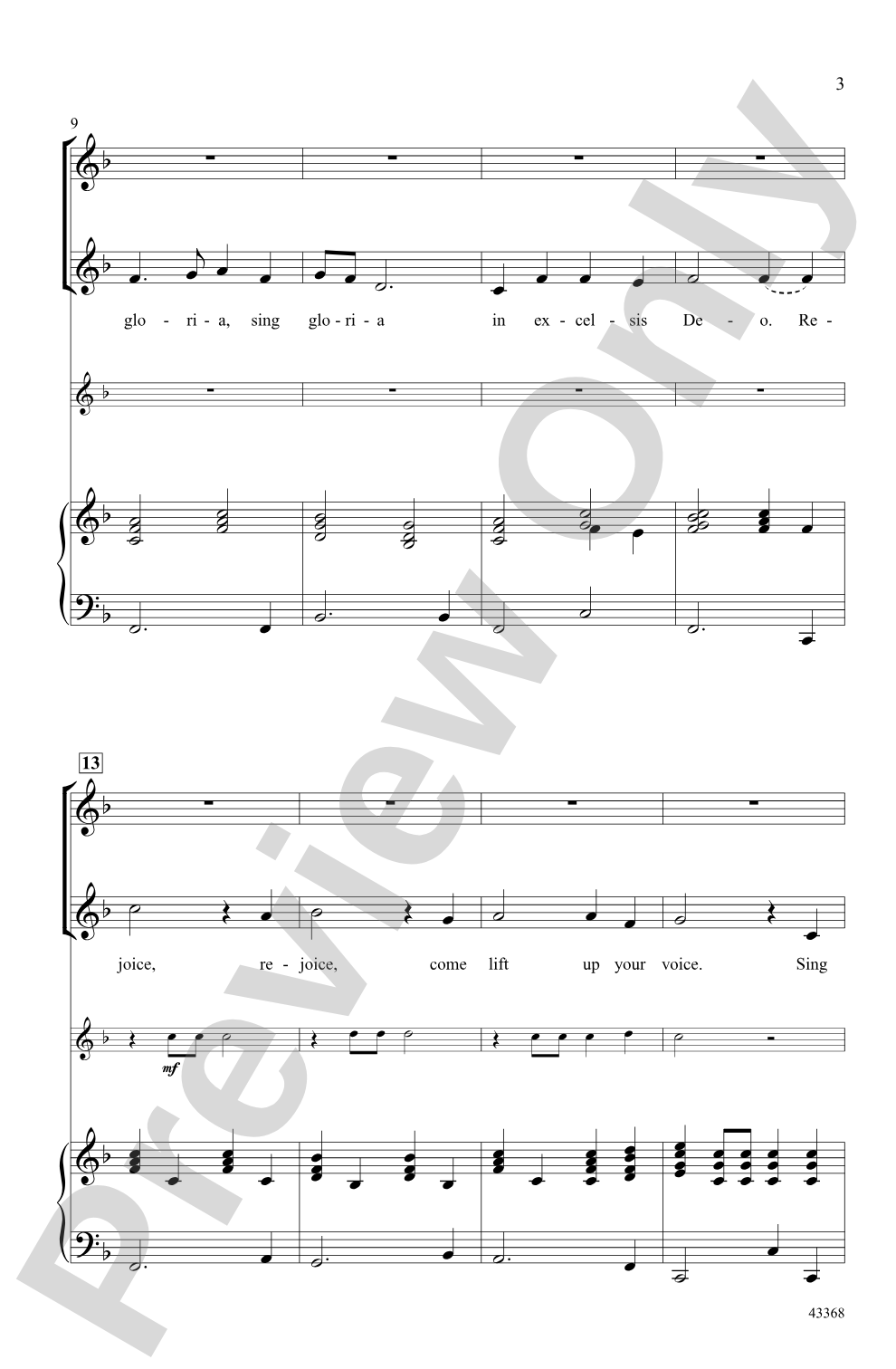
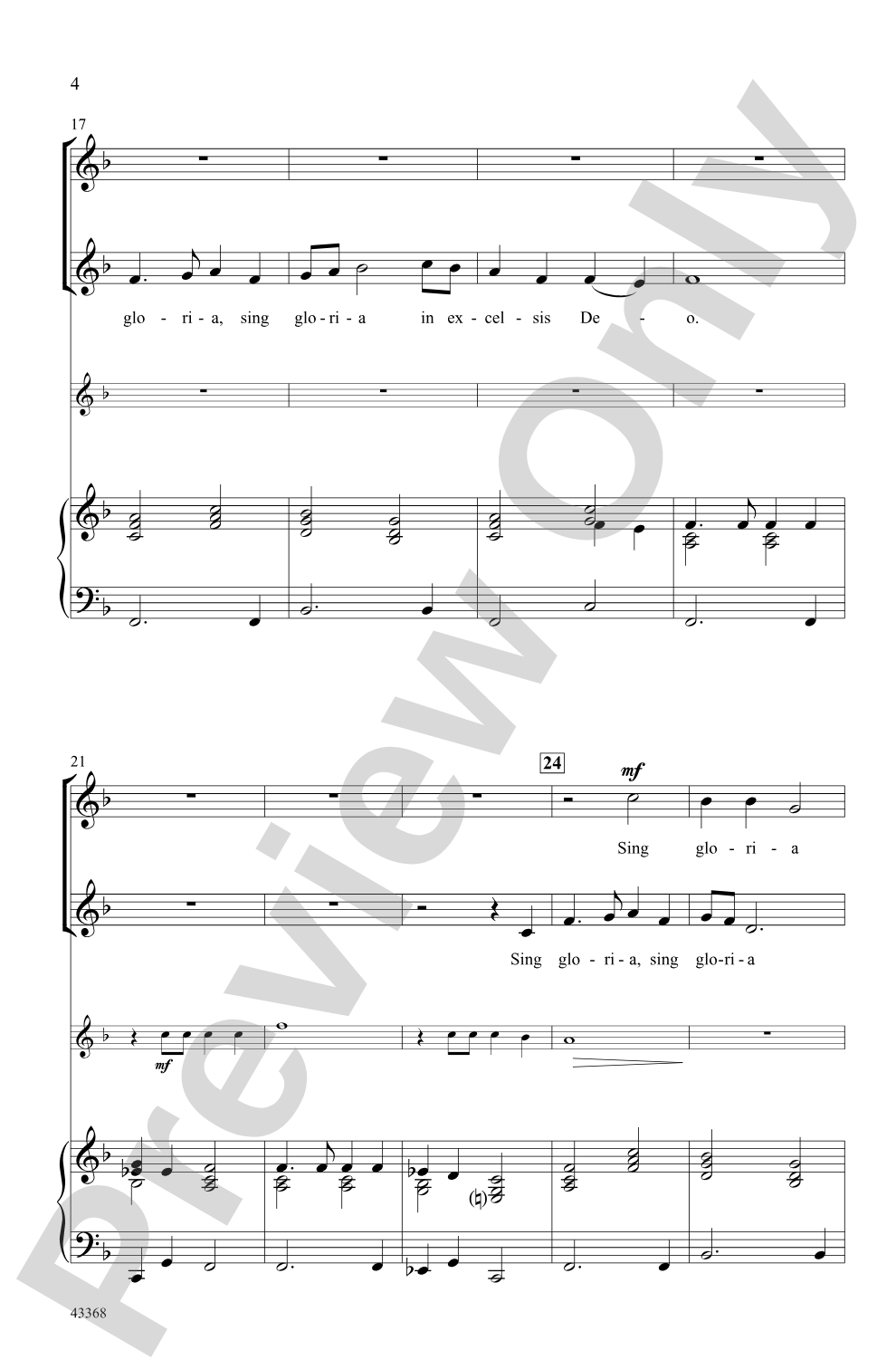
With contrapuntal counterlines and vocal parts limited to one octave each, this simple Latin text setting makes it easy for two-part treble and men's groups to impress. An optional trumpet part (included in the publication) heightens the stately feel. Staging suggestions on With a Song!


Sing Gloria!: 2-Part Choral Octavo isn't in MakeMusic Cloud just yet...but it could be. Let us know you'd like to see it, and you'll help shape what comes next. In the meantime, start a free trial and dive into thousands of interactive titles your students can play along with today.
Request This Title
Tell us you want it.
Start Your Free Trial
Explore everything that's ready to play right now.
Sample Audio
1
Audio File
--:--
0:00
0:00
Sample Video
No sample videos found.
Additional Details
Series:
Alfred Choral Designs
Publisher:
Alfred Music
Page Count:
12
SKU:
00-PO-0003315
Instrumentation:
Opt. Trumpet
More about this title
About the Composer: Sally K. Albrecht

Sally K. Albrecht has shaped American choral music for over three decades, first as Director of School Choral, Vocal, and Elementary Publications at Alfred Music, and throughout her career as a prolific composer with more than 600 published works and 75 songbooks and musicals in print. An ASCAP award recipient since 1987, she has conducted honor choirs at major venues including Lincoln Center, Carnegie Hall, and The Kennedy Center, earning recognition for her distinctive integration of movement into choral performance.
Albrecht holds degrees from Rollins College (B.A. in Music and Theater, 1976), the University of Miami (M.A. in Drama, 1977, and M.M. in Accompanying, 1979), and has taught at Oakland University, Jersey City State College, and Meredith College. A native of Cleveland, she currently resides in Wake Forest, North Carolina, with her husband, composer and arranger Jay Althouse. In 2021, she received the Distinguished Alumna Award from both the University of Miami Frost School of Music and Rollins College.
Why we love this
Albrecht's gift for writing within strict vocal limits without sacrificing musicality shines here. The contrapuntal lines give singers genuine harmonic satisfaction while staying in their comfortable range, and the optional trumpet part transforms a simple setting into something ceremonial and polished. This is exactly the kind of accessible piece that builds confidence in developing choirs while sounding genuinely impressive.
What to expect
Dignified and flowing, with a Latin text that gives the piece liturgical weight despite its secular classification. The contrapuntal writing creates layers of sound that feel richer than the simple voicing might suggest, while the optional trumpet adds brightness and formal grandeur without demanding advanced instrumental players.
Who it's for
Two-part treble and men's choirs looking for literature that balances accessibility with musical substance. This works especially well for mixed-age community choirs, school choirs transitioning into two-part singing, or groups preparing for a spring concert that needs a confident closer.
How to get the most out of it
- Balance the two choral lines carefully during runs where they move together. The parts should feel conversational, not hierarchical.
- If including the trumpet, use it sparingly in rehearsal at first so singers lock the Latin text securely before adding the instrumental layer.
- Reference the staging suggestions provided on the With a Song! resource to add purposeful movement that reinforces the stately character rather than feels tacked on.
How to use it
Position this near the end of a concert where you want to leave the audience with something polished and memorable. It pairs well with other accessible sacred or ceremonial texts, or use it as the centerpiece of a program exploring different cultural or linguistic traditions in choral repertoire.
Skills your students will build
- Reading and sustaining Latin text pronunciation
- Singing independent contrapuntal lines while maintaining blend
- Balancing two-part harmony across the full vocal range without strain
- Responding to optional instrumental accompaniment without losing vocal independence