

Sing and Rejoice!: SAB Choral Octavo
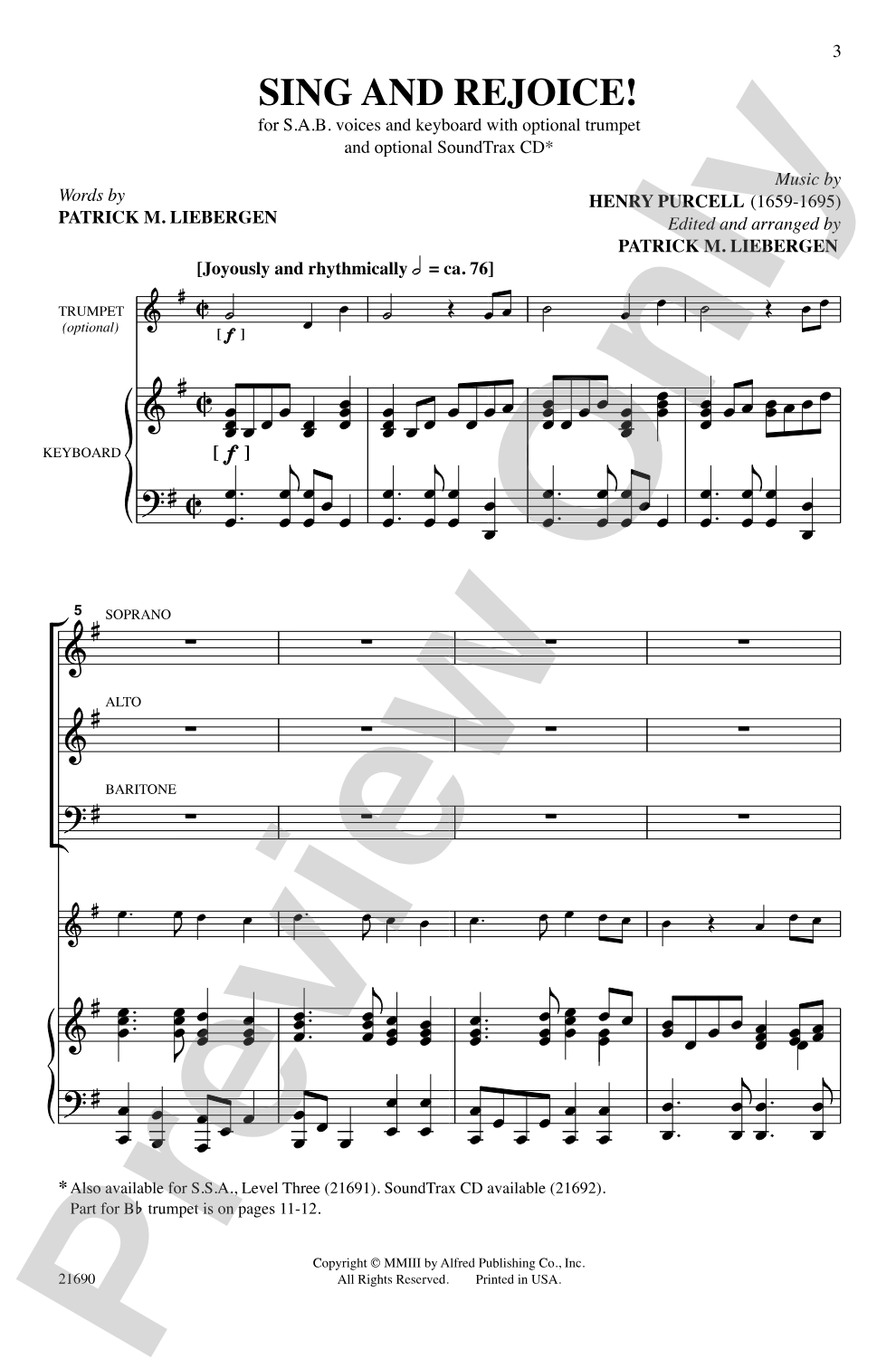
Music by Henry Purcell / arr. Patrick M. Liebergen
Item: 00-PO-0006523
$2.05
Minimum order quantity: 20 copies
Pickup currently not available
Description
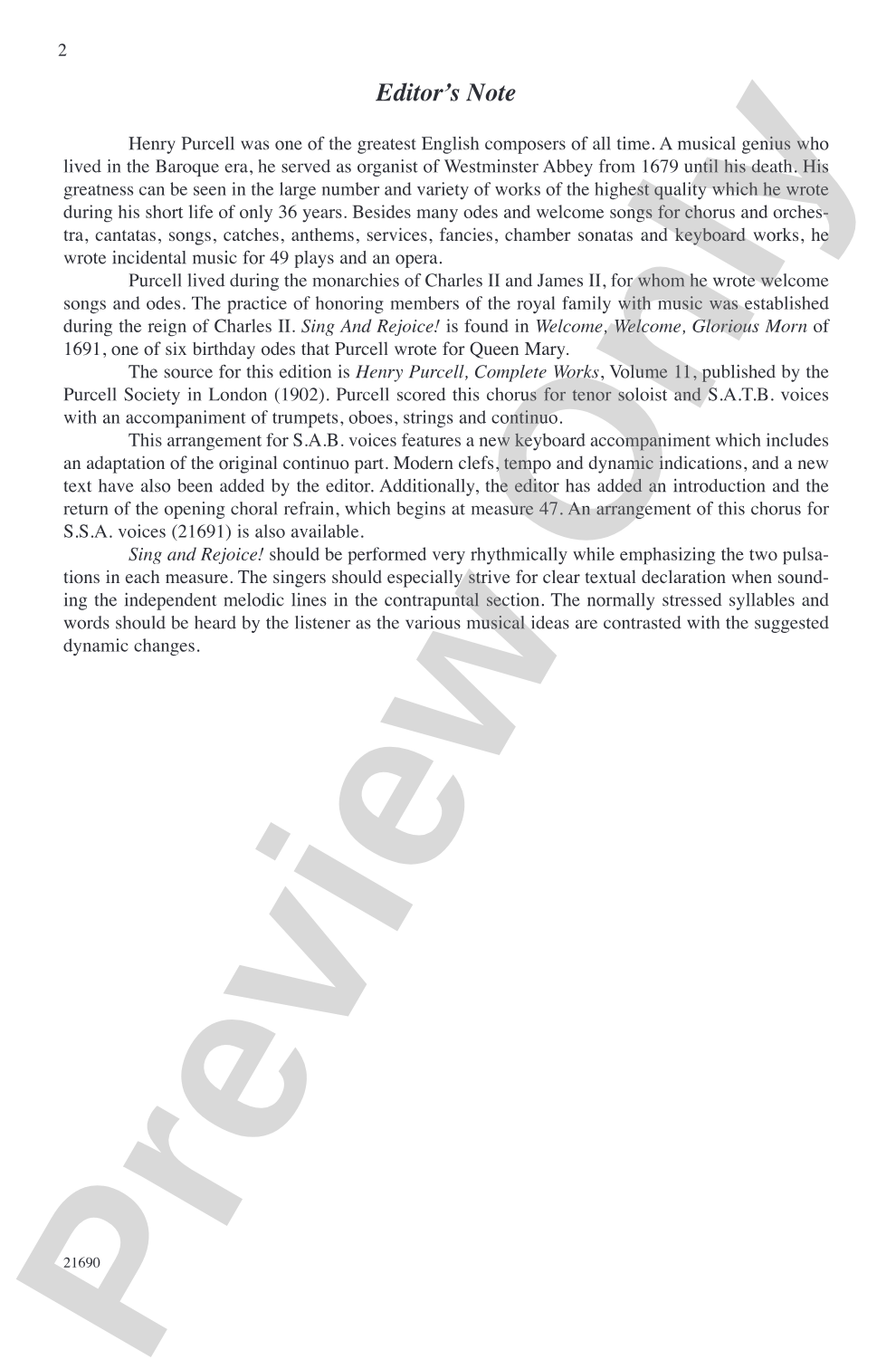
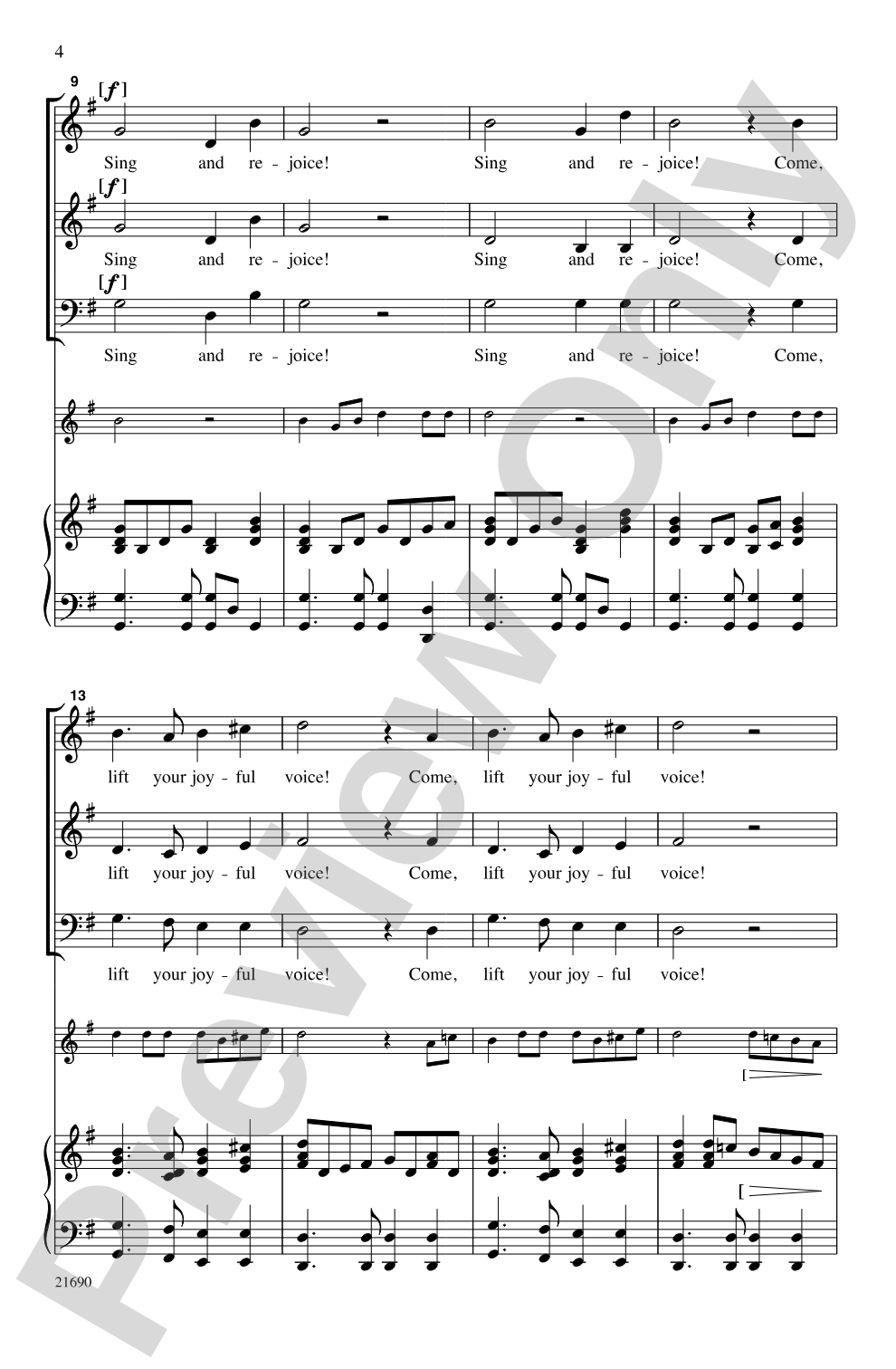
Look no further for a masterwork from the Classical period that your SAB or SSA choir can learn in a hurry. Patrick Liebergen has taken this joyous Henry Purcell work and skillfully adapted it for developing choirs with an original English text, three full sounding vocal parts, and an optional trumpet part. With well-crafted vocal parts in modest ranges and logical chordal and contrapuntal lines, your singers will master this in no time. Each of the ABA sections is followed by a dynamically contrasted echo of the same material.


Sing and Rejoice!: SAB Choral Octavo isn't in MakeMusic Cloud just yet...but it could be. Let us know you'd like to see it, and you'll help shape what comes next. In the meantime, start a free trial and dive into thousands of interactive titles your students can play along with today.
Request This Title
Tell us you want it.
Start Your Free Trial
Explore everything that's ready to play right now.
Sample Audio
1
Audio File
--:--
0:00
0:00
Sample Video
No sample videos found.
Additional Details
Series:
Alfred Choral Designs
Publisher:
Alfred Music
Page Count:
12
SKU:
00-PO-0006523
More about this title
About the Composer: Henry Purcell
Henry Purcell (1659-1695) shaped the sound of English Baroque music during the Restoration period, establishing himself as the nation's most accomplished composer of his time. His gift for vocal writing—whether in opera, church music, or secular songs—lies in his ability to marry expressive text-painting with singable, natural melody lines. This octavo draws from Purcell's secular vocal repertoire, where his wit and harmonic sophistication shine through in works built for singers and audiences to enjoy immediately.
Why we love this
Liebergen's adaptation preserves Purcell's melodic gift and structural clarity while removing the technical hurdles that make original Baroque vocal writing challenging for developing choirs. The echo sections create genuine musical architecture without requiring extensive rehearsal time, and the optional trumpet part offers flexibility for programs where you have brass players available or need to keep the texture purely choral.
What to expect
Buoyant and ceremonial, with the brightness of Baroque English style softened by Liebergen's accessible adaptation. The piece moves with natural momentum through its sections, carrying singers and listeners through moments of full texture and deliberate, charming silence.
Who it's for
Choirs at the developing to early-intermediate level who want substantial repertoire that sits in comfortable ranges and doesnt demand advanced sight-reading or vocal technique. Directors working with SAB or SSA ensembles will find this especially useful for programs that include a mix of singers with varying experience.
How to get the most out of it
- Shape the vocal lines with the natural speech rhythm of the English text; Purcell wrote for singers who understood text declamation, and respecting those syllabic patterns will bring clarity and character.
- Balance the three parts so that melodic content registers clearly without letting any voice part drift into accompaniment mode; contrapuntal writing means every part matters.
- Use the echo sections as opportunities for genuine dynamic contrast rather than simply repeating at a softer level; vary articulation or vowel color slightly to make each echo feel like a deliberate musical gesture.
- If performing with the optional trumpet, have the brass part double or support key melodic moments in rehearsal to help singers find secure pitch, then balance it so it enhances rather than overwhelms the voices.
How to use it
This works well as a concert opener or closer where you need energy and clarity without technical pyrotechnics. Pair it with other sacred or secular Baroque arrangements, or program it alongside Renaissance works to show stylistic continuity in English vocal music.
Skills your students will build
- Reading SAB voicing with independent contrapuntal lines
- Text-painting and expressive phrasing in Baroque style
- Balancing three vocal parts in sections marked by dynamic contrast
- Singing with clear diction in original English text
- Responding to structural repetition and echo as compositional devices