

Sing and Rejoice!: SSA Choral Octavo
Music by Henry Purcell / arr. Patrick M. Liebergen
Item: 00-PO-0004284
$2.25
Minimum order quantity: 20 copies
Pickup currently not available
Description
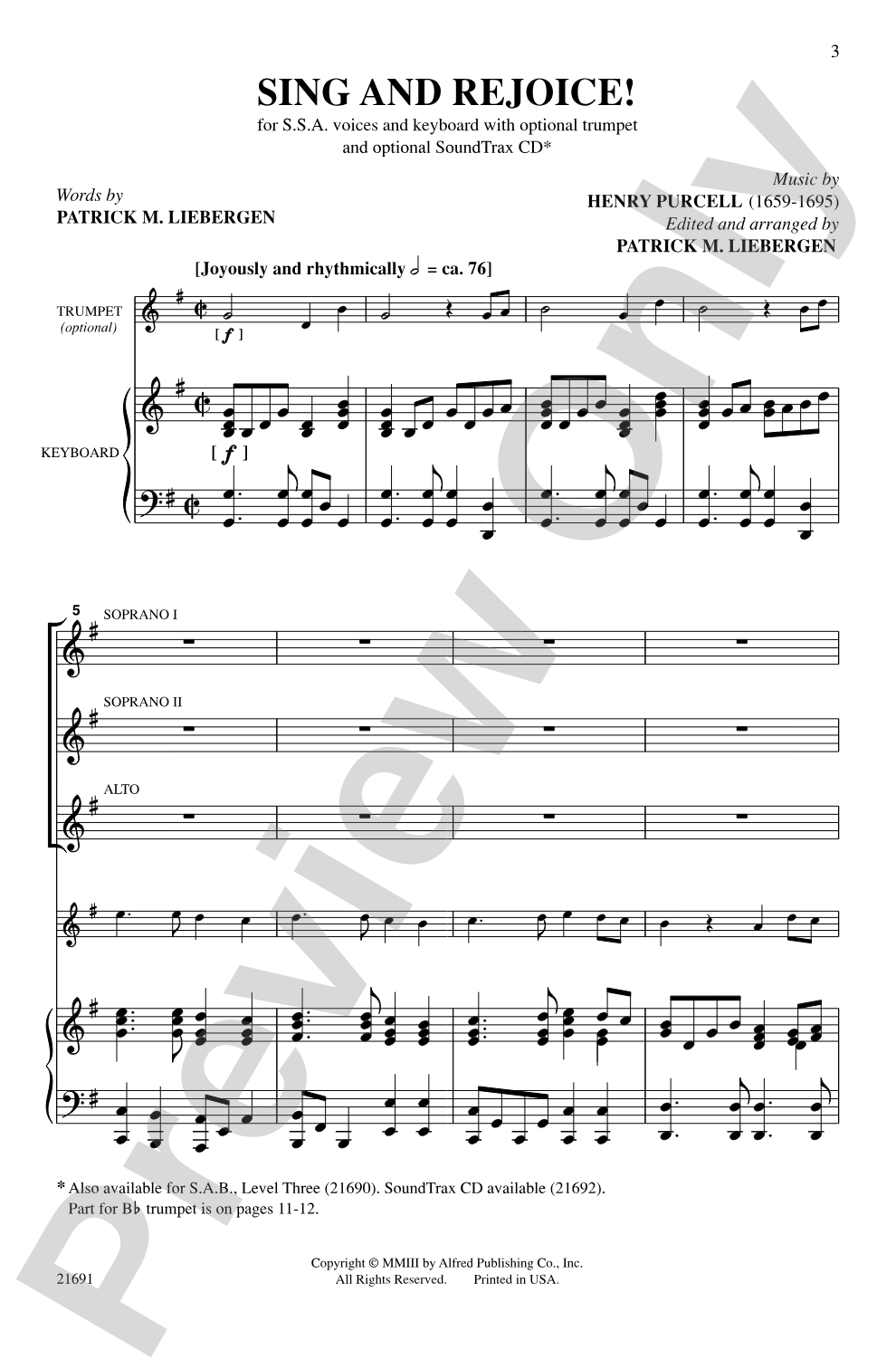
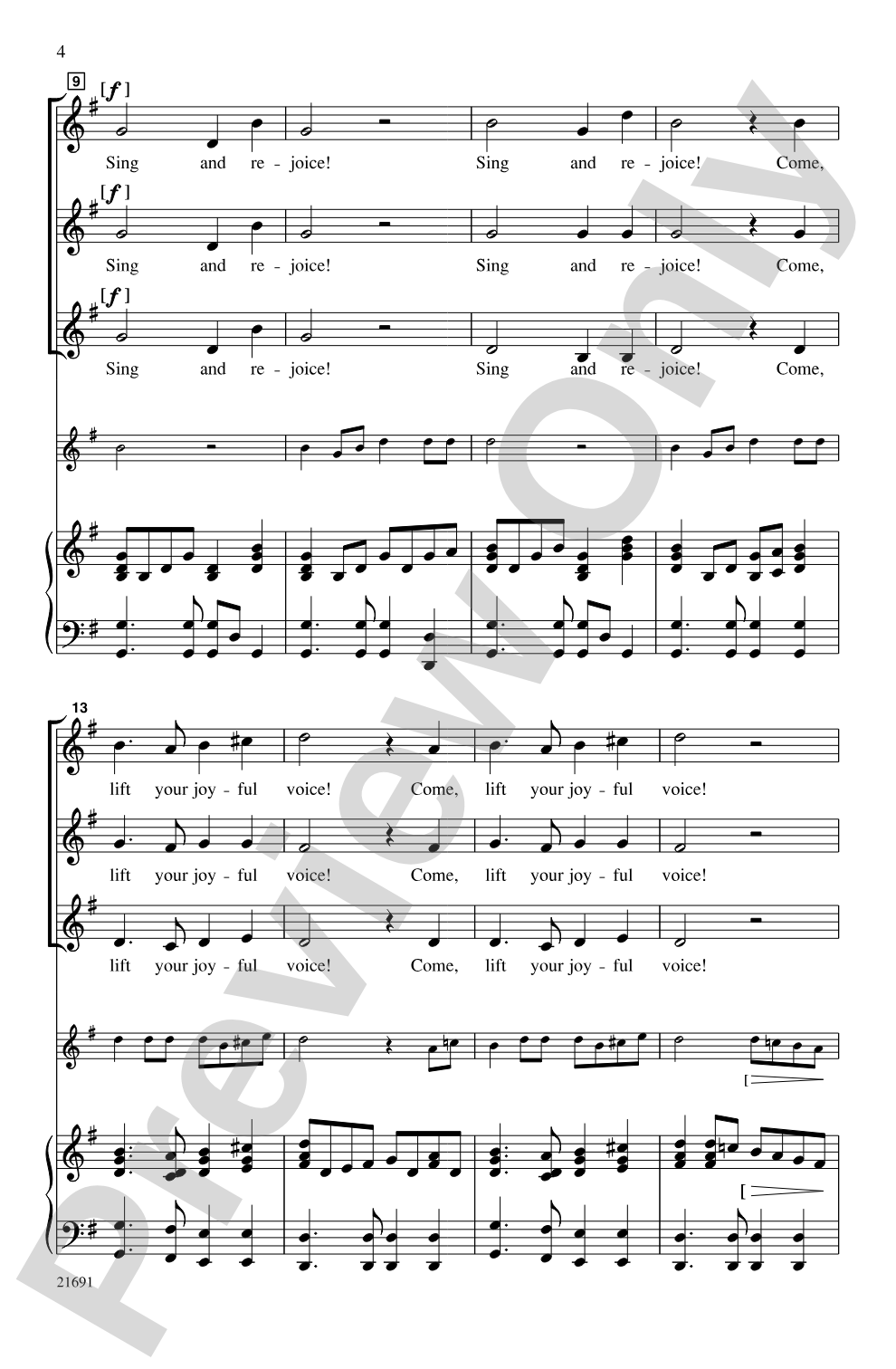
Look no further for a masterwork from the Classical period that your SAB or SSA choir can learn in a hurry. Patrick Liebergen has taken this joyous Henry Purcell work and skillfully adapted it for developing choirs with an original English text, three full sounding vocal parts, and an optional trumpet part. With well-crafted vocal parts in modest ranges and logical chordal and contrapuntal lines, your singers will master this in no time. Each of the ABA sections is followed by a dynamically contrasted echo of the same material.


Sing and Rejoice!: SSA Choral Octavo isn't in MakeMusic Cloud just yet...but it could be. Let us know you'd like to see it, and you'll help shape what comes next. In the meantime, start a free trial and dive into thousands of interactive titles your students can play along with today.
Request This Title
Tell us you want it.
Start Your Free Trial
Explore everything that's ready to play right now.
Sample Audio
1
Audio File
--:--
0:00
0:00
Sample Video
No sample videos found.
Additional Details
Series:
Alfred Archive Edition: Alfred Choral Designs
Publisher:
Alfred Music
Page Count:
12
SKU:
00-PO-0004284
More about this title
About the Composer: Henry Purcell
Henry Purcell (1659-1695) stands as England's greatest Baroque composer and a towering figure in music history. His output spans sacred vocal music, dramatic works, instrumental pieces, and secular songs that combine Italian melodic elegance with English textural sophistication. Purcell's gift for expressive harmony and memorable melody made him a favorite at the court of King Charles II, and his influence on later English composers proved enduring.
For choral musicians, Purcell's vocal writing remains instantly gratifying. His melodies sit comfortably for singers, his harmonic language feels both sophisticated and accessible, and his structural clarity makes learning straightforward. This octavo brings one of his joyful secular works within reach of developing choirs, preserving the character that made Purcell's music beloved across centuries.
Why we love this
Purcell's original material shines through Liebergen's thoughtful adaptation, giving your singers an encounter with genuine Baroque writing rather than a simplified imitation. The echo sections create natural dynamic interest and allow you to shape the piece without heavy interpretation, and the optional trumpet part offers flexibility for programs where you have brass available.
What to expect
Buoyant and celebratory, with the kind of melodic charm that makes singers smile as they sing. The piece sparkles with Baroque grace notes and bright harmony, and the echo sections add playfulness without resorting to gimmicks. There is genuine joy in the material, not manufactured exuberance.
Who it's for
Developing SSA choirs looking for Baroque repertoire that doesn't require years of training. Singers will encounter authentic harmonic language and period style without the extreme ranges or dense part-writing that slow down learning. Programs serving middle school through early high school singers benefit especially from the modest vocal ranges and logical voice leading.
How to get the most out of it
- Shape each ABA section with a clear tonal center and forward motion through the A sections, then allow the echo to settle with slightly softer dynamics and more deliberate phrasing.
- Balance the three voices so that the melody remains prominent without burying the harmonic support beneath it; in the echo sections, pull back the overall volume rather than changing voice balance.
- If using the optional trumpet part, keep it slightly forward in the mix to define the top line, but avoid letting it overshadow the sopranos during their held notes.
How to use it
Program this as a welcome opener for a spring or holiday concert where you want to start with energy and showcase your singers' ability to handle period style. It pairs well with other Baroque sacred or secular works on a mixed-era concert, or serves as a strong closer if you want to send the audience out smiling.
Skills your students will build
- Reading baroque harmonic language and voice leading patterns
- Balancing three-part SSA texture while maintaining melodic clarity
- Shaping contrasting sections (A and echo) with dynamic control
- Singing with articulation and stylistic lightness appropriate to the period