
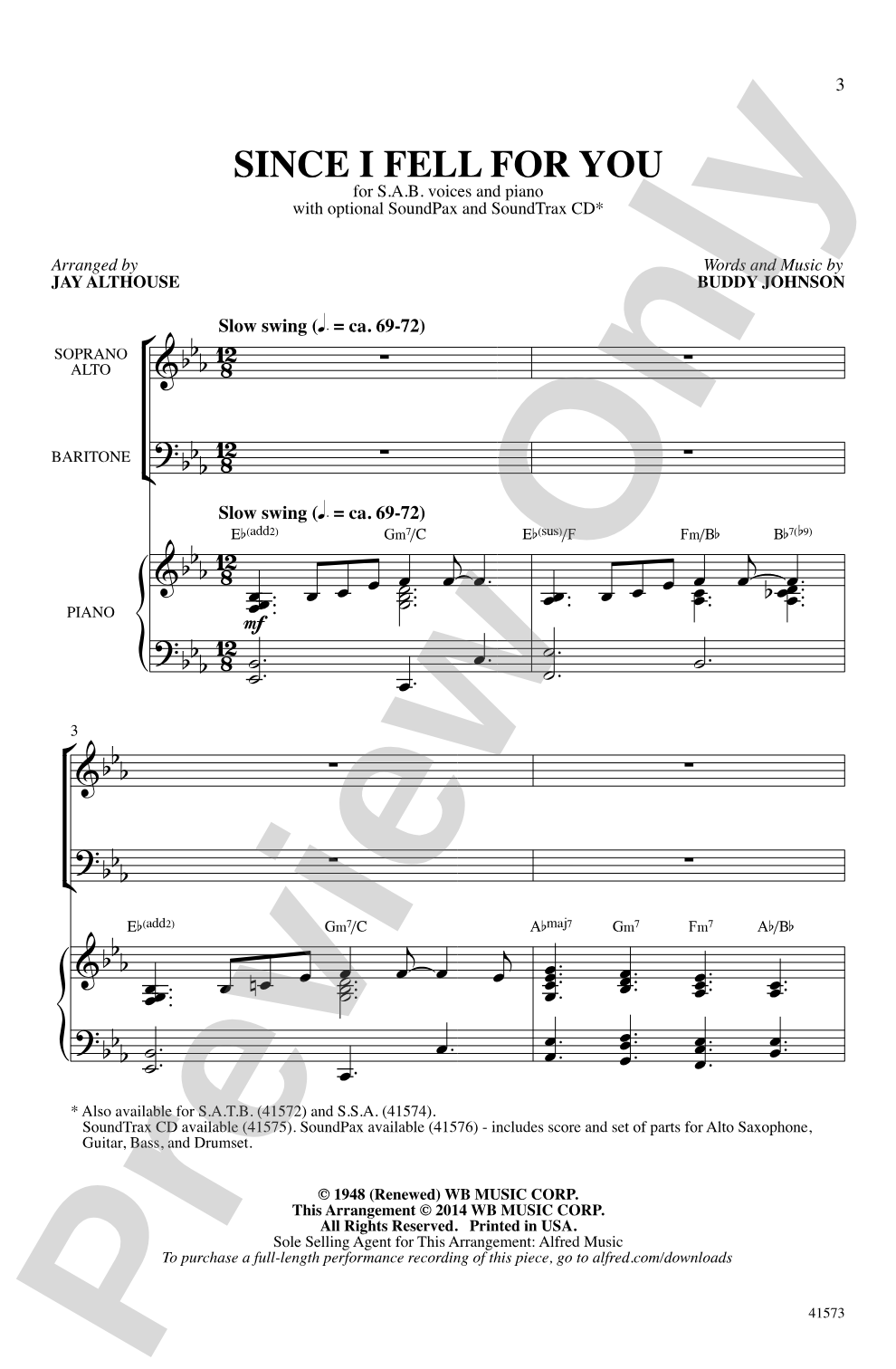
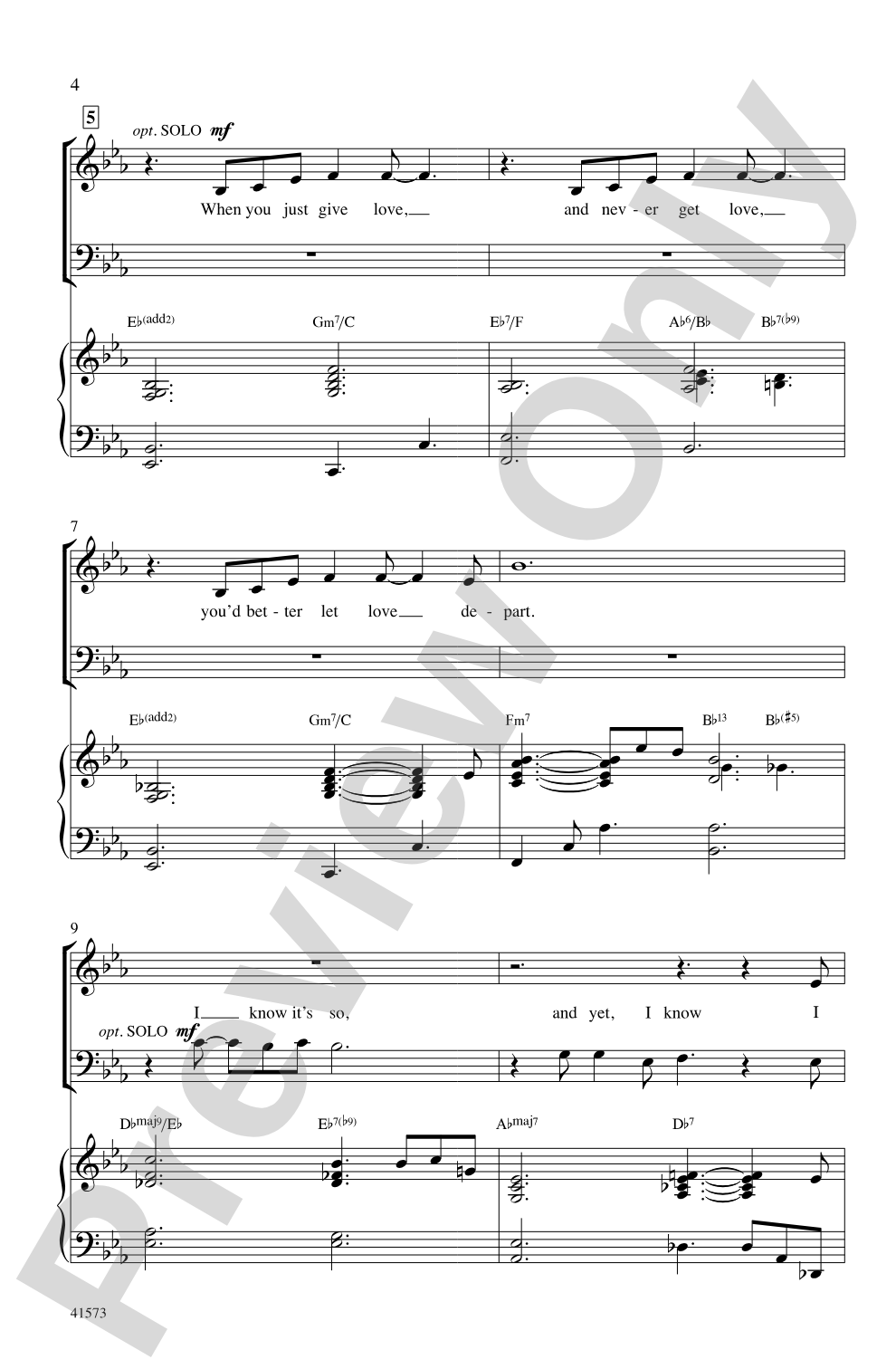

Since I Fell For You: SAB Choral Octavo
Words and music by Buddy Johnson / arr. Jay Althouse
Item: 00-PO-0001925
$1.95
Minimum order quantity: 20 copies
One moment…
Related Items
Since I Fell for You: SoundTrax Digital Audio Download |
$27.99
|
View | |
Since I Fell For You: SATB Choral Octavo |
$2.10
|
View | |
Since I Fell For You: SSA Choral Octavo |
$1.95
|
View | |
Since I Fell for You: SATB Choral Octavo |
$2.10
|
View | |
Since I Fell for You: SAB Choral Octavo |
$1.95
|
View | |
Since I Fell for You: SSA Choral Octavo |
$1.95
|
View | |
Since I Fell for You: Choral Octavo SoundTrax CD |
$27.99
|
View |
Description
This beautiful blues ballad appeared on the Billboard Hot 100 chart in 1963, a bit surprising since it was written in 1945! Tight choral harmony and a subtle accompaniment make this sad tale come alive. "You took my love and now you're gone."


Since I Fell For You: SAB Choral Octavo isn't in MakeMusic Cloud just yet...but it could be. Let us know you'd like to see it, and you'll help shape what comes next. In the meantime, start a free trial and dive into thousands of interactive titles your students can play along with today.
Request This Title
Tell us you want it.
Start Your Free Trial
Explore everything that's ready to play right now.
Sample Audio
1
Audio File
--:--
0:00
0:00
Sample Video
No sample videos found.
Additional Details
Series:
Alfred Pop Choral Series
Publisher:
Alfred Music
Page Count:
12
SKU:
00-PO-0001925
More about this title
About the Composer: Buddy Johnson
Buddy Johnson (1915-1977) was a pianist, singer, and bandleader who became a key figure in jump blues and R&B during the 1940s and 1950s. His tight orchestral arrangements and witty, emotionally direct songwriting made him a prolific hitmaker; "Since I Fell For You" stands as one of his most enduring compositions, recorded by countless artists across genres and generations.
Johnson's influence on American popular music runs deeper than chart positions alone. He bridged swing, blues, and early rock and roll at a moment when those boundaries were still fluid, and his understanding of ensemble voicing and rhythmic precision shaped how many musicians approached contemporary music in the decades that followed.
Why we love this
Jay Althouse's arrangement respects the song's melancholic core while opening it up for three-part voices without sacrificing harmonic sophistication. The recorded accompaniment captures the blues sensibility perfectly, giving your singers a genuine groove to sing against rather than a generic pop track.
What to expect
The song settles into your singers' voices like a late-night confession. There's a tender sadness in the blues harmony, a recognition of loss that feels both personal and universal. The arrangement gives enough air around the melody that every word lands clearly, and the subtle groove underneath keeps the piece grounded in genuine feeling rather than sentimentality.
Who it's for
This arrangement works well for middle school through adult choirs seeking authentic pop repertoire with genuine harmonic substance. If your ensemble has solid music-reading skills and comfort with jazz idioms, this piece will reward careful preparation with a performance that sounds both accessible and artfully crafted.
How to get the most out of it
- Let the rhythm section in the accompaniment guide your tempo; resist the urge to rush through the verse. The song lives in restraint and space.
- Balance the parts so the melody emerges clearly, but keep the supporting voices warm and present. This isn't about soloists and background; it's about ensemble cohesion in a blues context.
- Shape the phrase "You took my love and now you're gone" with the emotional weight it deserves. This lyric is the heart of the arrangement, not just a hook.
- Work the alto and baritone lines independently during rehearsal so singers understand how the harmony complements, not doubles, the melody.
How to use it
Program this on a concert exploring the intersection of jazz and pop standards, perhaps pairing it with other blues-inflected pieces or mid-century pop ballads. It also works as a striking centerpiece in a set focused on storytelling and emotional depth, providing contrast to more upbeat selections without leaving the pop idiom.
Skills your students will build
- Singing blues inflection and swing rhythm
- Maintaining harmonic independence in three-part writing
- Connecting emotion and lyrical meaning to vocal phrasing
- Interpreting written dynamics and tempo markings in a jazz context
- Blending with a recorded accompaniment while maintaining ensemble precision