
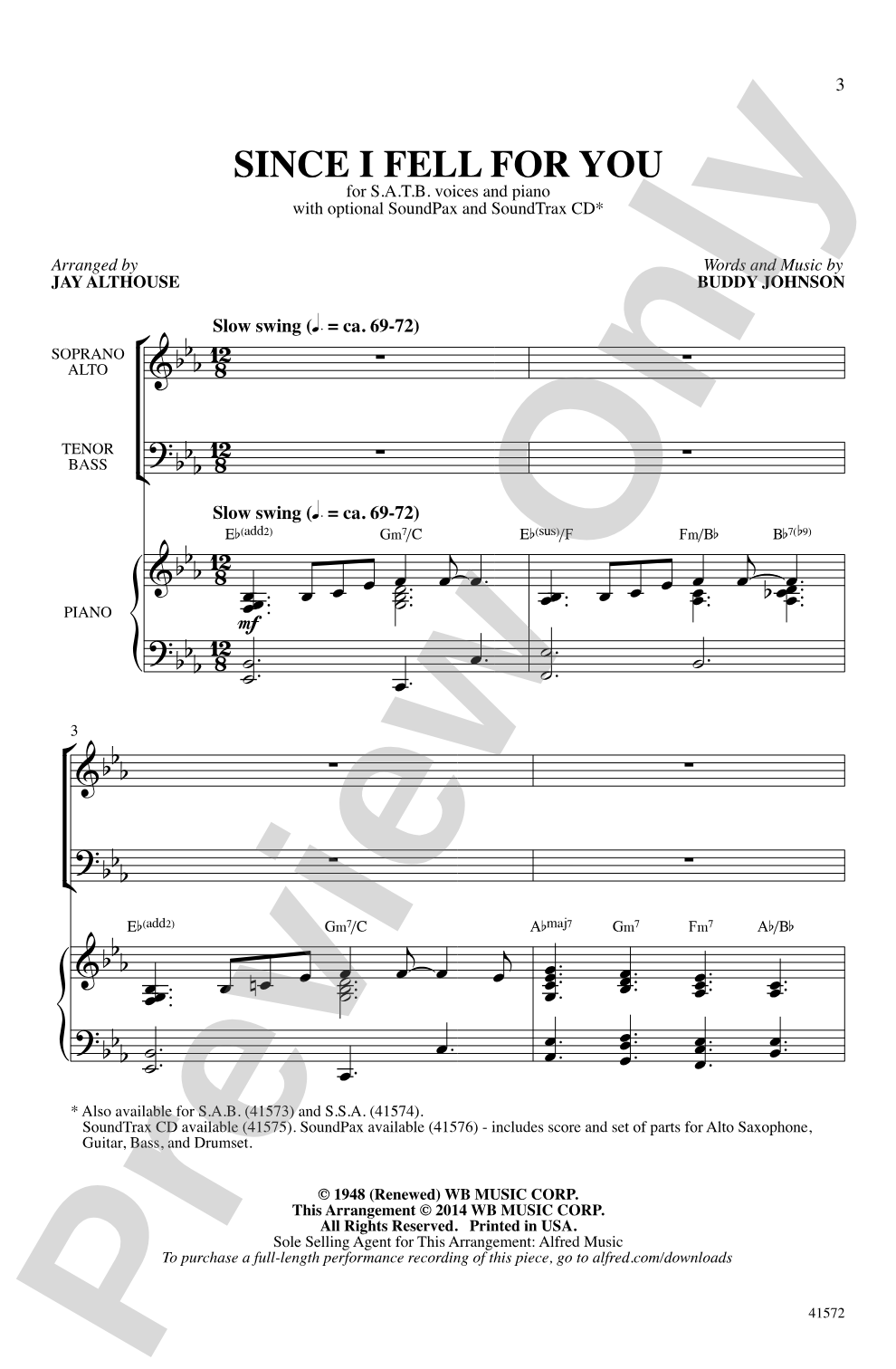
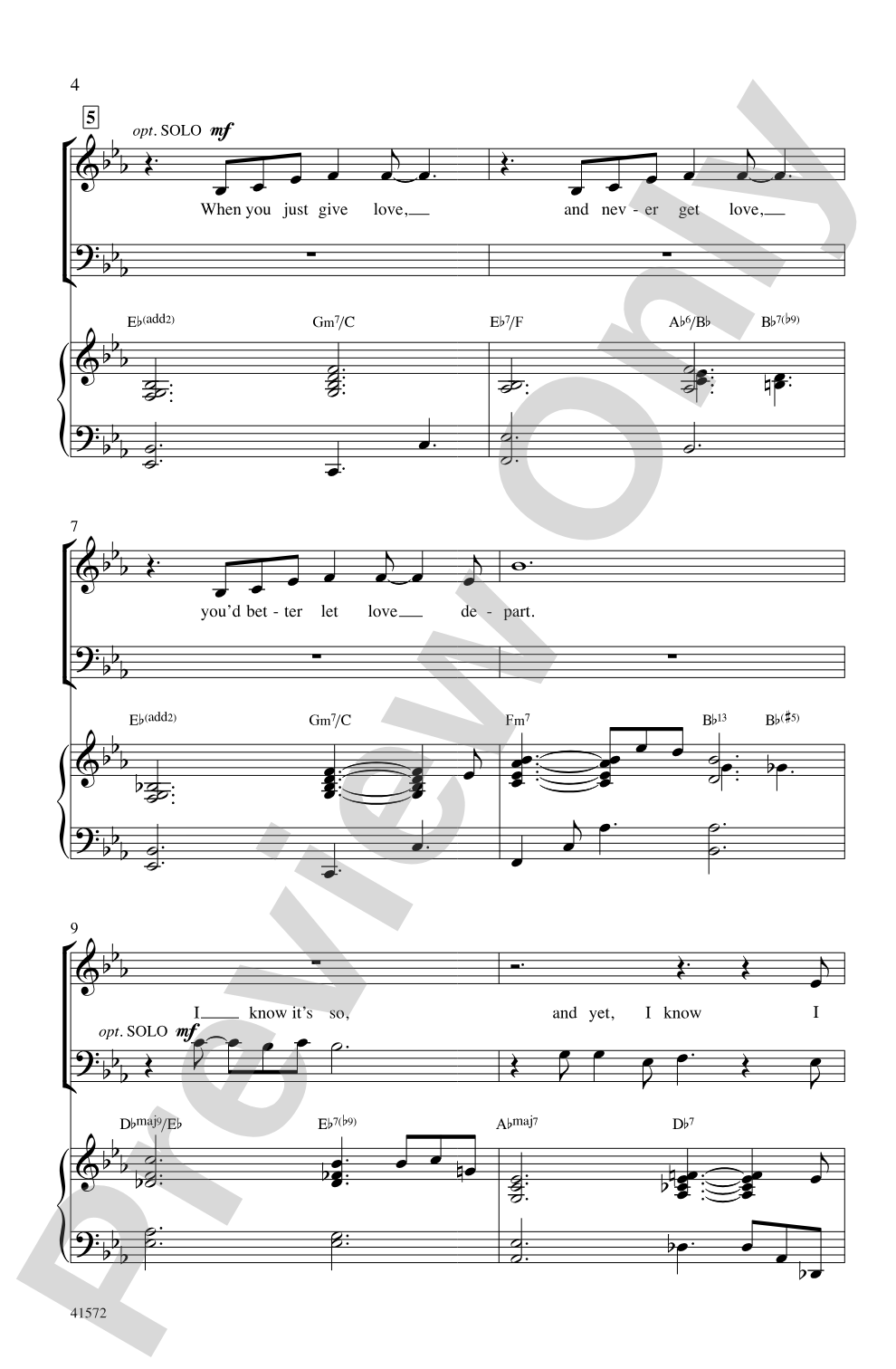

Since I Fell For You: SATB Choral Octavo
Words and music by Buddy Johnson / arr. Jay Althouse
Item: 00-PO-0001924
$2.10
Minimum order quantity: 20 copies
One moment…
Related Items
Since I Fell for You: SoundTrax Digital Audio Download |
$27.99
|
View | |
Since I Fell For You: SAB Choral Octavo |
$1.95
|
View | |
Since I Fell For You: SSA Choral Octavo |
$1.95
|
View | |
Since I Fell for You: SATB Choral Octavo |
$2.10
|
View | |
Since I Fell for You: SAB Choral Octavo |
$1.95
|
View | |
Since I Fell for You: SSA Choral Octavo |
$1.95
|
View | |
Since I Fell for You: Choral Octavo SoundTrax CD |
$27.99
|
View |
Description
This beautiful blues ballad appeared on the Billboard Hot 100 chart in 1963, a bit surprising since it was written in 1945! Tight choral harmony and a subtle accompaniment make this sad tale come alive. "You took my love and now you're gone."


Since I Fell For You: SATB Choral Octavo isn't in MakeMusic Cloud just yet...but it could be. Let us know you'd like to see it, and you'll help shape what comes next. In the meantime, start a free trial and dive into thousands of interactive titles your students can play along with today.
Request This Title
Tell us you want it.
Start Your Free Trial
Explore everything that's ready to play right now.
Sample Audio
1
Audio File
--:--
0:00
0:00
Sample Video
No sample videos found.
Additional Details
Series:
Alfred Pop Choral Series
Publisher:
Alfred Music
Page Count:
12
SKU:
00-PO-0001924
More about this title
About the Composer: Buddy Johnson
Buddy Johnson (1915-1977) was a pianist, bandleader, and composer who bridged jump blues, R&B, and early rock and roll. His prolific songwriting career produced standards that have endured across genres and generations, with "Since I Fell For You" standing as one of his most recorded compositions.
Johnson's gift lay in crafting memorable melodies with emotional directness, paired with harmonies that swing naturally. His work helped shape the sound of 1940s and 1950s popular music and remains a reliable choice for choral ensembles seeking material with both accessibility and genuine jazz pedigree.
Why we love this
Jay Althouse's arrangement captures the ballad's melancholic swing without overcomplicating the SATB voicing, making it genuinely singable while preserving the blues sensibility. The piece bridges jazz and choral worlds naturally, giving singers a taste of authentic American popular music from a composer who lived and breathed that tradition. It's the kind of standard that works equally well in a concert focused on American songwriting or as a featured moment in a mixed pops show.
What to expect
A quiet heartbreak sung in close harmony. The piece has the introspective quality of a late-night ballad, with chords that settle and hover like smoke, while the text carries a weight of resignation and loss. Singers feel the pull of the blues progression beneath them, even as they're asked to sustain long, lyrical phrases.
Who it's for
This arrangement works for intermediate and advanced high school choirs, college choral ensembles, and adult community choirs seeking material with popular appeal and musical substance. Directors programming jazz standards, American songbook repertoire, or concert themes centered on blues and R&B will find a polished, stylistically authentic option that audiences connect with immediately.
How to get the most out of it
- Lean into the lyrical quality of the melody line. This blues ballad works best when soloists and sections sing with natural phrasing rather than metronomic precision, allowing the text to shape the rhythm.
- Balance the inner voices carefully so the chordal foundation remains transparent. The accompaniment is described as subtle, which means your harmony parts should support without overwhelming the top line.
- Use the recorded accompaniment as a reference for tempo and style, but consider a live pianist if possible. Hearing the harmonic movement from a real instrument helps singers understand the blues changes they're singing through.
- Bring out the narrative in the lyrics. "You took my love and now you're gone" carries genuine sadness, so encourage singers to connect emotionally to the text rather than treating it as a pure vocal exercise.
How to use it
Program this as a standalone moment in a concert of American standards or as a thoughtful bridge between uptempo pop selections and more classical choral work. It also anchors a thematic set on blues and jazz repertoire, or serves as a softer counterpoint in a secular pop choral concert.
Skills your students will build
- Singing jazz-influenced harmony and blue notes with expressive control
- Shaping legit musical phrases while maintaining the conversational rhythms of blues-based melody
- Balancing four-part SATB texture so inner voices support without obscuring the top line
- Connecting text and emotion to musical choices in a popular music context