
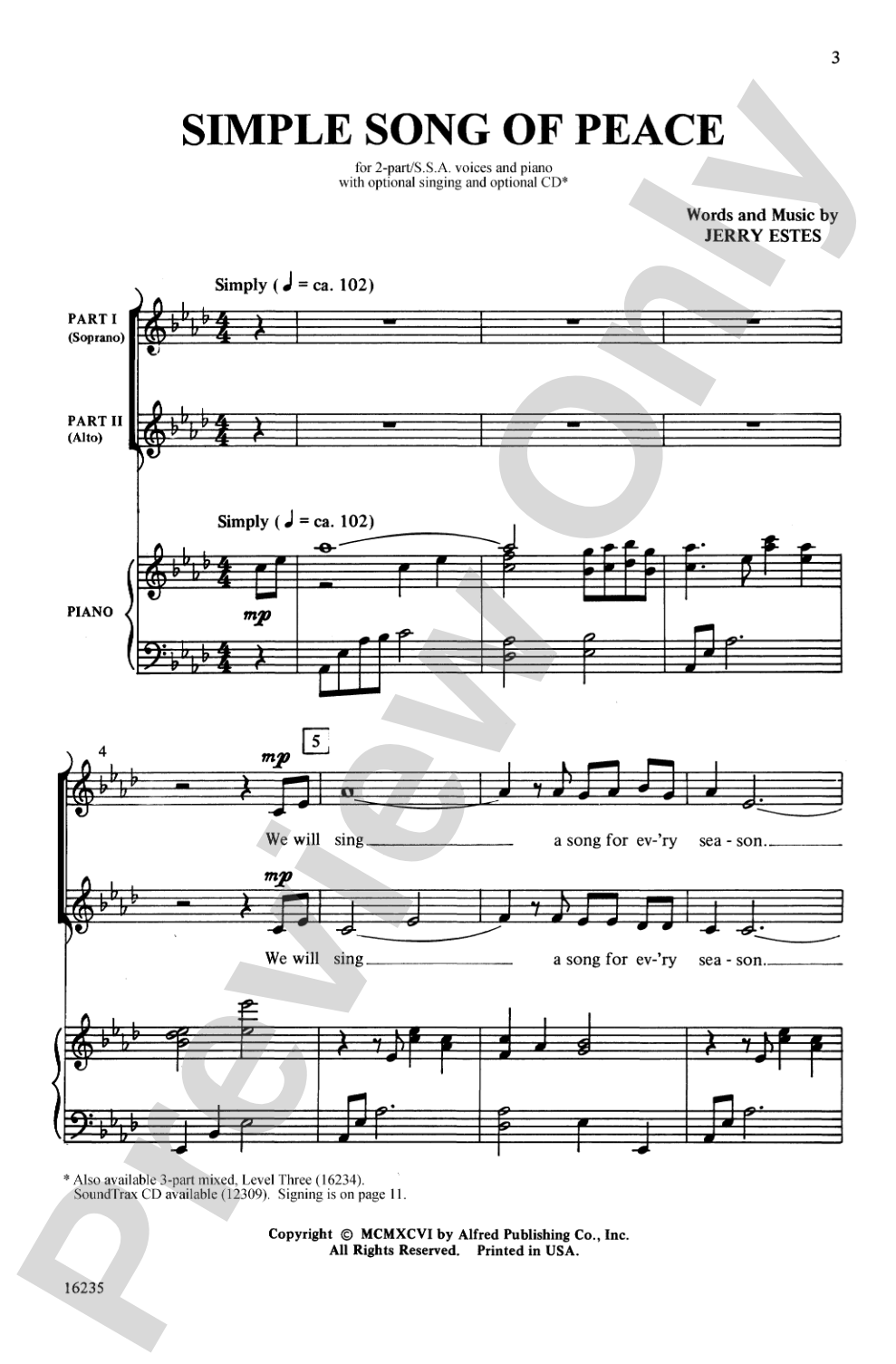
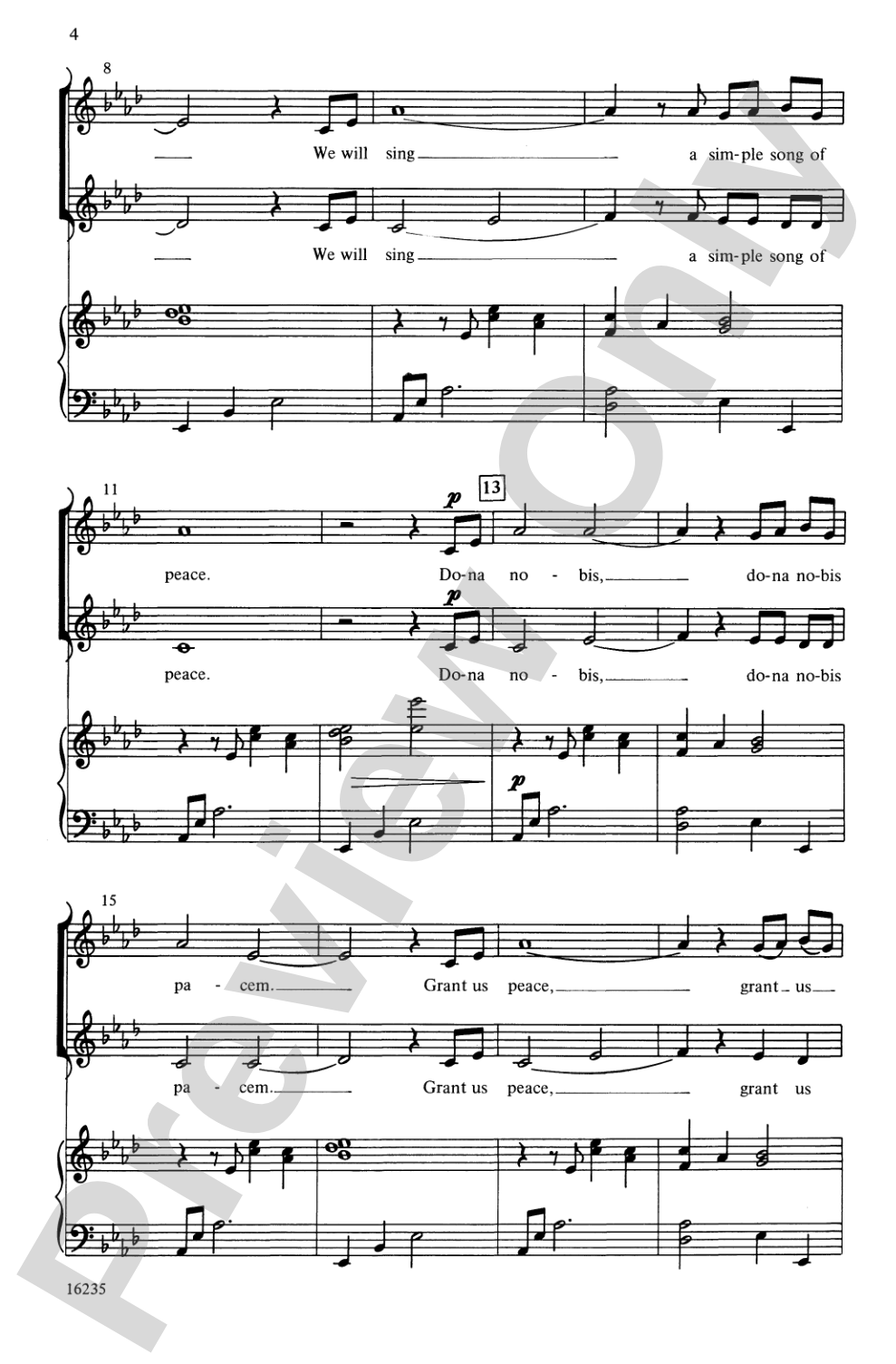

Simple Song of Peace: 2-Part/SSA (with Opt. Sign Language) Choral Octavo
Music by Jerry Estes
Item: 00-PO-0003941
$2.25
Minimum order quantity: 20 copies
Pickup currently not available
Related Items
Simple Song of Peace: 3-Part Mixed (with Opt. Sign Language) Choral Octavo |
$2.25
|
View | |
Simple Song of Peace: 3-Part Mixed (with Opt. Sign Language) Choral Octavo |
$2.25
|
View | |
Simple Song of Peace: 2-Part/SSA (with Opt. Sign Language) Choral Octavo |
$2.25
|
View | |
Simple Song of Peace: Choral Octavo SoundTrax CD |
$27.99
|
View |
Description


Simple Song of Peace: 2-Part/SSA (with Opt. Sign Language) Choral Octavo isn't in MakeMusic Cloud just yet...but it could be. Let us know you'd like to see it, and you'll help shape what comes next. In the meantime, start a free trial and dive into thousands of interactive titles your students can play along with today.
Request This Title
Tell us you want it.
Start Your Free Trial
Explore everything that's ready to play right now.
Sample Audio
No sample audio found.
Sample Video
No sample videos found.
Additional Details
Series:
Alfred Archive Edition: Alfred Choral Designs
Publisher:
Alfred Music
Page Count:
12
SKU:
00-PO-0003941
More about this title
About the Composer: Jerry Estes

Jerry Estes brings classroom experience and formal training to his work as a composer. He holds a B.M.E. in vocal music from Southwest Baptist University and an M.M. from Southern Illinois University, grounding his writing in both pedagogy and musicianship.
As a vocal music educator at Wydown Middle School, Estes teaches grades 6-8 and remains active in MENC and ASCAP. His compositions reflect his deep understanding of what young singers need: music that is rewarding to learn and meaningful to perform.
Why we love this
Estes has written a piece that works across multiple skill levels within the same octavo. The optional sign language integration and built-in staging possibilities mean you can shape this for your specific ensemble and context, whether you're looking for a simple two-part arrangement or something with fuller texture and visual dimension.
What to expect
The piece carries a warm, accessible character suited to its message of peace and unity. Straightforward melody and clear harmonic language create a sense of sincerity without oversimplification.
Who it's for
This octavo serves mixed choirs in grades 6-8, all-female groups in middle or early high school, and community choirs seeking repertoire with an inclusive message. It works equally well for singers with limited experience and those with developing musicianship.
How to get the most out of it
- Shape the melodic lines with breath and phrasing rather than relying on dynamics alone; young singers often need permission to breathe musically.
- If incorporating sign language, schedule rehearsal time dedicated to learning the signs as a separate skill, then gradually integrate signing with singing so neither overshadows the other.
- Recorded accompaniment is available separately; use it during rehearsal to lock in unison passages, then gradually reduce accompaniment reliance for stronger ensemble independence.
How to use it
Position this as a closing number for graduation ceremonies, peace-themed concerts, or assembly programs where the optional movement and sign language can make a visual impact. The 12-page format allows rehearsal flexibility and works well alongside more complex repertoire in a larger concert program.
Skills your students will build
- Two and three-part harmonic independence
- Unison and part singing with secure intonation
- Rhythmic precision in simple meters
- Integration of movement or sign language with singing
- Diction clarity in secular texts