
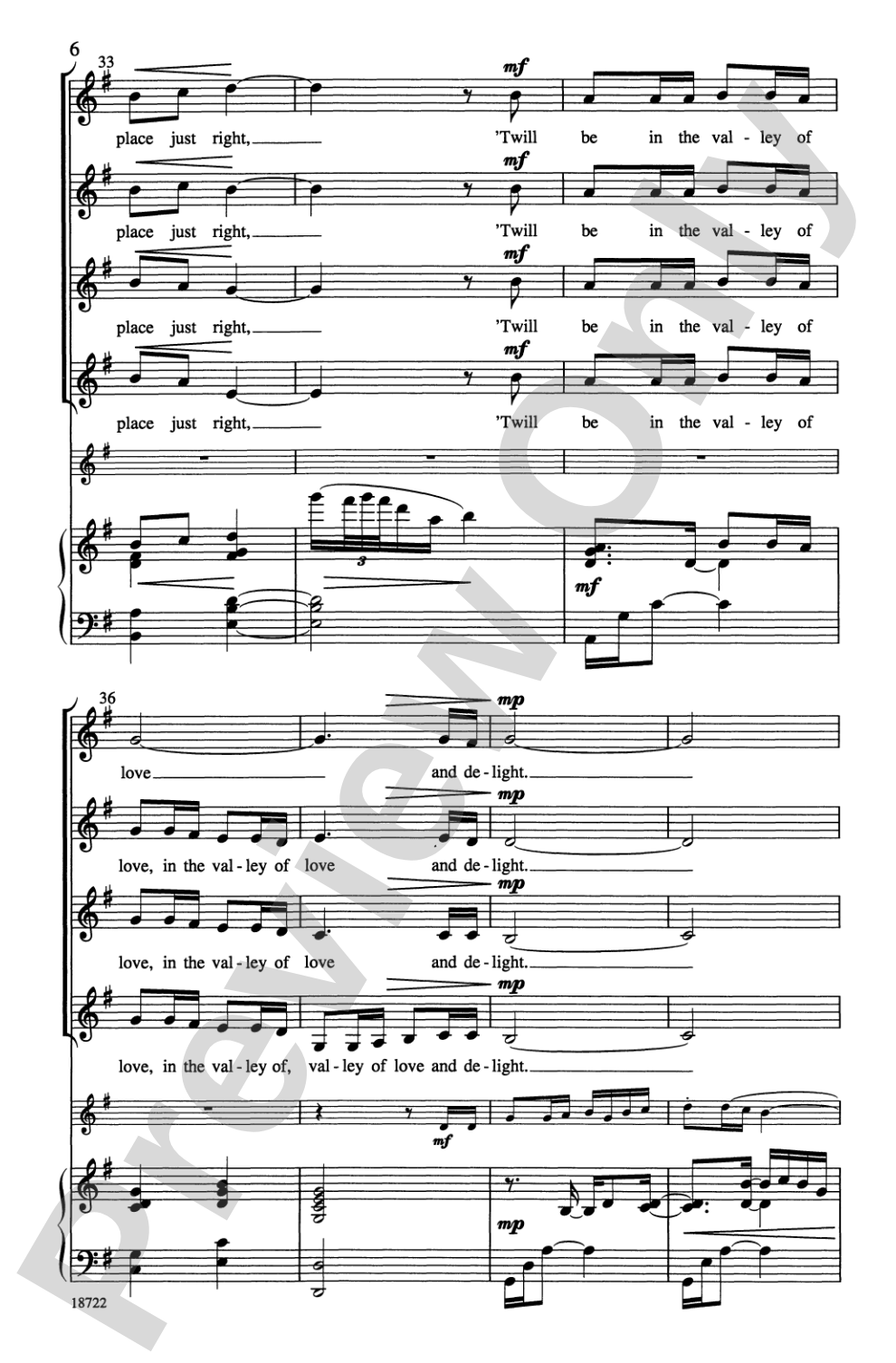

Simple Gifts: SSAA Choral Octavo
Arr. Mark Hayes
Item: 00-PO-0002145
$4.25
Minimum order quantity: 20 copies
Pickup currently not available
Description
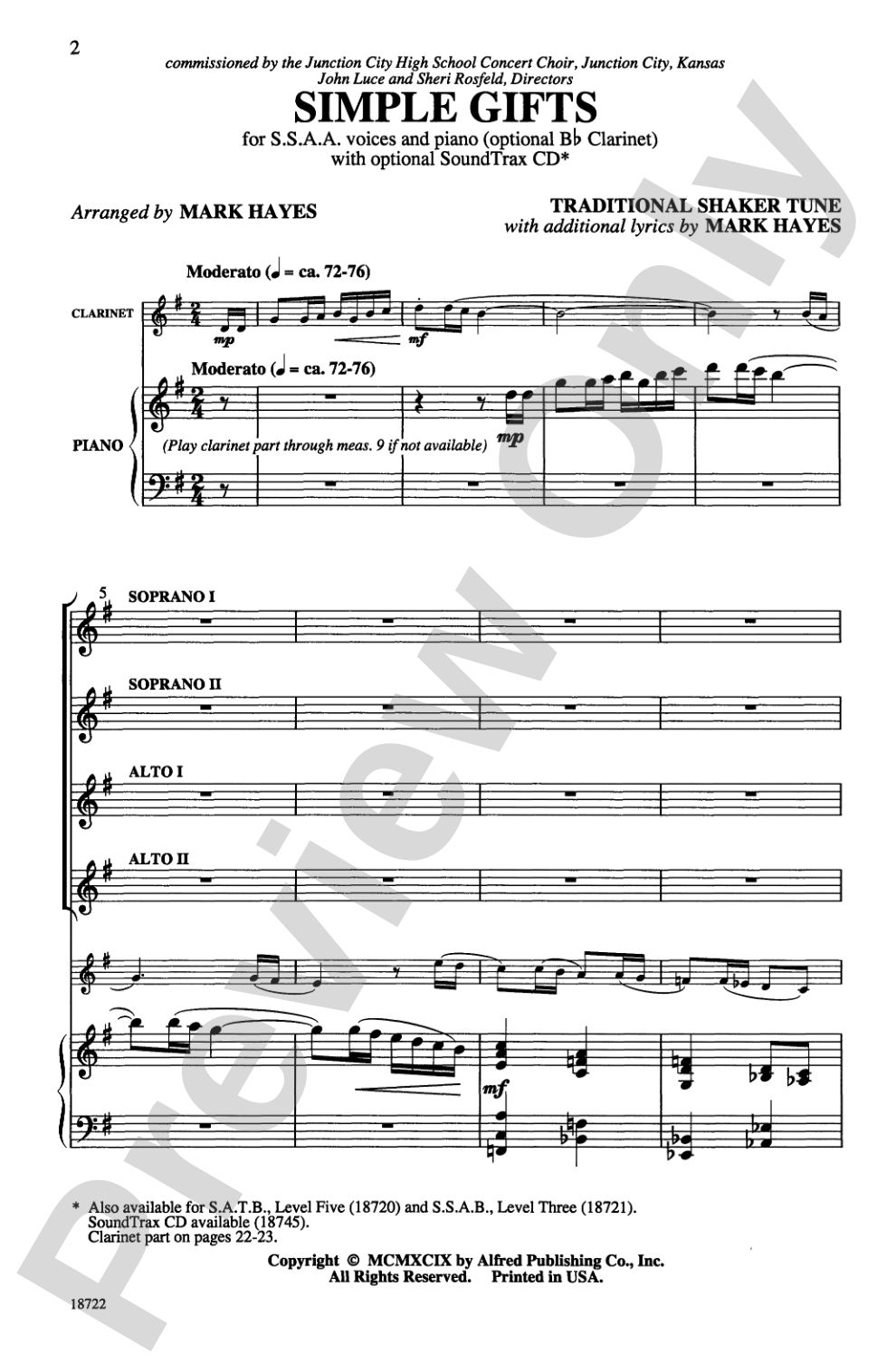
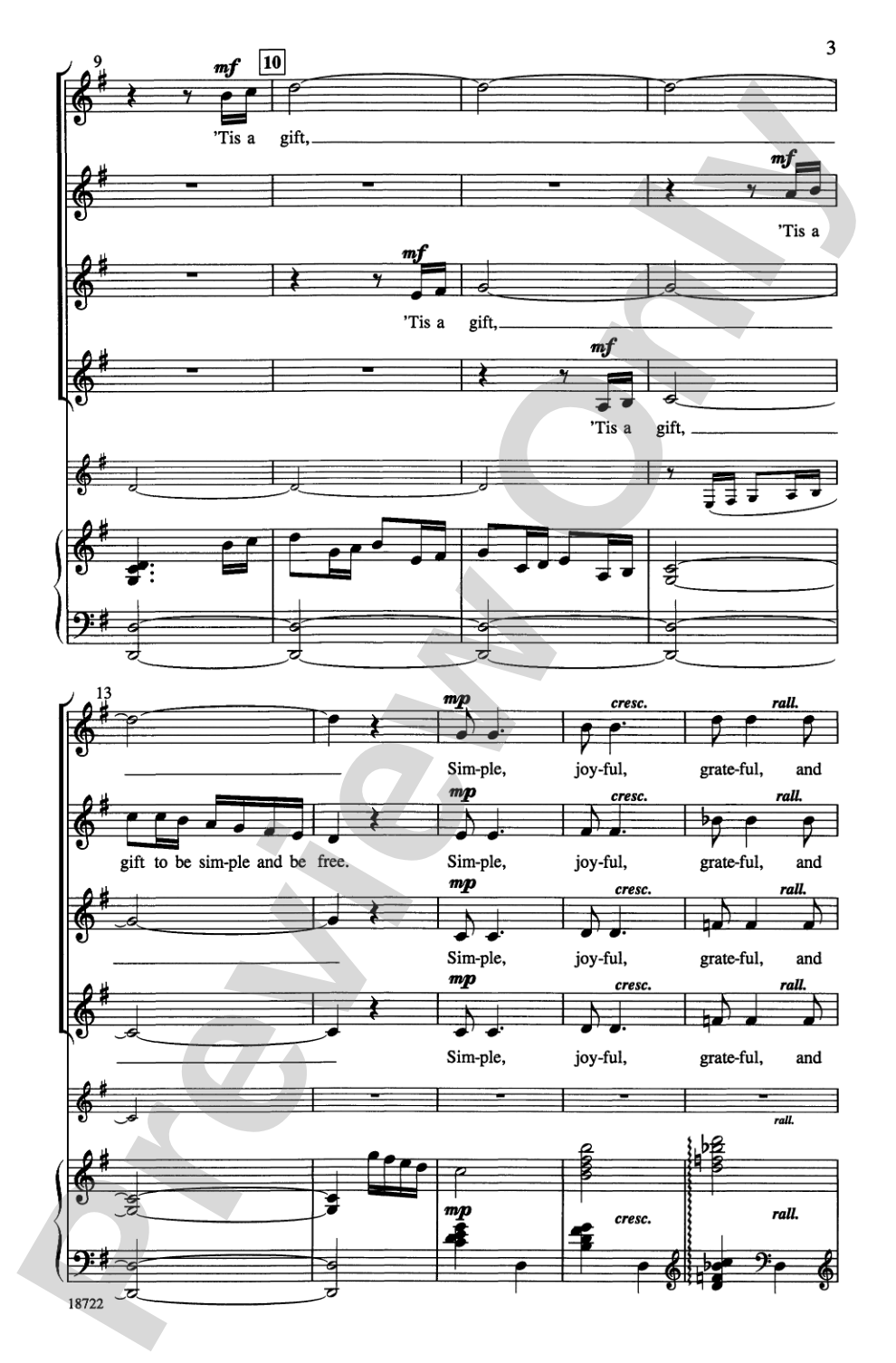
Your singers will be moved by this skillful arrangement from Mark Hayes. The opening optional clarinet introduces the melody with an Americana feel. Includes fresh new verses by the arranger: "'Tis a gift to be joyful, 'tis a gift just to sing . . . for music is the greatest gift of all."


Simple Gifts: SSAA Choral Octavo isn't in MakeMusic Cloud just yet...but it could be. Let us know you'd like to see it, and you'll help shape what comes next. In the meantime, start a free trial and dive into thousands of interactive titles your students can play along with today.
Request This Title
Tell us you want it.
Start Your Free Trial
Explore everything that's ready to play right now.
Sample Audio
1
Audio File
--:--
0:00
0:00
Sample Video
No sample videos found.
Additional Details
Series:
Alfred Archive Edition: Alfred Choral Designs
Publisher:
Alfred Music
Page Count:
24
SKU:
00-PO-0002145
More about this title
About the Arranger: Mark Hayes
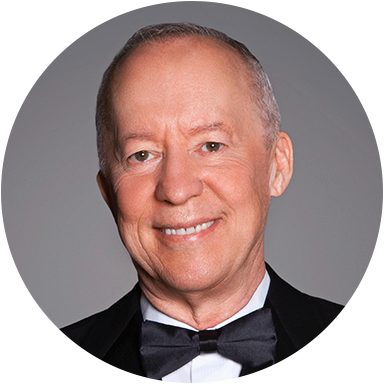
Mark Hayes has built an extraordinary career as a composer, arranger, and conductor, with more than 1,750 published works spanning sacred and secular genres. He holds a summa cum laude degree in piano performance from Baylor University and has guest conducted at Lincoln Center, the National Cathedral, and Carnegie Hall, where his large-scale choral works including Te Deum, Magnificat, and Gloria have received performances. His Requiem, which premiered at Lincoln Center in 2013, was subsequently performed at St. Ignatius Basilica in Rome as part of the Vatican-sponsored Festival Pro Musica E Arte Sacra.
Beyond his choral output, Hayes is equally prolific as an orchestrator and record producer, having orchestrated the musical Madame Buttermilk and arranged music for theatrical productions. His deepest passion remains writing for piano, with over 100 piano books published in styles ranging from gospel to classical to jazz to Broadway arrangements. In 2010, Baylor University honored him with the Award for Exemplary Leadership in Christian Music. Hayes continues to compose and conduct from his home in Kansas City, Missouri, driven by a mission to create beautiful music for audiences worldwide.
Why we love this
Hayes brings substantial artistic weight to this folk standard, crafting an arrangement that honors the hymn's spiritual core while expanding its emotional vocabulary through new text. The optional clarinet introduction establishes an unmistakable Americana character that immediately signals to your audience the accessibility and warmth of what follows. For treble choirs, this piece delivers both the simplicity singers need and the sophistication conductors crave.
What to expect
Warm, grounded, and gently reflective. The arrangement honors the Shaker roots of "Simple Gifts" with open harmonies and a folk sensibility, yet Hayes's additions introduce moments of genuine emotion without losing the tune's inherent joy. There's a sense of community and shared purpose in the singing.
Who it's for
This arrangement suits treble choirs at the intermediate level and above. Its straightforward harmonic language and limited range make it accessible for younger or less experienced singers, while Hayes's skillful counterpoint and refreshed text appeal to more sophisticated ensembles.
How to get the most out of it
- Balance the opening clarinet introduction carefully; it should present the melody clearly enough for the choir to recognize the tune, but not overwhelm the entrance of the voices. If your instrumentalist is not available, the optional marking means the piece stands fully on its own.
- Shape the new verses Hayes has written with intentional phrasing. The text 'for music is the greatest gift of all' deserves particular attention to vowel unity and legit resonance, especially in SSA voicings where the soprano line carries momentum.
- Use the recorded accompaniment to lock in the harmonic framework, then gradually move away from it in rehearsal so your singers develop independence in balancing parts and maintaining the gentle rhythmic lilt of the arrangement.
- Resist the temptation to rush the tempo. The Americana feel depends on a relaxed, conversational pace that gives space to the arrangement's open harmonies and allows text clarity to shine.
How to use it
Program this as a closing piece for a concert centered on American spiritual and folk traditions, or as a thoughtful anchor for a graduation ceremony where themes of gratitude and reflection resonate with your audience. It also fits beautifully in Thanksgiving services or as a bridge between secular and sacred repertoire in a mixed concert program.
Skills your students will build
- Blending open harmonies in SSA voicing
- Balancing parts when one voice carries the primary melodic line
- Singing with clarity and vowel unity across longer note values
- Responding to gentle dynamic shaping and text painting
- Singing independence from instrumental accompaniment