

Sicut Cervus: SSA, a cappella Choral Octavo
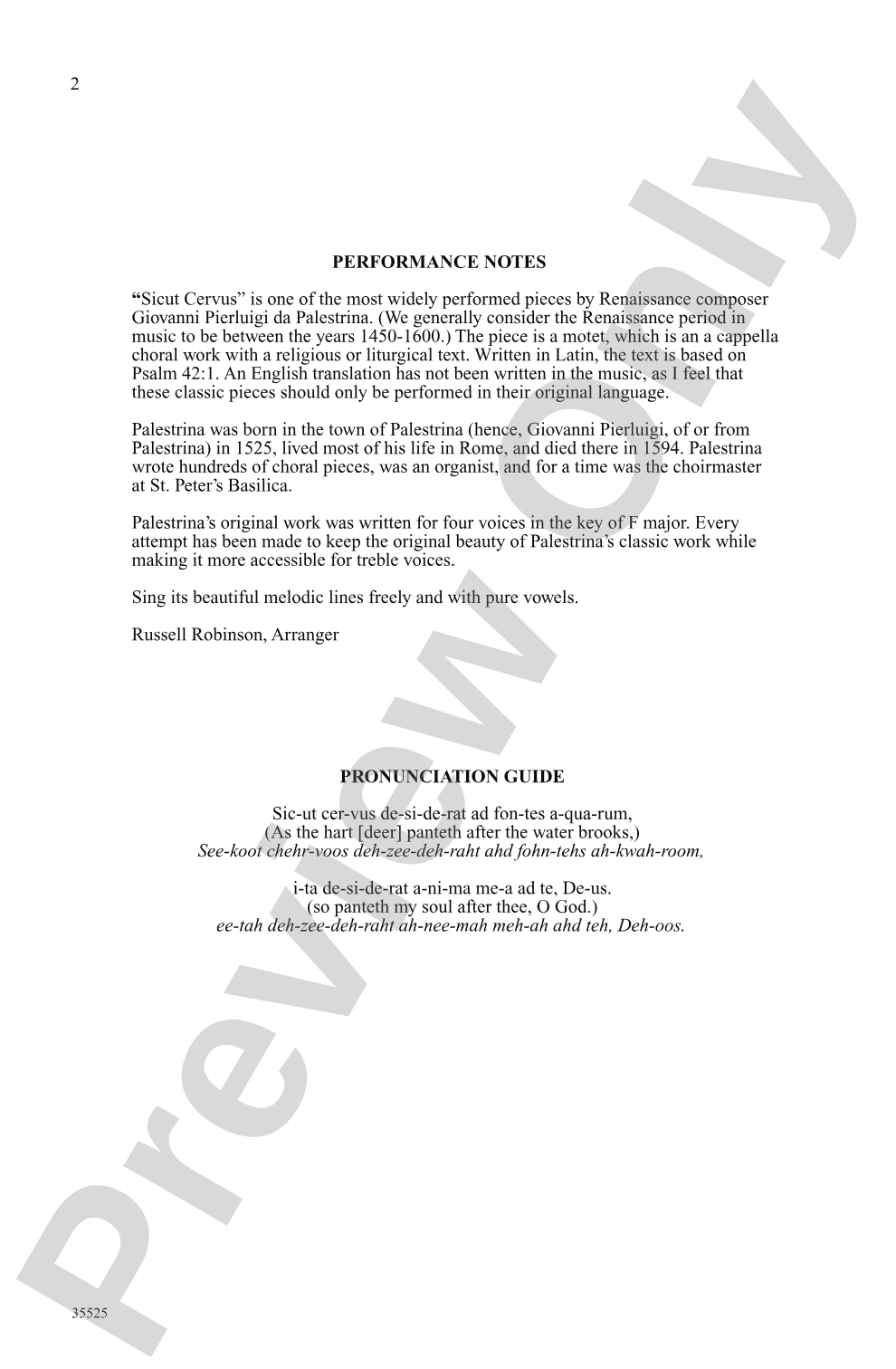
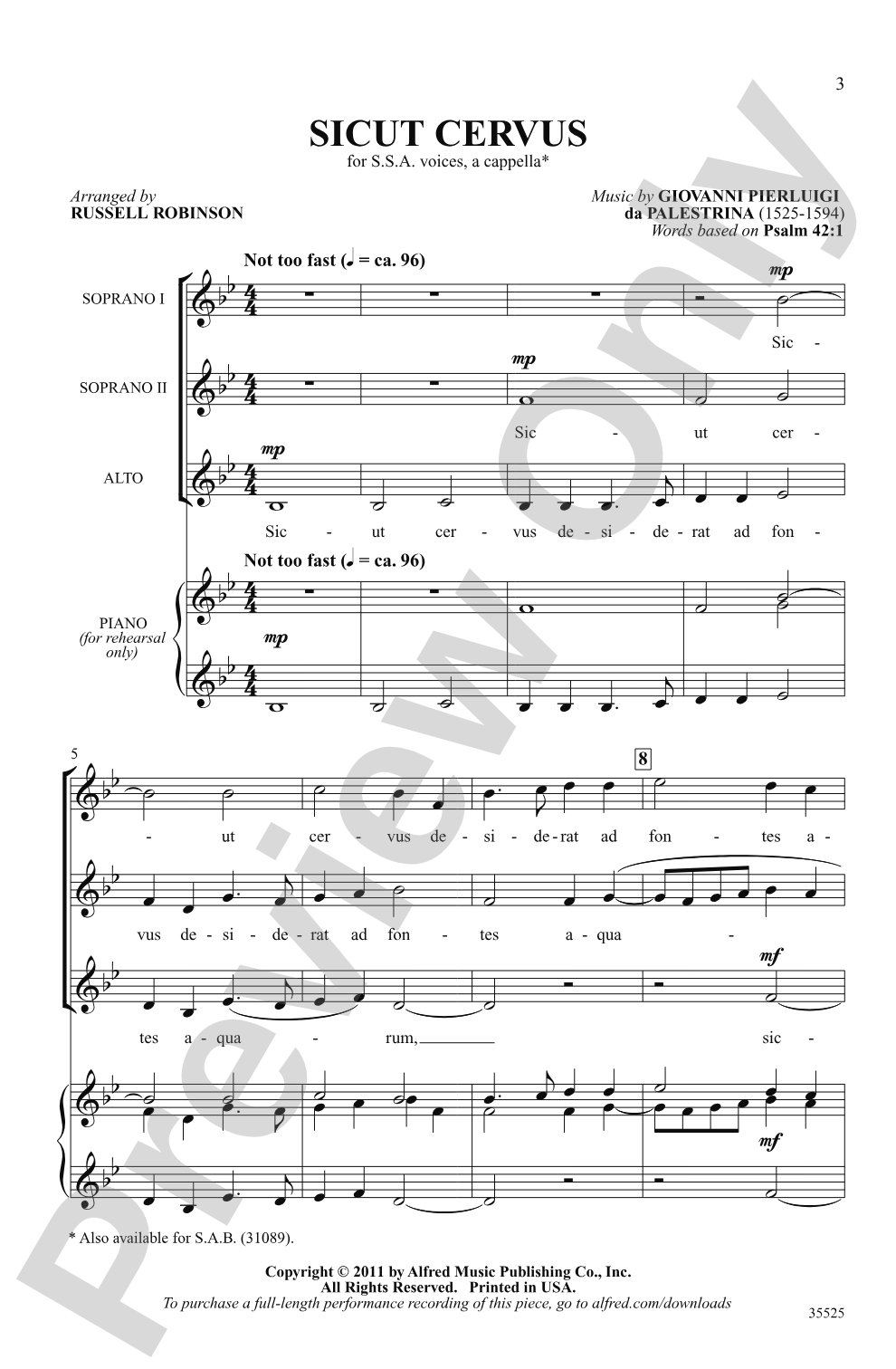
Music by Giovanni Pierluigi da Palestrina, words based on Psalm 42:1 / arr. Russell Robinson
Item: 00-PO-0000905
$2.05
Minimum order quantity: 20 copies
Pickup currently not available
Description
This widely performed Renaissance motet is now available in an SSA edition. Transposed up a fourth from the original key of F major, the beauty of Palestrina's polyphonic writing is maintained while making it more accessible for treble choirs. Also available for SAB (00-31089).


Sicut Cervus: SSA, a cappella Choral Octavo isn't in MakeMusic Cloud just yet...but it could be. Let us know you'd like to see it, and you'll help shape what comes next. In the meantime, start a free trial and dive into thousands of interactive titles your students can play along with today.
Request This Title
Tell us you want it.
Start Your Free Trial
Explore everything that's ready to play right now.
Sample Audio
1
Audio File
--:--
0:00
0:00
Sample Video
No sample videos found.
Additional Details
Series:
Alfred Choral Designs
Publisher:
Alfred Music
Page Count:
8
SKU:
00-PO-0000905
More about this title
About the Composer: Giovanni Pierluigi da Palestrina
Giovanni Pierluigi da Palestrina (1525-1594) was the preeminent composer of the Roman Renaissance and a master of polyphonic sacred music. His work established the gold standard for liturgical composition during the Counter-Reformation, and his legacy shaped choral writing for centuries.
Palestrina's genius lay in his ability to balance complex counterpoint with clarity and reverence. His motets, including Sicut Cervus, demonstrate why he remains central to choral pedagogy: the voice leading is singable, the harmonies are rich yet transparent, and the emotional depth is immediate. Directors and students studying his work encounter one of the most influential compositional minds in Western music.
Why we love this
Russell Robinson's transposition up a fourth makes this canonical Renaissance motet genuinely playable for treble choirs without sacrificing an ounce of its architectural beauty. The SSA voicing opens access to Palestrina's polyphonic mastery for singers who might otherwise encounter only simplified arrangements or forced octave doublings. Your choir gets to sing the real thing, just voiced thoughtfully for their range.
What to expect
Sicut Cervus unfolds with serene devotion, its interwoven melodic lines creating a sense of gentle uplift rather than grandeur. There is space and clarity in the texture; each voice breathes and moves independently, yet the whole resonates with calm assurance. The effect is meditative and intimate, inviting listeners into a moment of quiet reverence.
Who it's for
This arrangement serves treble choirs, advanced middle school ensembles, and upper-level high school groups ready for genuine Renaissance polyphony. Directors seeking to build musicianship through masterwork study without the technical barriers of the original SAB or SATB versions will find this edition practical and artistically legitimate. Sacred music programs, holiday concerts, and chamber choirs all benefit from this accessible gateway to Palestrina.
How to get the most out of it
- Keep phrase endings gently shaped rather than abrupt; Renaissance phrasing values the natural arch of text and melody over dramatic stops.
- Balance the voice parts so no single line overwhelms the others; this is counterpoint, not accompanied melody, and each voice carries equal musical weight.
- Use light, warm vowels throughout to maintain the clarity of the polyphonic texture without pushing tone or forcing projection.
- Mark breath points carefully in rehearsal and stick to them; the a cappella context makes rhythmic precision essential, and strategic breathing supports both ensemble integrity and phrase coherence.
How to use it
Pair this with other Renaissance sacred works to build a compelling concert segment that demonstrates the sophistication of polyphonic writing across composers and regions. It also works beautifully as a concert opener, establishing a reflective tone and showcasing ensemble blend and musicianship early. Holiday concerts, sacred music festivals, and spring concerts all provide natural homes for this motet's spiritual character.
Skills your students will build
- Renaissance polyphonic writing and voice independence
- Part-singing and blend in a cappella contexts
- Maintaining rhythmic precision without instrumental support
- Phrase shaping and breathing in multi-line texture
- Performing sacred music with stylistic authenticity