

Sicut Cervus: SAB Choral Octavo
Music by Giovanni Pierluigi da Palestrina, words based on Psalm 42:1 / arr. Russell Robinson
Item: 00-PO-0000778
$2.25
Minimum order quantity: 20 copies
Pickup currently not available
Description
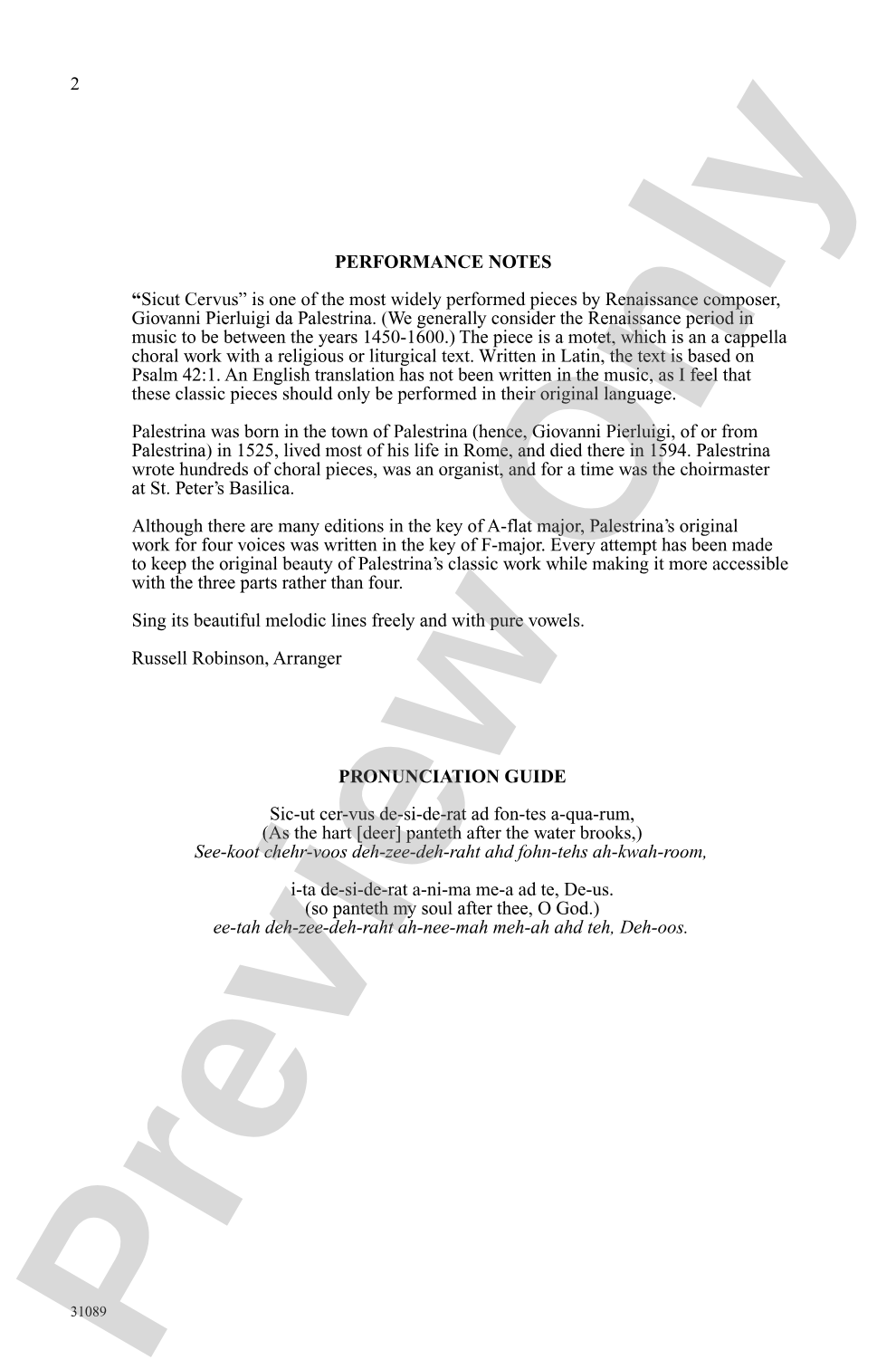
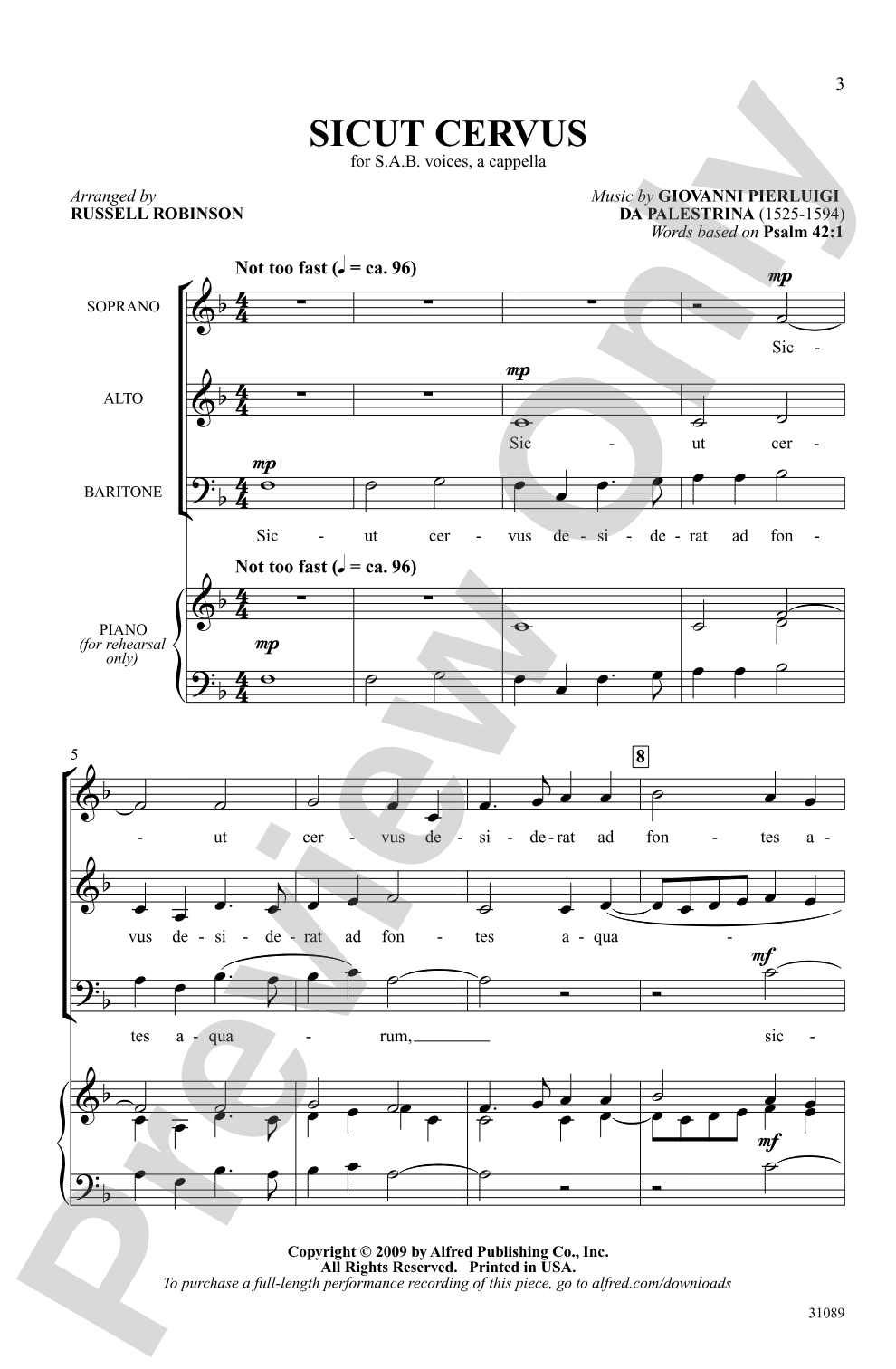
This widely performed Renaissance masterpiece is available for the first time in an SAB edition. Set in the original key of F major, the beauty of Palestrina's polyphonic writing is maintained while making it more accessible for younger or smaller choirs. Also available for SSA (00-35525).


Sicut Cervus: SAB Choral Octavo isn't in MakeMusic Cloud just yet...but it could be. Let us know you'd like to see it, and you'll help shape what comes next. In the meantime, start a free trial and dive into thousands of interactive titles your students can play along with today.
Request This Title
Tell us you want it.
Start Your Free Trial
Explore everything that's ready to play right now.
Sample Audio
1
Audio File
--:--
0:00
0:00
Sample Video
No sample videos found.
Additional Details
Series:
Alfred Archive Edition: Alfred Choral Designs
Publisher:
Alfred Music
Page Count:
8
SKU:
00-PO-0000778
More about this title
About the Composer: Giovanni Pierluigi da Palestrina
Giovanni Pierluigi da Palestrina (c. 1525-1594) stands as the towering figure of Renaissance polyphony and sacred music. Working primarily in Rome, he composed over 100 masses, 250 motets, and numerous other sacred works that defined the sound of the Catholic Counter-Reformation. His music is characterized by serene counterpoint, singable melodic lines, and a reverence for text that made complex polyphonic writing feel inevitable rather than imposed.
Palestrina's influence on choral writing extends far beyond his own era. Generations of composers studied his works as models of perfect voice leading and harmonic clarity. For today's choirs, his music offers a direct path into Renaissance style without the extreme difficulty of some contemporaries, making him an essential introduction to the period.
Why we love this
This arrangement strips away none of the spiritual substance of the original while opening the piece to choirs that lack an extensive soprano range or the vocal depth to handle five-part writing. The F major key stays true to Palestrina's vision, preserving the exact tessitura and harmonic color while the streamlined SAB texture lets the elegance of the polyphonic writing breathe. Directors will find this strikes a rare balance between authenticity and genuine accessibility.
What to expect
Sicut Cervus unfolds like a musical prayer, with voices entering one by one as if in conversation with the divine. The text ("As the deer longs for flowing water") breathes through gentle counterpoint that never feels hurried or intellectually remote. This is contemplative music that draws listeners inward, creating space for reflection through its crystalline harmony and seamless voice leading.
Who it's for
This edition serves choirs with limited soprano range, smaller ensembles, and programs seeking Renaissance sacred music without the vocal demands of traditional SATB or SSAAB scores. Treble-heavy choirs and developing vocal programs will find the three-part mixed voicing both singable and genuinely musical. Educational and community choirs performing liturgical or concert settings will value both the musical integrity and the practical accessibility.
How to get the most out of it
- Shape each phrase with a gentle arc rather than driving toward downbeats; let the counterpoint create its own forward motion as voices enter and interlock.
- Pay close attention to text underlay, especially at points where multiple syllables fall on single notes; clarity of language will enhance the piece's meditative quality.
- Balance the three parts so no single voice dominates; even though the sopranos carry the primary melody, altos and basses must remain present and engaged in the polyphonic fabric.
- Approach the harmonic progressions with patience; resist the urge to rush through resolutions, allowing consonances to land with quiet certainty.
How to use it
This work pairs beautifully with other Renaissance motets in a concert devoted to sacred choral music across centuries, offering stylistic contrast with both earlier vocal works and later chorale-based pieces. It serves equally well as a spiritual centerpiece in a liturgical service or as an accessible entry point for audiences new to polyphonic singing. Consider programming it alongside an SSA or SATB arrangement of different Renaissance texts to showcase how Palestrina's style transcends voicing choices.
Skills your students will build
- Renaissance polyphonic style and text-driven phrasing
- Independent melodic lines and ensemble balance within three-part mixed voicing
- Awareness of harmonic function and consonant resolution in tonal music
- Sustained tone production and breath control across longer phrases