
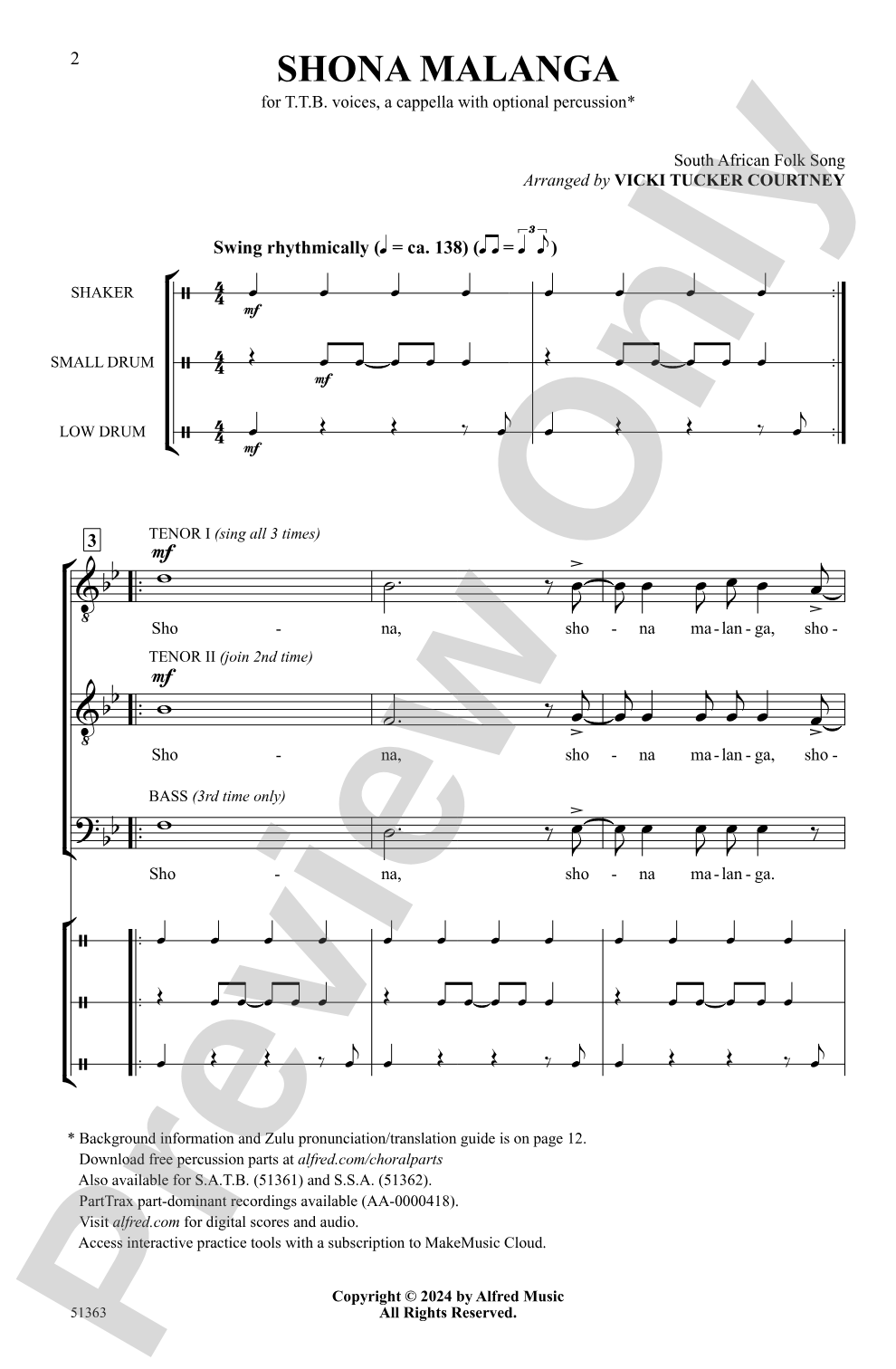
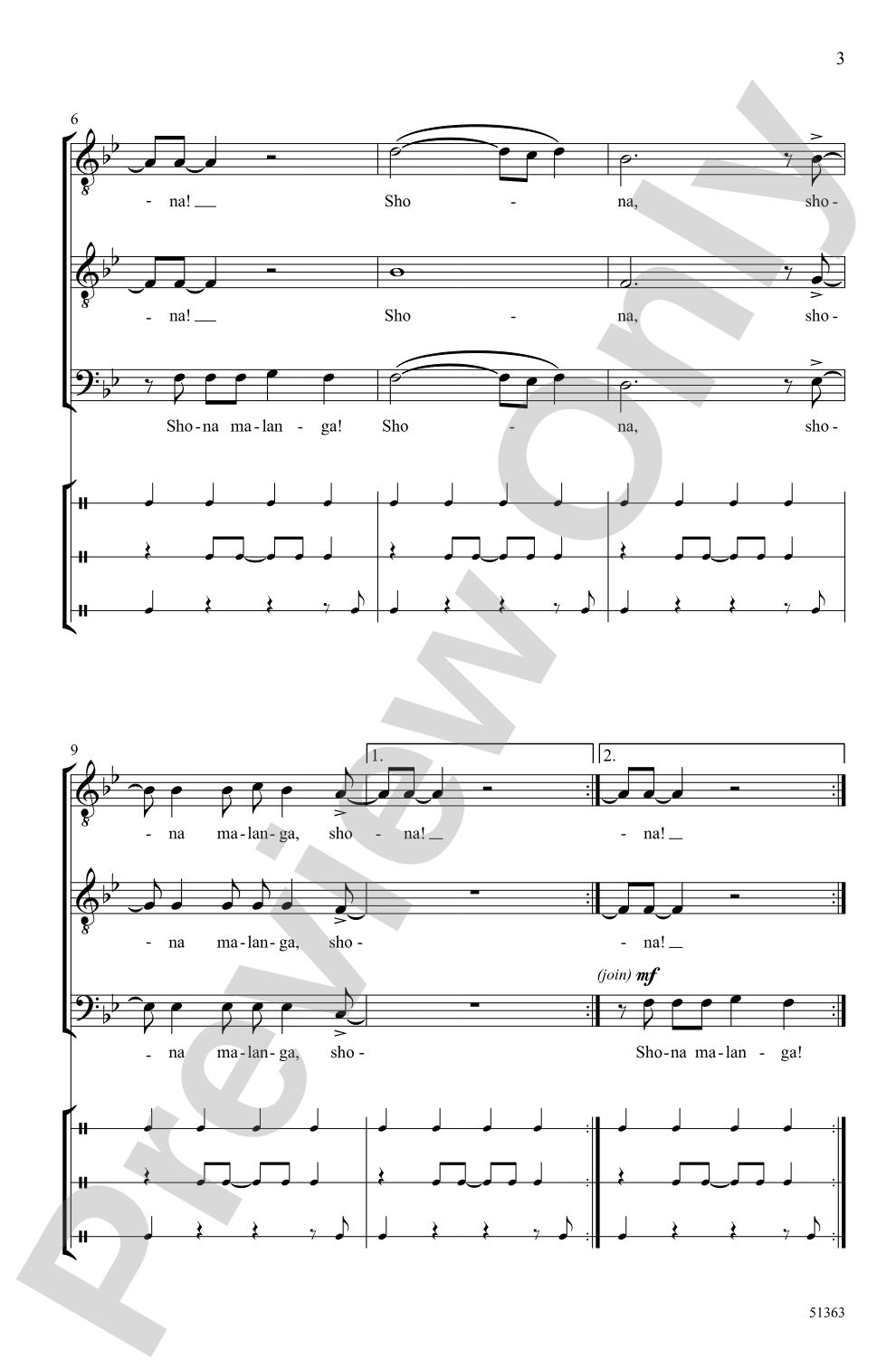
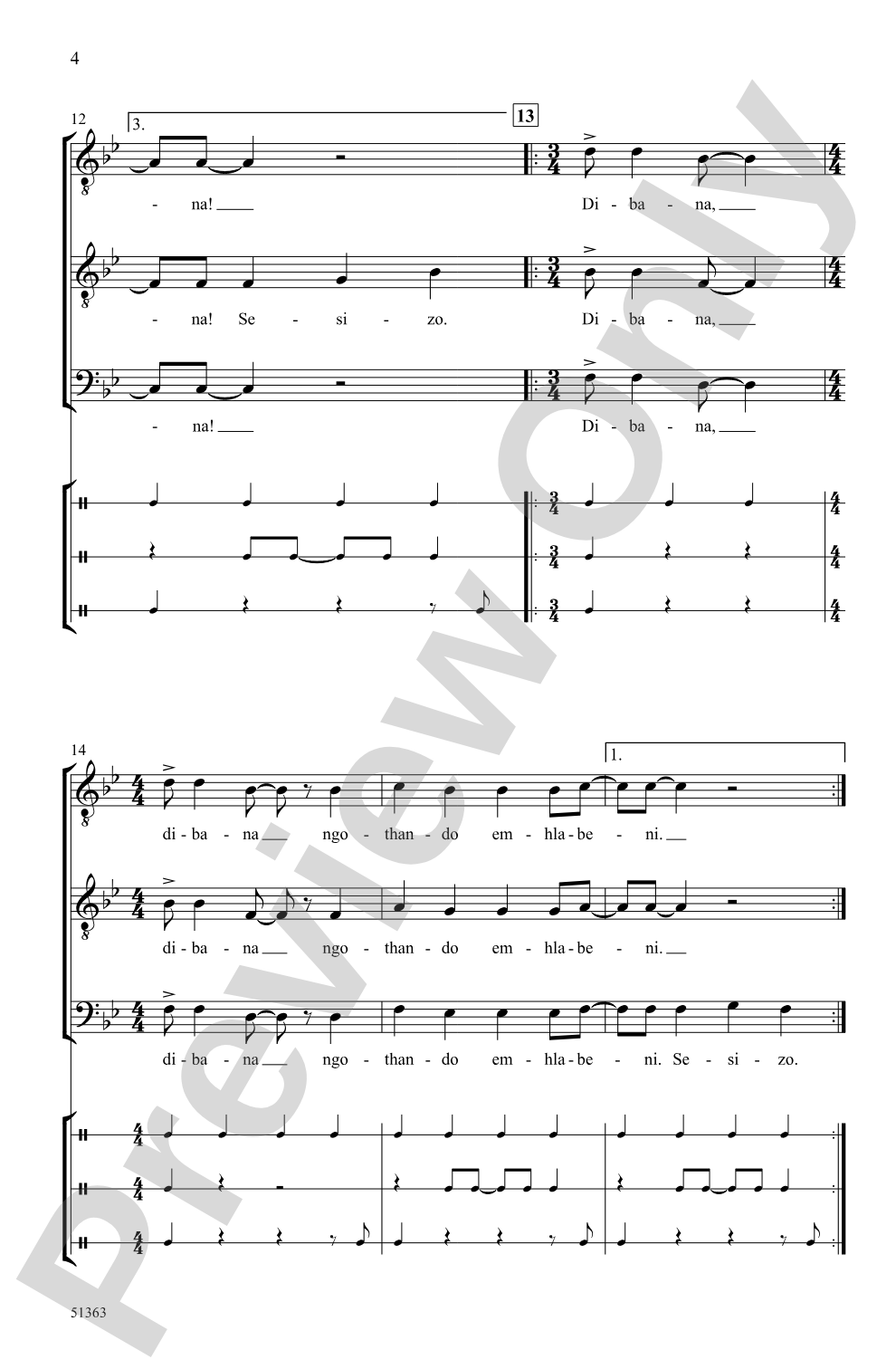

Shona Malanga: TTB, a cappella Choral Octavo
South African Folk Song / arr. Vicki Tucker Courtney
Item: 00-PO-0007919

$2.30
Minimum order quantity: 10 copies
Please note: Under U.S. copyright law, you must purchase the exact number of copies needed for your ensemble. Printing, duplicating or sharing additional copies is strictly prohibited.
Pickup currently not available
Related Items
Shona Malanga: 3-Part Mixed, a cappella Choral Octavo |
$2.30
|
View | |
Shona Malanga: 3-Part Mixed, a cappella Choral Octavo |
$2.30
|
View | |
Shona Malanga: SSA, a cappella Choral Octavo |
$2.30
|
View | |
Shona Malanga: SSA, a cappella Choral Octavo |
$2.30
|
View | |
Shona Malanga: TTB, a cappella Choral Octavo |
$2.30
|
View | |
Shona Malanga: PartTrax Digital Audio Download |
$49.99
|
View | |
Shona Malanga: PartTrax Digital Audio Download |
$49.99
|
View | |
Shona Malanga: PartTrax Digital Audio Download |
$49.99
|
View | |
Shona Malanga: 3-Part Mixed, a cappella Choral Octavo |
$2.30
|
View | |
Shona Malanga: SSA, a cappella Choral Octavo |
$2.30
|
View | |
Shona Malanga: TTB, a cappella Choral Octavo |
$2.30
|
View |
Description
The short Zulu text of this authentic South African song calls for workers' rights and political justice. Three percussion instruments provide a rhythmic backdrop for this a cappella gem!
The PerformancePlus+ series is an innovative addition to the ever-expanding MakeMusic Cloud interactive library. These engaging selections are presented with educational resources designed to enrich the rehearsal process and create outstanding performances. Including:


The PerformancePlus+ series is an innovative addition to the ever-expanding MakeMusic Cloud interactive library. These engaging selections are presented with educational resources designed to enrich the rehearsal process and create outstanding performances. Including:
- Assignment, recording, and assessment tools within MakeMusic Cloud
- Part-predominant and accompaniment tracks
- Printable sheet music (with a standard MakeMusic Cloud subscription)
- Correlated rehearsal guides and performance notes
- Rights to perform in a live or virtual setting
Don't just read it, hear it, play along with it, and watch your students grow with it. In MakeMusic Cloud, Shona Malanga: TTB, a cappella Choral Octavo comes alive with professional accompaniment, adjustable tempo, and built-in practice tools that turn solo practice into real progress.
Open in the Player
Jump straight in and assign it today.
Start Your Free Trial
Open this title and explore the full library in minutes.
Sample Audio
1
Audio File
--:--
0:00
0:00
Sample Video
Additional Details
Series:
Alfred Choral Designs
Publisher:
Alfred Music
Page Count:
12
SKU:
00-PO-0007919
More about this title
About the Arranger: Vicki Tucker Courtney

Vicki Tucker Courtney began piano study at age four and developed deep expertise in choral accompaniment during her years at North Texas State University. Her prolific career spans composing and arranging across choirs, piano, handbells, and solo voice, with over 350 published titles to her name and multiple ASCAP Plus Awards recognizing her contributions to music education.
Courtney has worked extensively in church music settings and maintains an active studio teaching piano and composition to students across all levels. She studied under Dove Award winner Mark Hayes in 2002 and 2004, grounding her arranging practice in both classical training and contemporary choral idioms. She currently resides in Columbia, Tennessee.
Why we love this
This arrangement honors the original Zulu protest song while making it genuinely accessible for secondary and early college choirs. The percussion framework grounds the piece without overwhelming the voices, and the cultural and political context provided in the performance notes transforms a short work into a powerful statement about justice and solidarity that resonates far beyond its modest page count.
What to expect
The piece carries the energy of collective voice and purposeful movement. Despite its brevity, the Zulu text and rhythmic percussion create an atmosphere of quiet determination, building a sense of community and shared conviction that feels both intimate and urgent.
Who it's for
This octavo works for mixed choirs in grades 9-12 and college programs seeking repertoire with genuine cultural roots and social substance. Directors looking for approachable a cappella literature that educates singers about world music traditions and allows meaningful engagement with themes of justice and human rights will find it particularly valuable.
How to get the most out of it
- Study the Zulu pronunciation guide included in the rehearsal materials before any first read-through. Authentic language placement affects both the rhythmic drive and the emotional weight of the text.
- Balance the three percussion parts so they anchor the rhythm without obscuring the choral lines. The percussion should feel like it's supporting workers' solidarity, not dominating the ensemble.
- Let the shorter length work for you. Use multiple performance contexts (assembly, competition, church service, demonstration concert) to build deeper interpretation across rehearsals rather than rushing toward a single performance.
How to use it
Pair this with other world choral music or with pieces addressing social justice themes to create a thematic concert section. Its compact length makes it ideal for opening or closing a program with impact, or for inclusion in a festival competition set where its authenticity and distinct cultural voice stand out among more conventional selections.
Skills your students will build
- Pronunciation and placement of Zulu phonemes
- Rhythmic coordination with non-pitched percussion accompaniment
- Understanding the historical and social context of folk protest music
- Ensemble balance in a cappella writing with added percussion
- Cultural awareness in choral repertoire