
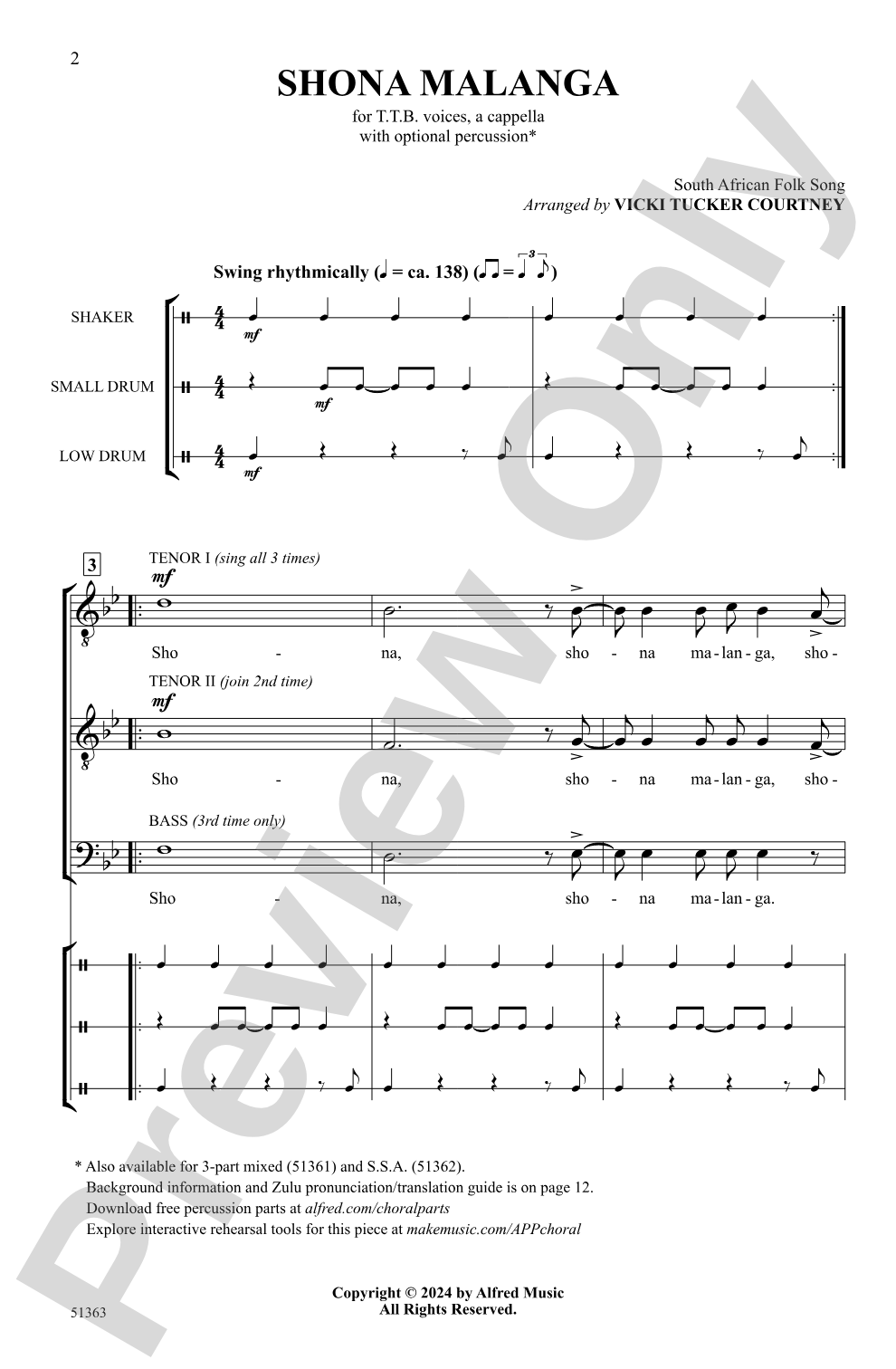
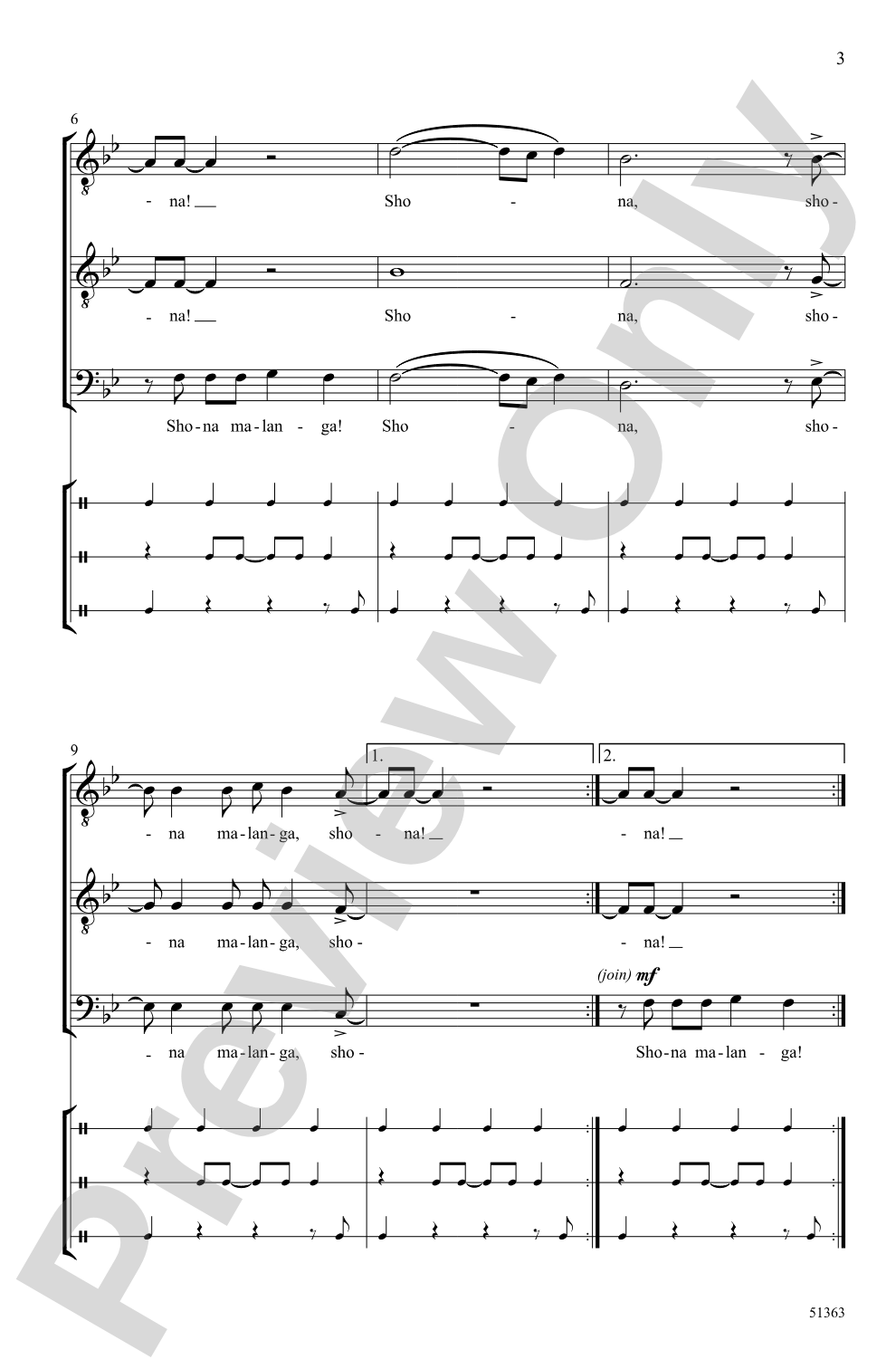
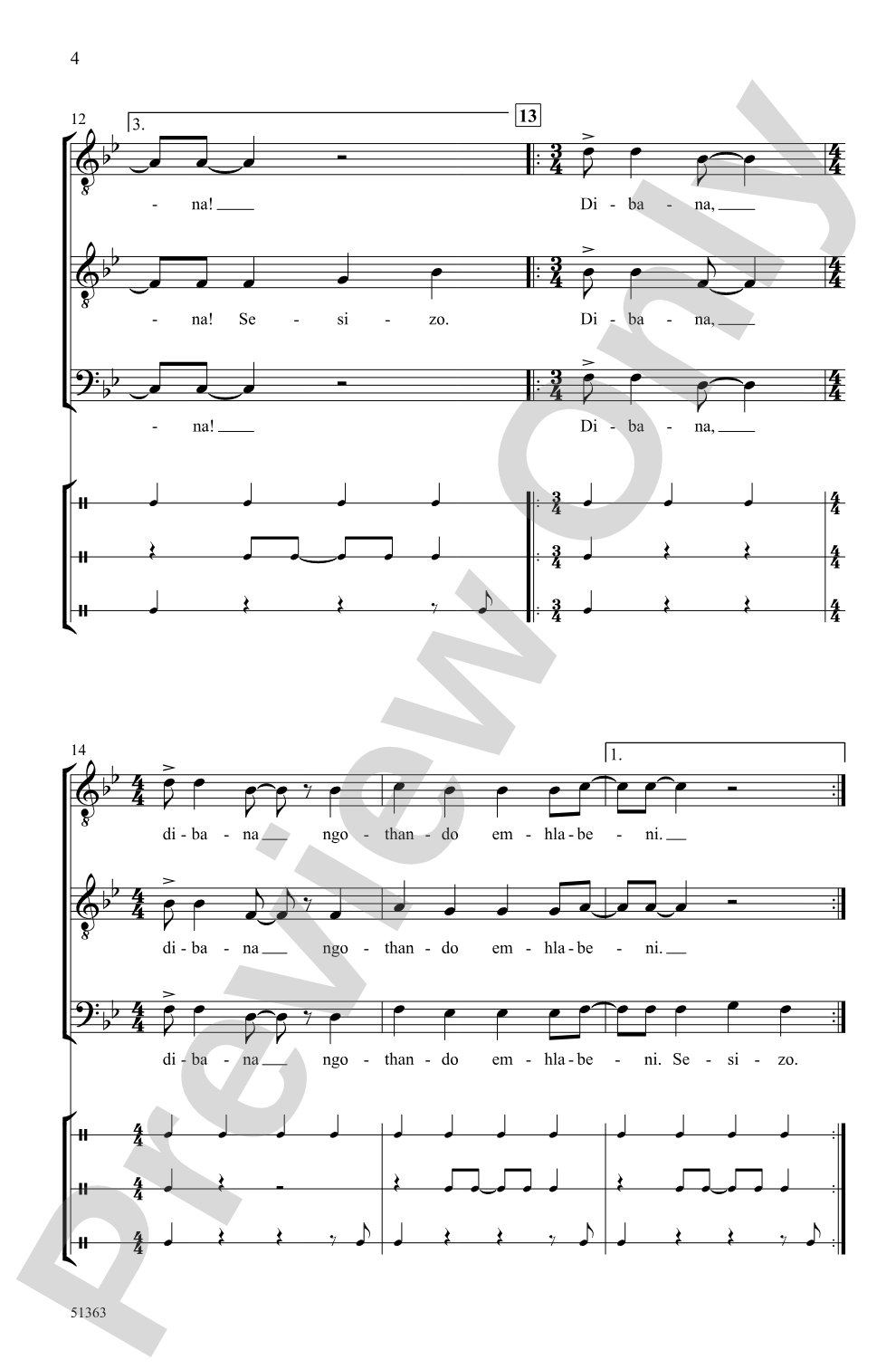

Shona Malanga: TTB, a cappella Choral Octavo
South African Folk Song / arr. Vicki Tucker Courtney
Item: 00-PO-0007307

$2.30
Minimum order quantity: 10 copies
Please note: Under U.S. copyright law, you must purchase the exact number of copies needed for your ensemble. Printing, duplicating or sharing additional copies is strictly prohibited.
Pickup currently not available
Related Items
Shona Malanga: 3-Part Mixed, a cappella Choral Octavo |
$2.30
|
View | |
Shona Malanga: 3-Part Mixed, a cappella Choral Octavo |
$2.30
|
View | |
Shona Malanga: SSA, a cappella Choral Octavo |
$2.30
|
View | |
Shona Malanga: SSA, a cappella Choral Octavo |
$2.30
|
View | |
Shona Malanga: TTB, a cappella Choral Octavo |
$2.30
|
View | |
Shona Malanga: PartTrax Digital Audio Download |
$49.99
|
View | |
Shona Malanga: PartTrax Digital Audio Download |
$49.99
|
View | |
Shona Malanga: PartTrax Digital Audio Download |
$49.99
|
View | |
Shona Malanga: 3-Part Mixed, a cappella Choral Octavo |
$2.30
|
View | |
Shona Malanga: SSA, a cappella Choral Octavo |
$2.30
|
View | |
Shona Malanga: TTB, a cappella Choral Octavo |
$2.30
|
View |
Description
The short Zulu text of this authentic South African song calls for workers' rights and political justice. Three percussion instruments provide a rhythmic backdrop for this a cappella gem!
The PerformancePlus+ series is an innovative addition to the ever-expanding MakeMusic Cloud interactive library. These engaging selections are presented with educational resources designed to enrich the rehearsal process and create outstanding performances. Including:


The PerformancePlus+ series is an innovative addition to the ever-expanding MakeMusic Cloud interactive library. These engaging selections are presented with educational resources designed to enrich the rehearsal process and create outstanding performances. Including:
- Assignment, recording, and assessment tools within MakeMusic Cloud
- Part-predominant and accompaniment tracks
- Printable sheet music (with a standard MakeMusic Cloud subscription)
- Correlated rehearsal guides and performance notes
- Rights to perform in a live or virtual setting
Don't just read it, hear it, play along with it, and watch your students grow with it. In MakeMusic Cloud, Shona Malanga: TTB, a cappella Choral Octavo comes alive with professional accompaniment, adjustable tempo, and built-in practice tools that turn solo practice into real progress.
Open in the Player
Jump straight in and assign it today.
Start Your Free Trial
Open this title and explore the full library in minutes.
Sample Audio
1
Audio File
--:--
0:00
0:00
Sample Video
Additional Details
Series:
Alfred Choral Designs
Publisher:
Alfred Music
Page Count:
12
SKU:
00-PO-0007307
More about this title
About the Arranger: Vicki Tucker Courtney

Vicki Tucker Courtney began her musical life at the piano at age four, eventually studying at North Texas State University where she developed her skills as both a performer and accompanist. Her published output now exceeds 350 titles across multiple mediums, including choral arrangements, solo voice, handbells, and piano works. She has received numerous ASCAP Plus Awards and studied composition under the mentorship of Dove Award winner Mark Hayes.
Based in Columbia, Tennessee, Courtney continues to compose and arrange full time while maintaining an active teaching practice with piano and composition students. Her work spans both traditional and contemporary contexts, reflecting a deep understanding of how music serves different worship and concert settings.
Why we love this
Courtney transforms a politically charged South African work song into an engaging piece that teaches students about music as activism while keeping rehearsals energized. The integration of three percussion instruments alongside an a cappella texture creates a rhythmic drive that feels organic rather than added, and the short Zulu text becomes memorable quickly, leaving room for discussion about meaning and cultural context.
What to expect
Grounded and propulsive. The percussion creates forward momentum while the three-part writing stays accessible, allowing singers to focus on the urgent character of the text rather than technical complexity. There's a joyful defiance in the music that energizes a room.
Who it's for
TTB choirs looking for authentic world music that carries real cultural and political weight. This works equally well for concert programming, competitive festivals, or peace-themed curricula, and the PerformancePlus+ resources scaffold learning for groups new to African vocal idioms.
How to get the most out of it
- Establish the percussion groove in a separate rehearsal before the singers enter. Let the players internalize the rhythm pattern so they can lock the pulse while the choir finds its pitch and entries.
- Shape the text dynamically. Since the message calls for workers' rights and justice, encourage singers to deliver the words with conviction rather than as decorative syllables.
- Balance the three percussion parts so none drowns out the voices. A light touch on beaters or mallets often serves better than force.
- Use the recorded accompaniment to hear how the percussion sits with the vocal lines, then gradually back away from it as confidence builds.
How to use it
Pair this with other world music selections to build a diversified concert, or position it as the centerpiece of a program exploring music and social movements. It also serves as an effective festival entry, where the combination of authentic cultural material and strong musical craftsmanship stands out.
Skills your students will build
- Singing in unison and three-part harmony across unfamiliar vocal syllables
- Maintaining rhythmic independence while voices sustain longer note values
- Understanding text-driven phrasing and emotional expression in a non-English context
- Working with rhythmic accompaniment that doesn't function as harmonic support