
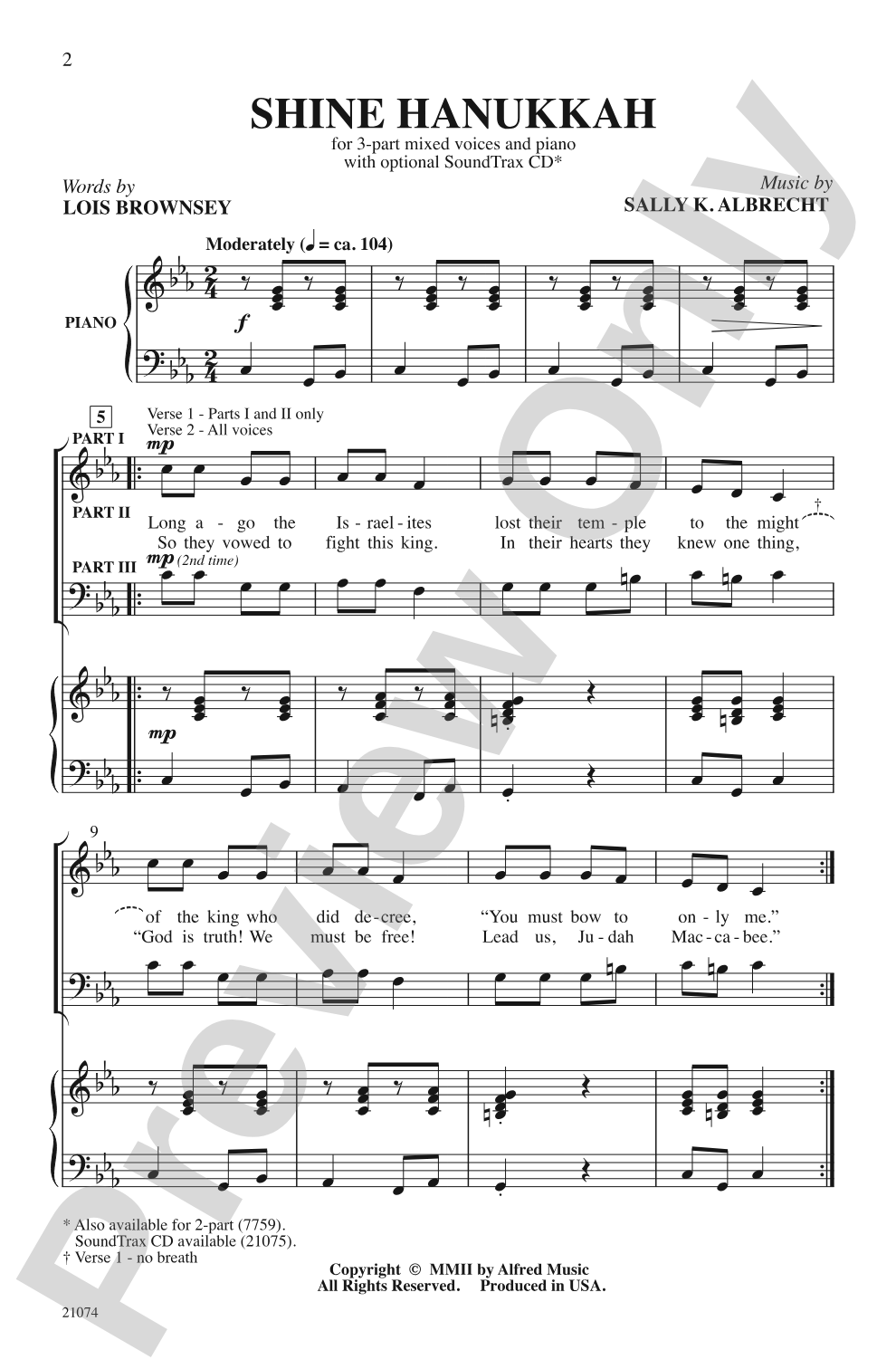
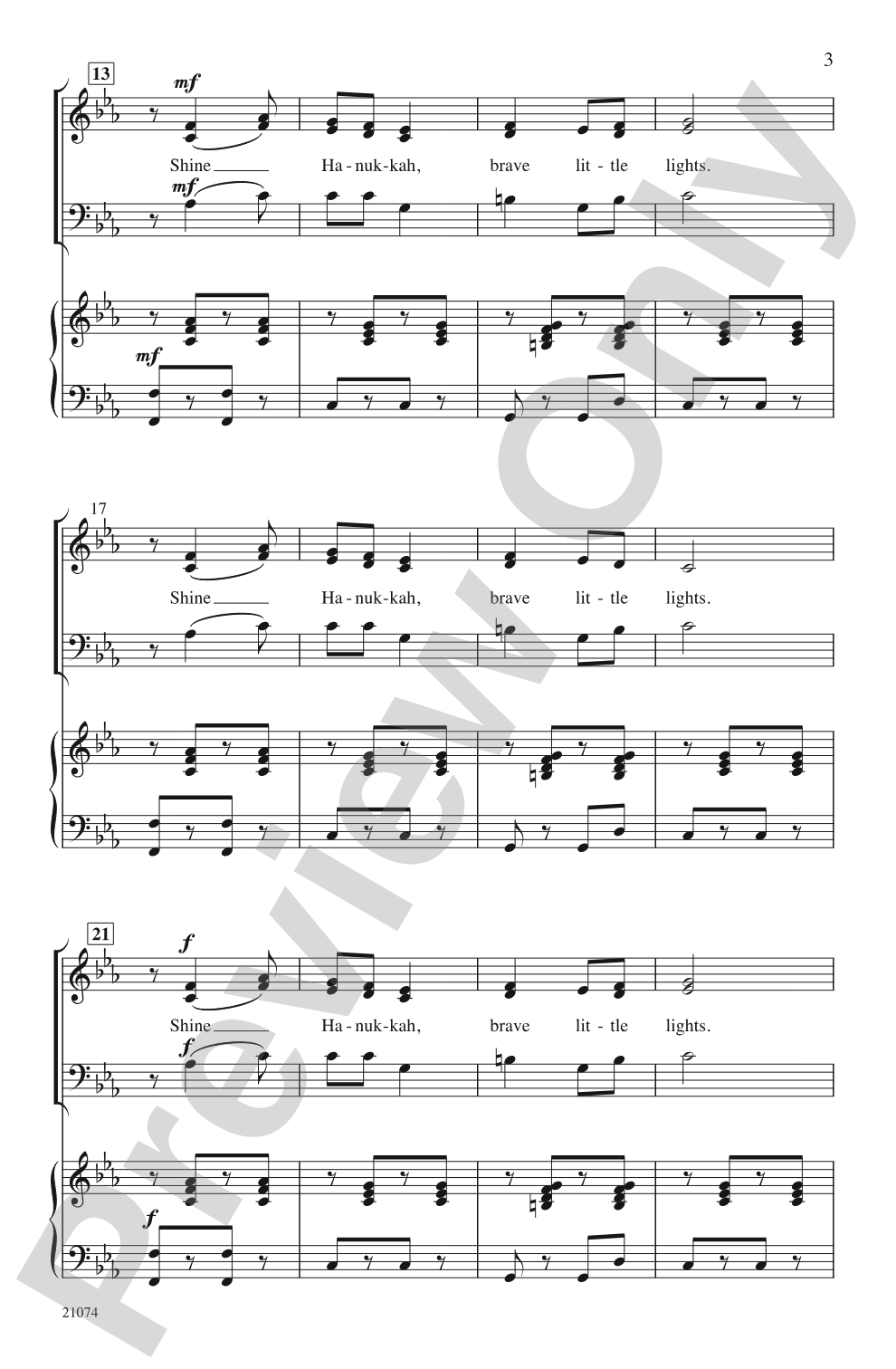

Shine Hanukkah: 3-Part Mixed Choral Octavo
Music by Sally K. Albrecht and Lois Brownsey
Item: 00-PO-0006518
$2.25
Minimum order quantity: 20 copies
Pickup currently not available
Description
The story of Hanukkah unfolds in this special 2-part selection. Part I and Part II share the melody line, giving all your singers a chance to shine. A slower middle section contrasts with the 2-beat minor-key melody. An optional descant tops off the arrangement. The bright SoundTrax CD will add sparkle to your performance.


Shine Hanukkah: 3-Part Mixed Choral Octavo isn't in MakeMusic Cloud just yet...but it could be. Let us know you'd like to see it, and you'll help shape what comes next. In the meantime, start a free trial and dive into thousands of interactive titles your students can play along with today.
Request This Title
Tell us you want it.
Start Your Free Trial
Explore everything that's ready to play right now.
Sample Audio
1
Audio File
--:--
0:00
0:00
Sample Video
No sample videos found.
Additional Details
Series:
Alfred Archive Edition: Alfred Choral Designs
Publisher:
Alfred Music
Page Count:
8
SKU:
00-PO-0006518
More about this title
About the Composer: Sally K. Albrecht
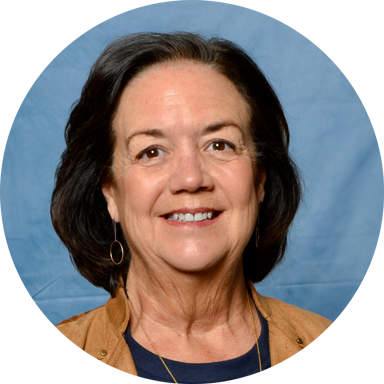
Sally K. Albrecht has shaped American choral music for decades as a composer, conductor, and clinician with a distinctive focus on movement and accessibility. Since 1987, she has been a consistent ASCAP Special Music Award recipient and maintains over 600 published choral works alongside 75 larger musicals and songbooks. Her conducting has led honor choirs at prestigious venues including Lincoln Center, Carnegie Hall, and The Kennedy Center, and she spent more than thirty years developing choral, vocal, and elementary publications as Director of School Choral and Vocal Music for major educational publishers, including Alfred Music.
Educated at Rollins College (B.A., 1976) and the University of Miami (M.A. in Drama, 1977; M.M. in Accompanying, 1979), Albrecht has taught at Oakland University, Jersey City State College, and Meredith College. She has served as Chair of the Board of Trustees for the Omicron Delta Kappa National Leadership Honor Society and received their Pillar of Leadership award. In 2021, she was recognized as a Distinguished Alumna by both the University of Miami Frost School of Music and Rollins College, where she serves on the Board of Trustees. She lives in Wake Forest, North Carolina, with her husband, composer and arranger Jay Althouse.
Why we love this
Albrecht and Brownsey craft a Hanukkah piece that genuinely honors the story while keeping the vocal writing open and inviting. The shared melody between Parts 1 and 2 means no singer gets sidelined, and the optional descant gives you flexibility to add shimmer without adding complexity. A slower middle section provides the breathing room that makes a holiday piece feel substantial rather than rote.
What to expect
The minor-key opening in two-beat rhythm creates a reflective, purposeful mood that honors the Hanukkah story. The contrast of the slower middle section feels like a moment of pause and reverence before the piece brightens again, and the optional descant overhead adds a sense of light and hope.
Who it's for
Mixed choirs in middle school, high school, or community settings who want a meaningful Hanukkah piece that allows all voices to carry the melody. The three-part voicing and optional descant make it approachable for developing ensembles while remaining engaging for more experienced singers.
How to get the most out of it
- Balance the two-part melody sections carefully so both Parts 1 and 2 feel equally prominent; this is where ensemble pride builds.
- Use the slower middle section to explore dynamic contrast and let the lyrics land with clarity and warmth.
- If you're adding the descant, rehearse it separately first to ensure it sits as an optional embellishment, not a distraction from the main melody.
- The recorded accompaniment from the SoundTrax CD gives you a polished reference; let your singers hear it once early on, then build independence before final rehearsals.
How to use it
This works beautifully as a centerpiece of a winter concert, especially if you're programming music from different traditions or faiths. It also pairs well with instrumental accompaniment beyond what the SoundTrax provides, letting you add strings or handbells if your budget and ensemble allow.
Skills your students will build
- Singing melody in unison and divided parts with consistent blend
- Contrasting musical moods (reflective minor-key sections versus brighter textures)
- Layering optional vocal lines (descant) without losing focus on primary material
- Interpreting sacred and cultural music with respect and intention