
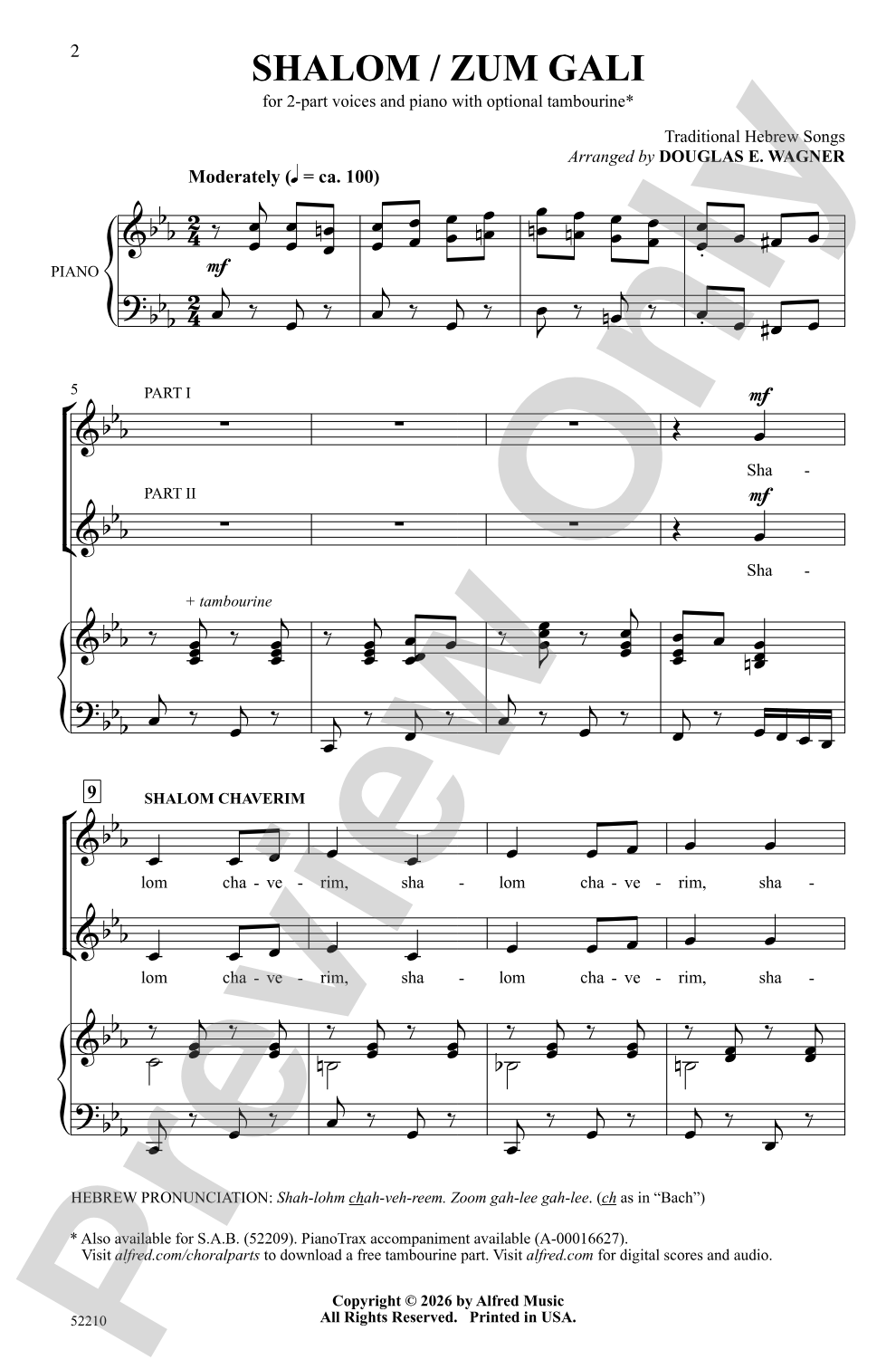
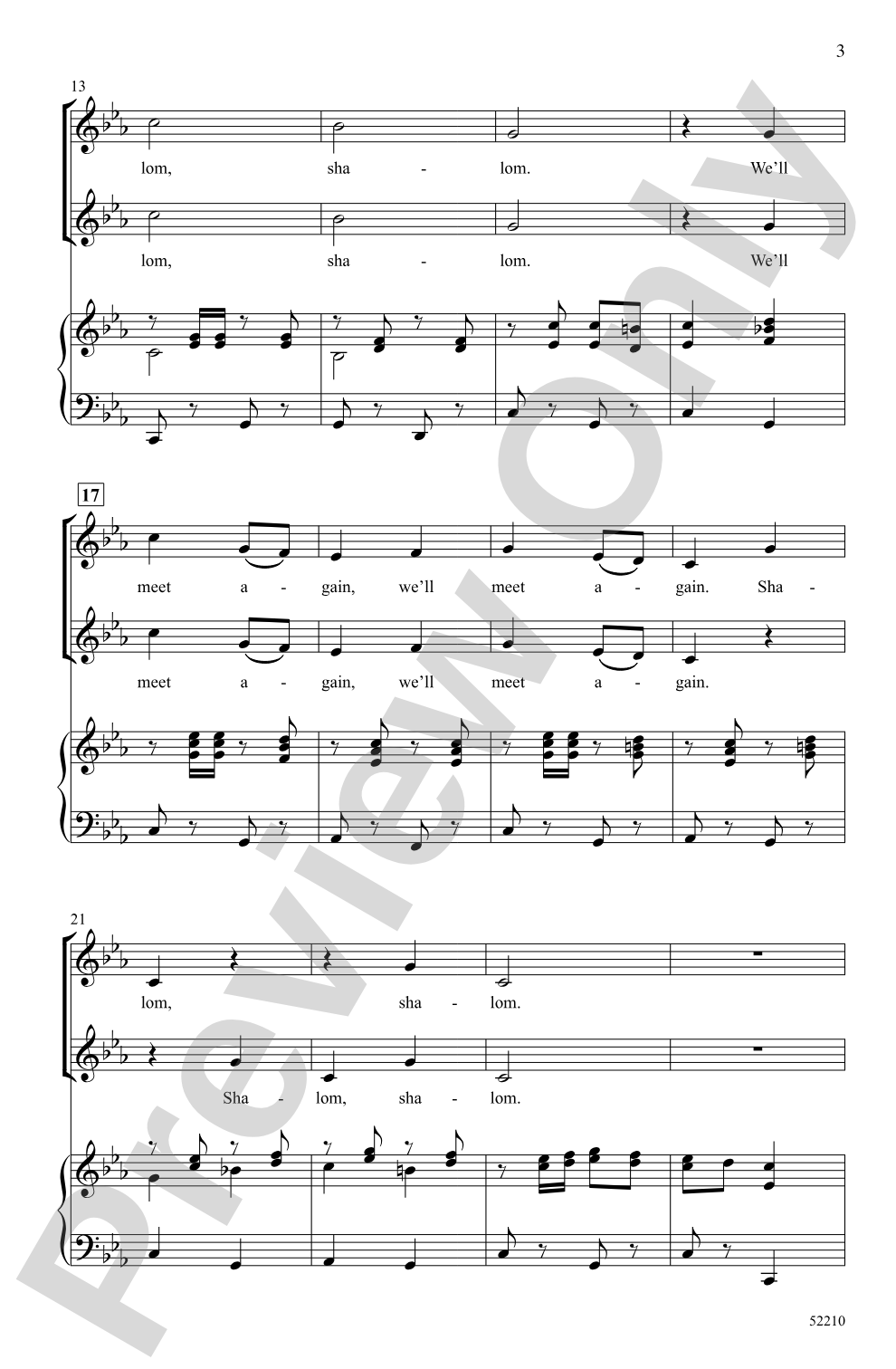

Shalom / Zum Gali: 2-Part Choral Octavo
Traditional Hebrew Songs / arr. Douglas E. Wagner
Item: 00-PO-0007830
$2.40
Minimum order quantity: 20 copies
Pickup currently not available
Description
Sing two traditional Hebrew melodies in one! It's "Shalom Chaverim" alongside "Zum Gali Gali"---two folk songs your singers may already know. As this creative and lively arrangement unfolds, the familiar tunes intertwine over a vibrant piano and tambourine accompaniment. A helpful guide ensures the accurate pronunciation of the four Hebrew words. Joyful and dancelike.


Shalom / Zum Gali: 2-Part Choral Octavo isn't in MakeMusic Cloud just yet...but it could be. Let us know you'd like to see it, and you'll help shape what comes next. In the meantime, start a free trial and dive into thousands of interactive titles your students can play along with today.
Request This Title
Tell us you want it.
Start Your Free Trial
Explore everything that's ready to play right now.
Sample Audio
1
Audio File
--:--
0:00
0:00
Sample Video
Additional Details
Series:
Alfred Choral Designs
Publisher:
Alfred Music
Page Count:
8
SKU:
00-PO-0007830
More about this title
About the Arranger: Douglas E. Wagner

Douglas E. Wagner brings three decades of high school music leadership into his prolific composing and arranging career. A Butler University graduate with degrees in music at both undergraduate and graduate levels, Wagner has published over 3,500 titles across choir, band, orchestra, handbell ensemble, and keyboard literature since 1973.
His arrangements and original compositions have reached audiences in concert halls, on radio and television broadcasts throughout the United States, and on international stages. More than seventeen million copies of Wagner's music have been purchased by educators and performers worldwide. He resides in Indianapolis, Indiana.
Why we love this
Wagner's choice to layer these two beloved Hebrew melodies creates a natural bridge between what your singers may already know and something fresh to discover. The interweaving arrangement moves beyond simple medley territory; it builds genuine musical interest while keeping the poetry of both songs intact. Paired with a bright piano and tambourine accompaniment, this piece delivers authentic cultural celebration without requiring advanced vocal technique.
What to expect
Joyful and kinetic, with the buoyancy of a folk celebration. The familiar melodies feel immediately welcoming, yet the arrangement's creativity keeps singers engaged as the two songs dance around each other. There's lightness and warmth throughout, punctuated by the rhythmic vitality of the accompaniment.
Who it's for
This arrangement works well for middle school through early high school choirs seeking accessible, engaging world music literature. It's also ideal for any choir building a culturally diverse program or preparing music for Chanukah celebrations and interfaith concert settings.
How to get the most out of it
- Study the pronunciation guide carefully before the first rehearsal and return to it periodically. Accurate Hebrew pronunciation transforms the piece from a pleasant folk arrangement into a meaningful cultural experience for your singers and audience alike.
- Use the recorded accompaniment in early rehearsals to establish the tempo and rhythmic feel, then pull it back as singers gain confidence with their parts so they learn to lock into one another rather than relying entirely on the track.
- Highlight the tambourine texture in your mix; the rhythmic shimmer is essential to the dancelike character and gives your singers a specific energy to match vocally.
- Emphasize the interplay between the two melodies as they weave together. Balance matters here; neither tune should overpower the other, especially when both parts sing simultaneously.
How to use it
Program this alongside other world music selections to build a thematic concert moment celebrating cultural traditions. Its modest technical demands and uplifting character make it an excellent opener or closer for a concert, and its connection to Jewish heritage makes it a natural fit for Chanukah performances and multicultural celebration events.
Skills your students will build
- Singing in a second language with accurate pronunciation and intonation
- Following two independent melodic lines that weave and intersect
- Maintaining rhythmic independence when melodies overlap
- Responding to accompaniment texture and using it as a rhythmic reference point
- Balancing harmonic blend when two familiar tunes sound simultaneously