

Shalom / Zum Gali: SAB Choral Octavo
Traditional Hebrew Songs / arr. Douglas E. Wagner
Item: 00-PO-0007829
$2.40
Minimum order quantity: 20 copies
Pickup currently not available
Description
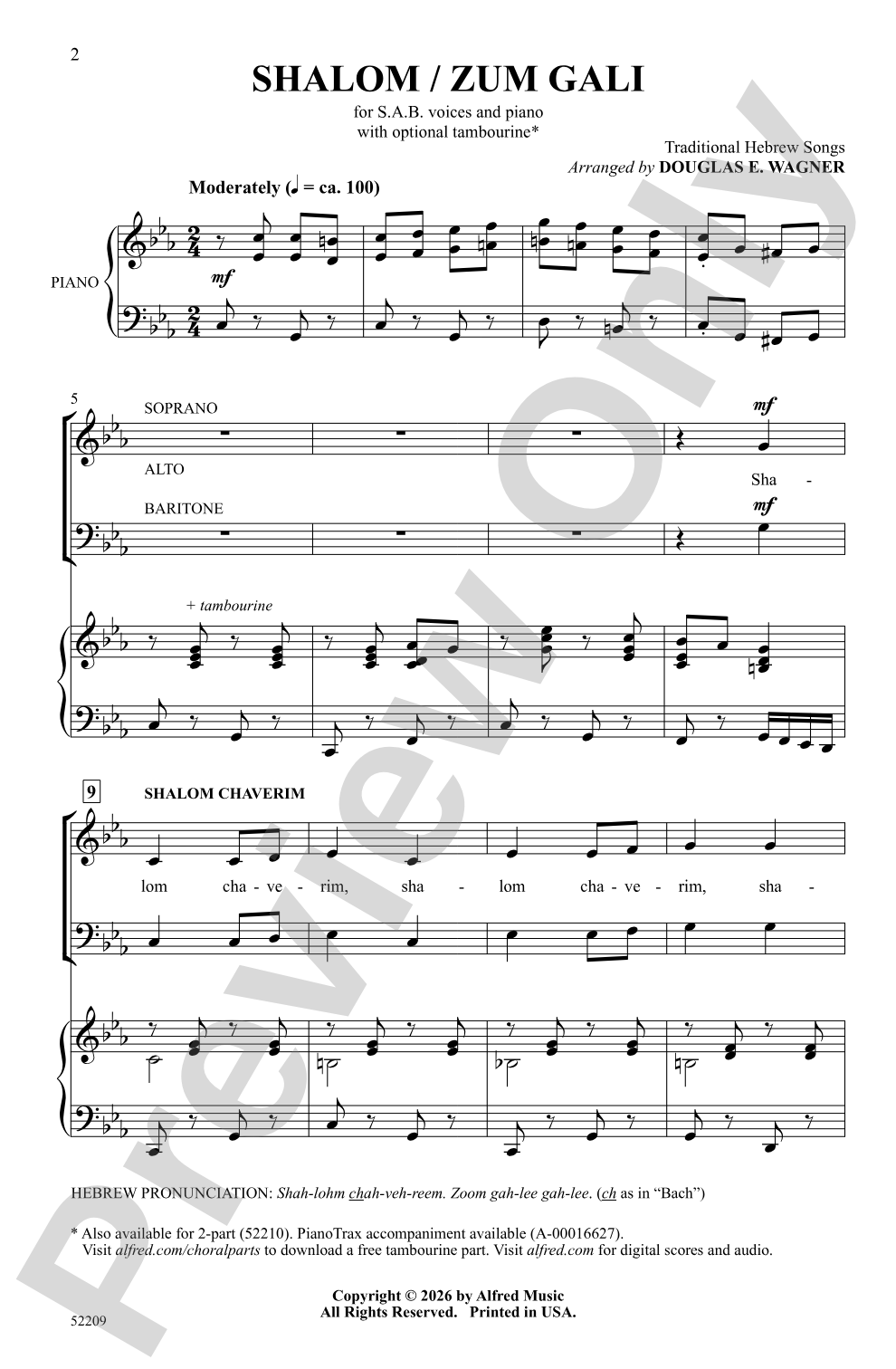
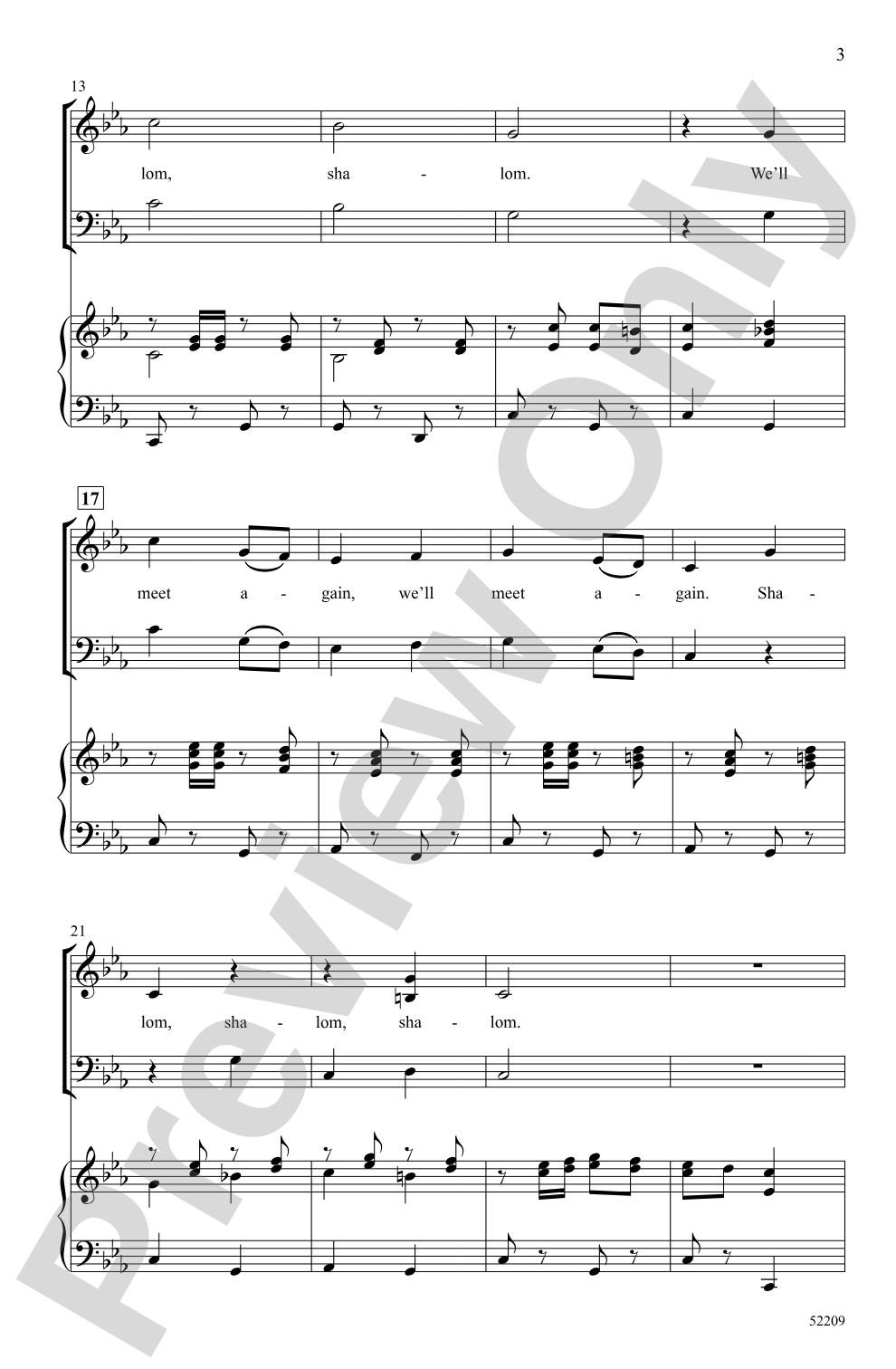
Sing two traditional Hebrew melodies in one! It's "Shalom Chaverim" alongside "Zum Gali Gali"---two folk songs your singers may already know. As this creative and lively arrangement unfolds, the familiar tunes intertwine over a vibrant piano and tambourine accompaniment. A helpful guide ensures the accurate pronunciation of the four Hebrew words. Joyful and dancelike.


Shalom / Zum Gali: SAB Choral Octavo isn't in MakeMusic Cloud just yet...but it could be. Let us know you'd like to see it, and you'll help shape what comes next. In the meantime, start a free trial and dive into thousands of interactive titles your students can play along with today.
Request This Title
Tell us you want it.
Start Your Free Trial
Explore everything that's ready to play right now.
Sample Audio
1
Audio File
--:--
0:00
0:00
Sample Video
Additional Details
Series:
Alfred Choral Designs
Publisher:
Alfred Music
Page Count:
8
SKU:
00-PO-0007829
More about this title
About the Arranger: Douglas E. Wagner
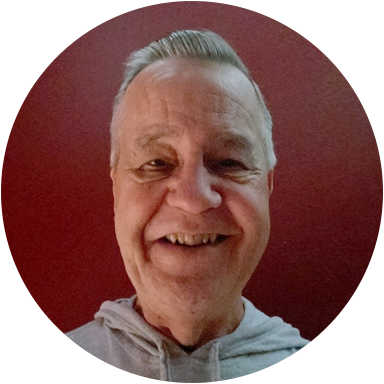
Douglas E. Wagner studied music at Butler University, earning both undergraduate and graduate degrees before spending three decades as a high school music director and administrator in the Midwest. Since 1973, he has published more than 3,500 compositions and arrangements across nearly every ensemble type: choir, band, orchestra, handbell ensemble, organ, piano, and voice.
His works have reached audiences in concert halls, on radio and television broadcasts across North America, and in performances worldwide. With over seventeen million copies of his music in circulation, Wagner remains one of the most widely performed composers in American music education. He lives in Indianapolis, Indiana.
Why we love this
Wagner pairs two beloved Hebrew folk melodies in a single, energetic arrangement that gives your singers the satisfaction of learning two songs at once. The interweaving of "Shalom Chaverim" and "Zum Gali Gali" creates rhythmic vitality and genuine joy, while the included pronunciation guide removes the barrier many directors face when approaching world repertoire. This is the kind of piece that lands immediately with SAB singers and leaves audiences smiling.
What to expect
Bright, celebratory, and rooted in the folk traditions that make these melodies so enduring. The intertwining of the two familiar tunes over a lively piano and tambourine accompaniment creates a sense of playful joy and infectious forward motion, as if the singers are part of a gathering where these songs already live in everyone's memory.
Who it's for
SAB choirs seeking accessible, engaging repertoire that celebrates world music and builds singers' confidence with text in other languages. This arrangement works beautifully for school and community choirs at intermediate levels, especially those wanting to diversify their concert programming or highlight Chanukah and Jewish heritage traditions.
How to get the most out of it
- Establish the rhythm of the tambourine accompaniment early in rehearsal; it drives the character and should feel almost dancelike rather than tentative.
- Drill the Hebrew text with the full vowel sounds specified in the pronunciation guide, then gradually speed it up during the section transitions where the melodies intertwine.
- Balance the two melodic lines clearly in the overlapping passages so each tune remains recognizable rather than muddy.
- Shape the dynamic arc to build energy toward the final statements of both melodies, letting the vibrant accompaniment support the singers' momentum.
How to use it
Program this alongside other world music selections to build a cohesive cultural focus, or place it in a winter concert celebrating Chanukah and interfaith traditions. The joyful, dancelike character also makes it a strong closer for a lighter spring concert or a natural fit for community engagement events where multicultural repertoire strengthens audience connection.
Skills your students will build
- Singing accurate vowels and articulation in Hebrew text
- Blending two distinct melodies in overlapping sections
- Responding to percussion accompaniment cues and rhythmic pulse
- Sustaining ensemble sound through sectional independence