
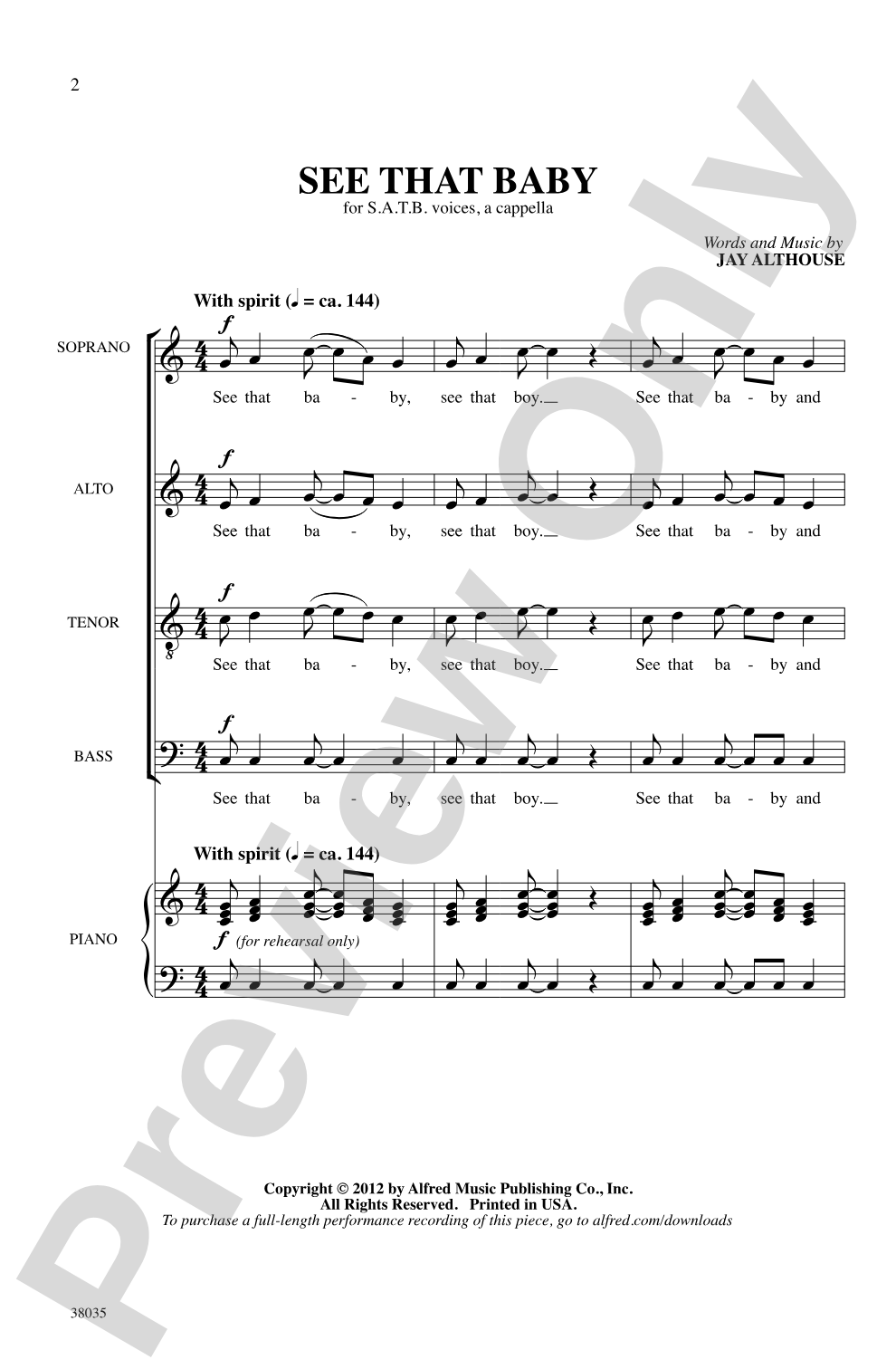
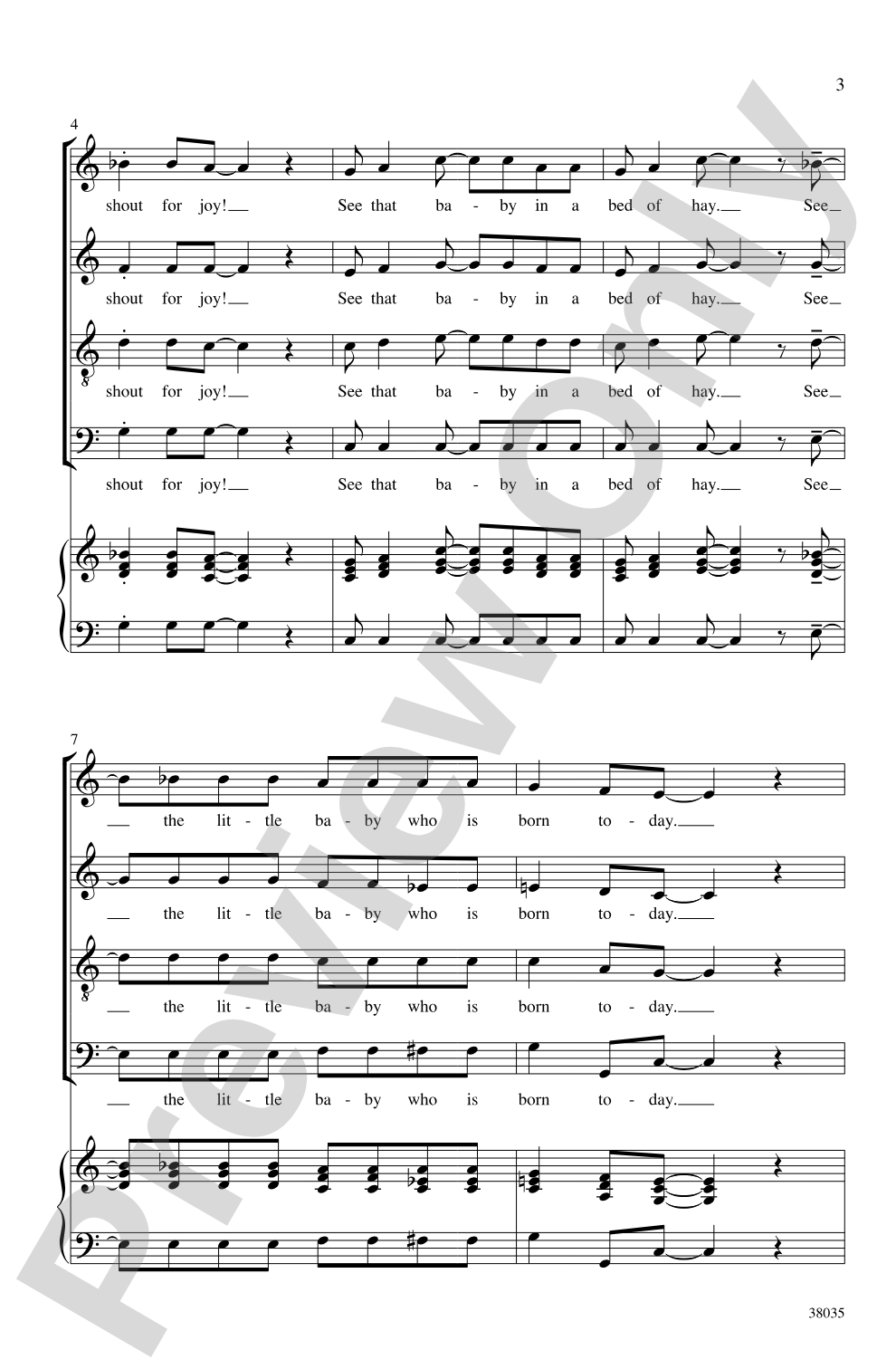
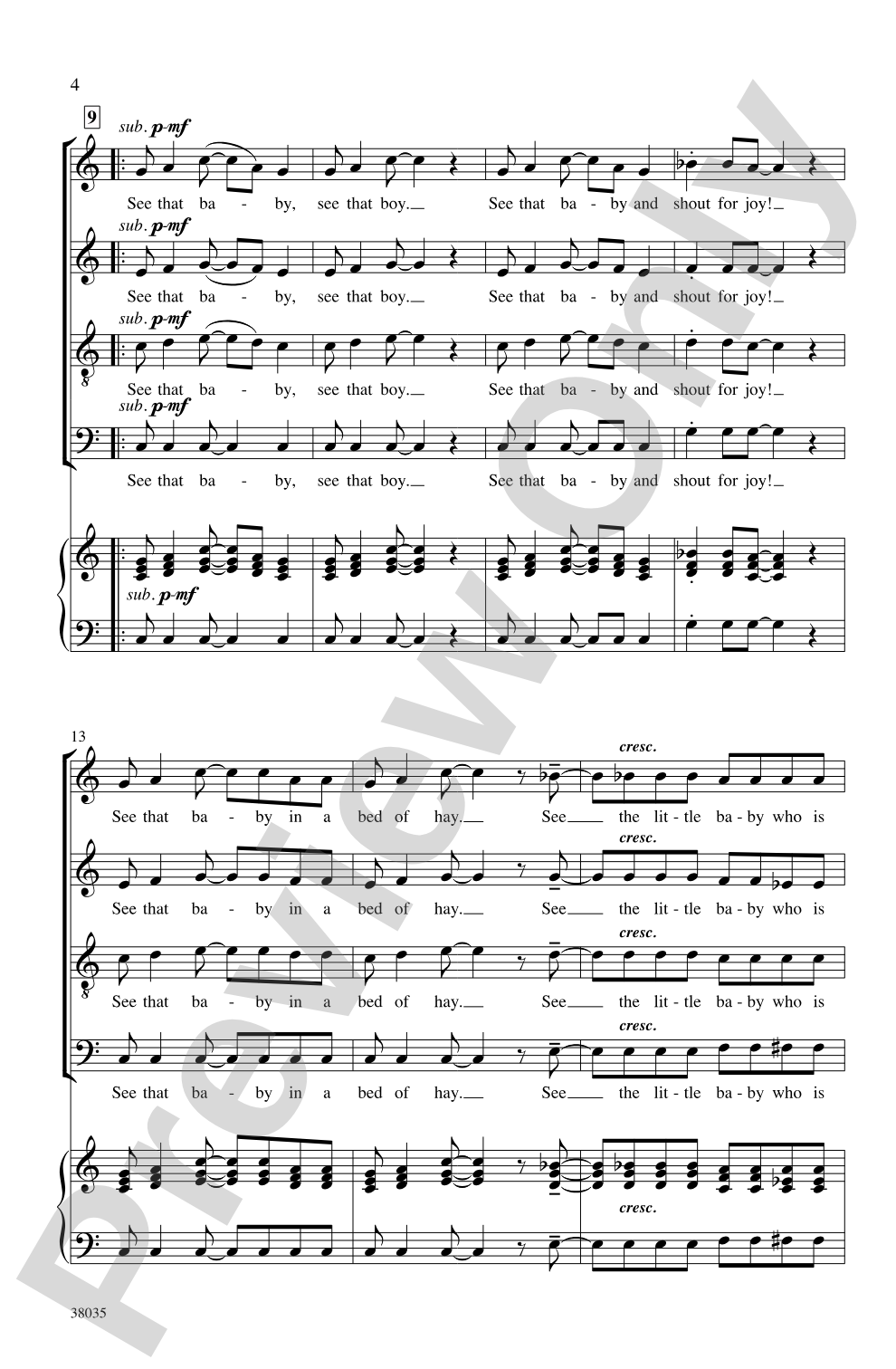

See That Baby: SATB a cappella Choral Octavo
Words and music by Jay Althouse
Item: 00-PO-0001348
$1.95
Minimum order quantity: 20 copies
Pickup currently not available
Related Items
See That Baby: SATB a cappella Choral Octavo |
$1.95
|
View |
Description
Your SATB choir will sound vibrant performing this memorable, a cappella Christmas spiritual. Features strong dynamic contrasts, short solos, and a touch of "Go, Tell It on the Mountain."


See That Baby: SATB a cappella Choral Octavo isn't in MakeMusic Cloud just yet...but it could be. Let us know you'd like to see it, and you'll help shape what comes next. In the meantime, start a free trial and dive into thousands of interactive titles your students can play along with today.
Request This Title
Tell us you want it.
Start Your Free Trial
Explore everything that's ready to play right now.
Sample Audio
1
Audio File
--:--
0:00
0:00
Sample Video
No sample videos found.
Additional Details
Series:
Alfred Choral Designs
Publisher:
Alfred Music
Page Count:
16
SKU:
00-PO-0001348
More about this title
About the Composer: Jay Althouse

Jay Althouse holds degrees in Music Education and Music from Indiana University of Pennsylvania, where he was honored as a Distinguished Alumni recipient. Early in his career, he spent eight years managing rights and licenses for a major educational music publisher and served on the Executive Board of the Music Publishers Association of America. This background shaped his deep understanding of what choirs need and how music reaches performers worldwide.
As a composer, Althouse has created over 800 choral works performed across the English-speaking world. He holds membership in ASCAP and is a regular recipient of the organization's Special Award for composition. Beyond his own writing, he has co-authored children's musicals with his wife Sally K. Albrecht, compiled vocal solo collections, and written instructional resources for music classrooms including rhythm and composer study materials. He served on the board of the North Carolina Master Chorale and continues to contribute to the Folk Art Society of America.
Why we love this
Althouse knows exactly how to make a cappella writing work for working choirs. The dynamic contrasts give singers clear moments to breathe and reset, while the integration of a familiar spiritual melody (from "Go, Tell It on the Mountain") anchors the piece in repertoire singers already know. The short solos provide performance opportunities without overwhelming less experienced ensemble members.
What to expect
Vibrant and warm, with the comfort of a familiar spiritual woven into fresh harmonic language. The piece moves with rhythmic energy and builds momentum through its dynamic contrasts, creating a sense of celebration that feels rooted in tradition rather than trendy.
Who it's for
This octavo works well for intermediate to advanced SATB choirs looking for engaging Christmas repertoire with substance beyond standard carols. Directors seeking pieces that highlight both ensemble cohesion and individual voices will find the solo sections and voicing particularly rewarding. The accessible spiritual foundation makes it approachable even for choirs still building their a cappella confidence.
How to get the most out of it
- Shape the dynamic contrasts decisively rather than gradually. This piece relies on clear shifts between sections, so treat each change as a distinct gesture rather than a slow swell.
- Work the short solos in sectional rehearsals first so the featured singers hear exactly where they sit in the harmonic texture before full ensemble rehearsals.
- Let the spiritual melody breathe when it appears. Resist the urge to push the tempo; these familiar lines work best when singers have room to phrase naturally.
- Balance the a cappella texture by checking that inner voices are audible in full-choir sections. Without instrumental support, alto and tenor lines can disappear if they're not voiced with intentional weight.
How to use it
Program this as a concert opener or closer during holiday performances; the recognizable spiritual melody gives audiences an immediate foothold while the a cappella setting showcases ensemble skill. It pairs naturally with other spirituals or contemporary choral arrangements and works equally well in chapel services, community concerts, or school holiday programs.
Skills your students will build
- Singing independently in an a cappella setting without instrumental support
- Managing dynamic shifts and transitions between contrasting sections
- Blending inner vocal parts (alto and tenor) while maintaining harmonic clarity
- Interpreting and performing solo passages within an ensemble context
- Connecting to spiritual tradition through melodic recognition and arrangement