
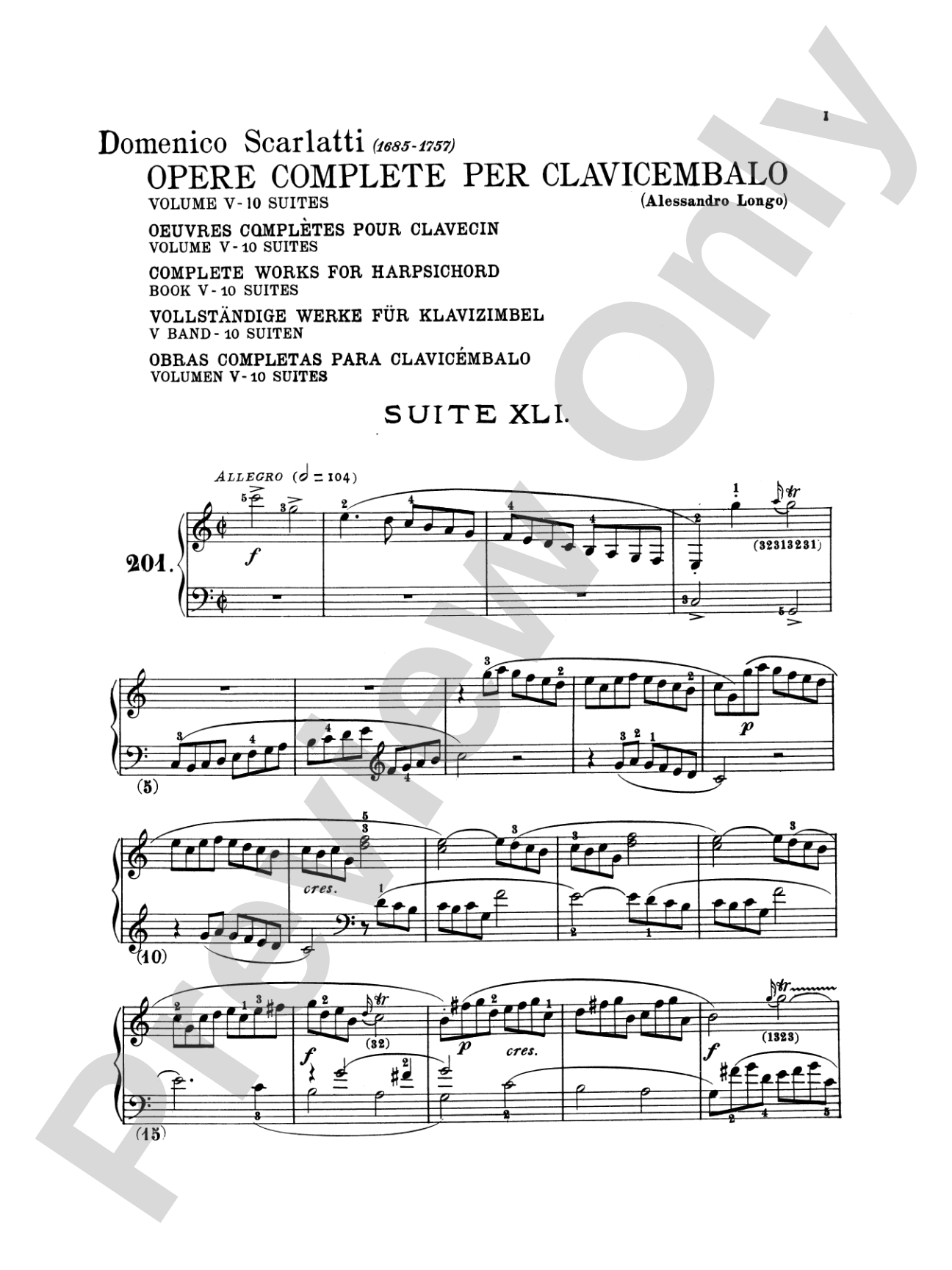
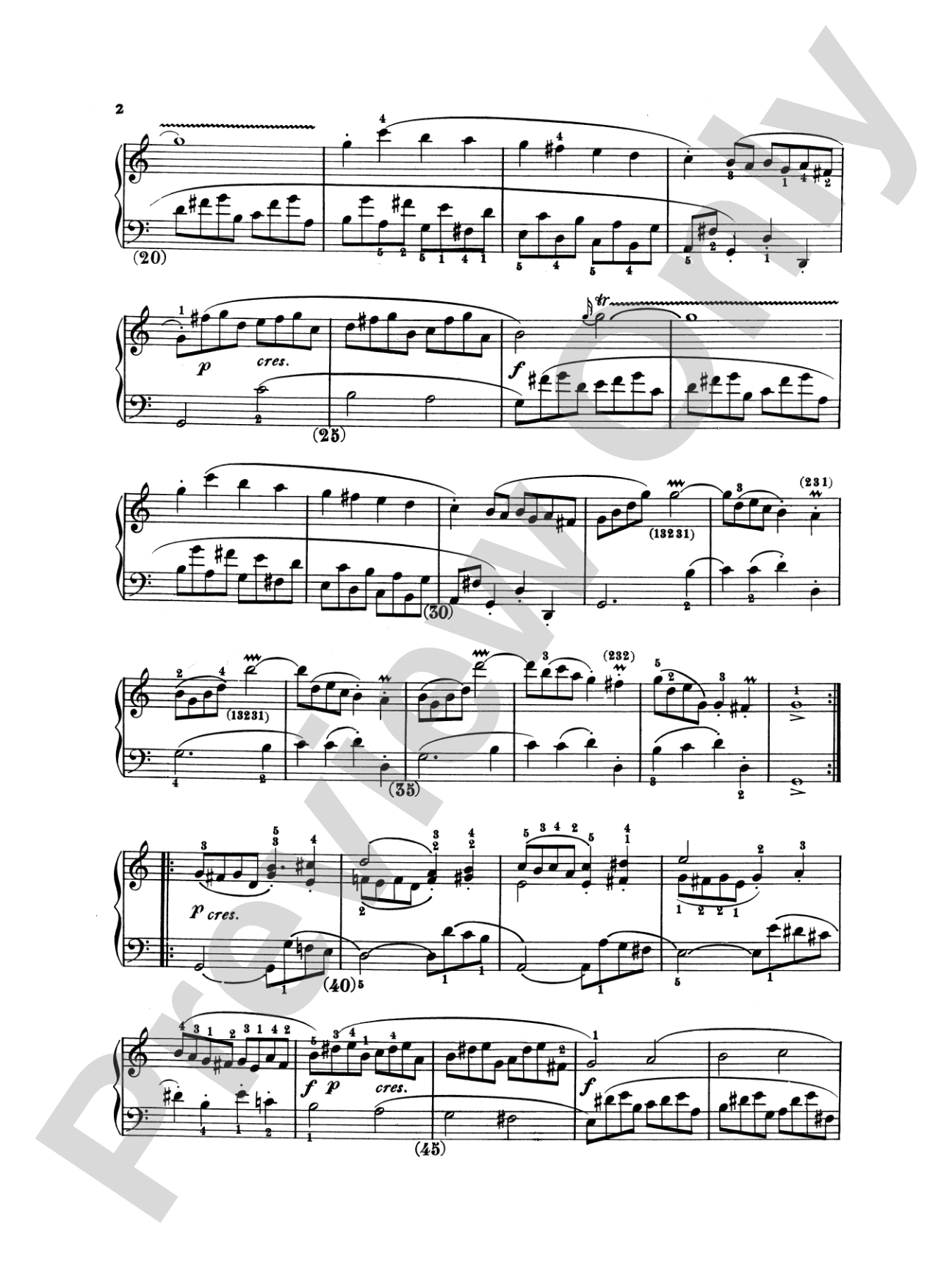
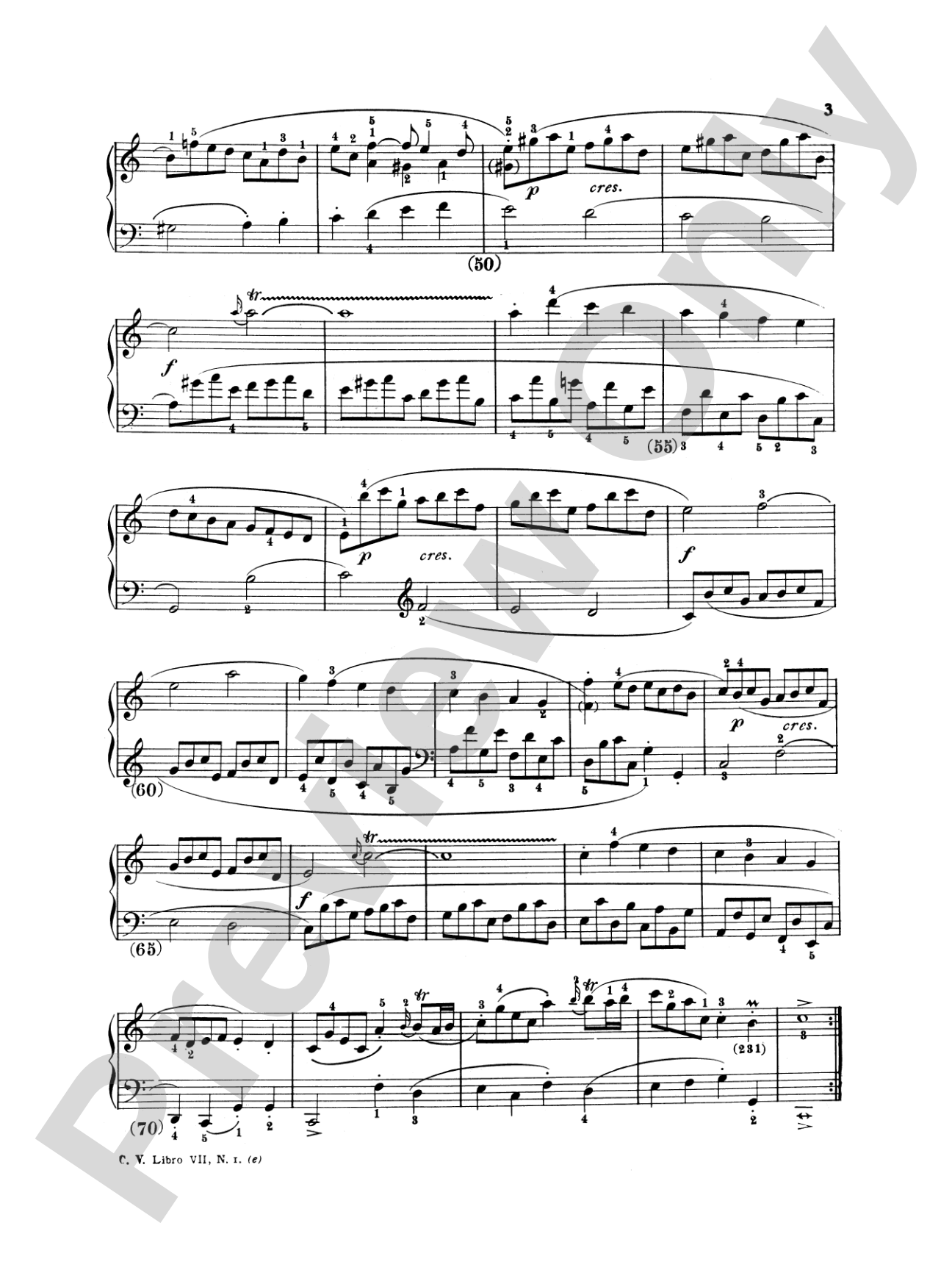

Scarlatti: The Complete Works, Volume V: Piano Book
By Domenico Scarlatti
Item: 00-PK-0003748

$24.99
Pickup currently not available
Buy Extra Parts (Digital PDF Download)
Parts Added to Cart!
Related Items
The Complete Works, Volume V: Piano Book |
$24.95
|
View |
Description
10 Suites (Longo 201-250)


Don't just read it, hear it, play along with it, and watch your students grow with it. In MakeMusic Cloud, Scarlatti: The Complete Works, Volume V: Piano Book comes alive with professional accompaniment, adjustable tempo, and built-in practice tools that turn solo practice into real progress.
Open in the Player
Jump straight in and assign it today.
Start Your Free Trial
Open this title and explore the full library in minutes.
Sample Audio
No sample audio found.
Sample Video
No sample videos found.
Additional Details
Series:
Kalmus Edition
Publisher:
Alfred Music
Page Count:
212
SKU:
00-PK-0003748
More about this title
About the Composer: Domenico Scarlatti
Domenico Scarlatti (1685, 1757) was a virtuoso harpsichordist and prolific composer who spent much of his career in the Spanish and Portuguese courts. His 555 keyboard sonatas, written primarily for the Spanish Infanta Maria Barbara, represent a radical departure from the strict counterpoint of his father Alessandro Scarlatti and contemporary Baroque conventions. He pioneered a keyboard idiom that demanded technical brilliance and explored the instrument's full range with dramatic leaps, rapid hand crossings, and rhythmic innovation that would influence keyboard writing for generations.
For music educators, Scarlatti's works occupy a unique pedagogical space between the Baroque and Classical periods. These suites demonstrate how a master composer could advance musical language while maintaining the structural clarity and ornamentation expected of the era. Teaching Scarlatti teaches students to reconcile virtuosic demands with compositional economy, and to understand the keyboard as a vehicle for genuine dramatic expression rather than mere technical display.
Why we love this
This volume captures Scarlatti at his most inventive and pianistically idiomatic. The Longo 201, 250 range includes some of his most frequently performed sonatas, and programming them as suites reveals how he organized and developed musical ideas across related keys and tempos. Students gain exposure to a repertoire that bridges continents and centuries while remaining gratifyingly performable at multiple levels.
What to expect
These sonatas and suites pulse with the energy of the Spanish and Portuguese courts where Scarlatti composed them. You encounter both intricate contrapuntal passages and surprisingly direct, dance-like movements that sparkle with wit and rhythmic vitality, balanced by moments of cantabile warmth that reveal a lyrical sensibility beneath the technical surface.
Who it's for
Advanced pianists and serious students ready to engage with Baroque keyboard masterworks at full depth. Teachers seeking comprehensive Scarlatti material for repertoire study, exam preparation, or concert programming will find this collection indispensable for intermediate and advanced levels.
How to get the most out of it
- Approach ornaments with historical style: research the specific notation conventions of Scarlatti's period, as his trills and grace notes carry different weight than Romantic-era embellishments.
- Shape phrases through articulation and subtle voicing rather than relying on dynamic extremes; the harpsichord's character means clarity of line matters more than volume contrast.
- Isolate the hand-crossing passages and practice them slowly with both the visual map and kinesthetic awareness, as these require confident spatial planning rather than speed.
- Respect the dance rhythms embedded in many movements; even when notation appears simple, internal pulse and grace create the character that makes these pieces sing.
How to use it
Program individual movements or complete suites as cornerstones of Baroque solo recitals, or use them strategically across a season's lessons to build technical breadth alongside historical literacy. These works also pair well with other Baroque keyboard composers as part of a focused exploration of pre-Classical keyboard writing.
Skills your students will build
- Harpsichord articulation and Baroque phrasing conventions
- Hand crossing and spatial management across the keyboard
- Ornament realization in the Baroque style
- Rhythmic precision in dance forms (minuet, gigue, courante)
- Voice independence and inner-line audibility in contrapuntal textures
- Stylistic differentiation between Baroque keyboard writing and later Classical piano technique