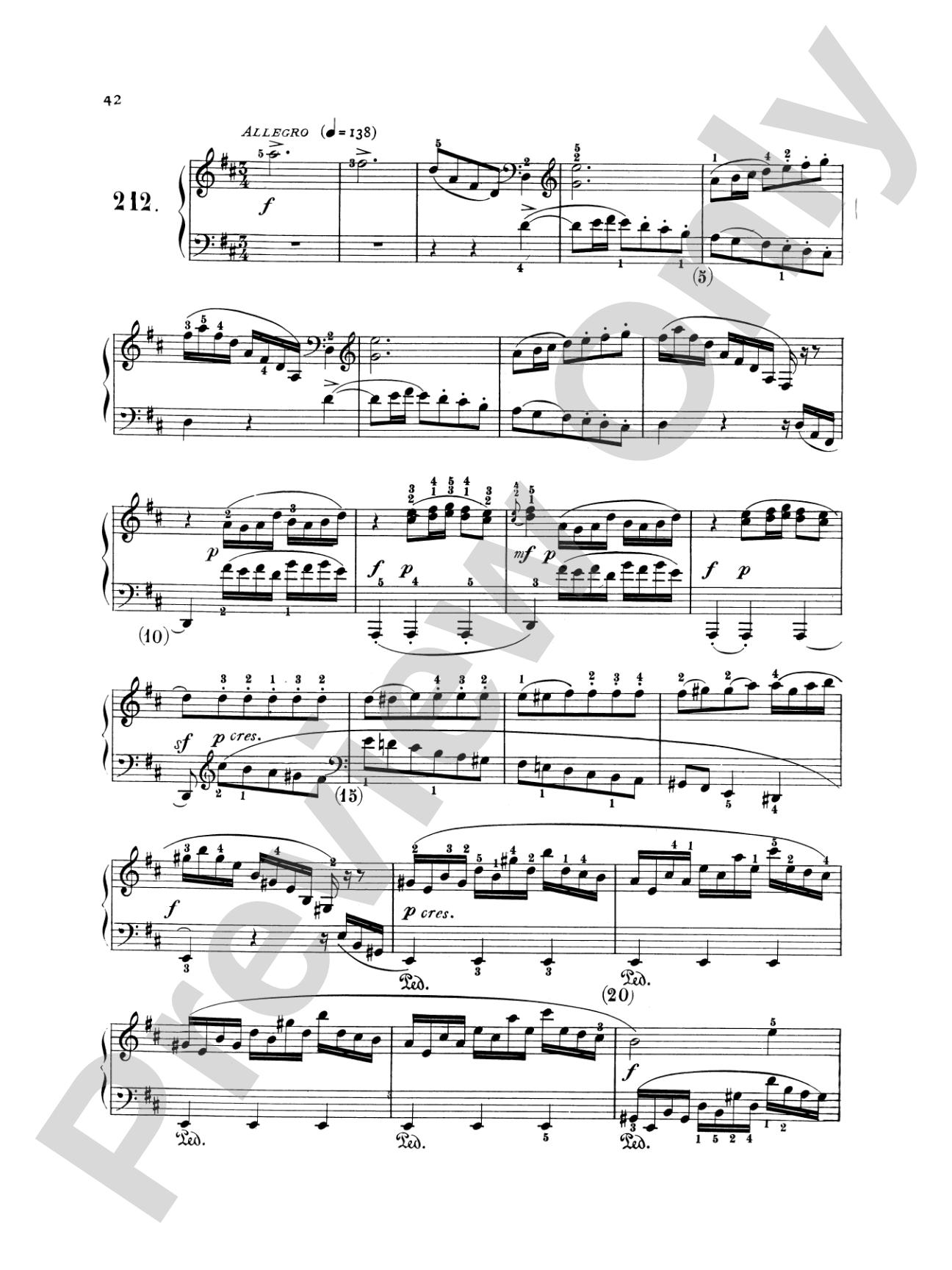
Scarlatti: The Complete Works, Volume V Sheet Music Preview

Scarlatti: The Complete Works, Volume V

By Domenico Scarlatti

Item: 00-PC-0012280

Digital Download
$0.99
Description
10 Suites (Longo 201-250)

Don't just read it, hear it, play along with it, and watch your students grow with it. In MakeMusic Cloud, Scarlatti: The Complete Works, Volume V comes alive with professional accompaniment, adjustable tempo, and built-in practice tools that turn solo practice into real progress.

Sample Audio
No sample audio found.
Sample Video
Additional Details
Series: Kalmus Edition
Publisher: Alfred Music
Page Count: 212
SKU: 00-PC-0012280

More about this title

About the Composer: Domenico Scarlatti

Domenico Scarlatti (1685–1757) was an Italian Baroque composer whose keyboard works revolutionized piano technique and musical expression. Though trained in the Italian operatic tradition under his father Alessandro Scarlatti, Domenico devoted much of his career to writing harpsichord sonatas, creating over 550 works that became foundational to the modern piano repertoire.

Scarlatti spent formative years in Rome and Venice before settling in Spain and Portugal as a court musician, where he composed prolifically for the royal households. His sonatas introduced unprecedented technical demands, crossed-hand passages, and rhythmic innovations that challenged and inspired generations of pianists. His music bridges the Baroque and Classical periods, establishing keyboard virtuosity as central to composition.

Why we love this

This volume offers substantial access to essential Scarlatti without requiring students to hunt through collected editions or incomplete anthologies. The ten suites (Longo 201–250) represent a diverse cross-section of his keyboard writing, from dance-inspired movements to introspective miniatures, providing teachers with authentic material at varying levels of difficulty. Pairing these pieces in a single collection makes it practical to build a Baroque keyboard curriculum or incorporate significant Scarlatti study into upper-level piano repertoire.

What to expect

These sonatas and suites pulse with the energy of the Spanish and Portuguese courts where Scarlatti composed them. You encounter both intricate contrapuntal passages and surprisingly direct, dance-like movements that sparkle with wit and rhythmic vitality, balanced by moments of cantabile warmth that reveal a lyrical sensibility beneath the technical surface.

Who it's for

Advanced pianists and serious students ready to engage with Baroque keyboard masterworks at full depth. Teachers seeking comprehensive Scarlatti material for repertoire study, exam preparation, or concert programming will find this collection indispensable for intermediate and advanced levels.

How to get the most out of it

  • Approach ornaments with historical style: research the specific notation conventions of Scarlatti's period, as his trills and grace notes carry different weight than Romantic-era embellishments.
  • Shape phrases through articulation and subtle voicing rather than relying on dynamic extremes; the harpsichord's character means clarity of line matters more than volume contrast.
  • Isolate the hand-crossing passages and practice them slowly with both the visual map and kinesthetic awareness, as these require confident spatial planning rather than speed.
  • Respect the dance rhythms embedded in many movements; even when notation appears simple, internal pulse and grace create the character that makes these pieces sing.

How to use it

Program individual movements or complete suites as cornerstones of Baroque solo recitals, or use them strategically across a season's lessons to build technical breadth alongside historical literacy. These works also pair well with other Baroque keyboard composers as part of a focused exploration of pre-Classical keyboard writing.

Skills your students will build

  • Harpsichord articulation and Baroque phrasing conventions
  • Hand crossing and spatial management across the keyboard
  • Ornament realization in the Baroque style
  • Rhythmic precision in dance forms (minuet, gigue, courante)
  • Voice independence and inner-line audibility in contrapuntal textures
  • Stylistic differentiation between Baroque keyboard writing and later Classical piano technique

You May Also Like